

Picture this: You are standing in the supplement aisle, eyes glazed over, staring at a wall of giant plastic tubs. On one side, you have whey, the classic, reigning champion of the bodybuilding world. On the other, you have pea protein, the fast-rising green machine that is taking over plant-based shakes.
How do you choose between whey protein vs pea protein?
Whether you want to build muscle, keep your skin clear, calm a grumpy stomach, or save the planet, science has some fascinating answers. Grab your favorite shaker bottle, and let’s dive into the ultimate, fluff-free, science-backed protein powder showdown!
The Tale of the Tape: What Are Whey and Pea Proteins?
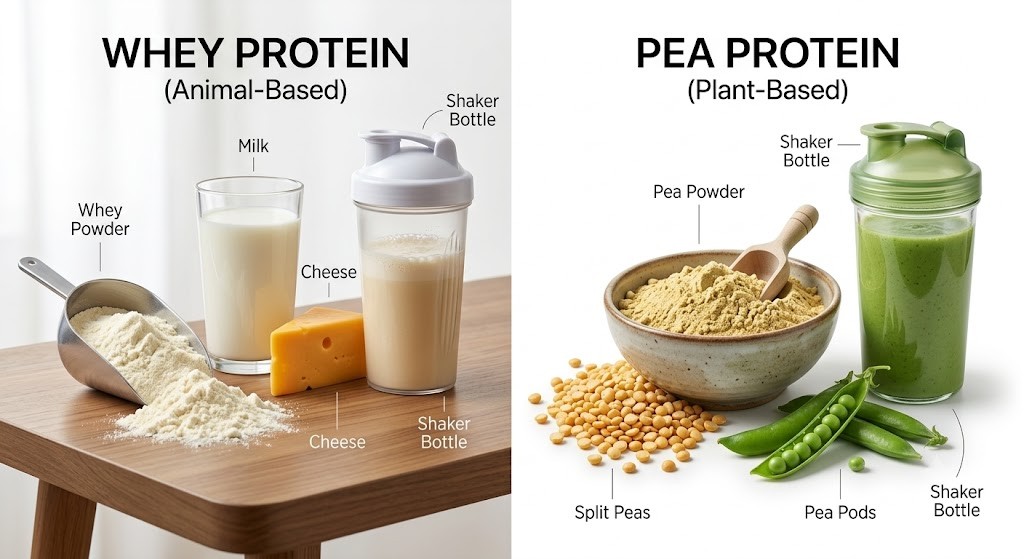
Before we look at how these proteins perform in your body, let's understand what they actually are.
Whey protein is animal-derived, isolated from the liquid byproduct of cheesemaking. Once viewed as dairy waste, it is now processed into a highly refined, fast-absorbing powder. Because it is a complete animal protein, it naturally contains all nine essential amino acids (EAAs), with especially high levels of leucine, the king of muscle-building signals.
Pea protein is plant-derived, extracted from yellow split peas (Pisum sativum). It is also a complete protein—which is rare for plants—though it is naturally lower in the essential amino acid methionine. To make up for this, many plant powders blend it with rice protein to create a complete, balanced amino acid profile.
Both powders can easily pack 20 to 26 grams of protein per scoop, but their nutritional profiles have some key differences. Let’s look at the numbers:
The Sodium Surprise
Did you notice that sodium jump? While a scoop of whey isolate has a modest 65 mg of sodium, pea protein isolate averages around 238 mg—about 10% of your daily recommended limit. Why?
The main storage proteins in peas are globulins, which only dissolve in salt solutions. Manufacturers use sodium-based salt washes to separate the protein from the starches during the isolation process. The sodium remains bound to the protein isolate, which is a key detail if you are watching your blood pressure or sodium intake.
Bloat Patrol: Why Does Whey Make You Gassy (and How Pea Protein Saves Sensitive Stomachs)?
We’ve all been there: you drink a post-workout shake, and thirty minutes later, your stomach is making noises that sound like a construction site.
If whey protein makes you bloated, you are not alone. Whey is derived from milk, meaning it carries varying levels of lactose. If your body lacks the lactase enzyme to break down this dairy sugar, the undigested lactose travels straight to your colon. Once there, colonic bacteria feast on it, releasing gases like carbon dioxide (CO2), hydrogen (H2), and methane (CH4). The result? Painful bloating, gas, and a quick run to the restroom.
Pea protein isolate is naturally hypoallergenic, gluten-free, soy-free, and 100% dairy-free, making it incredibly gentle on sensitive stomachs.
But wait—don't peas cause gas too? Whole peas are packed with complex sugars called FODMAPs (fermentable oligosaccharides, disaccharides, monosaccharides, and polyols). In sensitive guts, FODMAPs trigger intense bloating and gas. However, when yellow split peas are processed into pea protein isolate, the soluble fibers and starches are stripped away during wet-fractionation, making it a low-FODMAP, gut-friendly option that digests smoothly without causing a balloon-like stomach.
Pec Gains Without the Pimple Pain: Does Pea Protein Build Muscle Without the Whey-Induced Acne?
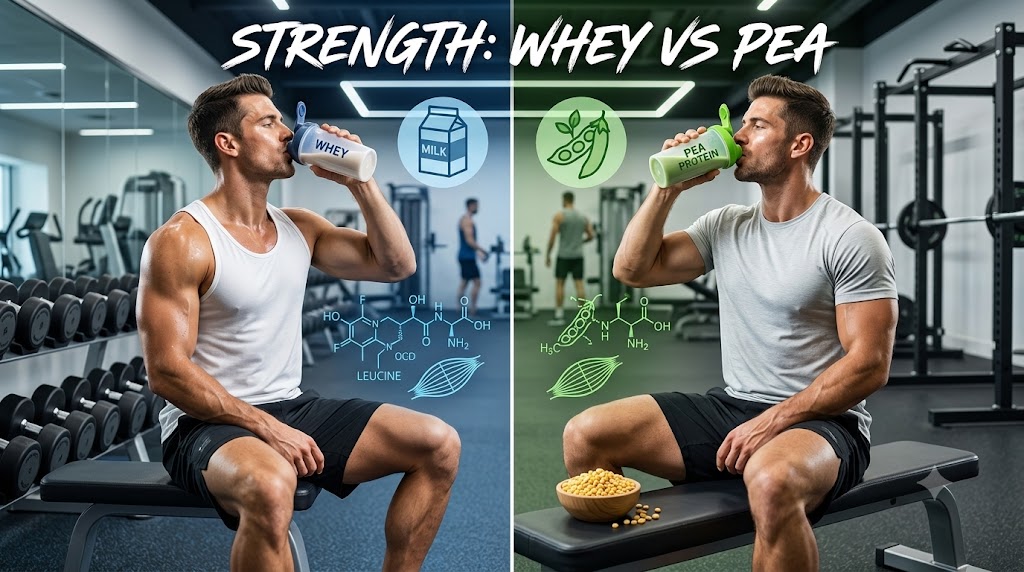
Can you build serious muscle with a plant-based powder? Absolutely.
For years, gym culture claimed that plant proteins were inferior to animal proteins for mass gain. But clinical studies have completely debunked this myth.
In a 12-week double-blind study published in the Journal of the International Society of Sports Nutrition, researchers compared biceps thickness in men taking either pea protein, whey protein, or a placebo during resistance training. The results? Pea protein performed just as well as whey, showing equivalent muscle growth. Another 8-week trial focused on high-intensity functional training (HIFT) showed no difference in squat or deadlift strength gains between the two groups.
But here is where pea protein pulls ahead: your skin health.
If you are prone to acne breakouts, whey protein might be the hidden culprit behind those stubborn truncal breakouts on your chest and back. Whey protein triggers a dramatic post-workout spike in blood insulin and insulin-like growth factor 1 (IGF-1). This hormonal surge suppresses a transcription factor called FoxO1, which then activates the mTORC1 pathway. When mTORC1 is turned on, it tells your sebaceous glands to produce excess sebum (oil) and causes skin cells to hyper-keratinize. This pathway leads directly to painful, inflamed acne flares.
Pea protein is plant-based and does not contain dairy hormones or trigger the same intense insulin and IGF-1 spikes, allowing you to build muscle without the pimple pain.
The Great Protein Bake-Off: Can You Substitute Pea Protein for Whey in Recipes?
If you enjoy baking with protein powder, you know it can be a culinary minefield. Let’s look at the food science of how these proteins behave under heat.
Whey protein has a very low water-binding capacity (WBC). When heated, whey proteins quickly denature and gel, squeezing out moisture. If you try to bake cookies or muffins using only whey, you will likely end up with dry, dense, rubbery hockey pucks.
Pea protein is a culinary superhero. It has an incredibly high water-binding and oil-holding capacity. It acts like a sponge, absorbing and holding onto moisture during the baking process to keep your goods soft and tender.
In a study on gluten-free cookies, substituting flour with pea protein preserved the elastic modulus (G') and viscous modulus (G'') of the dough, producing soft, delicious cookies that matched traditional recipes in consumer taste tests.
The Chef's Trick: If you want the best of both worlds, blend them! Substituting pea protein for up to half of the whey in your recipes improves thickness, moisture retention, and emulsion stability.
Aging Like Fine Wine: Whey vs. Pea Protein for Women Over 50
As women cross the age 50 threshold, their nutritional priorities shift toward preserving lean muscle tissue and protecting bone density. After menopause, estrogen levels drop, which can cause bone mineral density to decrease by up to 2% annually. This bone loss, combined with natural age-related muscle wasting (sarcopenia), can lead to osteosarcopenia—a condition that increases the risk of falls and fractures.
To fight this, women over 50 need to increase their protein intake to 1.0 to 1.5 grams per kilogram of body weight daily.
While whey is a fantastic choice for sarcopenia due to its high leucine content, pea protein has shown some surprising benefits for bone health.
A groundbreaking study led by Dr. Phil Chilibeck at the University of Saskatchewan compared the bone-strengthening effects of dairy milk versus pea-based milk in older adults undergoing resistance training. The researchers discovered that those consuming pea protein showed equal or superior bone geometric measurements—which are strong predictors of overall bone strength—particularly in the weight-bearing hip bone.
Additionally, pea protein is naturally rich in non-heme iron, providing a helpful boost for postmenopausal women who may need nutritional support for age-related iron-deficiency anemia.
The Clean Label Detective: Navigating Heavy Metals and Microplastics
If you are a clean-label enthusiast, you should know that both protein sources carry distinct contamination risks depending on how they are sourced and processed.
The Plant Problem (Heavy Metals): Because yellow peas grow directly in the soil, they absorb naturally occurring or industrial minerals through their roots. Independent testing by the Clean Label Project and Consumer Reports revealed that plant-based protein powders averaged nine times higher lead levels, alongside elevated cadmium and arsenic, compared to whey.
The Dairy Problem (Microplastics): Whey is a dairy product, and liquid milk goes through an extensive industrial journey of pasteurization, homogenization, filtration, and transport through plastic tubing and gaskets. Studies have found widespread microplastic contamination in milk powders, reaching over 10,040 microplastic items per kilogram. The primary culprits are polyethylene (PE) and polypropylene (PP) particles that shed from processing equipment.
Contaminant Class | Whey Protein Risk | Pea Protein Risk |
Heavy Metals | Low: Minimal absorption from animal dairy. | High: Absorbed from soil; averages 9x more lead than whey. |
Microplastics | High: Pervasive PE and PP particles shed from dairy lines. | Low: Minimal plastic contact during mechanical separation. |
Purity Certifications | NSF, Informed Sport, or Labdoor. | Clean Label Project, USDA Organic. |
To stay safe, look for brands with independent third-party testing, such as Clean Label Project certification, which screens for heavy metals, pesticides, and plastic residues.
Greener Gains: Carbon and Water Footprints of Pea vs. Whey
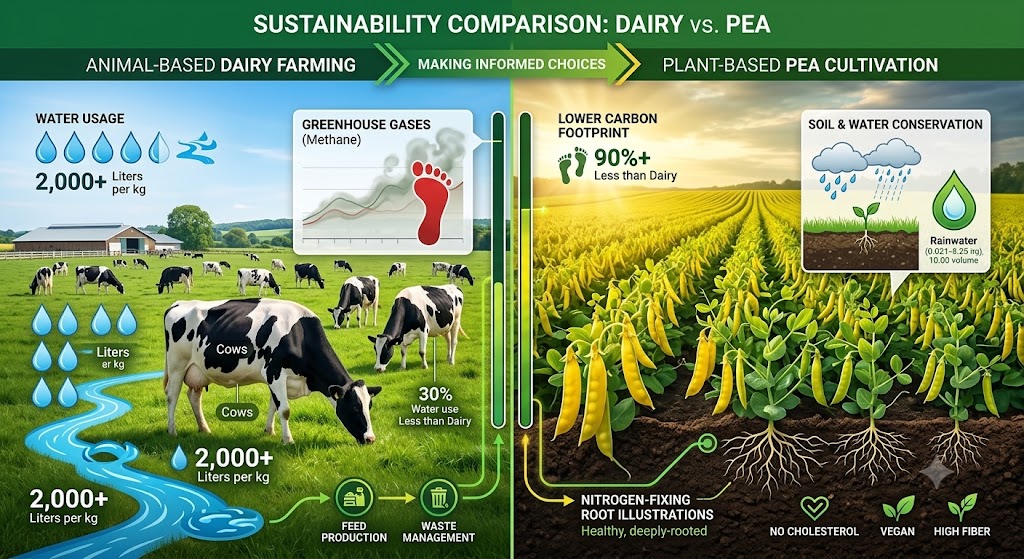
If you want to reduce your environmental impact, the choice is clear.
Dairy farming is highly resource-intensive, utilizing 70% of agricultural land and generating over 70% of food-related greenhouse gas emissions (GHGe).
Pea protein concentrate has a carbon footprint that is up to 97% lower than some animal protein sources. Yellow peas are highly sustainable, water-efficient crops that rely mostly on natural rainfall (green water) rather than surface irrigation (blue water). Even better, peas are nitrogen-fixing leguminous plants. They naturally convert atmospheric nitrogen into nutrients for the soil, eliminating the need for synthetic nitrogen fertilizers that pollute local waterways.
The Final Verdict: How to Choose Your Champion
Still undecided? Let’s look at this simple selection guide to help you choose the right powder for your goals:
Your Priority | Go with Whey Protein | Go with Pea Protein |
Sensitive Stomach | Only if it is highly filtered whey isolate. | Highly Recommended: Hypoallergenic & low-FODMAP. |
Acne-Prone Skin | Avoid if you notice breakouts. | Highly Recommended: Dermatologically friendly. |
High Baking Use | Can make baked goods dry or rubbery. | Highly Recommended: Retains moisture beautifully. |
Postmenopausal Health | Great for fast post-workout leucine delivery. | Highly Recommended: High in non-heme iron and hip bone support. |
Environmental Value | Higher carbon and land footprint. | Highly Recommended: Highly sustainable and nitrogen-fixing. |
Meet VoCal: The World's Easiest Way to Track Your Shakes
No matter which protein you choose, staying consistent is the secret to seeing real results. But let’s be honest: typing every ingredient into a clunky tracking app is a chore.
That is where VoCal comes in.
VoCal is a voice-first calorie tracking app designed to eliminate the friction of logging your meals. Instead of searching databases or scanning barcodes, you just tap the microphone and speak naturally:
"Had a smoothie with one scoop of pea protein isolate, a cup of almond milk, and a banana."
VoCal’s advanced AI instantly processes your voice, breaks down your exact macronutrients (protein, carbs, fats), and keeps you on pace to hit your daily goals. If you are transitioning from whey to pea protein, VoCal is the perfect tool to help you monitor your changing fiber, protein, and sodium levels without any hassle.
Frequently Asked Questions (FAQs)
Is pea protein a complete protein?
Yes! Pea protein isolate contains all nine essential amino acids. It is naturally lower in methionine, but you can easily balance this by eating a varied diet or choosing a pea-and-rice protein blend.
Why does whey protein make me bloated?
Whey protein is derived from milk and contains lactose. If you have a lactase deficiency, undigested lactose undergoes bacterial fermentation in your colon, releasing gases like carbon dioxide (CO2), hydrogen (H2), and methane (CH4), which cause bloating, flatulence, and cramps.
Is pea protein actually as good as whey for muscle growth?
Yes, science says so! Head-to-head clinical trials show that when daily protein intake is matched, pea protein isolate produces equivalent muscle thickness and strength gains as whey protein.
Can I mix whey and pea protein together?
Absolutely! Mixing the two can actually improve the texture and water retention of baked goods and create a highly stable, smooth emulsion for post-workout shakes.
Disclaimer: The information provided in this article, including comparisons, nutritional data, and health insights, is for informational and educational purposes only. It is not intended as medical advice, diagnosis, or treatment, nor is it a substitute for professional medical expertise.Always consult with a qualified healthcare provider, physician, or registered dietitian before starting any new supplement, diet, or exercise regimen, especially if you have pre-existing medical conditions, are pregnant, or are nursing.