

Picture this: You just crushed an absolute beast of a workout, blended up a creamy protein shake, and downed it in seconds. You are ready to repair those muscles and seize the day!
But then, 30 minutes later, it hits. Your stomach is gurgling, you feel uncomfortably full, and you look like you have swallowed a basketball.
When you are tracking your daily macros and calories with VoCal, logging your nutrition should be the only thing on your mind—not dealing with uncomfortable tummy trouble. Every gram of protein counts toward your goals, but it does you no good if your stomach is in a constant state of rebellion.
If your post-workout shake is turning your stomach into a balloon, you are probably caught in the classic showdown: whey protein vs pea protein. Let's dive into the science of why whey might be bloating you and see if pea protein is the gut-friendly hero your sensitive stomach deserves!
The Anatomy of Bloating: Why Whey Distends the Gut
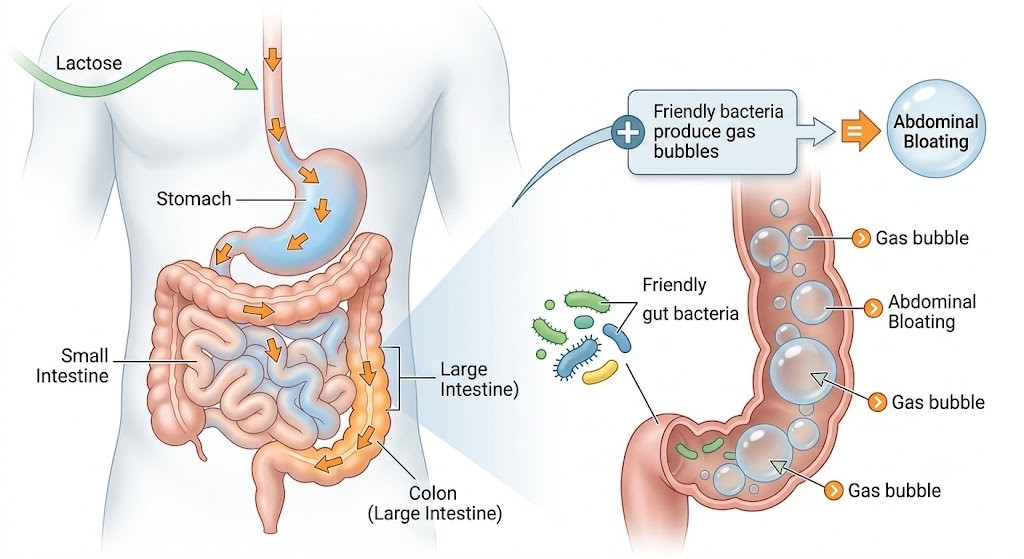
Let's get down to the biological nitty-gritty of why dairy-based proteins can make your stomach throw a tantrum.
Lactose Malabsorption: The Sugar Saboteur
The main culprit behind whey-induced bloating is lactose, a natural milk sugar. Normally, your small intestine uses an enzyme called lactase to break lactose down into easy-to-absorb sugars.
But here is a wild stat: the National Institute of Diabetes and Digestive and Kidney Diseases (NIDDK) estimates that about 36% of people in the United States—and up to 68% of the global population—suffer from lactose malabsorption.
When you don't have enough lactase, undigested lactose travels straight to your large intestine. There, your gut bacteria feast on it, fermenting the sugar and releasing a rush of gases like hydrogen and carbon dioxide. This fermentation, combined with water being pulled into your bowel, creates that familiar, uncomfortable distension.
Who Is Most At Risk?
While infants are lactase-producing superstars, our bodies naturally wind down lactase production as we grow up. Depending on your genetic background, your risk of lactose malabsorption can be quite high.
Here is a breakdown of the estimated prevalence of primary lactose malabsorption across different populations in the United States:
Ethnic or Racial Group | Estimated Prevalence of Lactose Malabsorption |
Asian Americans | 95% |
American Indians | 80% to 100% |
African Americans | 60% to 80% |
Ashkenazi Jews | 60% to 80% |
Hispanics/Latinos | 50% to 80% |
White/Northern European Origin | 2% to 12% |
Casein Sensitivity: The Sneaky Protein Allergy
Sometimes, bloating isn't about milk sugars (lactose)—it's about milk proteins.
While whey is separated from casein during cheese-making, trace amounts of casein can still linger in your whey powders. If you have a casein sensitivity, your immune system reacts to these proteins, causing gut irritation and localized inflammation.
If this is the case, buying a lactose-free whey protein won't help you, because your body is still reacting to the milk proteins themselves.
Bottom Line: Whey protein bloating is usually triggered by lactose malabsorption, where gut bacteria ferment undigested sugars. However, if you have a casein sensitivity, even lactose-free whey will still irritate your stomach.
The Hidden Culprits: Sweeteners, Thickeners, and Emulsifiers
Sometimes, the whey itself is completely innocent, and the blame lies entirely on the other ingredients on the label.
Sugar Alcohols and Osmotic Fermentation
Many protein powders claim to be "sugar-free" or "keto-friendly," but they achieve that sweet taste by using sugar alcohols like sorbitol, mannitol, and xylitol. These sugar alcohols are poorly absorbed by your small intestine, meaning they travel to your colon and act as fermentable FODMAPs.
Once in the colon, they pull in water and feed your gut bacteria, leading to quick fermentation, bloating, and sometimes diarrhea.
To calculate your true daily carb intake when consuming sugar alcohols, you can use this simple equation:
Net Carbs = Total Carbs - (Sugar Alcohols/ 2)
While they keep the calories down, they can quickly stir up trouble in sensitive stomachs.
Emulsifying Gums and Intestinal Permeability
Ever wonder how protein powders get that thick, milkshake-like texture? They usually contain thickening agents like xanthan gum, guar gum, and carrageenan.
These gums are soluble fibers that ferment rapidly in your gut, producing gas that can trigger bloating and cramps. Worse still, some emulsifiers like carrageenan have been linked to gut inflammation and increased intestinal permeability (also known as "leaky gut").
Bottom Line: Artificial sweeteners, sugar alcohols, and thickeners like xanthan gum can ferment aggressively in your colon. This leads to heavy bloating and discomfort, even if you tolerate dairy just fine.
Whey Protein Isolate vs. Concentrate: Chemical Differences
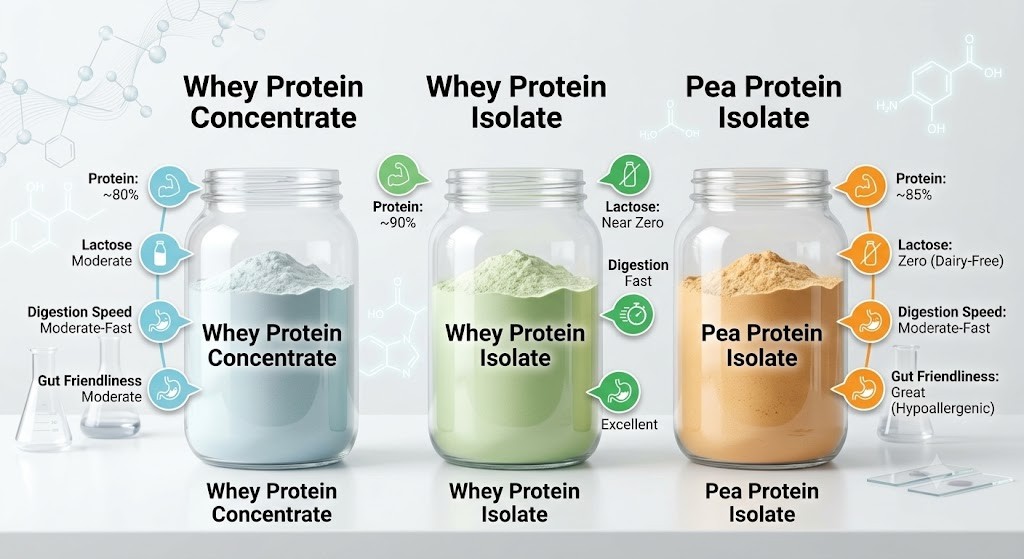
If you are set on sticking with whey, how the powder is processed makes a massive difference for your stomach.
Filtration Methods and Lactose Levels
Liquid whey undergoes different filtration processes to yield distinct types of protein powder:
Whey Protein Concentrate (WPC): This is the most common and affordable type. It undergoes moderate filtration, retaining some milk fat and containing about 5% to 8% lactose. If you are sensitive to lactose, WPC is highly likely to make you bloated.
Whey Protein Isolate (WPI): This undergoes intense microfiltration to strip away almost all fat and carbohydrates. It is 90% or more protein by weight and contains less than 1% lactose. This makes it much easier to digest if you have mild lactose intolerance.
Whey Protein Hydrolysate (WPH): This is enzymatically pre-digested to help your body absorb it faster. However, it can still trigger responses if you have a severe milk allergy.
Let's compare these dairy proteins with a plant-based alternative: pea protein isolate.
Parameter | Whey Protein Concentrate (WPC) | Whey Protein Isolate (WPI) | Pea Protein Isolate (PPI) |
Protein Concentration | 70% to 80% | 90% or more | 80% to 85% |
Lactose Concentration | 5% to 8% | Less than 1% | 0% (dairy-free) |
FODMAP Status | High FODMAP | Low FODMAP | Low FODMAP |
Digestion Speed | Rapid | Extremely Rapid | Moderate |
Gut Tolerability | Low for sensitive guts | Moderate to High | High (hypoallergenic) |
Relative Cost | Budget-friendly | Premium | Moderate |
Bottom Line: Whey isolate is filtered to remove almost all fats and lactose, making it much easier on the stomach than whey concentrate. However, it is still a dairy product, so it won't help if you have a dairy protein allergy.
Pea Protein: The Gentle, Hypoallergenic Champion
If your stomach has declared war on dairy, pea protein isolate is a fantastic peace offering.
Naturally Low-Allergen and Low-FODMAP
Pea protein is extracted from yellow split peas (Pisum sativum). Unlike dairy, soy, or wheat, yellow peas are naturally hypoallergenic and completely free of the most common allergens.
During processing, the fiber and starch are removed, leaving behind a pure protein isolate that is exceptionally gentle on your stomach tissues. Best of all, pea protein is certified low-FODMAP by Monash University, making it an absolute game-changer for those dealing with IBS or sensitive guts.
The Methionine Gap and How to Fix It
Protein quality is often measured by its amino acid profile. While whey is a complete protein, single-source plant proteins like pea protein have a small gap: they are naturally low in the essential amino acid methionine.
Luckily, this is an easy fix! By blending pea protein (which is high in lysine) with brown rice protein (which is high in methionine), you create a complete, perfectly balanced protein with a high biological value. This classic combo delivers all nine essential amino acids your body needs without any of the digestive drama.
Bottom Line: Pea protein is naturally hypoallergenic, gluten-free, and low-FODMAP. While it's slightly low in one amino acid, pairing it with brown rice protein creates a complete, stomach-friendly formula.
Muscle-Building Magic: Can Pea Build Muscle as Effectively as Whey?
A common myth in the fitness world is that plant proteins can't build muscle like whey does. Let's bust that myth with hard science!
The Leucine Factor
Leucine is the essential amino acid that acts as a "on switch" for muscle protein synthesis. It is true that whey contains slightly more leucine (about 2.5 grams per serving) compared to pea protein (around 1.5 grams). However, research shows that as long as your overall daily protein intake is sufficient, this small difference doesn't impact your long-term muscle gains.
What Do the Clinical Trials Say?
In head-to-head clinical trials, pea protein stands strong against whey:
Muscle Size: A 12-week study published in the Journal of the International Society of Sports Nutrition put resistance-trained men on a training program while taking either pea protein, whey protein, or a placebo. The result? Both the pea and whey groups showed identical, significant increases in biceps muscle thickness.
Strength and Power: An 8-week clinical trial of athletes undergoing high-intensity functional training (HIFT) showed absolutely no difference in strength, body composition, or exercise performance between those using whey and those using pea protein.
Bottom Line: Multiple clinical studies show that pea protein is just as effective as whey for building muscle size and boosting strength, provided your total daily protein targets are met.
How to Stop the Bloat: Quick Tips for a Happy Stomach
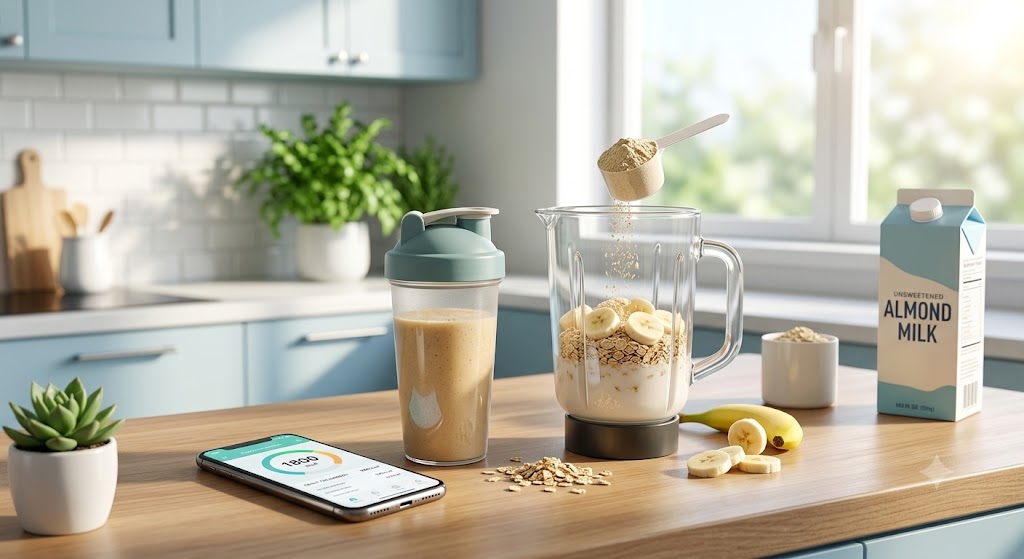
Ready to enjoy your post-workout shake without feeling like a balloon? Here are some simple, science-backed strategies to keep your digestion smooth:
Keep It Simple: Look for minimalist protein powders with under 8 ingredients to avoid gut-irritating additives, heavy gums, and artificial sweeteners.
The "Mini-Shake" Protocol: Start with a half-serving (10 to 15 grams of protein) to let your gut adjust, then gradually work your way up to a full scoop.
Sip, Don't Gulp: Chugging a thick shake in under two minutes delivers a heavy osmotic load to your stomach, slowing down digestion. Take your time and sip it over 20 to 30 minutes.
Dilute It: Mix your powder with plenty of water or a highly tolerable plant-based milk (like unsweetened almond milk) to keep the liquid thin and easy to process.
Track Your Symptoms with VoCal: Use our hands-free, voice-activated calorie and macro tracker to log your daily shakes. It's the easiest way to find patterns, helping you identify exactly which ingredients or portions make your stomach happy or sad!
Bottom Line: To kick bloating to the curb, switch to clean, plant-based protein blends, scale back your serving size, and drink slowly. Tracking your habits with voice technology makes finding your perfect gut-friendly routine incredibly simple.
Frequently Asked Questions (FAQs)
Does pea protein cause bloating?
For most people, pure pea protein isolate does not cause bloating because it is dairy-free and low-FODMAP. However, some people might experience mild bloating in the first week as their gut adjusts, or if the brand they choose contains added gums and inulin.
How do I know if I'm reacting to lactose or casein in whey?
Lactose intolerance is a digestive issue with milk sugars, causing immediate bloating, gas, or diarrhea. Casein sensitivity is an immune reaction to milk proteins, causing deeper inflammation. If a lactose-free whey protein still makes you bloated, a casein sensitivity is likely the cause.
Is whey protein isolate 100% lactose-free?
No, but it is extremely close. Whey protein isolate is highly filtered and contains less than 1% lactose, which is why most people with mild lactose intolerance can digest it without issues.
Can I build muscle just as effectively with pea protein?
Yes! Clinical trials have proven that pea protein isolate is just as effective as whey for building muscle thickness, increasing strength, and helping muscle recovery when paired with regular exercise.
Disclaimer: The information provided in this article is for educational and informational purposes only and is not intended as medical advice, diagnosis, or treatment. Always consult with a qualified healthcare professional, doctor, or registered dietitian before starting any new supplement, making significant dietary changes, or addressing chronic gastrointestinal symptoms.