

Have you ever stood in the grocery aisle, stare-down style, with a carton of almond milk in one hand and oat milk in the other, wondering: “Which one of you is going to save my vegan birthday cake?”
You are definitely not alone. Plant-based milk alternatives have completely taken over American kitchens. Whether you are a seasoned pastry chef or a weekend cookie monster, choosing the right dairy-free substitute is the secret to baking success.
But when it comes to the great battle of almond milk vs oat milk, we aren't just comparing flavors—we are dealing with two completely different chemical structures under the hood. One is a light, nutty, low-calorie emulsion, while the other is a creamy, starch-heavy powerhouse.
Let’s dive into the science of how these milks behave under oven heat and find out which one reigns supreme for your cakes, cookies, and breads!
Meet the Competitors: How They’re Made
Before we crank up the oven, let's look at the origin stories of these two contenders.
Oat milk is actually a triumph of modern food science. It was invented in the early 1990s by Swedish scientist Rickard Öste. To make it, oats are blended with water, and then special enzymes (like amylases) are tossed in to break down the heavy grain starches into simpler, sweet-tasting sugars. The remaining solid pulp, known as oat okara, is filtered out, leaving behind a velvety, naturally sweet liquid.
Almond milk takes a more traditional approach. Raw almonds are ground up, hydrated with hot water, and spun at high speeds in a centrifuge to separate the pulp. The liquid is then homogenized under high pressure to create a smooth, milky-white emulsion.
The Bottom Line: Oat milk is a starch-dense, enzymatically sweetened grain beverage, whereas almond milk is a highly diluted, low-calorie nut emulsion containing mostly water.
Nutrition Face-Off: The Tale of the Tape
Understanding the macromolecular makeup of your milk is key because those fats, carbs, and proteins behave completely differently when heated. Unsweetened almond milk is roughly 96.5% water. Oat milk, on the other hand, packs a much heavier carbohydrate punch.
Here is how a standard 1-cup (240 mL) serving of each compares, featuring data from the USDA FoodData Central:
Nutritional Component (per 1 Cup / 240 mL) | Unsweetened Almond Milk (Refrigerated) | Unsweetened Oat Milk (Refrigerated) | Soy Milk (Unsweetened) | Bovine Milk (2% Reduced-Fat) |
USDA FDC Identifier | FDC ID 2257045 | FDC ID 100277 | FDC ID 100177 | Survey Food Code 11111000 |
Energy (Calories) | 19 – 30 kcal | 80 – 120 kcal | 80 – 100 kcal | 120 – 122 kcal |
Total Protein (g) | 0.66 – 1.0 g | 2.0 – 4.0 g | 6.0 – 8.1 g | 8.0 – 8.2 g |
Total Carbohydrates (g) | 0.67 – 1.0 g | 14.0 – 20.0 g | 3.0 – 4.0 g | 11.0 – 12.0 g |
Dietary Fiber (g) | 0.0 – 0.5 g | 1.5 – 2.4 g | 1.0 – 1.5 g | 0.0 g |
Total Sugars (g) | 0.0 g | 4.0 – 8.0 g | 1.0 g | 11.0 – 12.0 g (Lactose) |
Total Fat (g) | 1.6 – 3.0 g | 1.5 – 3.6 g | 4.0 g | 5.0 g |
Water Content (%) | ~96.5% | ~90.0% | ~88.5% | ~88.0% |
The Bottom Line: Almond milk is your go-to for low-calorie volume, but oat milk’s higher carbohydrate and starch density mimics the thickness and structure of whole cow's milk much more closely.
Baking Science: Cakes, Cookies & Bread

In the science lab of your kitchen, milk isn't just a wet ingredient—it's a multi-tasking hydrator, browning agent, and structural support. Let's look at how they perform across the baking spectrum:
Cakes and Muffins: Fluffiness vs. Crumbly Disasters
When you are baking a cake, your main goals are a uniform rise, a fluffy crumb, and a moist texture that lasts.
Oat Milk: Oat milk contains natural soluble fibers called beta-glucans. During baking, these beta-glucans act as natural water-binders, locking in moisture and preventing your cake from drying out. The result? A beautifully moist, soft cake.
Almond Milk: Because unsweetened almond milk is nearly all water (96.5%) and lacks binding starches or fats, that water quickly turns to steam and evaporates in the oven. This can leave you with a pale, crumbly, and dry cake.
Cookies: Crispy Edges vs. Thin Spreads
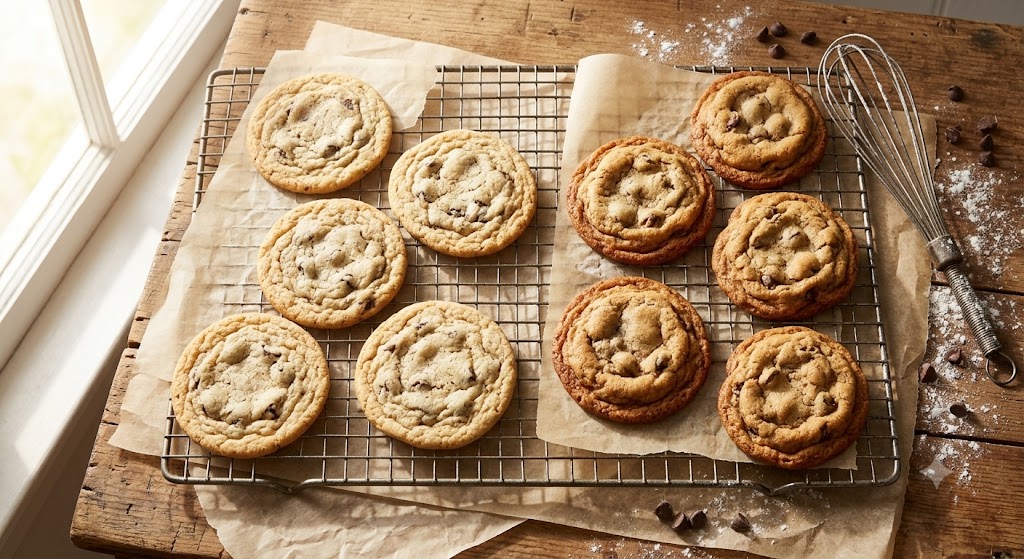
Cookie perfection is all about managing spread, chewiness, and that beautiful golden-brown color.
Oat Milk: Remember those broken-down starches? They create reducing sugars (maltose and glucose). When baked, these sugars react with proteins at high heat in a chemical process known as the Maillard reaction. This gives cookies gorgeous golden-brown edges, rich caramelized flavors, and a chewy center.
Almond Milk: Lacking sugars and protein, almond milk won't give you that golden glow. Plus, its high water content can dissolve sugar in your dough too quickly, causing your cookies to over-spread into flat, crispy puddles.
Yeast Breads: The Yeast Feast
Baking bread requires active yeast fermentation and a strong gluten network.
Oat Milk: The natural sugars in oat milk act as premium fuel for yeast (Saccharomyces cerevisiae). This speeds up fermentation, helping your dough rise faster and higher.
Almond Milk: Lacking simple sugars, yeast has to work double-time to break down the flour’s starches, which can result in sluggish rise times and denser loaves.
Here is a handy summary chart of what to expect in the oven:
Baked Category | Almond Milk Outcomes | Oat Milk Outcomes | Culinary Troubleshooting Solutions |
Cakes & Cupcakes | Pale crust, dry crumb, crumbly texture | Deep golden crust, moist crumb, stable rise | For almond milk, add 1 tbsp neutral oil or vegan butter, plus 1/2 tsp applesauce |
Cookies | Pale color, excessive cookie spread | Golden edges, controlled spread, chewy center | For almond milk, reduce liquid by 15% and brush cookie tops with soy milk wash |
Yeast Breads | Slow fermentation rise, dense crumb | Faster rise times, soft crumb, great oven spring | For almond milk, add 1 tsp of sugar per cup of liquid to feed the yeast |
The Bottom Line: For most traditional baking—especially cakes, chewy cookies, and breads—oat milk is the absolute MVP. Choose almond milk when you want a crisp shortbread or are focusing on low-calorie, low-carb baking.
Allergens and Earth: The Bigger Picture
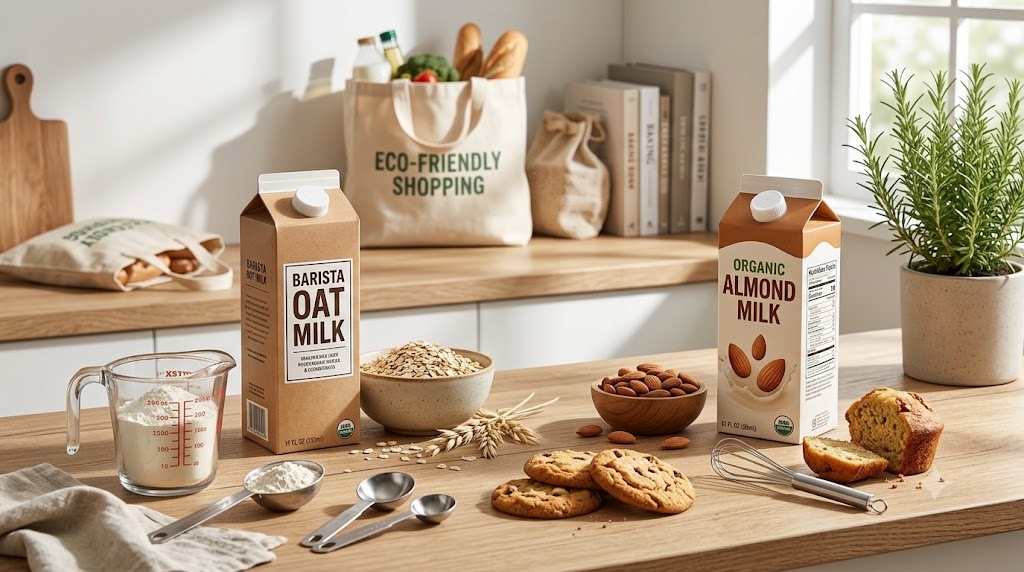
Your baking choice might also depend on who is coming to dinner and how you feel about the environment.
Allergen Safety: Almond milk is a tree nut product, making it unsafe for anyone with nut allergies. Oat milk is naturally nut-free, making it a safer option for school treats. However, if you have celiac disease or gluten sensitivity, make sure to buy certified gluten-free oat milk.
Water Footprint: Almonds are notorious water hogs. It takes a whopping 371 liters of water to produce just 1 liter of almond milk, compared to a meager 48 liters for oat milk.
Weight Management, Blood Sugar, and Satiety
If you are keeping an eye on your daily calorie deficit or blood sugar, your milk choice becomes highly strategic.
The Low-Carb Champion: Unsweetened almond milk is extremely low in carbohydrates (less than 1g per cup) and calories (about 30 kcal). This makes it perfect for a keto or Mayo Clinic-style low-carb eating plan.
The Fullness Factor: However, almond milk digests very quickly. Oat milk’s beta-glucan fibers form a thick, viscous gel in your stomach. This delays gastric emptying, keeping you full for longer by releasing satiety hormones like peptide YY (PYY) and cholecystokinin (CCK).
Tracking Your Bakes Hassle-Free with VoCal
Let’s be honest: baking calculations are already a math puzzle. Trying to manually look up the precise calories in "1 cup of barista-blend oat milk" versus "unsweetened almond milk" in the middle of mixing a batter is a recipe for a headache.
That’s where VoCal steps in.
Instead of typing out search terms and navigating drop-down menus, you can simply say what you used. For instance, just speak into the app: "I used one cup of unsweetened almond milk and two cups of oat flour".
The voice-first platform uses acoustic parsing to match your ingredients with verified databases like the USDA FoodData Central and updates your daily calorie budget in under 15 seconds. It is the ultimate tool for health-conscious bakers!
Frequently Asked Questions (FAQs)
Can I substitute oat milk for almond milk 1:1 in baking?
Yes! In most recipes, they can be swapped 1:1. Just keep in mind that oat milk is naturally sweeter and thicker. If you swap in almond milk instead, you might need to add a bit of oil or sugar to match oat milk's texture and browning power.
Does oat milk cause blood sugar spikes compared to almond milk?
Yes, unsweetened oat milk has a higher glycemic index than unsweetened almond milk. Since oat starch is broken down into simple sugars during processing, it can raise blood glucose faster. If you are managing type 2 diabetes or are on a strict keto diet, almond milk is the safer bet.
Which plant milk is closest to dairy milk in baking?
Oat milk’s creamy texture and starch profile make it the closest match to whole dairy milk. If you need high protein for structure, soy milk is also a very close alternative.
Disclaimer: This article is for informational purposes only. For medical advice or diagnosis, consult a professional.