

You are standing in the supplement aisle, staring intensely at two tubs of protein powder. In one corner, we have whey protein, the undisputed dairy champion of the classic gym-bro era. In the other corner, we have pea protein, the plant-based darling of the modern clean-living movement.
Historically, deciding between whey protein vs pea protein was a simple matter of your dietary lifestyle. Vegans grabbed the peas; dairy lovers grabbed the whey.
But if you are tracking your daily nutrition on VoCal, gross protein numbers are only half the story. Sourcing these powders exposes them to two very different, very sneaky microscopic gatecrashers.
Are you drinking soil-born heavy metals with your plant shakes? Or are you downing industrial microplastics with your dairy blend? Let’s dive into the messy, fascinating science of protein powder purity.
The Dirt on Pea Protein: The Heavy Metal Sourcing Trap
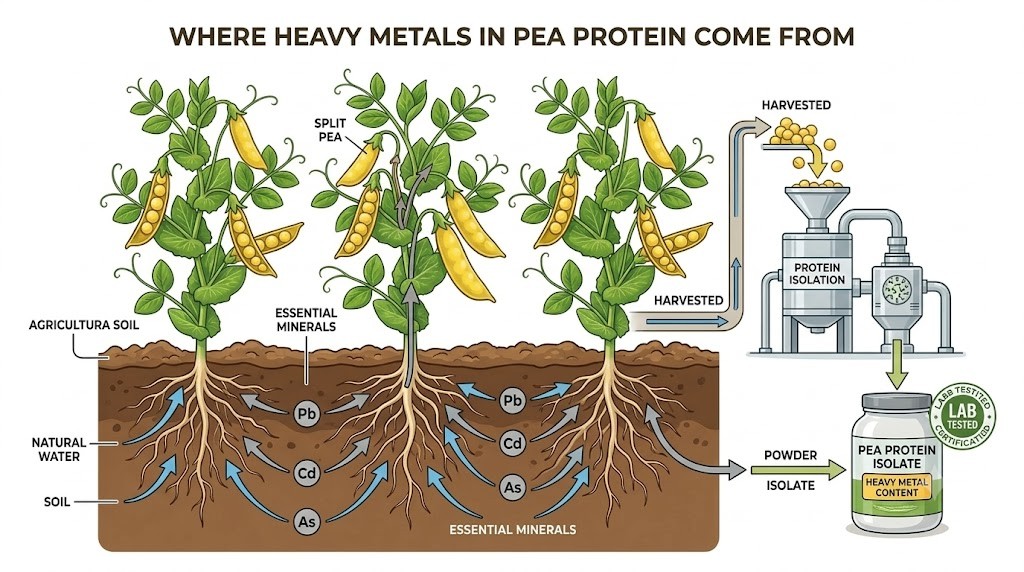
Let’s start with plant-based protein. Pea protein isolate is typically made from yellow split peas (Pisum sativum). On paper, it sounds incredibly wholesome. But split peas are highly efficient at extracting water and minerals from the earth.
Unfortunately, they do not just absorb the good stuff. If there are toxic heavy metals lurking in agricultural soils, peas will pull those up, too.
The Mechanics of Soil Absorption
When split peas grow, they use active transport pathways in their roots designed for healthy minerals like zinc and iron. Heavy metals mimic these minerals, taking a free ride up the plant stem and concentrating in the seeds. During industrial protein extraction, these metals get heavily concentrated.
This botanical design is why plant-based protein powders are structurally predisposed to carrying higher heavy metal loads than animal proteins.
The "Organic Paradox"
You might think buying "certified organic" protects you. Plot twist: it actually does the opposite.
An extensive analysis by the Clean Label Project evaluated 160 of the top-selling protein powders across 70 major brands in the United States. They found that 47% of the tested products exceeded at least one federal or state regulatory safety threshold, including California's strict Proposition 65 limits.
Surprisingly, certified organic protein powders had, on average, three times more lead and twice as much cadmium as conventional, non-organic formulations. In total, 79% of the organic protein powders tested exceeded California's lead limits. Why? Because organic farming relies heavily on natural soil-grown crops, which capture historical, soil-bound heavy metals.
Flavor choice also matters. Chocolate protein powders can contain up to four times more lead and 110 times more cadmium than vanilla alternatives. Cocoa trees (Theobroma cacao) are natural hyper-accumulators of heavy metals, compounding the baseline heavy metals already found in pea isolates.
This contamination is not just a theoretical worry; it has triggered major legal battles in the United States. For instance, a high-profile class-action lawsuit accused Costco of selling Orgain Organic Protein Powder as a "clean" product without disclosing that independent lab tests showed lead levels exceeding established levels of concern.
Heavy Metal Contaminant | California Prop 65 Limit | US FDA Interim Reference Level | US EPA Chronic Oral Reference Dose |
Lead (Pb) | 0.5 mcg/day | 2.2 mcg/day (Children) / 8.8 mcg/day (Adult Women) | Under ongoing evaluation |
Cadmium (Cd) | 4.1 mcg/day | Under evaluation | 0.001 mg/kg/day (Food source) |
Arsenic (As) | No established limit | Under evaluation | 0.0003 mg/kg/day (Inorganic) |
Mercury (Hg) | Under review | Under evaluation | 0.0003 mg/kg/day (Screening level) |
Over time, these metals can accumulate in your body's tissues. Chronic lead exposure is linked to kidney issues, high blood pressure, and brain health concerns. Cadmium primarily targets the kidneys, potentially disrupting their filtering systems over decades of exposure.
The Bottom Line: Organic and chocolate-flavored plant-based proteins run a higher risk of soil-born heavy metal contamination. If you are logging your meals on VoCal, do not assume that "organic" automatically means "purity".
The Sticky Truth About Whey: Processing and Plastic Contaminants

If plant proteins struggle with soil contaminants, animal-derived whey protein faces a very modern, industrial enemy: microplastics and nanoplastics.
Whey is a liquid byproduct of cheesemaking. Converting it from raw dairy into a dry, shelf-stable powder requires massive industrial machinery. Along this high-throughput journey, plastic can creep in at every turn.
The Bovine and Industrial Chain
Microplastics enter the milk supply chain through multiple routes. Dairy cows ingest them through plastic-wrapped fodder, contaminated drinking water, and airborne synthetic fibers. These tiny particles can cross the cow's gut barrier, enter systemic circulation, and secrete directly into their milk.
Once the raw milk reaches the factory, it undergoes pasteurization, homogenization, and intense filtration. Rubbing against plastic gaskets, tubes, and holding tanks introduces polyethylene (PE) and polypropylene (PP) microplastics. Finally, high-temperature spray-drying evaporates the liquid, concentrating both the whey protein and any suspended plastic particles.
A study comparing raw, farm-fresh milk to processed packaged milk showed that industrial processing and packaging multiplied the microplastic load up to four times, reaching concentrations up to 71.11 particles per liter. Testing of European milk powders—the exact substrate used for whey extraction—revealed irregular plastic fragments in every single sample.
Dairy Matrix Evaluated | Particle Shape Dominance | Polymer Composition | Abundance Range |
Raw Milk (Farm Fresh) | Fibers, Yellow fragments | Polydimethylsiloxane, Elastane, Rayon | 17.78 particles/L |
Processed Packaged Milk | Irregular fragments, Gray fibers | Low-Density Polyethylene, Polypropylene | 37.78 to 71.11 particles/L |
Industrial Yogurt | Fibers | Polyethylene, Polypropylene | 4616 particles/kg |
Skim-Milk Powder | Fibers, Spheres, Fragments | Polypropylene, Polyethylene, PS, PET | All samples contaminated |
Ripened Cheese | Irregular fragments | Poly(ethylene terephthalate), PE, PP | 1857 particles/kg |
The Vascular Threat: A Wake-Up Call
For a long time, we assumed that any plastic we swallowed simply passed harmlessly through us. But recent clinical science has shattered that comfort.
A landmark study published in The New England Journal of Medicine (NEJM) looked at patients undergoing surgery to clear plaque from their neck arteries. Researchers analyzed the removed plaque and found that 58.4% of patients had microscopic polyethylene particles embedded directly in their arterial walls.
The shocking part? Over the next three years, patients with plastic-laden plaque faced a 4.53-fold higher risk of suffering a heart attack, stroke, or dying from any cause compared to those whose plaque was plastic-free. The plastic was actively recruiting inflammatory cells, destabilizing the arterial walls and making them more likely to rupture.
On top of physical plastic particles, standard plastic tubs and pouches can leach chemical plasticizers, like Bisphenol A (BPA) and phthalates, into your protein powder. BPA mimics estrogen in the human body, potentially disrupting your hormonal balance and metabolic health.
There is also the risk of deliberate product adulteration. In the past, bad actors have added nitrogen-rich melamine—an industrial plastic chemical—to low-quality protein blends to falsely inflate their tested protein content, which can cause severe kidney damage.
The Bottom Line: Dairy-derived whey protein is highly susceptible to microplastics shed from milking and processing equipment. Plus, storing your powder in cheap plastic tubs can leach hormone-disrupting chemicals like BPA over time.
The Plot Twist: When Plastics and Heavy Metals Team Up
Here is a wild bit of environmental chemistry: heavy metals and microplastics do not just mind their own business. When they meet, they can form a synergistic, highly toxic tag-team.
Microplastics have a massive surface area relative to their size. As they weather and degrade, their surfaces oxidize, creating a negative electrical charge. This charge acts like a chemical "magnet", pulling positively charged heavy metals (like lead and cadmium) onto the plastic particle's surface.
When you digest these plastic-metal complexes, the microplastic can shield the heavy metals from being cleared by your stomach acids. Once they reach your lower intestines, the metals desorb, delivering a concentrated, localized dose of toxic metals directly to your gut lining. This can spark localized gut inflammation, damage your microbiome, and increase gut permeability.
The Bottom Line: Microplastics can act as transport vectors for heavy metals. Once ingested, they can deliver concentrated heavy metals straight to your gut lining, compounding the risk of systemic inflammation.
The Nutrition Showdown: Amino Acids & Absorption
While chemical purity is a huge deal, your protein powder still needs to do its primary job: fuel your muscles and support recovery. Let’s look at how whey protein vs pea protein stack up nutritionally.
The Amino Acid Champion
When it comes to raw muscle-building potential, whey protein isolate is the reigning gold standard. It is a complete protein, boasting an exceptional ratio of all nine essential amino acids. Most importantly, it is loaded with leucine, the key amino acid that acts as a light switch to turn on muscle protein synthesis. Whey is about 10.5% leucine by weight.
Pea protein is also technically a complete protein. However, it is quite low in the essential sulfur-containing amino acid methionine. Its leucine content is also lower, sitting at about 8.1%. To get the same muscle-building trigger as whey, you simply need to scoop slightly more pea protein.
Digestibility and Stomach Comfort
Whey isolate is incredibly bioavailable, holding a perfect digestibility score of 1.00. Pea protein is slightly harder for the body to break down, scoring a 0.89.
However, whey contains milk sugars (lactose), which can trigger bloating, gas, and digestive discomfort for lactose-sensitive individuals. Pea protein is hypoallergenic, gluten-free, and naturally gentle on sensitive stomachs.
Nutritional Parameter | Whey Protein Isolate | Pea Protein Isolate |
Protein Sourcing | Bovine Dairy Co-product | Yellow Split Peas |
Complete Protein Profile | Yes (All 9 EAAs in optimal ratios) | Yes (All 9 EAAs; lower in Methionine) |
PDCAAS Score | 1.00 (Maximum score) | 0.89 |
DIAAS Score | 1.09 (Excellent quality) | 0.82 (Moderate-to-high quality) |
Leucine Concentration | ~10.5% (~105 mg/g) | ~8.1% (~81 mg/g) |
BCAA Yield (per 100g) | ~21.2 g | ~15.1 g |
Digestive Tolerability | Risk of bloating, gas, lactose distress | Hypoallergenic, gentle on sensitive stomachs |
Primary Contaminant Risk | Microplastics, nanoplastics, packaging BPA | Heavy metals from soil bioaccumulation |
The Bottom Line: Whey wins for pure muscle synthesis and rapid absorption, but pea protein is an outstanding, stomach-friendly alternative for anyone who struggles with dairy.
Playing Detective: How to Find a Clean Supplement
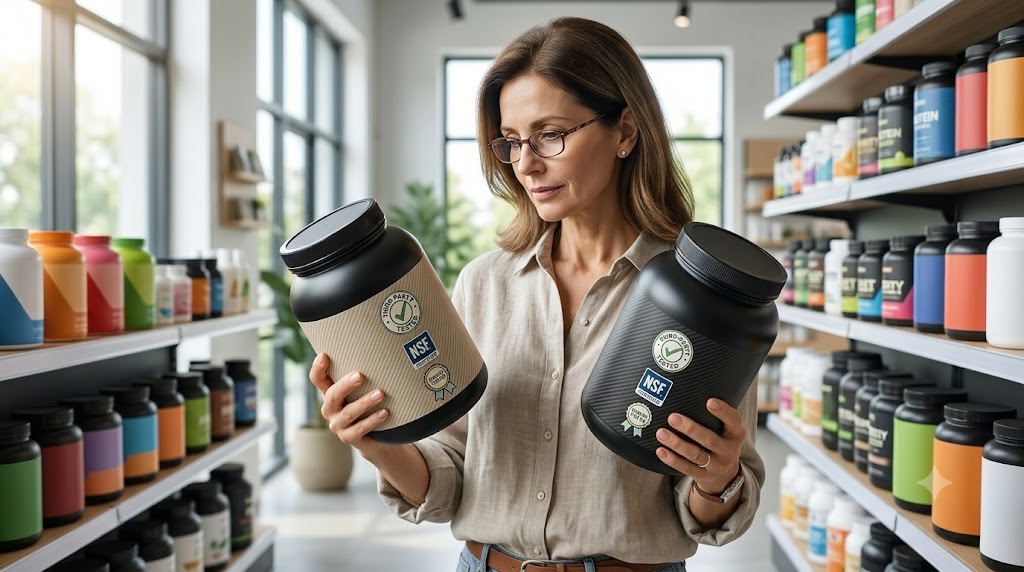
Because the FDA regulates protein powders as dietary supplements, manufacturers do not need pre-market approval to sell them. To keep yourself safe, look for these trusted, independent third-party certifications.
NSF/ANSI 173: The gold standard for supplement safety. This badge ensures that what is on the label is actually in the tub, and that heavy metals and pesticides do not exceed strict safety thresholds.
NSF Certified for Sport: If you are a competitive athlete, this is your shield. It includes all NSF 173 tests plus a screen for over 270 substances banned by major sporting organizations.
Clean Label Project Purity Award: This non-profit tests products directly from retail shelves for over 100 to 300 industrial and environmental contaminants, including heavy metals, pesticide residues, and plasticizers like BPA. The Purity Award is reserved only for products that score in the top one-third of their category.
Certification Program | Issuing Body | Primary Scope of Testing | Sourcing Application |
NSF/ANSI 173 | NSF International | Verifies label accuracy; tests for heavy metals, pesticides, and microbial pathogens | Baseline verification of protein content and heavy metal levels |
NSF Certified for Sport | NSF International | Lot-by-lot screening for 270+ WADA-banned substances | Essential for competitive athletes to mitigate banned substance risk |
Purity Award | Clean Label Project | Tests for heavy metals, glyphosate, BPA/BPS, and phthalates | Best for sensitive consumers seeking to minimize exposure to heavy metals and plastics |
Sourcing Action Plan: How to Scoop Smart
If You Choose Whey (Dairy):
Go with Isolate over Concentrate: Isolate undergoes stricter filtration, which helps remove more of the raw processing residues, fats, and lactose.
Pick Vanilla or Unflavored: Avoid chocolate-flavored powders, as cocoa naturally harbors high amounts of lead and cadmium.
Check the Tub: Seek brands that use high-density polyethylene (HDPE) or PET containers certified as BPA-free. Avoid flimsy, flexible plastic bags.
Look for the NSF or CLP Seals: Ensure your brand is third-party tested to guarantee the dairy processing chain is free of industrial residues.
If You Choose Pea (Plant):
Demand Purity Certifications: Since plants pull heavy metals directly from the dirt, look for the Clean Label Project Purity Award to ensure your batch was tested.
Skip the Chocolate Flavor: Just like with whey, combining plant proteins with cocoa heavily increases the metal load of your shake.
Do Not Blindly Trust "Organic": Remember the organic paradox. Look for laboratory-tested batch results rather than relying solely on USDA organic labels.
Bump Up Your Scoop Size: Scoop about 15% to 20% more pea protein to match the leucine output of whey, or blend your pea protein with rice protein to balance the amino acid profile.
FAQs
Is pea protein safer than whey?
It depends on what you are trying to avoid. Pea protein is naturally free from common dairy allergens and lactose. However, it carries a higher risk of soil-born heavy metals like lead and cadmium. Whey has a much lower heavy metal load, but is more vulnerable to microplastics from industrial dairy processing.
Does organic protein have fewer heavy metals?
Actually, no. Clean Label Project testing revealed that certified organic protein powders contained, on average, three times more lead and twice as much cadmium as conventional powders. This is because organic crops rely on natural soils, which can absorb historical heavy metal deposits.
How do I avoid microplastics in my whey?
To minimize microplastics, choose whey protein isolate, which undergoes more intensive filtration. Avoid cheap, single-use, or highly flexible plastic packaging, and choose brands housed in robust, food-grade, BPA-free HDPE or PET containers. Most importantly, look for third-party purity certifications.
Should I skip chocolate flavor?
If your absolute priority is minimizing heavy metal exposure, yes. Cocoa trees are natural hyper-accumulators of soil metals, meaning chocolate-flavored protein powders of all types consistently test higher for cadmium and lead than vanilla or unflavored varieties.
Disclaimer: This is for informational purposes only. For medical advice or diagnosis, consult a professional. Always speak with your physician or a qualified healthcare provider before starting any new dietary supplement, lifestyle change, or athletic regimen.