

Imagine this: You’re crushing your workouts, hitting your personal records, and consistently drinking your post-workout shakes. You’re on the fast track to muscle growth—until you wake up, look in the mirror, and see a fresh breakout of stubborn pimples mapping across your face and back.
It feels like a cruel trade-off. Do you have to sacrifice your clear skin just to feed your muscles?
The sports nutrition world has a dirty secret: dairy-derived protein supplements are highly linked to acne breakouts. But as plant-based proteins surge in popularity, fitness enthusiasts are asking a crucial question: In the battle of whey protein vs pea protein, can a humble split pea build muscle just as effectively as dairy, without triggering a skin-sabotaging oil spill?
Let’s dive into the science, break down the hormones, and find out how to get spotless gains.
Why Whey Might Be Sabotaging Your Skin
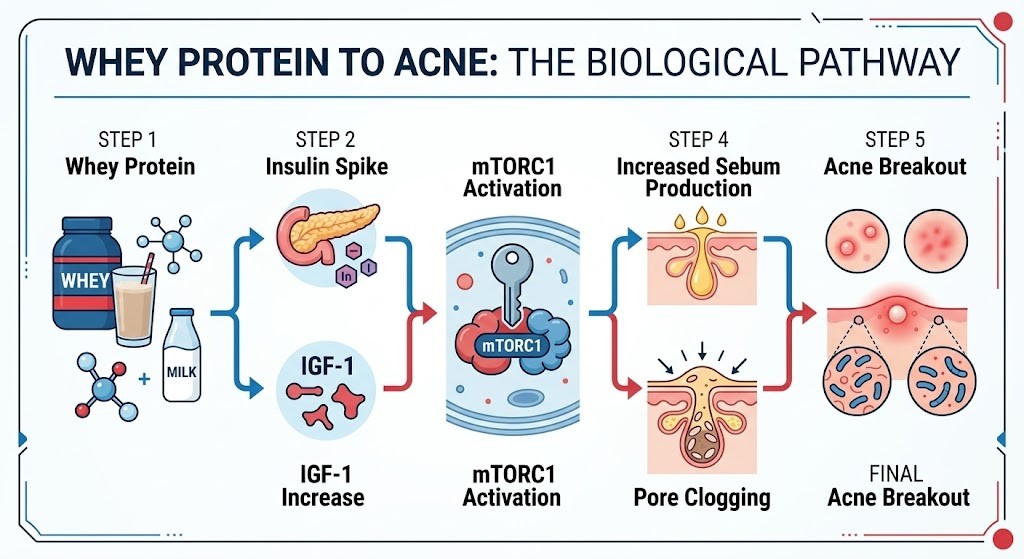
To understand why whey protein causes breakouts, we have to look at its dairy roots. Cow’s milk contains two main protein fractions: casein (which makes up 80%) and whey (which makes up the remaining 20%).
While whey is a muscle-building favorite because it digests rapidly and is packed with Branched-Chain Amino Acids (BCAAs), its speed is exactly what triggers your skin. When you drink a whey shake, it causes a rapid, massive spike in your blood insulin levels.
This insulin spike triggers a domino effect:
The Hormonal Surge: Your liver is signaled to pump out a growth hormone called Insulin-like Growth Factor 1 (IGF-1).
mTORC1 Overdrive: Together, insulin and IGF-1 activate a master cellular growth pathway called mTORC1. Leucine (which whey has in spades) acts like rocket fuel for this pathway.
The Acne Exploded: Once mTORC1 is hyper-activated, it instructs your skin's sebaceous glands to produce excess sebum (oil). At the same time, IGF-1 increases androgen hormones, which cause dead skin cells to pile up and clog your pores.
This combination of excess oil and clogged pores creates the perfect breeding ground for acne-causing bacteria, resulting in inflammatory breakouts.
The Clinical Proof
This isn't just theory.
In a 60-day study tracking 30 young gym-goers, researchers observed a statistically significant onset or worsening of acne after starting whey protein supplementation.
Dermatologists reported a case series of five teenage athletes with severe, stubborn acne that refused to clear up with standard medications. The moment they threw out their whey protein tubs, their skin cleared up completely.
To make matters worse, the calcium in dairy can actually bind to (chelate) common oral acne antibiotics like doxycycline, rendering your skin treatments far less effective!
The Bottom Line: Whey protein causes rapid insulin and IGF-1 spikes, over-activating the mTORC1 pathway. This floods your skin with excess oil and blocks your pores, making it a major trigger for acne breakouts.
Enter Pea Protein: The Clear Skin Champion
Sourced from yellow split peas (Pisum sativum), pea protein is naturally dairy-free, gluten-free, and highly hypoallergenic.
Because it is plant-based, pea protein does not cause the rapid hormonal spikes associated with bovine milk. No dairy means no dramatic insulin spikes, no crazy IGF-1 surges, and no mTORC1 oil-spill cascade.
In fact, pea protein is so gentle on the skin that clinical studies have evaluated its use in skin barrier recovery. Preclinical and clinical trials show that pea protein can help preserve skin hydration, reduce redness, and soothe inflammatory skin conditions like atopic dermatitis.
So, it won't break you out—but can it actually build muscle?
The Bottom Line: Pea protein is naturally clear skin-safe. It completely bypasses the hormonal pathways that trigger acne, digests easily, and contains anti-inflammatory properties that support a healthy skin barrier.
The Muscle-Building Showdown: Can Peas Compete?
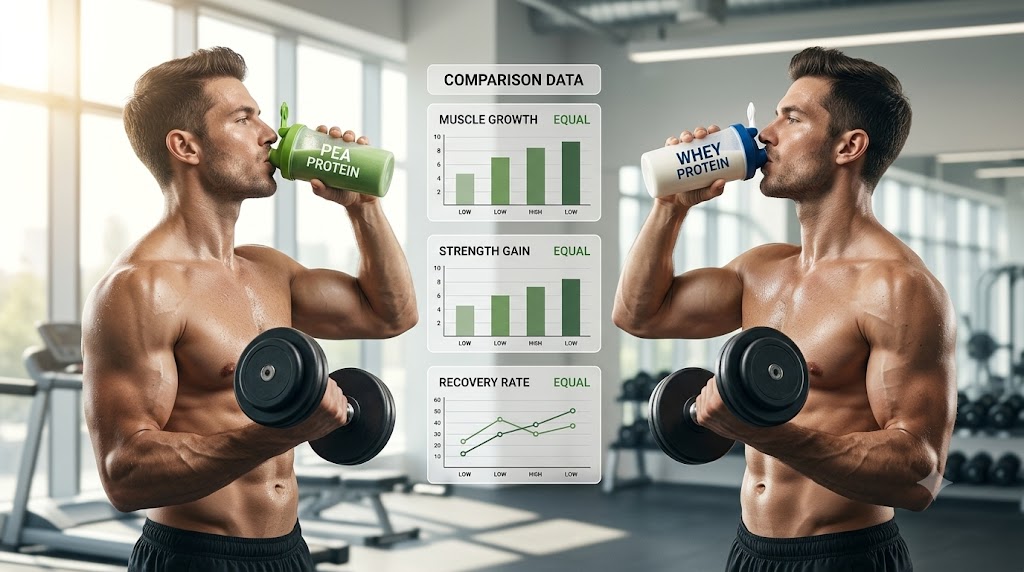
Many lifters assume plant-based protein is inherently inferior for muscle growth because plant amino acids are historically thought to be less anabolic. But modern clinical trials have completely debunked this myth.
When you match the total protein dose, pea protein performs identically to whey.
The Biceps Thickness Trial
In a landmark 12-week double-blind study published in the Journal of the International Society of Sports Nutrition, 161 young men underwent structured upper-body resistance training. They took either 25 grams of pea protein, whey protein, or a placebo twice a day.
The results? Biceps muscle thickness increased significantly across the board, with no statistical difference between the pea protein group (+20.2%) and the whey protein group (+15.6%).
Strength and Recovery
Another 84-day clinical trial in healthy adults found that pea protein supplementation combined with resistance training improved whole-body muscle strength by 16.1%, compared to 11.1% in the whey group.
Additionally, a study on soccer players showed that those taking pea protein post-training had lower markers of muscle damage (such as creatine kinase) and recovered just as effectively as those taking animal-based protein.
Clinical Trial | Study Design & Duration | Participants & Protocol | Key Hypertrophy & Strength Outcomes |
Babault et al. (2015) | Double-blind, randomized, placebo-controlled trial (12 weeks) | 161 healthy males (18-35 years); resistance training of upper limbs; 25g pea protein, whey protein, or placebo twice daily. | Biceps brachii thickness increased significantly across all groups (p < 0.0001) with no significant difference between pea (+20.2%) and whey (+15.6%) in untrained participants. |
Banach et al. (2024) | Randomized parallel-group trial (84 days) | Healthy sedentary adults; weekly structured resistance training; pea protein vs. whey protein supplementation. | Whole-body muscle strength improved by 16.1% in the pea group (p = 0.01) compared to 11.1% in the whey group (p = 0.06), demonstrating functional equivalence. |
Banfield et al. (2019) | Randomized parallel-group trial (8 weeks) | Healthy adults; High-Intensity Functional Training (HIFT) program; equalized whey or pea protein intake. | No significant differences between groups in body composition, rectus femoris and vastus lateralis thickness, or overall force production. |
The Bottom Line: Dose-for-dose, clinical research shows that pea protein matches whey step-for-step when it comes to muscle thickness, recovery, and overall strength gains.
The Amino Acid Profiles: Leucine vs. Arginine
If we zoom into the molecular level, how do these two stack up?
Both are complete proteins, meaning they contain all nine essential amino acids (EAAs) your body can’t make on its own. However, their structural profiles highlight some interesting trade-offs:
Whey is higher in Leucine: Leucine is the specific amino acid that acts as the "on switch" for muscle protein synthesis. Whey contains about 8.6 grams of leucine per 100 grams, compared to pea's 5.9 grams.
Pea is higher in Arginine: Pea protein contains more than three times the amount of arginine found in whey (5.9 grams vs 1.7 grams). Arginine is a precursor to nitric oxide, which dilates blood vessels, improves blood flow, and gives you that coveted post-workout muscle pump.
The Digestibility Score: Whey has a perfect Digestible Indispensable Amino Acid Score (DIAAS) of 1.09, while pea scores a highly respectable 0.82. Pea protein is slightly lower because it has low levels of methionine, an essential amino acid. You can easily offset this minor gap by eating a balanced diet or choosing a pea-and-rice protein blend.
Amino Acid (g per 100g of Protein) | Pea Protein Isolate | Whey Protein Concentrate | Architectural Significance in Muscle & Skin |
Glutamic Acid | 12.9g | 15.5g | Precursor to glutamine; fuels rapid cellular division. |
Arginine | 5.9g | 1.7g | Substrate for nitric oxide synthesis; supports vascular flow. |
Lysine | 5.5g | 7.1g | Crucial for collagen cross-linking and skin integrity. |
Leucine | 5.9g | 8.6g | Primary trigger for muscle protein synthesis and mTORC1 activation. |
Valine | 3.8g | 3.5g | Branched-chain amino acid; supports tissue repair. |
Isoleucine | 3.2g | 3.8g | Branched-chain amino acid; supports glucose transport. |
Phenylalanine | 4.1g | 2.5g | Precursor for neurotransmitter synthesis. |
Threonine | 2.8g | 5.4g | Key component of intestinal barrier health. |
Methionine | 0.7g | 1.8g | Sulfur-containing amino acid; initiates translation. |
Histidine | 1.9g | 1.4g | Precursor to carnosine; acts as a pH buffer. |
Cysteine | 0.2g | 0.8g | Precursor for cellular glutathione synthesis. |
The Bottom Line: While whey has a slight edge in raw leucine and digestion speed, pea protein easily crosses the threshold needed to build muscle, while packing a massive dose of pump-enhancing arginine.
Mind the Plant-Based Additive Trap!
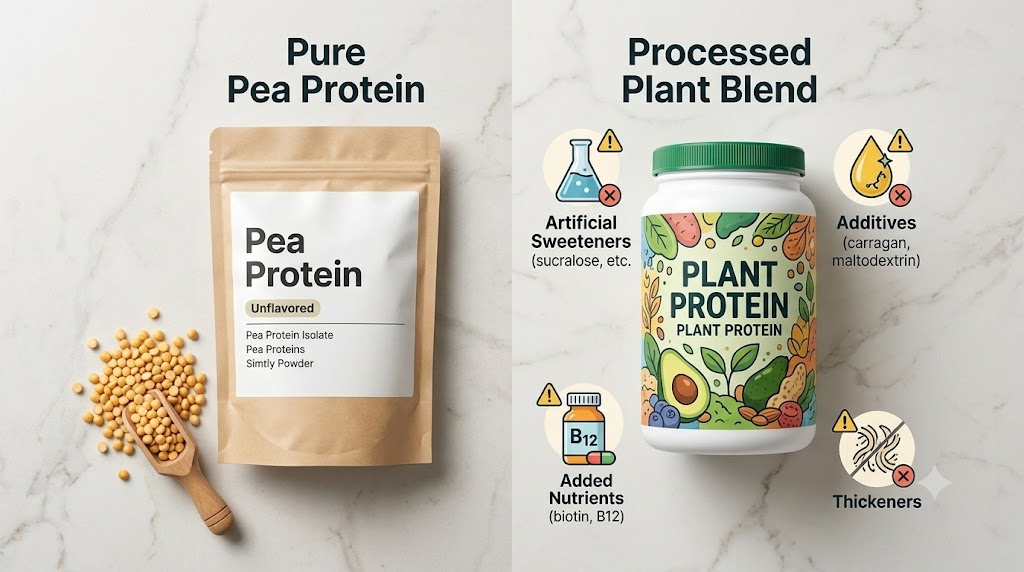
Before you run out and buy the first plant-based protein powder you see, be warned: not all vegan protein powders are skin-friendly.
Many commercial plant-based powders are heavily fortified with synthetic vitamins and minerals to mimic animal products. However, some of these additives can actively trigger acne breakouts:
Vitamin B12 & Biotin: High doses of vitamin B12 can alter the gene expression of skin bacteria, triggering severe acne flares in about 1 in 10 people. Biotin can also cause breakouts by throwing off your skin's natural keratin balance.
Artificial Sweeteners: Ingredients like sucralose can disrupt your gut microbiome over time. A damaged gut barrier (gut dysbiosis) causes systemic inflammation, which is a massive driver of acne breakouts.
To keep your skin clear, always look for clean, unflavored pea protein isolates that have simple ingredient lists and are free from added synthetic B-vitamins, biotin, or artificial sweeteners.
The Bottom Line: Protect your skin by avoiding heavily fortified plant blends. Stick to minimalist, unflavored pea protein isolates with zero artificial sweeteners or added high-dose B-vitamins.
Track Your Gains and Your Glow with VoCal
The newly released 2025-2030 Dietary Guidelines for Americans suggest prioritizing high-quality protein, raising target intakes to 1.2 to 1.6 grams of protein per kilogram of body weight per day. At the same time, the guidelines recommend keeping your saturated fat intake below 10% of your daily calories.
Swapping out heavy animal proteins for plant-based alternatives like pea protein is a fantastic way to hit those protein targets while keeping your saturated fats low and your skin clear.
But let’s be honest: tracking all of these macros, weighing your scoops, and counting your daily grams can feel like a stressful chore. Traditional calorie tracking apps are tedious and often lead to logging fatigue.
That's where VoCal comes in—the world's easiest calorie tracking app designed to take the friction out of nutrition.
Instead of typing in databases, scanning barcodes, or taking photos of your food, you simply speak to the app.
You can log your entire breakfast in seconds just by saying:
"I had one scoop of pea protein, a cup of oatmeal, and a tablespoon of almond butter."
VoCal instantly logs your calories, maps your macros (proteins, fats, carbs), and provides long-term health insights so you can hit your daily protein targets without the headache.
The Bottom Line: Meeting your daily 1.2–1.6 g/kg protein targets shouldn't mean sacrificing your skin or your free time. VoCal makes logging your clean, plant-based meals as easy as speaking them out loud.
Frequently Asked Questions (FAQs)
Does whey protein always cause acne?
No, not for everyone. If you do not have acne-prone skin, your body might handle the insulin spikes from whey without a problem. However, if you are genetically predisposed to acne, whey protein acts as a significant trigger that can severely worsen breakouts.
Is pea protein as good as whey for muscle growth?
Yes. Head-to-head clinical trials show that when the total protein intake is matched, there is no significant difference in muscle thickness, recovery, or strength gains between whey and pea protein.
Can pea protein cause stomach bloating?
Generally, no. Unlike whey, which contains lactose and can cause gas, bloating, and digestive discomfort in dairy-sensitive individuals, pea protein is naturally dairy-free and highly hypoallergenic, making it very gentle on the stomach.
Why are some vegan protein powders bad for acne?
Some vegan blends are loaded with added vitamins like high-dose Vitamin B12 and Biotin, both of which can trigger acne breakouts in sensitive individuals. They may also contain artificial sweeteners and emulsifiers that can disrupt gut health and promote inflammation. Always look for simple, unflavored isolates.
Disclaimer: The information provided in this article is for educational and informational purposes only and is not intended as medical advice, diagnosis, or treatment. Always consult with a qualified healthcare professional, doctor, or registered dietitian before starting any new supplement, making significant dietary changes, or addressing chronic gastrointestinal symptoms.