
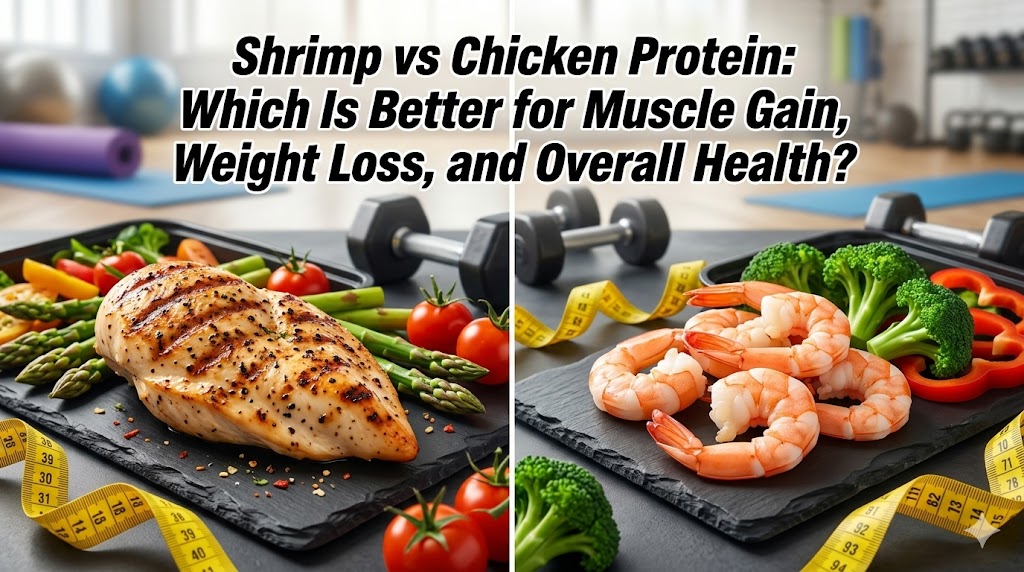
Picture this: You just crushed an intense workout, your muscles are screaming for fuel, and you're staring blankly into the fridge.
In one corner, we have the undisputed heavyweight champ of the fitness world: boneless, skinless chicken breast.
In the other, we have the quick-cooking, low-calorie challenger from the sea: shrimp.
Both are incredibly lean, packed with high-quality protein, and loved by meal-preppers everywhere.
But when it comes to your unique fitness goals, which one actually deserves a spot on your plate?
Let’s break down the science of the shrimp vs chicken protein battle so you can choose the perfect champion for your diet.
Let's Talk Amino Acids: The Muscle Builders
To understand why these proteins are so popular, we have to look at their building blocks: amino acids.
Both chicken breast and shrimp are complete proteins, meaning they deliver all nine essential amino acids your body can't make on its own.
If you are looking to repair and build muscle, you need to pay special attention to branched-chain amino acids (BCAAs)—specifically leucine, isoleucine, and valine.
Leucine is the "MVP" amino acid that acts as a chemical green light to trigger muscle growth. To fully kickstart this process after a workout, experts suggest aiming for 2 to 3 grams of leucine per meal.
Here is how a 100-gram (about 3.5-ounce) cooked serving of each stacks up when we look at the amino acid data:
Protein and Amino Acid Metrics | Cooked Skinless Chicken Breast (Per 100g) | Cooked Shrimp (Per 100g) |
Total Protein (g) | 32.1 | 22.8 |
Total Essential Amino Acids (g) | 14.1 | 9.2 |
Leucine (mg) | 2,652 | 1,658 |
Isoleucine (mg) | 1,573 | 893 |
Valine (mg) | 1,660 | 907 |
Arginine (mg) | 2,168 | 1,910 |
Chicken breast has a higher overall protein density, meaning you get more essential amino acids per bite.
Just one standard serving of chicken breast easily clears the 2-gram leucine threshold to kick off muscle synthesis.
Shrimp is also an outstanding source of complete protein, but because it is less dense, you’ll need to eat a slightly larger portion to get the exact same anabolic muscle-building boost.
Bottom Line: Chicken breast is the absolute winner for protein density and leucine content per gram, making it highly efficient for muscle repair.
Crunching the Numbers: Calories, Fat, and Macros
While protein is the star of the show, the fat and calorie counts of your food determine how well they fit into your daily macro goals.
If you are trying to keep your fats extremely low or are following a strict low-calorie diet, the differences here might surprise you.
Let's look at a standard 3-ounce (85g) cooked serving of both proteins:
Macronutrient Component | Cooked Skinless Chicken Breast (Per 3 oz / 85g) | Cooked Shrimp (Per 3 oz / 85g) |
Calories (kcal) | 128 | 101 |
Total Fat (g) | 3.0 | 1.4 |
Saturated Fat (g) | 1.0 | 0.44 |
Total Carbohydrates (g) | 0.0 | 1.3 |
Cholesterol (mg) | 88.0 | 179.4 |
Sodium (mg) | 44.0 | 125.0 (Fresh) / 804.9 (Processed) |
Shrimp is exceptionally low in fat and calories, giving you a very high ratio of protein-derived calories.
Chicken breast is also lean, but it naturally carries slightly more fat and saturated fat per serving, which bumps up the overall calorie count.
One important thing to watch out for is sodium.
Fresh, wild-caught shrimp is naturally low in sodium (around 125 milligrams).
However, many commercial frozen seafood brands treat shrimp with a preservative called sodium polyphosphate to lock in moisture. This can send the sodium content soaring over 800 milligrams per serving!
Bottom Line: Shrimp is the lighter option with fewer calories and less fat per serving, but you must read labels carefully to avoid hidden sodium in frozen varieties.
Muscle Up: Which Builds More Mass?
If your goal is to pack on size and build strength, chicken breast has earned its reputation as the gold standard for a reason.
With over 32 grams of protein per 100g, chicken breast makes it incredibly easy to hit elevated daily protein goals without overeating fats or carbs.
Chicken is also packed with essential B-vitamins like niacin (vitamin B3) and vitamin B6.
These vitamins act as cofactors in your metabolic pathways, helping your body convert the food you eat into usable cellular energy (ATP).
This energy keeps your stamina high during heavy lifting sessions.
Shrimp is still a fantastic muscle-building food, but because of its lower protein concentration, you have to eat a much larger volume of seafood to match the anabolic kick of a simple grilled chicken breast.
For most athletes, chicken breast is simply a more practical everyday staple, while shrimp acts as a fun way to add variety to your diet.
Bottom Line: Chicken breast is the champion of muscle building due to its high protein density, exceptional leucine content, and energizing B-vitamins.
The Weigh-In: Which Is Best for Weight Loss?

High-protein diets are incredibly effective for shedding fat.
Protein keeps you feeling full, has a high thermic effect (meaning your body burns more calories just digesting it), and helps you hold onto your precious muscle tissue while losing fat.
If you are starting a low-carb or ketogenic diet, you will likely experience a rapid drop in water weight as your body empties its glycogen stores.
During this transition, keeping your protein intake high helps protect your muscles.
Because shrimp is so incredibly low in fat and calories, it is the ultimate food for "volume eating".
This means you can pile a massive amount of shrimp onto your plate for very few calories, physically filling up your stomach and sending strong fullness signals to your brain.
Using a voice-based calorie tracker like VoCal makes logging these meals effortless.
Instead of typing out search terms, you can simply say, "I had three ounces of grilled wild shrimp and a cup of steamed broccoli."
The app instantly logs your macros, helping you stay on top of your daily calorie deficit and monitor sodium levels in your food.
Bottom Line: Both proteins are weight-loss superstars. However, shrimp's ultra-low calorie density makes it perfect for satisfying big appetites on a strict calorie budget.
The Cholesterol Controversy: Is Shrimp Bad for Your Heart?

For decades, doctors warned people to stay away from shellfish due to its high cholesterol content.
A 3-ounce serving of shrimp contains roughly 179 milligrams of cholesterol, which is significantly higher than chicken.
However, modern heart research has completely changed how we look at dietary cholesterol.
We now know that saturated fats have a much greater impact on your blood cholesterol levels than the cholesterol you get from your food.
Saturated fats make it harder for your liver to clear "bad" LDL cholesterol from your blood.
Because shrimp contains virtually no saturated fat (less than half a gram per serving), it behaves very differently in your body than high-fat red meats.
A famous clinical trial conducted by Rockefeller University and the Harvard School of Public Health put this to the test.
Participants ate a low-fat diet supplemented with either 10 ounces of steamed shrimp daily or two large eggs daily.
The results were eye-opening :
The Cholesterol Ratio: While the shrimp diet raised LDL cholesterol by 7.1%, it raised "good" HDL cholesterol by 12.1%. Because HDL rose more than LDL, the vital total-to-HDL cholesterol ratio did not worsen.
Triglycerides Dropped: The shrimp diet actually decreased blood triglyceride levels by an impressive 13%.
This proves that moderate shrimp consumption does not harm the lipid profiles of healthy individuals.
One caveat to keep in mind is food sensitivities.
About 6% of Americans have anti-shrimp antibodies in their blood.
In these individuals, regularly eating shrimp can trigger hidden inflammation in the arteries, which may increase long-term cardiovascular risks.
If you have a known shellfish sensitivity, you should stick to chicken.
Bottom Line: For most healthy people, shrimp is a highly heart-healthy, low-fat protein that can actually improve triglyceride levels.
Nutrient Showdown: Vitamins and Minerals
When comparing the micronutrient profiles of these foods, we see that they offer very different benefits depending on what your body needs.
Here is how their key vitamins and minerals compare:
Nutrient | Cooked Skinless Chicken Breast (Per 6 oz / 170g) | Cooked Shrimp (Per 3 oz / 85g) | Main Health Benefit |
Selenium | 54.2 mcg (99% DV) | 42.1 mcg (76% DV) | Powerful antioxidant that supports thyroid health |
Vitamin B12 | 0.34 mcg (14% DV) | 1.4 mcg (59% DV) | Essential for nerve function and making red blood cells |
Niacin (B3) | 16.1 mg (100% DV) | 2.3 mg (14% DV) | Converts food into daily workout energy |
Vitamin B6 | 1.6 mg (92% DV) | 0.21 mg (12% DV) | Supports brain health and amino acid metabolism |
Phosphorus | 409.7 mg (33% DV) | 260.1 mg (21% DV) | Keeps your bones strong and stores cellular energy |
Choline | 198.9 mg (36% DV) | 115.1 mg (21% DV) | Crucial for cellular integrity and sharp cognitive focus |
Zinc | 1.6 mg (15% DV) | 1.4 mg (13% DV) | Helps with immune health and muscle protein synthesis |
Shrimp is incredibly rich in key marine minerals and antioxidants.
It is a fantastic source of selenium, which protects your cells from oxidative damage and regulates thyroid function.
Shrimp also supplies beneficial omega-3 fatty acids (EPA and DHA) for your brain, along with iodine, an essential element that keeps your metabolism running smoothly.
On the other hand, chicken breast is an absolute powerhouse for energy-supporting B-vitamins, delivering massive doses of niacin and vitamin B6 to keep you feeling energized.
Bottom Line: Shrimp shines with its rich profile of marine minerals, selenium, and iodine, while chicken breast excels at providing high-dose B-vitamins for daily energy.
Wallet-Friendly Wins: Cost and Convenience in the US
At the end of the day, your diet needs to be sustainable for both your body and your bank account.
Chicken breast is incredibly budget-friendly and widely available across the United States.
According to the Bureau of Labor Statistics (BLS), the national average retail price for boneless, skinless chicken breast consistently hovers around $4.17 to $4.18 per pound.
This stable pricing makes chicken the ultimate king of affordable meal prepping.
Shrimp, however, is a premium seafood option with a much wider price range.
While raw, smaller sizes can start around $6.00 per pound, larger colossal or jumbo shrimp can easily cost $24.00 per pound or more depending on where you shop.
Cooked, peeled, and deveined varieties also carry higher price tags due to the extra labor involved.
Sustainability is another key factor.
The Monterey Bay Aquarium Seafood Watch recommends looking for wild-caught shrimp from the US Pacific or Canada, or choosing farmed shrimp that carries ASC or BAP certifications.
While chicken breast is much easier on your wallet for daily meals, sustainable shrimp is a fantastic, nutrient-dense option to rotate into your diet.
Bottom Line: Chicken breast is far more economical and highly accessible for daily meal prep, while shrimp is a delicious, premium option best enjoyed in rotation.
The Verdict: Choose Your Fighter
To make your choice simple, let's look at which protein source is best suited for your specific fitness and health goals:
Fitness or Health Goal | Recommended Primary Source | Key Nutritional Rationale |
Maximum Muscle Hypertrophy | Chicken Breast | Richer in total protein and leucine to trigger muscle synthesis, plus loaded with workout-supporting B-vitamins. |
Strict Caloric Deficit & Volume Eating | Shrimp | Extremely low in fat and calories, letting you eat a higher physical volume of food without blowing your macro budget. |
Thyroid and Metabolic Support | Shrimp | Delivers essential trace minerals, selenium, and metabolism-boosting iodine. |
Budget-Friendly Meal Prep | Chicken Breast | Consistently affordable, widely available, and incredibly easy to cook in bulk. |
Whether you go with land or sea, tracking your protein goals is easy with a voice-activated calorie counter like VoCal.
Just say what you ate, let the app do the math, and keep crushing your goals!
Frequently Asked Questions
Is shrimp higher in protein than chicken?
No, skinless chicken breast is more protein-dense than shrimp. Cooked chicken breast contains about 32 grams of protein per 100 grams, while cooked shrimp offers around 20 to 23 grams of protein for the same weight. However, shrimp is lower in calories, making it a very pure source of protein relative to its calorie count.
Does the high cholesterol in shrimp increase heart disease risk?
For most healthy individuals, moderate shrimp consumption does not harm blood cholesterol levels. Saturated fat has a much larger impact on blood cholesterol than dietary cholesterol. Because shrimp is exceptionally low in saturated fat, it can be safely enjoyed as part of a heart-healthy diet.
Why does frozen shrimp sometimes contain more sodium than fresh shrimp?
Many commercial brands treat frozen shrimp with salted brines or sodium polyphosphate to preserve moisture and texture. This preservation process can easily increase the sodium content to over 800 milligrams per serving, compared to only 125 milligrams in fresh, untreated shrimp.
Which protein is more effective for reducing abdominal fat?
Both shrimp and chicken breast are excellent for losing belly fat when eaten as part of a calorie-controlled diet. High-protein foods help reduce visceral fat by boosting your metabolism and keeping hunger at bay. Shrimp has a slight advantage for strict calorie cuts, while chicken breast is highly satisfying and budget-friendly.
Disclaimer: This article is for informational purposes only and does not substitute for professional medical advice, diagnosis, or treatment. Always consult with a healthcare professional or registered dietitian before making significant changes to your diet.