
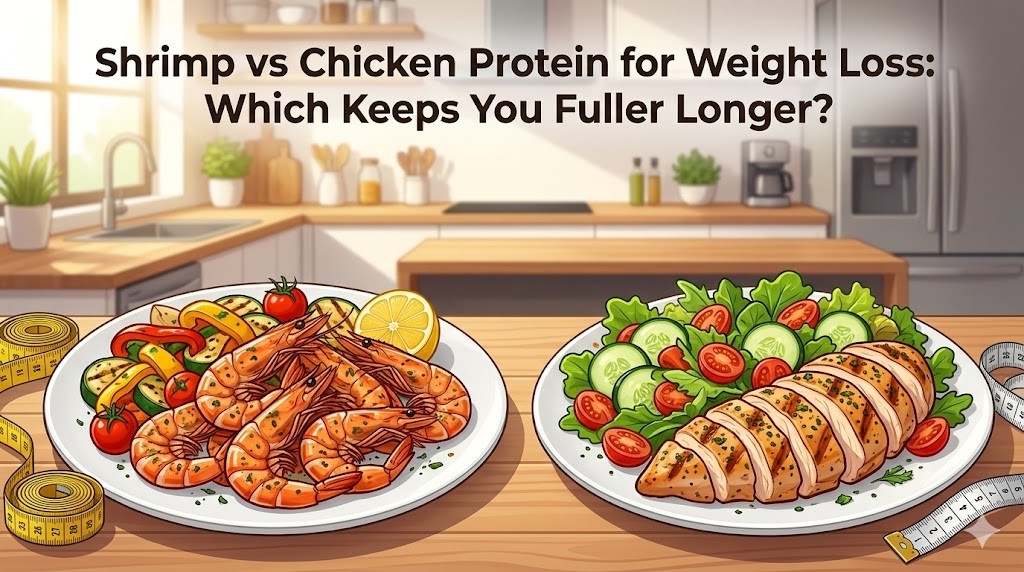
If you've ever tried to shed a few pounds, you already know the golden rule of dieting: protein is your best friend. It builds muscle, fires up your metabolism, and keeps you from raiding the pantry at midnight.
For years, skinless chicken breast has been the undisputed heavyweight champion of the meal-prep world. But if you're getting tired of dry, baked chicken, there’s a delicious challenger from the sea that might just steal the crown: shrimp.
But which one of these protein powerhouses actually keeps your stomach from growling longer? Let’s dive into the science behind the ultimate satiety showdown.
Using modern hands-free tracking tools like the voice-based calorie counter VoCal makes keeping tabs on these proteins a breeze, letting you log your meals on the go without lifting a finger.
Satiation vs. Satiety: What's the Difference?
To figure out which protein keeps you full, we first have to understand how our bodies process hunger. Appetite control actually happens in two distinct phases:
Satiation: This is the feeling of satisfaction that builds up while you’re eating. It’s what tells your brain, "Okay, put down the fork, we're done here".
Satiety: This is the magic period of fullness between meals. It’s the invisible shield that stops you from grabbing a handful of chips two hours after lunch.
While all proteins are great at triggering both phases compared to carbs and fats, different sources of protein interact with your digestive system in completely different ways.
The Bottom Line: Satiation is about stopping a meal, while satiety is about how long you can go before your next one. Lean proteins excel at both, but some do it better than others.
The Satiety Index: Marine vs. Land Proteins
Spoiler alert: marine proteins have a massive psychological and physiological advantage when it comes to keeping you full.
Scientists measure how filling foods are using a tool called the Satiety Index. This scale rates how satisfied people feel after eating a specific amount of calories from different foods.
On this index, white fish and lean seafood score a whopping 225%, while chicken lags behind at 146%.
In a classic clinical study, men who ate a seafood-based lunch consumed 11% less food at dinner compared to those who ate land-based meats. They didn't even realize they were eating less—their bodies were just naturally more satisfied!
So why does sea life beat land life? It comes down to two major things:
The Serotonin Connection: Seafood protein is packed with tryptophan, an amino acid your brain uses to create serotonin—the "happy hormone" that also tells your brain you are full.
Easy Digestion: Marine proteins are highly digestible, meaning your body absorbs their amino acids efficiently, releasing a steady stream of fullness signals.
The Bottom Line: Seafood consistently outperforms poultry on the Satiety Index, helping you naturally eat less later in the day without feeling deprived.
Water Weight and the "Gastric Stretch" Effect
Ever wonder why a giant bowl of soup fills you up more than a handful of crackers, even if they have the same calories? It's all about energy density—how many calories are packed into the physical weight of your food.
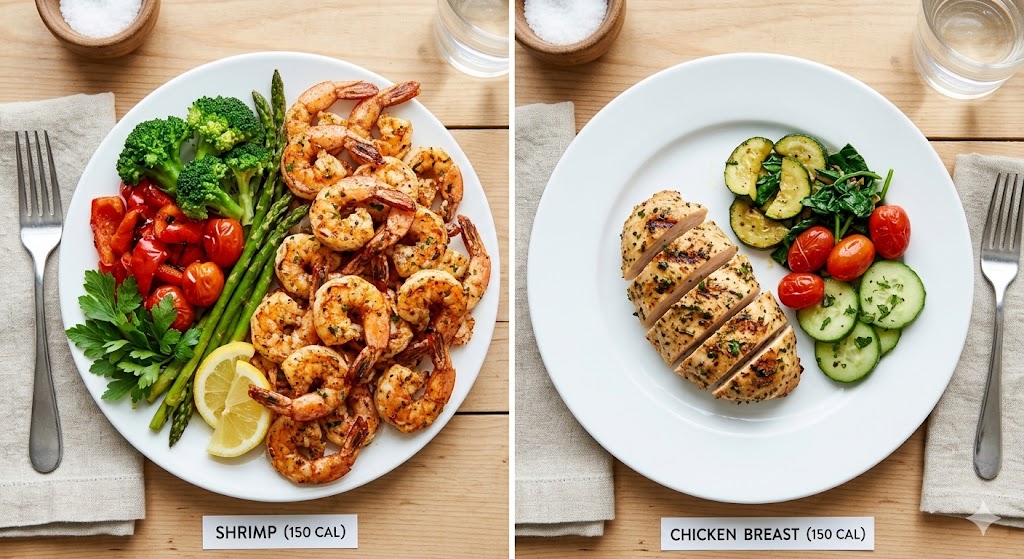
Shrimp is a secret weapon for volume eating. Because cooked shrimp is roughly 71% to 73% water, it is physically heavier but incredibly low in calories.
When you eat water-rich foods, they take up more physical space in your stomach, stretching your stomach walls. This activates "stretch receptors" that instantly send a memo to your brain saying, "We are physically full!".
If you have a budget of 150 calories, you can eat a massive pile of shrimp (about 150 grams) compared to a much smaller portion of chicken breast (about 95 grams). That's 57% more physical food in your belly!
The Side-by-Side Nutrition Breakdown
To see how they stack up, let's look at the USDA nutritional values for a cooked 100-gram serving of each :
Nutrient (per 100g cooked) | Cooked Shrimp | Cooked Skinless Chicken Breast |
Calories (kcal) | 99 - 101 | 157 |
Protein (g) | 22.8 - 23.5 | 31.0 - 32.1 |
Total Fat (g) | 1.4 - 1.7 | 3.2 - 3.6 |
Saturated Fat (g) | 0.4 | 1.0 |
Carbohydrates (g) | 0.2 - 1.3 | 0.0 |
Cholesterol (mg) | 179 | 116 |
Sodium (mg) | 208 - 804 | 47 |
Water Content (%) | 71.6% - 73.3% | 64.7% |
While chicken breast has slightly more protein gram-for-gram, shrimp wins hands-down on the calorie-to-volume ratio, giving you way more bite for your calorie buck.
Hormones, Hunger, and Gut-Brain Communication
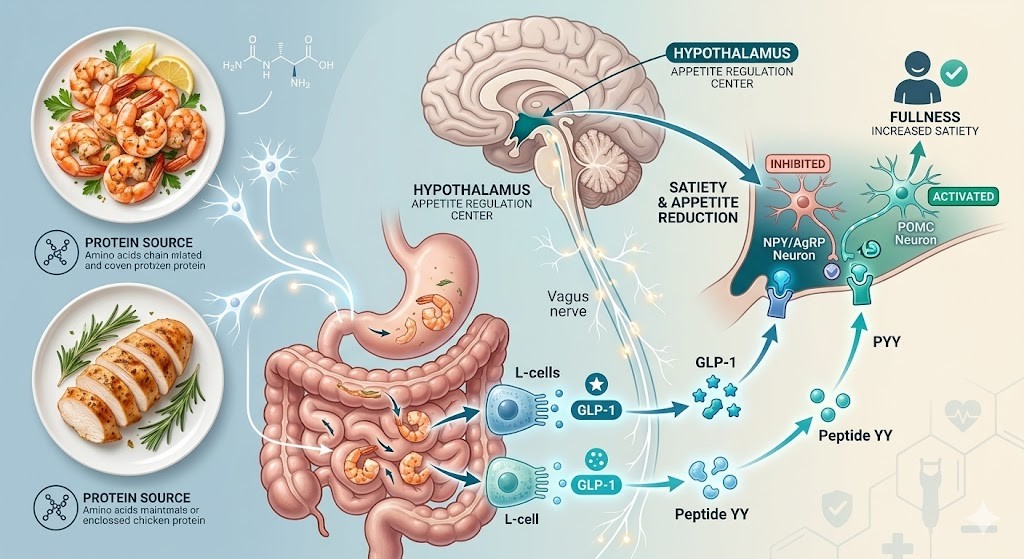
When you eat protein, your gut turns into a tiny chemical factory, pumping out hormones that control your appetite. The most important satiety hormones are GLP-1 (the very hormone popular weight-loss drugs mimic) and Peptide YY (PYY).
Lean marine proteins trigger a highly robust release of GLP-1 and PYY. These hormones tell your digestive tract to slow down, keeping food in your stomach longer and signaling your brain that you're well-fed.
Chicken, on the other hand, is higher in linoleic acid (an omega-6 fat). While chicken is still highly healthy, large dietary studies suggest that having too much omega-6 in your diet without balancing it with marine omega-3s can sometimes interfere with leptin—your body's master weight-control hormone.
What’s even cooler? Compounds found in shrimp shells, like chitosan, have been studied for their ability to naturally curb appetite and improve overall body composition in animal models.
Let's Talk About the Cholesterol in Shrimp
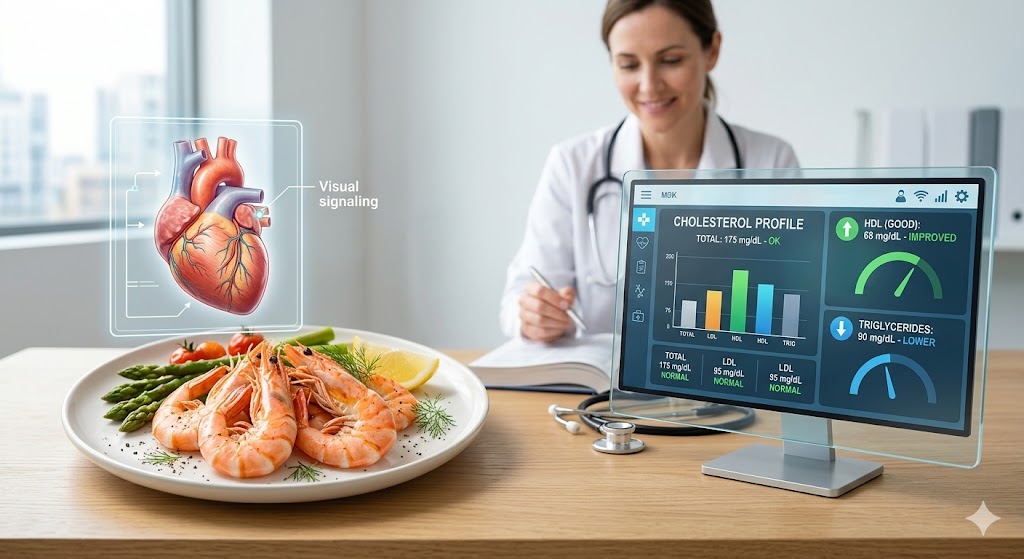
For decades, shrimp was blacklisted from heart-healthy diets because of its high cholesterol content. But we have some great news: modern science has completely cleared its name!
It turns out that dietary cholesterol has very little effect on blood cholesterol for most people. The real culprits behind high blood cholesterol are saturated fats and trans fats.
Shrimp has practically zero saturated fat. In fact, a famous study from Rockefeller University showed that people who ate 10 ounces of shrimp every single day actually improved their overall cholesterol profile!
The shrimp diet raised their "good" HDL cholesterol and lowered their triglycerides by 13%.
The Bottom Line: You don't need to fear the cholesterol in shrimp. It's incredibly low in saturated fat and packed with heart-healthy unsaturated fats.
Thyroid and Metabolic Support
To keep your weight-loss journey moving, you need a happy, active metabolism. Your thyroid gland is the master controller of your metabolism, and it relies heavily on two key minerals: iodine and selenium.
Shrimp is a goldmine for both. Selenium helps activate thyroid hormones by acting as a cofactor for deiodinase enzymes, which convert thyroxine (T4) into the active metabolic hormone triiodothyronine (T3).
Just one 3-ounce serving of cooked shrimp delivers about 76% of your daily selenium needs, alongside plenty of metabolism-boosting iodine. While chicken breast is rich in B vitamins, it simply can’t match shrimp's unique marine mineral package.
How to Prepare Shrimp for Weight Loss Success
How you cook your food makes all the difference.
Grilling, steaming, boiling, or baking your shrimp with some garlic, lemon juice, and a light mist of olive oil keeps it ultra-lean and preserves its fat-burning benefits. In fact, research shows these clean cooking methods protect your liver and prevent metabolic complications.
On the flip side, deep-frying your shrimp or drenching it in heavy butter or cream sauces will immediately erase all of its low-calorie advantages, transforming a weight-loss superfood into a calorie bomb.
The Takeaway
Both shrimp and chicken breast are elite, high-quality proteins that deserve a spot in your kitchen. But if your main goal is staying full on fewer calories, shrimp takes the crown.
With its higher water content, incredibly low calorie density, and powerful ability to trigger your body’s natural satiety hormones, shrimp keeps you feeling stuffed while keeping your calorie budget completely intact.
Keep your meals exciting by rotating both of these lean proteins, and make logging them effortless with hands-free tools like VoCal to stay perfectly on track!
Frequently Asked Questions
Does shrimp or chicken breast have more protein?
Gram-for-gram, cooked chicken breast has slightly more protein, providing around 31 to 32 grams per 100 grams, compared to 23 grams in shrimp. However, both are complete proteins, meaning they contain all the essential amino acids your body needs.
Why does shrimp keep you fuller longer than chicken?
Shrimp has a much higher water content and lower energy density. This means you can eat a larger physical volume of shrimp for the exact same amount of calories, triggering your stomach's physical fullness receptors and raising your body’s natural satiety hormones like GLP-1.
Is shrimp safe to eat if I have high cholesterol?
Yes, for the vast majority of people, shrimp is perfectly safe and highly beneficial. While it contains dietary cholesterol, it has almost no saturated fat, which is the actual driver of elevated blood cholesterol. Clinical studies show that eating steamed shrimp actually improves your cholesterol profile.
What is the healthiest way to cook shrimp?
The best way to cook shrimp for weight loss is to grill, steam, boil, or bake it. Avoid deep-frying or tossing it in heavy butter and cream sauces, which pack on unwanted fats and empty calories.
Disclaimer: Always consult with a healthcare professional or registered dietitian before making major changes to your diet, especially if you have food allergies or pre-existing cardiovascular conditions.