
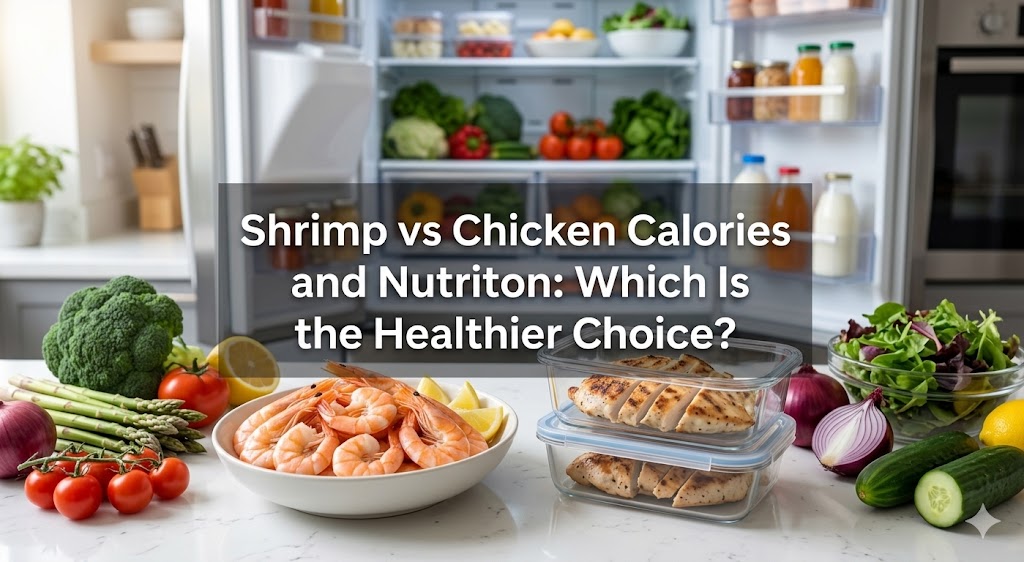
Imagine you’re standing in front of your open fridge on a Sunday night, blankly staring at your meal-prep containers, trying to decide between the ocean vibe and the chicken coop. Or maybe you're shouting into your favorite voice-activated calorie app: "VoCal, log eighty-five grams of steamed shrimp!".
Either way, you are tapping into two of the absolute healthiest lean proteins on the planet. But when it comes to shrimp vs chicken protein, which one actually wears the crown?
While both belong in a healthy diet, they have very different strengths when it comes to calories, heart health, and critical micronutrients.
Shrimp is low in calories yet rich in nutrients
Shrimp has an incredibly impressive nutrition profile. It is exceptionally low in calories, making it a dream food for volume eaters. When you eat shrimp, you are essentially getting high-quality protein packaged with a generous dose of hard-to-find minerals.
As you can see in our detailed comparison chart below, a standard 3-ounce cooked serving of shrimp provides less than 101 calories while delivering about 20 grams of protein and virtually no fat.
Shrimp is also one of the absolute best dietary sources of iodine, an essential mineral required for healthy thyroid function and brain development that many people do not get enough of.
Chicken is the ultimate high-yield protein machine
Skinless chicken breast is the undisputed king of meal preppers across the United States, and for good reason. It is highly accessible, budget-friendly, and delivers a massive punch of pure, complete protein per serving.
As shown in the nutrition chart above, while a 3-ounce cooked serving of chicken breast contains slightly more calories and total fat than shrimp, it offers a higher absolute volume of protein. It is also an exceptional source of metabolic B-vitamins, especially niacin and vitamin B6, which help your body turn food into usable daily energy.
Shrimp vs. Chicken Nutrition Chart
The table below provides a detailed side-by-side comparison of the nutrient profiles of cooked shrimp and cooked skinless chicken breast, based on USDA food database standards.
Nutrient | Cooked Shrimp (3 oz / 85g) | Cooked Skinless Chicken Breast (3 oz / 85g) |
Calories | 84 – 101 kcal | 140 kcal |
Protein | 19.4 – 20.4 g | 26.0 g |
Total Fat | 1.4 g | 3.0 g |
Saturated Fat | 0.4 g | 0.9 g |
Carbohydrates | 1.3 g | 0.0 g |
Sodium | 94.4 – 804.9 mg | 60 – 74 mg |
Cholesterol | 161 – 179.4 mg | 55 – 72 mg |
Vitamin B12 | 1.4 mcg (59% DV) | Trace |
Vitamin B3 (Niacin) | 2.3 mg (14% DV) | 12.6 mg (78% DV) |
Vitamin B6 | 0.2 mg (12% DV) | 0.8 mg (47% DV) |
Selenium | 42.1 mcg (76% DV) | ~23 mcg (42% DV) |
Phosphorus | 201 – 260.1 mg (21% DV) | 185 – 220 mg (18% DV) |
Potassium | 144.5 – 220 mg (4% DV) | 220 – 290 mg (8% DV) |
Zinc | 1.39 – 1.4 mg (13% DV) | 0.8 mg (7% DV) |
Iron | 0.27 – 0.43 mg (2% DV) | 0.8 mg (5% DV) |
Calcium | 77.4 mg (6% DV) | 10.2 mg (1% DV) |
Saturated fat vs. dietary cholesterol: Clearing the shrimp's name
For decades, shrimp was blacklisted from heart-healthy meal plans because of its high cholesterol content. A 3-ounce serving of cooked shrimp contains about 179.4 mg of dietary cholesterol. By comparison, the same serving of skinless chicken breast has only around 55 mg.
But modern cardiovascular science has completely cleared the air.
Saturated fat and the CSI score
According to the American Heart Association (AHA), saturated fat in your diet has a much greater impact on raising blood cholesterol levels than dietary cholesterol itself. Saturated fat essentially turns down your liver's ability to clear "bad" LDL cholesterol out of your bloodstream.
To measure a food's true impact on your heart, clinical researchers use the Cholesterol-Saturated Fat Index (CSI).
Astonishingly, cooked shrimp and skinless chicken breast share an identical, highly favorable CSI score of 6. Because shrimp has virtually zero saturated fat (less than half a gram per serving), it does not negatively impact blood lipids for the vast majority of healthy people.
Note: If you have type 2 diabetes or genetic hypercholesterolemia, your body may be more sensitive to dietary cholesterol, so always consult a healthcare professional about your targets.
Micronutrient showdown: Astaxanthin vs. B-Vitamins
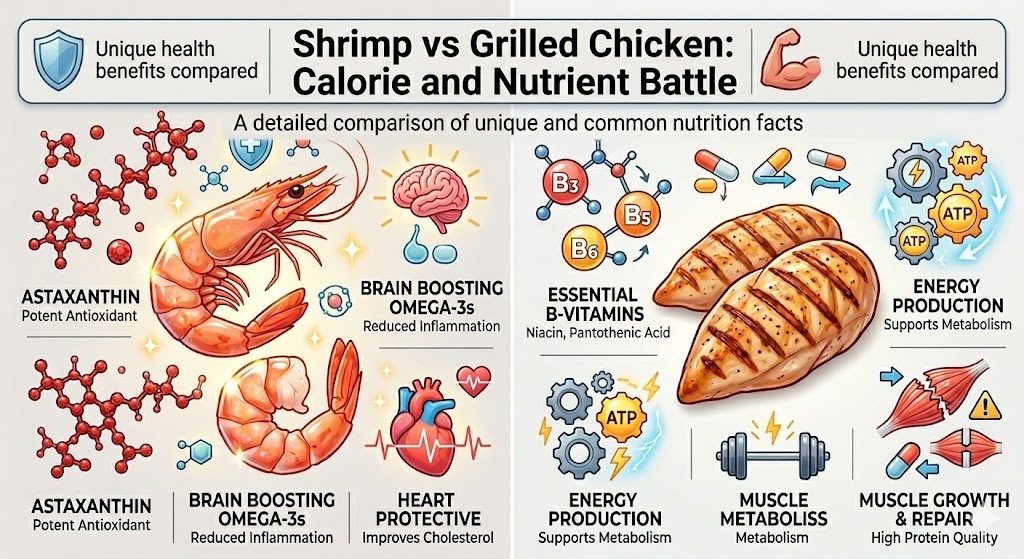
Looking past the macros, both of these foods act as incredibly unique micronutrient powerhouses in your body.
Astaxanthin: Shrimp's secret antioxidant superpower
That beautiful reddish-pink hue of cooked shrimp is not just for show—it comes from astaxanthin, a highly potent antioxidant that shrimp absorb from eating algae. Astaxanthin is widely studied for its ability to traverse the blood-brain barrier.
In clinical studies, this antioxidant has been shown to:
Support heart and brain health by strengthening arteries and protecting neural tissue.
Combat oxidative stress, protecting mitochondria and cell membranes from daily wear and tear.
Aid metabolic pathways by suppressing fatty acid synthesis and helping to regulate lipid deposition.
L-Lysine and B-Vitamins: Chicken's metabolic motor
Chicken breast is an unparalleled source of L-lysine, an essential amino acid critical for bone mineralization, connective tissue repair, and immune support. A single chicken breast contains over 4,000 mg of lysine.
Chicken is also incredibly rich in B-complex vitamins, especially B3 (niacin), B5, and B6. These vitamins function as the spark plugs of your cellular metabolic engine, helping your body convert the protein, fats, and carbs you eat into usable daily energy.
How to choose: Weight loss vs. muscle building
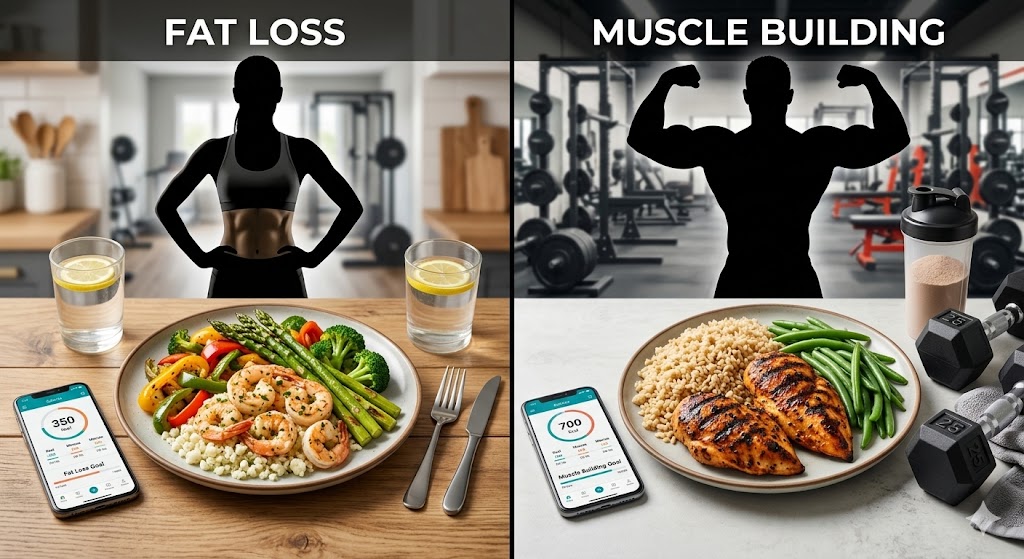
When you are logging your macros with a quick voice entry into VoCal, your food choices should reflect your physical goals.
Shrinking your waistline with shrimp
If you are on a strict caloric budget, shrimp is your ultimate weapon. When we analyze these foods by their calorie-to-protein ratio, we can use a quick scientific formula:
Protein Density (g per 100 kcal)=(Protein (g)/ Total Calories (kcal)) * 100
Using this formula, cooked shrimp delivers approximately 23.9 g of protein per 100 calories. Skinless chicken breast delivers 18.8 g of protein per 100 calories.
This means that for the exact same caloric budget, shrimp delivers roughly 27% more protein than chicken breast. It is the perfect choice for maximizing volume and satiety while keeping calories very low.
Building muscle with chicken breast
To maximize muscle protein synthesis, fitness experts recommend consuming a daily target of 1.6 to 2.2 g/kg of body weight.
If you are trying to hit high daily protein goals, chicken breast makes it much easier because it is denser and packs more absolute protein per ounce of food. It also digests more slowly, keeping your stomach full for a longer duration between heavy training sessions.
Dietary safety, allergens, and the government's seafood advice
Before you load up your shopping cart, there are a few practical rules of thumb to keep in mind.
Tropomyosin and other shellfish warnings
While shrimp is highly nutritious, it carries a few structural warnings:
Severe Allergies: Shellfish contain tropomyosin, a muscle protein that can trigger severe, life-threatening IgE-mediated allergic reactions (anaphylaxis). If you have a confirmed shellfish allergy, you must avoid shrimp entirely.
The Sodium Secret: Fresh shrimp naturally contains more sodium than chicken. Worse, many frozen shrimp brands in US grocery stores are treated with sodium tripolyphosphate to hold moisture, which can spike the sodium content up to 804.9 mg per serving. Always read labels if you are managing high blood pressure.
Federal seafood targets
The Dietary Guidelines for Americans recommend that adults consume at least 8 ounces of seafood per week to secure heart-healthy omega-3 fatty acids like EPA and DHA.
If you are pregnant or breastfeeding, the FDA recommends eating 8 to 12 ounces of low-mercury seafood weekly. Handily, the FDA classifies shrimp as a low-mercury "Best Choice," making it incredibly safe and beneficial for maternal and child health.
The bottom line
Neither shrimp nor chicken is universally "better" than the other. Instead, they shine in different categories.
Table 1: Cooked Macronutrient Comparison (per 3 oz / 85g serving)
Nutrient | Cooked Shrimp (3 oz / 85g) | Cooked Skinless Chicken Breast (3 oz / 85g) |
Calories | 80–101 kcal | 100–141 kcal |
Protein | 18.0–20.4 g | 24.0–26.0 g |
Total Fat | 0.2–1.4 g | 1.5–3.0 g |
Saturated Fat | 0.0–0.4 g | 0.5–0.9 g |
Carbohydrates | 0.2–1.3 g | 0.0 g |
Sodium | 94.4–804.9 mg | ~60–74 mg |
Table 2: Cooked Macronutrient Comparison (per 100g serving)
Nutrient | Cooked Shrimp (100g) | Cooked Skinless Chicken Breast (100g) |
Calories | 99–120 kcal | 165 kcal |
Protein | 22.0–24.0 g | 31.0 g |
Total Fat | 0.3–1.7 g | 3.5–3.6 g |
Saturated Fat | 0.3 g | 1.0 g |
Carbohydrates | 0.2–1.5 g | 0.0 g |
Choose shrimp if you want maximum protein density for fewer calories, a dose of potent astaxanthin antioxidants, and a boost of essential marine minerals like iodine and selenium.
Choose chicken breast if you have a tight grocery budget, are highly focused on maximizing muscle gains, need to keep your sodium low, or suffer from shellfish allergies.
To get the absolute best of both worlds, rotate them throughout your week to feed your body a diverse, nutrient-rich diet.
Frequently Asked Questions
Which has more protein, shrimp or chicken?
Gram for gram, cooked chicken breast contains slightly more protein than cooked shrimp. Cooked chicken breast provides approximately 31g of protein per 100g, while cooked shrimp delivers 22g to 24g of protein per 100g. However, when measured by calorie, shrimp has a superior protein-to-calorie density.
Is shrimp better than chicken for weight loss?
Yes, shrimp has a slight advantage for strict weight loss due to its incredibly low caloric density. A 3-ounce serving of cooked shrimp contains only 80 to 84 calories, whereas the same serving of skinless chicken breast contains roughly 100 to 141 calories, allowing you to eat a larger physical volume of food for fewer total calories.
Does shrimp raise cholesterol more than chicken?
No. Saturated fat is the primary dietary driver of blood cholesterol levels. Because both cooked shrimp and skinless chicken breast are extremely low in saturated fat, they share an identical, highly favorable Cholesterol-Saturated Fat Index (CSI) score of 6, meaning they have a very similar, minimal impact on blood cholesterol for most healthy people.
How many ounces of seafood should an individual consume weekly?
The Dietary Guidelines for Americans recommend that adults consume at least 8 ounces of seafood per week to secure essential omega-3 fatty acids. Pregnant or breastfeeding individuals should aim for 8 to 12 ounces of low-mercury seafood weekly, with shrimp listed as a top "Best Choice".
Disclaimer: This article is for informational and educational purposes only and does not substitute for professional medical advice, diagnosis, or treatment. Please consult a healthcare professional before making any major changes to your diet.