
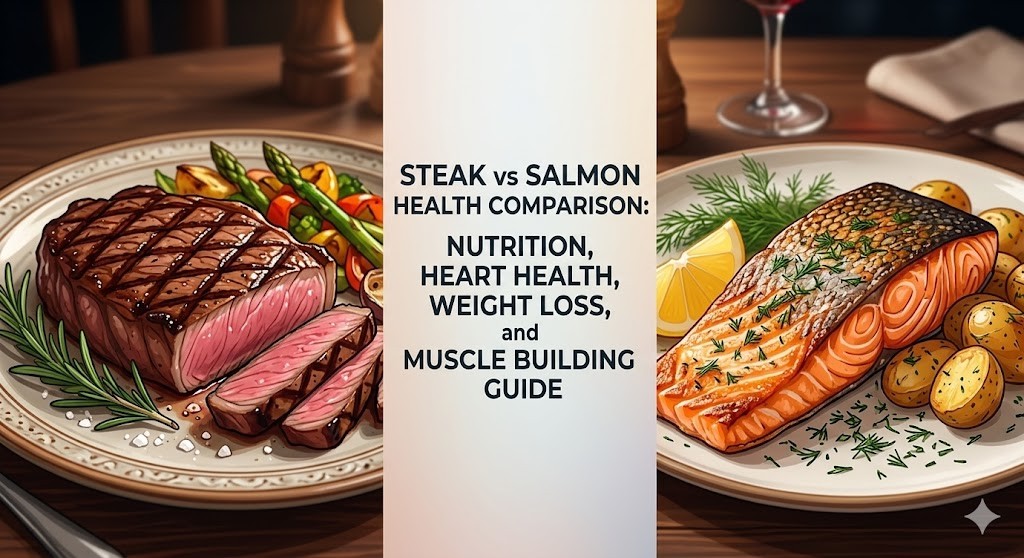
When Friday night rolls around, your stomach usually starts asking the big questions. Do you head to the local steakhouse for a sizzling, juicy sirloin? Or do you hit the seafood spot for a flaky, perfectly grilled salmon fillet?
Both of these options are absolute heavyweights in the protein world. But depending on whether you are trying to build massive biceps, shed a few pounds for summer, or keep your ticker running smoothly, the winner isn't always who you think.
In this ultimate steak vs salmon health comparison, we are putting these two nutritional titans head-to-head. We will look at how they affect your heart, your waistline, your cholesterol levels, and your gym performance. Grab a fork and let's settle this turf-versus-surf battle once and for all!
Nutritional Breakdown: Analyzing the Macronutrient and Micronutrient Profiles
Before we dive into the specific health battles, let's look at the basic stats. One fun fact to kick things off: beef and salmon actually differ in how much water they hold . Raw beef is about 58% water, whereas raw salmon is a bit juicier at 65% water .
Because beef has less water, it is slightly denser and packs more nutrients and calories by weight . This is why red meat has historically earned a reputation as a heavy-hitting, calorie-dense option.
Here is how 100 grams (about 3.5 ounces) of cooked top sirloin steak (trimmed of all fat) stacks up against wild and farmed Atlantic salmon, straight from the USDA FoodData Central database :
Nutrient (per 100g, Cooked) | Beef Top Sirloin (Lean Only) | Wild Atlantic Salmon | Farmed Atlantic Salmon |
Energy (Calories) | 177 kcal | 182 kcal | 206 kcal |
Protein | 31.0 g | 25.4 g | 22.1 g |
Total Lipid (Fat) | 5.0 g | 8.13 g | 12.4 g |
Saturated Fat | 1.9 g | 1.26 g | 2.4 g |
Monounsaturated Fat | 2.0 g | 2.7 g | 4.18 g |
Polyunsaturated Fat | 0.19 g | 4.17 g | 4.55 g |
Cholesterol | 81.0 mg | 55.4 mg | 63.0 mg |
Vitamin D | 0.0 mcg | 11.0 mcg | 11.0 mcg |
Vitamin B12 | 1.5 mcg | 3.05 mcg | 2.8 mcg |
Iron | 1.9 mg | 0.47 mg | 0.34 mg |
Zinc | 5.7 mg | 1.27 mg | 0.43 mg |
Selenium | 39.0 mcg | 46.8 mcg | 41.4 mcg |
Choline | 117.0 mg | 95.0 mg | 90.5 mg |
At first glance, both are incredible whole-food options. However, if we look closely at vitamins, salmon is the absolute king . It has a massive amount of vitamin D and vitamin E, which beef completely lacks . It is also loaded with B-complex vitamins, potassium, and magnesium .
On the flip side, top sirloin steak is your ultimate go-to for bioavailable heme iron and zinc . These two minerals keep your oxygen levels high and your immune system strong.
Bottom Line: Steak gives you a bit more protein density, iron, and zinc . Salmon fires back with vitamin D, vitamin E, and a treasure trove of healthy fats .
Which Protein Is Better for Cardiovascular Wellness?
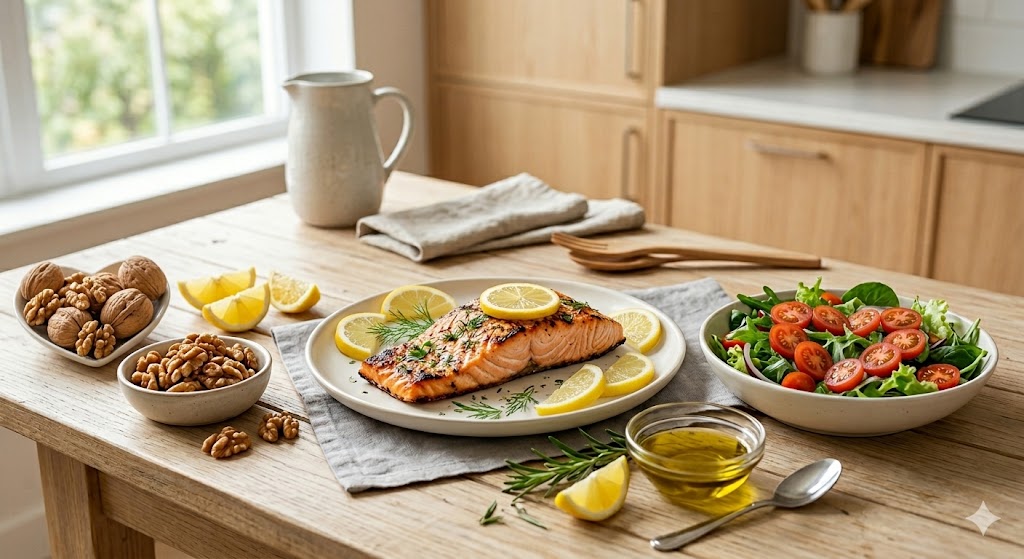
If your heart had a voting card, it would probably be wearing a "Team Salmon" t-shirt. The American Heart Association (AHA) strongly recommends putting fish on your plate at least twice a week because fish consumption is consistently linked to a lower risk of heart disease .
Large epidemiological studies of US adults show that eating red meat (even the unprocessed kind) is associated with a tiny but statistically significant 3% to 7% increase in the relative risk of cardiovascular issues and all-cause mortality. Fish, on the other hand, gets a completely free pass.
Salmon is so good for your heart because of its omega-3 fatty acids (specifically EPA and DHA). These awesome fats act like a relaxing spa day for your blood vessels. They lower blood pressure, reduce inflammation, improve endothelial function, and keep your heart rhythm steady.
To really understand how steak vs salmon impacts your heart, we also have to look at how these foods interact with your gut microbes, which brings us to a very hot topic in cardiometabolic research.
Bottom Line: Salmon takes this round easily. Its omega-3 fatty acids are a proven cheat code for long-term cardiovascular wellness.
The TMAO Paradox: Why the Red Meat "Bad Guy" Story Might Be a Red Herring
If you've spent any time reading health blogs, you might have heard of a scary-sounding molecule called TMAO (trimethylamine-N-oxide). Some scientists have linked high TMAO levels in the blood to clogged arteries and a higher risk of heart attacks.
When you eat a juicy steak, your gut bacteria feed on compounds like carnitine and choline. They turn these nutrients into trimethylamine (TMA), which your liver then oxidizes into TMAO. Because of this, red meat has often been labeled as a cardiovascular villain.
But here is where the science gets super weird: marine fish actually contain massive amounts of preformed, highly absorbable TMAO! In fact, eating a delicious piece of salmon can spike your blood TMAO levels up to 50 times higher than eating a juicy steak.
Yet, centuries of research show that people who eat plenty of fish have incredibly healthy hearts.
This creates a fascinating metabolic paradox. Either TMAO is just a harmless marker rather than a direct cause of heart disease, or the anti-inflammatory powers of salmon's omega-3s simply override any potential downside. It turns out that the red meat "TMAO scare" might just be a giant red herring.
Bottom Line: While steak does raise your TMAO levels over time, salmon raises them immediately. However, because fish consumption is consistently tied to great heart health, you don't need to panic about TMAO.
Cholesterol: Which Is the Better Choice for Healthy Lipid Levels?
Let's address the elephant in the dining room: cholesterol and saturated fat. Saturated fat has a reputation for raising your LDL (the "bad") cholesterol by turning down the receptors in your liver that clear it away. Since top sirloin has more saturated fat than wild salmon, steak has historically been banned from cholesterol-conscious diets.
But red meat isn't the absolute villain it's made out to be. A massive meta-analysis of 36 randomized controlled trials (RCTs) showed that red meat's impact on cholesterol depends entirely on what you compare it to.
When people swapped red meat for high-quality plant proteins, their cholesterol improved. But when researchers directly compared steak to fish, they found a surprise: eating red meat actually resulted in greater decreases in LDL and HDL cholesterol!
However, there is a giant catch: red meat did a much poorer job of lowering triglycerides (fat in your blood) compared to fish.
This is where salmon absolutely shines. The polyunsaturated fats in salmon trigger specific pathways in your liver (specifically a receptor called PPAR-alpha), which stops the liver from making so much fat and speeds up the clearance of triglycerides.
Let's look at how the fat profiles of these two foods compare per 100 grams:
Fat Category (per 100g, Cooked) | Beef Top Sirloin | Wild Atlantic Salmon |
Saturated Fat | 1.9 g | 1.26 g |
Monounsaturated Fat | 2.0 g | 2.7 g |
Polyunsaturated Fat | 0.19 g | 4.17 g |
Total Omega-3 (EPA + DHA) | 0.0 g | ~2.31 g |
Bottom Line: Lean steak won't wreck your cholesterol as long as you keep it lean, but salmon is the undisputed champion for slashing blood triglycerides.
Which Keeps You Full Longer and Supports Fat Loss?
If you are trying to lean down for the summer without constantly dreaming of donuts, both steak and salmon are excellent allies. They both contain zero carbohydrates, meaning they won't cause your blood sugar to spike and crash.
Plus, because they are packed with protein, they both give your metabolism a nice little boost through the thermic effect of food (your body has to burn calories just to break down protein).
But if you want to delay your next snack run as long as possible, go with the fish.
Clinical studies have shown that fish protein keeps people fuller than beef. In one randomized trial, young men who ate a fish lunch ended up consuming 11% fewer calories at dinner compared to when they ate a beef lunch—all without feeling any hungrier!
How does salmon pull off this weight-loss magic trick?
Slower Digestion: Fish protein actually digests at a more relaxed, gradual pace than beef. This means it hangs out in your gut longer, keeping those stretch receptors happy and sending "I'm full!" signals to your brain.
Serotonin Boost: Satiety is regulated by a chemical called serotonin. Eating fish raises the ratio of tryptophan to other amino acids in your blood. This helps tryptophan cross the blood-brain barrier, boosting serotonin and telling your brain you don't need that afternoon cookie.
Don't count steak out just yet, though. Excellent research on women shows that diets containing lean beef can significantly crush pesky carbohydrate and sugar cravings for up to 10 hours, making it much easier to stick to your overall diet plan.
Bottom Line: Salmon has a slight edge for keeping you full in the short term (saving you about 11% on your next meal), but both are elite, fat-loss-friendly foods.
Muscle Building: Comparing Protein Quality, Recovery, and Strength Gains

If you are trying to build serious muscle and strength, you need to trigger muscle protein synthesis (MPS) and ensure your muscle fibers recover properly after a brutal workout. Both steak and salmon are complete proteins, meaning they contain all the essential amino acids your body can't make on its own. But they support your gym goals in different ways.
Triggering the Growth Switch
To build muscle, your body needs a very specific amino acid called leucine. Leucine acts like an "on" switch for a cellular growth sensor called mTORC1. To turn this switch fully on, you need about 2.5 to 3.0 grams of leucine in a single meal.
Lean beef is incredibly efficient here. Just 100 grams (3.5 ounces) of cooked top sirloin steak hands you that 2.5-gram leucine jackpot on a silver platter. Salmon is also an amazing source, but because it is slightly less protein-dense, you'll need to eat a slightly larger portion (around 120 to 140 grams) to hit that same growth threshold.
The Secret Weapons: Creatine vs. Omega-3s
Beyond leucine, beef is packed with natural creatine, highly bioavailable heme iron, and zinc. Creatine is the fuel your muscles use for explosive, heavy lifts, meaning steak is built to support your raw power.
Salmon's secret weapon is its anti-inflammatory punch. Lifting heavy weights causes microscopic muscle damage (which is why you waddle the day after leg day).
The omega-3s in salmon act as precursors to anti-inflammatory molecules, which help calm that inflammation, reduce muscle soreness (DOMS), and get you back to the gym faster. Plus, research suggests omega-3s can make your muscle cells more sensitive to amino acids, helping to preserve muscle as you get older.
Performance Indicator | Beef Top Sirloin | Salmon (Wild-Caught) |
Protein Content | 31.0 g per 100g | 25.4 g per 100g |
Leucine Concentration | ~2.5 g per 100g | ~1.8 g per 100g |
Anabolic Co-factors | Creatine, Zinc, Heme Iron | Omega-3s, Vitamin D, Selenium |
Primary Benefit | Raw strength and explosive power | Faster recovery and reduced soreness |
Bottom Line: Steak takes the trophy for raw muscle-building power and strength, while salmon wins for helping your muscles recover and bounce back.
Micronutrient Showdown: The Unsung Heroes of Beef and Fish
While macros (protein, fats, carbs) get all the attention on social media, micronutrients (vitamins and minerals) are what keep your engine running smoothly. Let's look at the critical vitamins and minerals where these two foods split the crown.
Team Steak: Iron, Zinc, and Choline
Heme Iron: Beef is loaded with heme iron, the type of iron your body absorbs incredibly well. Iron is the core component of hemoglobin, which carries oxygen to your working muscles. If you are low on iron, your workouts will feel like you're running through wet cement.
Zinc: Crucial for immune health, DNA synthesis, and naturally supporting healthy testosterone levels.
Choline: Essential for brain development, liver health, and keeping your cell membranes structurally sound.
Team Salmon: Vitamin D, Vitamin B12, and Selenium
Vitamin D: This is a huge deal. Almost 40% of Americans are deficient in Vitamin D, which is vital for bone strength, immune function, and mood regulation. Steak has practically zero Vitamin D, but a single serving of salmon gives you nearly 100% of your daily needs.
Vitamin B12: Keeps your nerves working properly and helps make red blood cells. Salmon actually beats steak here, offering double the B12 per serving.
Selenium: A powerful antioxidant that supports thyroid health and protects your cells from oxidative stress.
Bottom Line: If you're feeling sluggish and need a boost in iron and zinc, eat steak . If you need immune support, bone health, and a giant dose of B-vitamins, eat salmon.
Farmed vs. Wild Salmon: What's the Catch?
Not all salmon is created equal, and the "Farmed vs. Wild-Caught" debate is a big one. It comes down to what the fish eat and how they live.
Wild-Caught Salmon swim free in the ocean, eating smaller fish and krill. This diet gives them a deep red color from a powerful antioxidant called astaxanthin. Wild salmon is leaner, has more protein per gram, and is very low in environmental contaminants.
Farmed Salmon live in pens and are fed a processed diet. Because they don't move around as much and eat calorie-rich feed, they are much fattier.
Here is the interesting part: because farmed salmon are so fatty, they actually contain slightly more total omega-3 fatty acids than wild salmon! However, they also pack twice as much saturated fat, more total calories, and fewer natural antioxidants like astaxanthin.
Nutrient (per 100g, Cooked) | Wild Atlantic Salmon | Farmed Atlantic Salmon |
Calories | 182 kcal | 206 kcal |
Protein | 25.4 g | 22.1 g |
Total Fat | 8.13 g | 12.4 g |
Saturated Fat | 1.26 g | 2.4 g |
Omega-3s (EPA + DHA) | ~2.31 g | ~2.50 g |
Bottom Line: If you want a leaner, clean-tasting fish packed with natural antioxidants, spend the extra cash on wild-caught. If you are on a budget and want a massive dose of omega-3s, farmed salmon is a great option.
Environmental Concerns and Contaminants: Mercury, PCBs, and Antibiotics
Whenever we discuss eating animal proteins in the modern world, environmental contaminants are always a concern.
The Mercury Question
Many people avoid fish because they are terrified of methylmercury—a heavy metal that can build up in marine life and harm your nervous system. Fortunately, salmon is exceptionally low in mercury. Because salmon eat low on the food chain and don't live for decades (unlike swordfish or shark), they are classified as an FDA "Best Choice" for safe weekly seafood consumption.
PCBs and Antibiotics in Farmed Salmon
Farmed salmon are raised in close quarters, which makes them more susceptible to diseases and parasites. Because of this, some salmon farms historically used antibiotics and chemical treatments.
Farmed salmon can also have higher levels of PCBs (industrial chemicals). To minimize risk, look for farmed salmon raised in highly regulated environments (like Norway or Iceland), or stick to wild-caught Pacific salmon.
Red Meat and Processing Concerns
Red meat has its own set of concerns, primarily around feed styles (grain-fed vs. grass-fed) and processing. To keep things healthy, choose unprocessed red meat (like top sirloin steak) over processed meats (like hot dogs or sausage). Unprocessed, lean cuts of beef are highly nutritious and do not carry the same health risks as highly processed meats.
Bottom Line: Salmon is incredibly safe from mercury, and lean, unprocessed steak is a highly nutritious whole food. Keep your sources clean, and your body will thank you.
Integrating Voice-Activated Nutrition Tracking for Steak and Salmon
The differences in fat, protein, and calories between a lean top sirloin steak, wild salmon, and farmed salmon are huge. If you log your farmed salmon as wild salmon, you could easily throw your daily calorie tracking off by 100 to 200 calories without even knowing it!
This is where voice-activated nutrition tracking via the VoCal app makes life incredibly simple. Instead of endlessly typing, searching through massive databases, or trying to guess which food entry is correct, you can just speak naturally to your phone:
"Logged: Three ounces of pan-seared wild Atlantic salmon."
"Logged: Five ounces of grilled, lean top sirloin steak."
VoCal leverages sophisticated language models to instantly recognize specific preparation styles and animal varieties, automatically capturing the exact lipid, vitamin, and amino acid distributions. This guarantees that critical biomarkers, such as your saturated fat limits or daily leucine thresholds, are recorded with clinical accuracy, keeping you on track to crush your health goals.
Bottom Line: Voice-based calorie tracking through VoCal eliminates the daily friction of food logging, ensuring you track your proteins and fats with maximum precision.
Frequently Asked Questions
Is it safe to eat salmon every day?
Yes, eating salmon daily is generally considered very safe for most healthy adults. Salmon is exceptionally low in mercury and is listed as an FDA "Best Choice" for seafood. However, to keep your diet fun and nutritionally diverse, it's always a good idea to rotate your protein sources throughout the week.
Can grass-fed beef match the omega-3 fatty acid profile of salmon?
Nice try, beef lovers! While grass-fed beef does contain slightly higher levels of omega-3s and a better omega-6 to omega-3 ratio than grain-fed beef, it can't touch salmon. A typical serving of beef contains negligible amounts of EPA and DHA, while a 5-ounce serving of cooked Atlantic salmon delivers over 1,800 milligrams of these highly cardioprotective marine fatty acids.
Which is better for a ketogenic or low-carbohydrate diet?
Both top sirloin steak and salmon contain zero carbohydrates, making them ideal for low-carbohydrate and ketogenic diets. However, salmon possesses a higher fat-to-protein ratio (especially farmed salmon), which aligns perfectly with the classic ketogenic target of high fat intake to support ketone production. Steak is highly suited for high-protein, low-carbohydrate diet variations.
Can I just take a fish oil supplement instead of eating salmon?
While fish oil supplements give you EPA and DHA, they don't provide the high-quality protein, vitamin D, vitamin B12, selenium, or the natural antioxidant astaxanthin found in a whole fillet of salmon. Whole foods consistently outperform isolated supplements in clinical trials.
Disclaimer: The nutritional and health information provided in this guide is for educational and informational purposes only and should not replace professional medical advice, diagnosis, or treatment. Always consult with a qualified healthcare professional or registered dietitian before making any major changes to your dietary regimen or exercise plan.