
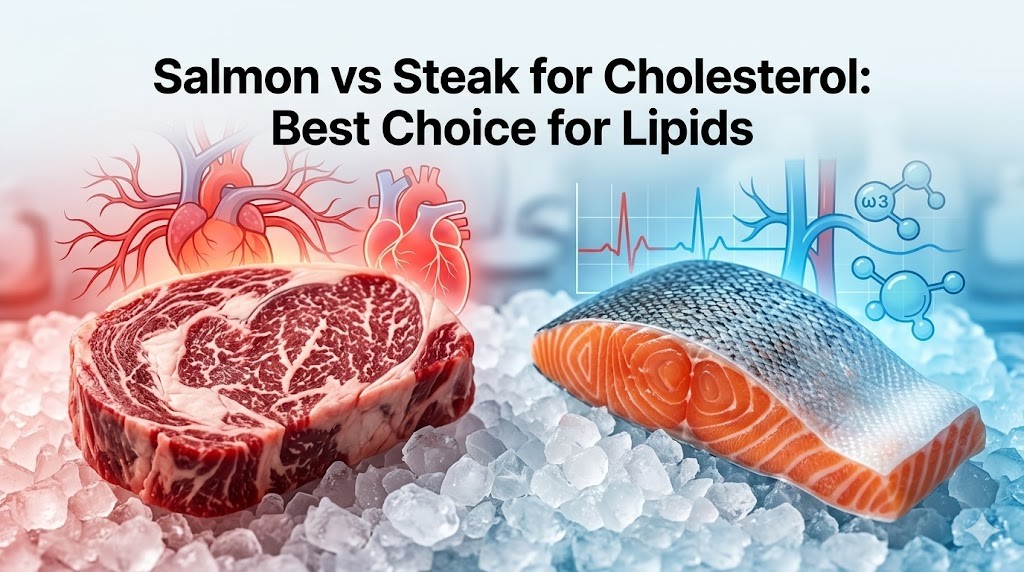
Picture this: You’re standing in front of the butcher counter, trying to plan a heart-healthy dinner. On your left, a beautifully marbled beef ribeye is calling your name. On your right, a sleek, pink salmon fillet glitters under the ice.
If you're watching your cholesterol, which one should you take home?
In this ultimate steak vs salmon health comparison, we’re pitting surf against turf to see how they impact your lipid levels. While old-school dietary advice told us to avoid all cholesterol-rich foods, modern science has flipped the script: the type of fat you eat matters way more than the cholesterol printed on the food label.
Let's dive into the science, the nutritional stats, and how your liver handles these two popular protein sources.
Saturated Fat and Steak: What Happens in Your Liver
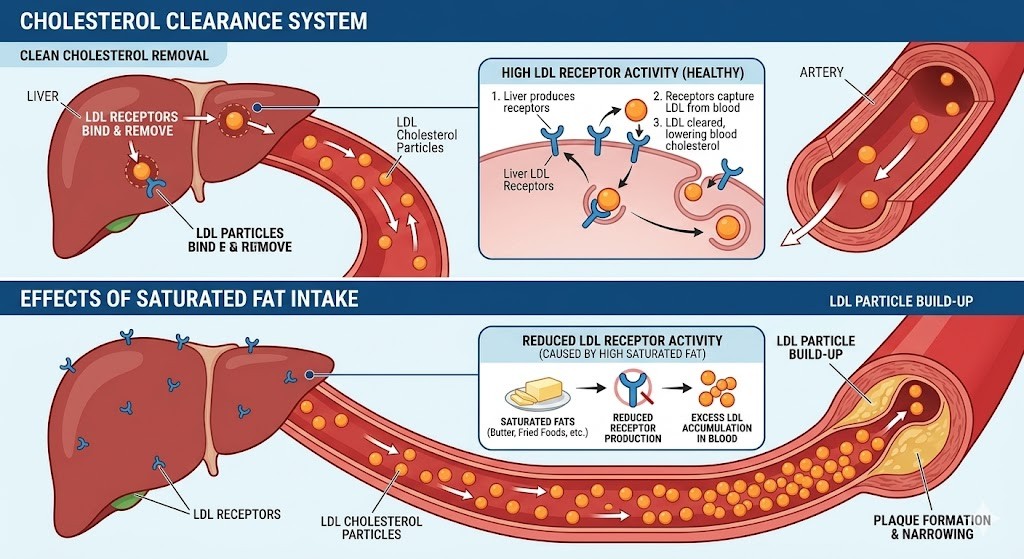
First up: steak. Who doesn't love a juicy, perfectly seared cut of beef? But if you’re focusing on keeping your cardiovascular health in tip-top shape, we have to look closely at saturated fats.
Your liver is the ultimate master regulator of cholesterol. It uses tiny, vacuum-like proteins called low-density lipoprotein receptors (LDLR) to grab "bad" LDL cholesterol out of your blood and dispose of it.
But when you eat highly marbled steaks loaded with saturated fats, things get a little sluggish. Saturated fats actually downregulate these hepatic LDL receptors. Fewer receptors mean the LDL cholesterol stays circulating in your bloodstream, driving up your overall cholesterol numbers.
To make matters worse, eating too much saturated fat changes the physical properties of the LDL particles themselves. It makes them stickier and more likely to aggregate inside your arterial walls. Once they clump together, they bind to proteins called proteoglycans like cellular velcro, which is the first step toward forming arterial plaque.
The Bottom Line: Heavily marbled steaks are packed with saturated fats that block your liver's ability to clear bad cholesterol and make LDL particles more likely to stick to your artery walls.
Salmon's Superpower: How Omega-3s Tackle Triglycerides
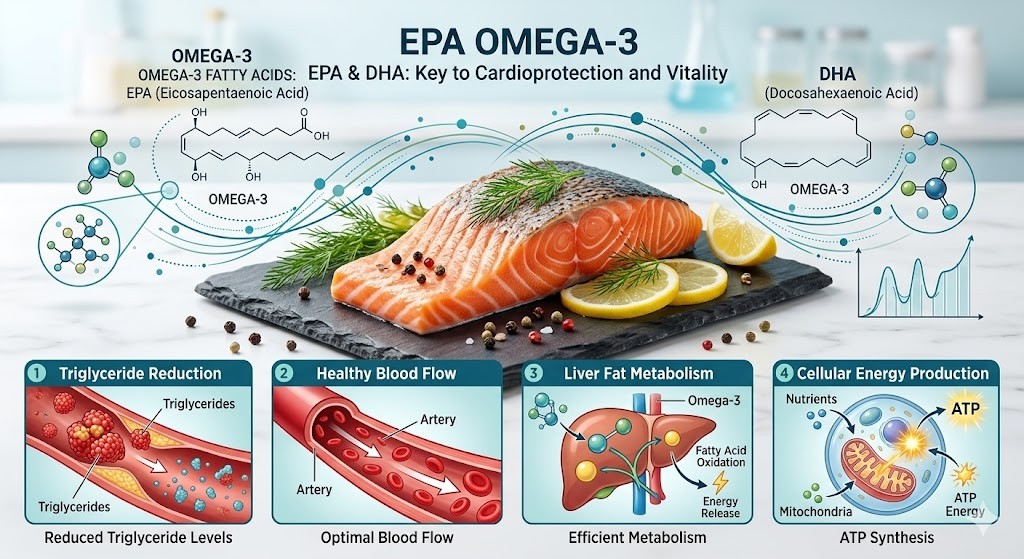
Now, let’s flip the coin and look at salmon. Salmon is basically the poster child for heart health, and for good reason. It is packed with long-chain omega-3 polyunsaturated fatty acids, specifically eicosapentaenoic acid (EPA) and docosahexaenoic acid (DHA).
While omega-3s won't directly lower your LDL cholesterol, they are absolute heavyweights when it comes to dropping your triglycerides (TGs) and very-low-density lipoproteins (VLDLs).
Here is how these marine fats work their magic inside your body:
Turning down the fat machine: Omega-3s suppress a liver transcription factor called SREBP-1c. This effectively turns down the volume on your liver's fat-making machine, stopping it from synthesizing new fatty acids.
Burning fat for fuel: They promote beta-oxidation, signaling your liver cells to burn incoming fatty acids for energy instead of packing them into triglycerides.
Enzymatic blocking: They block key enzymes (like diacylglycerol acyltransferase) that act as the "assembly line workers" building triglycerides in the liver.
Speedy blood cleanup: They upregulate lipoprotein lipase (LPL), which acts like a garbage disposal, rapidly clearing circulating triglycerides from your blood.
The gut barrier: When you eat omega-3s, your body processes them into special bile compounds called N-acyl taurines (NATs). These NATs actually block some fat absorption in your gut, protecting your liver.
The Bottom Line: Salmon's omega-3s are master regulators that stop fat production, burn off existing fat, and help clear triglycerides from your bloodstream.
Steak vs. Salmon: The Nutritional Showdown
Let’s look at the numbers. How do these two stacks of protein compare side-by-side?
Here is a nutritional breakdown of a standard 3-ounce (85 g) cooked serving—about the size of a deck of cards—of wild-caught sockeye salmon, farmed Atlantic salmon, a lean USDA Choice beef top sirloin, and a marbled Choice ribeye steak :
Nutrient (per 3 oz cooked serving) | Wild Sockeye Salmon | Farmed Atlantic Salmon | Lean Beef Top Sirloin | Choice Beef Ribeye Steak |
Calories (kcal) | 133 | 177 | 158 | 266 |
Protein (g) | 23 | 19 | 25 | 19 |
Total Fat (g) | 4.7 | 10.5 | 6.5 | 21 |
Saturated Fat (g) | 0.8 | 2.2 | 2.2 | 9 |
Monounsaturated Fat (g) | 1.8 | 4.2 | 2.7 | 10 |
Polyunsaturated Fat (g) | 2.1 | 4.6 | 0.3 | 1 |
Omega-3 Fatty Acids (mg) | 1,500 | 1,800 | <25 | <50 |
Cholesterol (mg) | 52 | 54 | 70 | 71 |
Vitamin D (mcg) | 14.2 | 6.0 | 0.1 | 0.1 |
Looking at these stats, the ribeye steak stands out with a massive 9 grams of saturated fat in just a small 3-ounce portion. While top sirloin is a much leaner beef option, it still lacks the heart-healthy polyunsaturated fats and vitamin D that make salmon such a nutritional powerhouse.
Wild-Caught vs. Farmed Salmon Sourcing
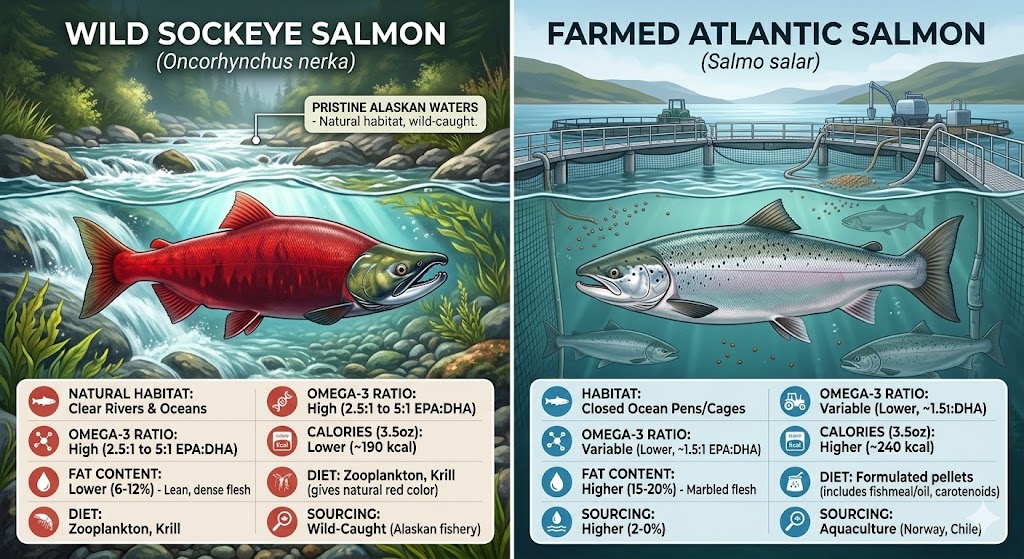
When you're at the grocery store, you'll likely face the choice between wild and farmed salmon.
Wild sockeye salmon is the athlete of the sea. It feeds on natural marine life, making it leaner, lower in calories, and rich in high-quality protein. It also boasts an incredibly healthy omega-3 to omega-6 ratio of about 17:1.
Farmed Atlantic salmon is raised on a processed, high-fat diet. It's much larger and carries more total fat, which means it has plenty of omega-3s, but also higher levels of saturated fat and a less optimal omega-3 to omega-6 ratio of about 2:1 to 3:1. Farmed salmon also tends to have higher concentrations of persistent organic pollutants (POPs) like PCBs.
The Bottom Line: While both offer excellent protein, wild-caught sockeye salmon is the superior choice for managing cholesterol due to its ultra-low saturated fat and clean, natural fat profile.
What the Science Says: Real-World Studies
Let’s look at some cool clinical studies that put these protein sources to the test:
The Red vs. White Meat Controversy
A landmark clinical trial published in the American Journal of Clinical Nutrition challenged the old idea that switching from red meat to chicken is a cure-all for cholesterol. Researchers put healthy adults on high-protein diets using lean red meat, lean white meat, or plant-based proteins.
The study found that when saturated fat levels were matched, both red and white meat raised bad LDL cholesterol and apolipoprotein B (apoB) by the exact same amount. It's the saturated fat in your food that drives cholesterol up, not the color of the meat. Additionally, eating red meat every day tripled blood levels of TMAO, a gut chemical strongly linked to clogged arteries.
Whole Fish vs. Fish Oil Supplements
Think you can just eat a greasy ribeye and pop a fish oil capsule to balance it out? Think again! A clinical trial compared eating fresh fish twice a week to taking daily omega-3 supplements over an 8-week period.
The fresh-fish eaters saw their bad LDL cholesterol decrease by -22.75 mg/dL, while their good HDL cholesterol rose. Meanwhile, the supplement group actually saw their LDL cholesterol increase by +18.7 mg/dL. Whole food wins the day!
How to Fit Saturated Fats into Your Daily Budget
To keep your arteries clear, you need to manage your saturated fat budget. The American Heart Association (AHA) recommends that no more than 5% to 6% of your daily calories come from saturated fat.
If you consume a standard 2,000-calorie daily diet, that translates to about 13 grams or less of saturated fat per day.
Here is a simple formula to calculate your limit:
Daily Saturated Fat Limit = (Total Calories *0.06)/9
Now, look back at our nutrition table. A single 3-ounce serving of ribeye steak knocks out 9 grams of your 13-gram daily limit! That doesn't leave much room for the rest of your day.
This is where VoCal comes in. Instead of carrying a calculator to the kitchen, you can simply use your voice to track your fats. Just say: "VoCal, log a three-ounce grilled top sirloin and some steamed asparagus."
The app automatically calculates your protein and checks it against your daily 6% saturated fat threshold. Heart health, simplified.
Quick Prep Tips for a Heart-Healthy Plate
How you cook your food matters just as much as what you buy. You don't want to ruin a lean protein by frying it in butter!
Healthy Cooking Techniques
Baking, Broiling, and Grilling: These methods let natural fats drain away from the meat. Always use a roasting rack so your protein doesn't sit in its own grease.
Poaching: This is the absolute lightest cooking method for salmon because it uses simmering water or broth with zero added oils.
Use High-Smoke-Point Oils: If you are searing, avoid butter, lard, or margarine. Instead, use a tiny splash of a high-smoke-point, monounsaturated oil like avocado oil.
Smart Tips for Steak
Trim the Fat: Grab kitchen shears and physically trim all visible white fat off the edges before cooking.
Go Lean: Look for USDA "Select" or "Choice" grades instead of "Prime". Choose cuts with "loin," "sirloin," or "round" on the package.
Moisturize Safely: Instead of basting beef with pan drippings, keep it moist using wine, citrus juice, or heart-healthy oil-based marinades.
Frequently Asked Questions
Is steak okay to eat if I have high cholesterol?
Yes, but stick to lean cuts like top sirloin in moderate portions (about 3 ounces, or the size of a deck of cards) and limit your intake. Always trim off any visible white fat before cooking.
Does salmon contain cholesterol?
Yes, like all animal foods, salmon has some cholesterol (about 54 mg per 3 oz). However, because it's very low in saturated fat and high in omega-3s, it actually helps improve your lipid profile overall.
Is farmed salmon healthy for my heart?
Absolutely! While wild-caught sockeye has a more natural fat profile and fewer contaminants, farmed salmon still provides excellent levels of heart-healthy omega-3s and is a great alternative to red meat.
How often should I eat fish for heart health?
The AHA recommends aiming for at least two servings of fatty fish (about 6 ounces total) per week to get the full cardioprotective benefits of omega-3s.
Disclaimer: This guide is for educational purposes only and shouldn't replace professional medical advice. Always talk to a healthcare professional before making major changes to your diet.