
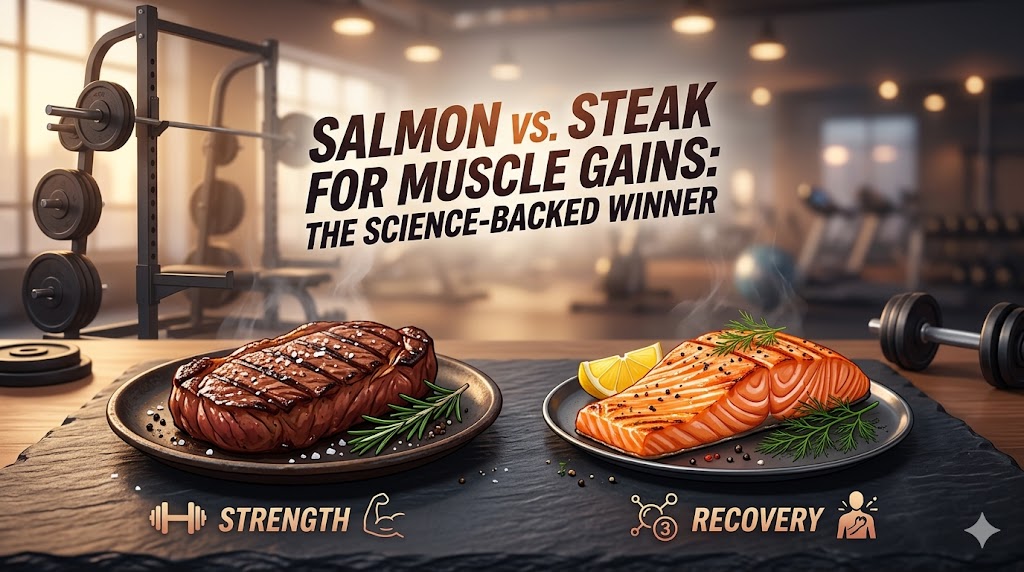
You’re standing in the grocery store aisle, fresh off a killer workout, staring down two gorgeous options: a juicy sirloin steak and a vibrant fillet of salmon. Both look delicious. Both are packed with protein. But when it comes to maximizing your hard-earned gains, which one deserves the crown?
While old-school bodybuilding lore might tell you to load up exclusively on red meat, modern nutritional science says it’s not that simple. A head-to-head steak vs salmon health comparison shows that choosing between these two muscle-building powerhouses is about much more than just counting grams of protein.
Let's dive into the science of protein quality, post-workout recovery, and strength adaptation to find out how to tailor your plate for peak performance.
The Quick Verdict: Steak or Salmon?
Short on time? Here is the fast track to making your decision:
Choose Steak if your primary focus is raw strength, cellular energy, and packing in dense, lean protein with minimal extra fat. Lean steak is a goldmine for creatine and iron, which fuel explosive gym sessions.
Choose Salmon if you want to crush post-workout soreness, protect your joints, and keep systemic inflammation at bay. Salmon's high concentration of omega-3 fatty acids makes it a recovery champion.
Let's Talk Protein Quality: The Science of Muscle Building
Before we put these two foods in the ring, we need to understand what makes a protein "high quality". Scientists use a few different metrics to grade protein, such as Biological Value (BV), Net Protein Utilization (NPU), and the Protein Digestibility Corrected Amino Acid Score (PDCAAS).
Basically, a high-quality protein has to deliver all the essential amino acids (the building blocks your body can't make on its own) in the right proportions, and your body needs to be able to digest and absorb them easily.
Beef steak scores off the charts across all of these metrics:
Protein Metric | Beef Steak | Whole Eggs | Soy Protein | Wheat Gluten |
Protein Efficiency Ratio (PER) | 2.9 | 3.9 | 2.2 | 0.8 |
Biological Value (BV) | 80 | 100 | 74 | 64 |
Net Protein Utilization (NPU) | 73 | 94 | 61 | 67 |
PDCAAS Score | 0.92 | 1.00 | 1.00 | 0.25 |
As an animal protein, salmon is right up there with beef, offering an equally complete and highly digestible amino acid profile.
Eating high-quality animal proteins like steak and salmon is incredibly important for keeping your muscles happy. In fact, a major analysis of clinical trials showed that animal proteins lead to significantly better muscle mass gains in younger adults (under age 60) compared to plant proteins like rice, wheat, or hemp. While you can build muscle on a plant-based diet, animal proteins naturally give you everything you need for muscle repair without requiring complex food combining or extra supplements.
In This Corner: Steak, the Strength Champion
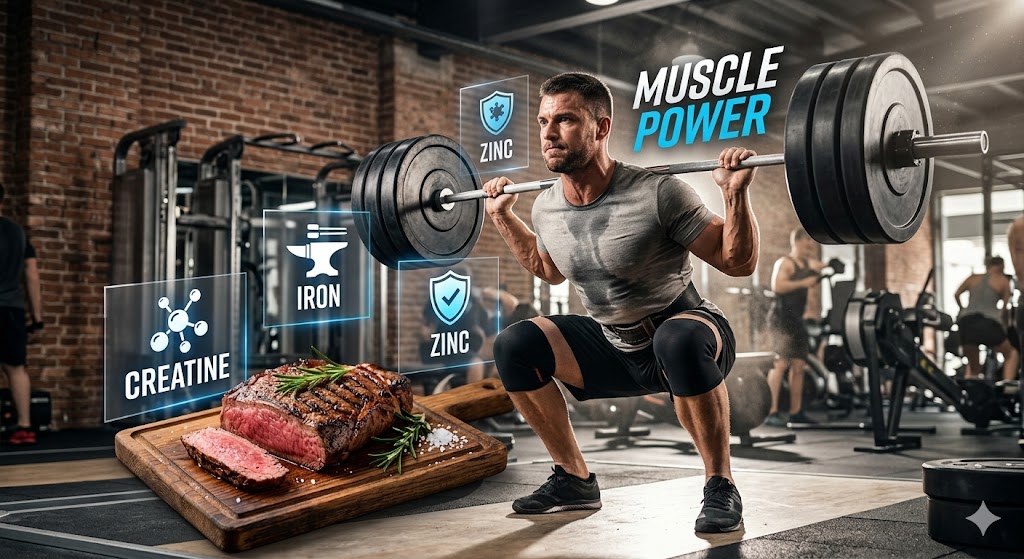
There’s a reason beef is synonymous with strength. Beyond its highly bioavailable protein, steak packs a serious punch of muscle-building micro-nutrients:
The Pros:
Natural Creatine: Creatine is the ultimate fuel for short, explosive bursts of power—like heavy squats or bench presses. A kilogram of raw beef contains about 4.5 grams of natural creatine, meaning a standard steak portion provides a solid, natural dose to help saturate your muscle stores.
Heme Iron & Zinc: Steak is loaded with heme iron, the type of iron your body absorbs best. Iron is crucial for transporting oxygen to your working muscles during heavy lifts, while zinc plays a key role in protein synthesis and muscle repair.
Pure Protein Density: Lean cuts of steak offer an exceptionally high ratio of protein-to-calories, letting you hit your macros without breaking your daily calorie budget.
The Cons:
Saturated Fats: Depending on the cut, steak can be high in saturated fats. To keep things heart-healthy, you’ll want to reach for cuts that fit the USDA "lean" guidelines (like top sirloin), which contain under 4.5 grams of saturated fat and less than 10 grams of total fat per serving.
In That Corner: Salmon, the Recovery King
If steak is about raw power, salmon is about smart recovery. This oily fish brings things to the table that red meat simply can't match:
The Pros:
Omega-3 Superpowers: Salmon is famous for its high concentration of omega-3 fatty acids, specifically EPA and DHA. These healthy fats integrate directly into your muscle cell membranes, keeping them stable and strong.
Anti-Inflammatory Action: Omega-3s act as natural inflammation-fighters, helping to shut down the inflammatory cascade that causes severe muscle soreness after a tough workout.
Astaxanthin Boost: That beautiful pinkish-orange color in wild salmon comes from astaxanthin, a highly potent antioxidant that helps protect your cells from oxidative stress and supports joint and skin health.
The Cons:
Calorie Density (Farmed): Farmed Atlantic salmon is incredibly healthy, but it is also much higher in fat and calories than wild-caught options. If you are in a strict weight-loss phase, those extra calories can sneak up on you quickly if you aren't tracking carefully.
The Whole-Food Showdown: Fat vs. Absorption Speed
Your muscles rely on a steady flow of amino acids after a workout to kickstart muscle protein synthesis (MPS). Both steak and salmon do a fantastic job of stimulating this process. However, the fat content of your meal can actually dictate how fast those amino acids reach your muscles.
Fascinating research has shown that consuming a highly lipid-rich (high-fat) whole food can temporarily slow down post-exercise muscle protein synthesis. In a clinical trial, active adults who ate low-fat pork (4.4g fat) experienced significantly higher post-workout muscle protein synthesis rates (0.106% per hour) than those who ate identical amounts of protein from high-fat pork (20.6g fat, which yielded only 0.072% per hour). The fast-absorbing, low-fat meal created a quicker spike of essential amino acids and leucine in the bloodstream.
What does this mean for your steak vs salmon health comparison?
If you want speedy recovery right after a workout, lean towards low-fat options. Go for lean top sirloin steak (about 5% fat) or wild sockeye salmon (about 5-6% fat). Save the heavily marbled ribeyes or rich, farmed Atlantic salmon (which can exceed 13% fat) for rest days or delicious muscle-building dinners where fast absorption isn't as critical.
The Recovery Battle: Taming DOMS

We’ve all been there: two days after a leg workout, and you can barely walk down the stairs. This is Delayed-Onset Muscle Soreness (DOMS).
While red meat provides excellent protein for long-term muscle adaptation, salmon has a clear structural advantage when it comes to speed-tracking your recovery.
The EPA and DHA in salmon integrate into your muscle cell membranes. By doing so, they stabilize the cells and prevent muscle damage biomarkers like creatine kinase (CK) and lactate dehydrogenase (LDH) from spilling out into your system. Studies show that consistent omega-3 intake significantly reduces subjective pain from DOMS, preserves joint range of motion, and improves overall post-exercise muscle quality.
By regularly eating salmon, you can bounce back faster and tackle your next training session with full intensity.
By the Numbers: Nutrition Comparison
Let's look at how a cooked 100-gram (3.5 oz) serving of these foods stacks up under the microscope:
Raw Food Source (100g Portion) | Calories (kcal) | Protein (g) | Total Fat (g) | Saturated Fat (g) | Key Advantage |
Top Sirloin Steak (Lean Only) | 170 | 29.3 | 5.0 | 1.9 | Extreme protein density; rich in iron and zinc |
Wild Atlantic Salmon | 182 | 25.4 | 8.1 | 1.3 | Leaner fish profile; high natural EPA/DHA and astaxanthin |
Farmed Atlantic Salmon | 206 | 22.1 | 12.4 | 2.4 | Calorie-dense; excellent for mass building and healthy fats |
Tracking Your Gains with VoCal
Because the calories and fats can vary dramatically between wild sockeye salmon, farmed Atlantic salmon, and different cuts of steak, keeping an eye on your daily intake is key to reaching your fitness goals.
That is where VoCal comes in. Instead of typing in complicated search terms or guessing which species of salmon you just cooked, you can log your meals using simple voice commands.
Just say: "I just ate six ounces of grilled wild sockeye salmon and a baked potato," and VoCal will instantly log your protein, fats, and micronutrients. Tracking your muscle-building journey has never been this simple.
Frequently Asked Questions
Is steak or salmon better for building muscle?
Both are fantastic, highly bioavailable sources of complete animal protein. Lean steak is highly efficient for pure protein density with minimal fat, while salmon provides additional heart-healthy fats that support joint health and reduce post-workout soreness.
Does salmon actually reduce muscle soreness?
Yes! The omega-3 fatty acids in salmon help lower muscle cell inflammation, reducing the severity of DOMS (Delayed-Onset Muscle Soreness) and lowering systemic markers of muscle damage like creatine kinase.
Does eating high-fat steak or salmon slow down recovery?
An ultra-fatty food matrix can temporarily slow down how fast your body absorbs amino acids after a workout. For the absolute fastest post-workout nutrient delivery, choose lean steak cuts (like top sirloin) or wild-caught sockeye salmon.
Disclaimer: This comparison is for informational purposes only. It does not constitute medical advice, diagnosis, or personalized treatment recommendations. Always consult a healthcare professional or a registered dietitian before making significant changes to your diet or exercise routine.