
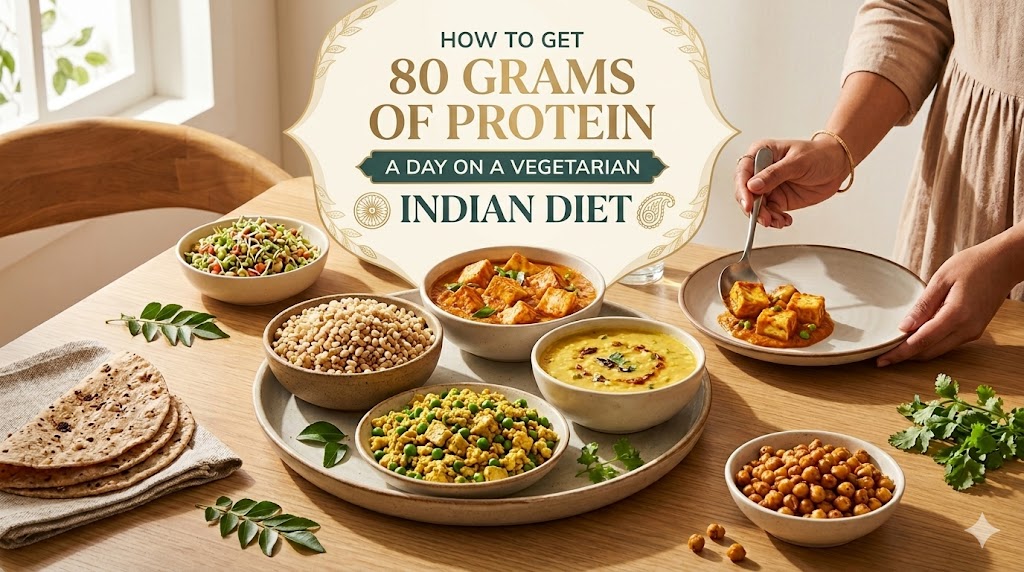
Let’s be real: the typical Indian vegetarian plate is a carb-heavy love affair. We adore our parathas, we live for our pulao, and we’d probably marry a samosa if we could. But when your fitness goals require a serious protein upgrade—like hitting that magic 80g-a-day mark—the "dal-chawal" routine can feel a little light on the "power" and a little heavy on the "nap."
The good news? You don't have to give up your heritage to find your gains. According to the latest 2024 guidelines from the National Institute of Nutrition (NIN), we just need a little plate-restructuring. Think of it as a wardrobe edit for your dinner: fewer basic cereals, more high-impact protein "accessories".
Here is your complete guide to hitting 80g of protein while keeping your Indian flavors front and center.
The Secret Sauce: The 3:1 Rule
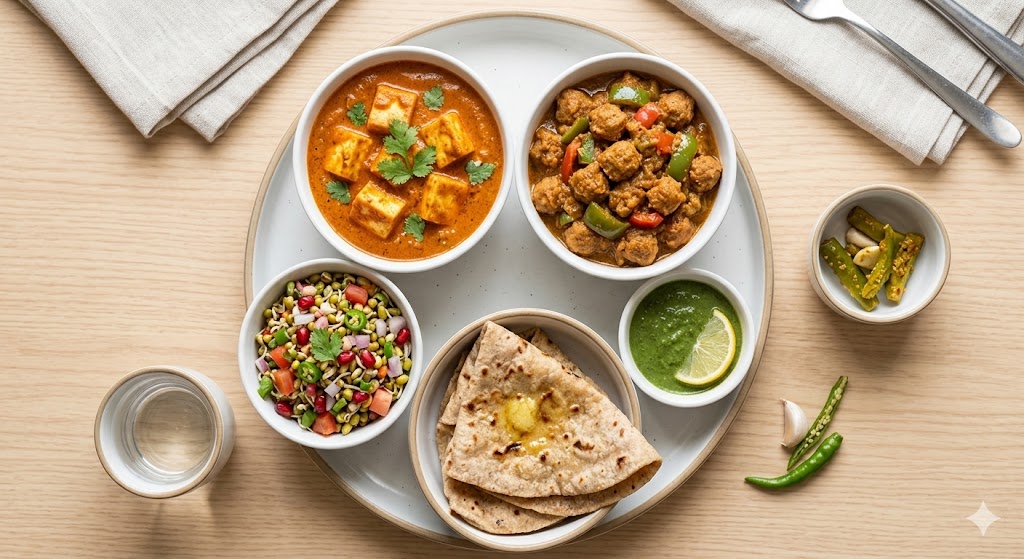
Traditionally, we treat dal like a side dish and rice like the main event. Flip the script! The experts at ICMR-NIN now suggest a 3:1 ratio: three parts protein-rich sides (like lentils, soy, or paneer) to one part grain. This small tweak is the ultimate hack for hitting your macros without feeling like you're on a "diet".
Meet Your Protein Powerhouses
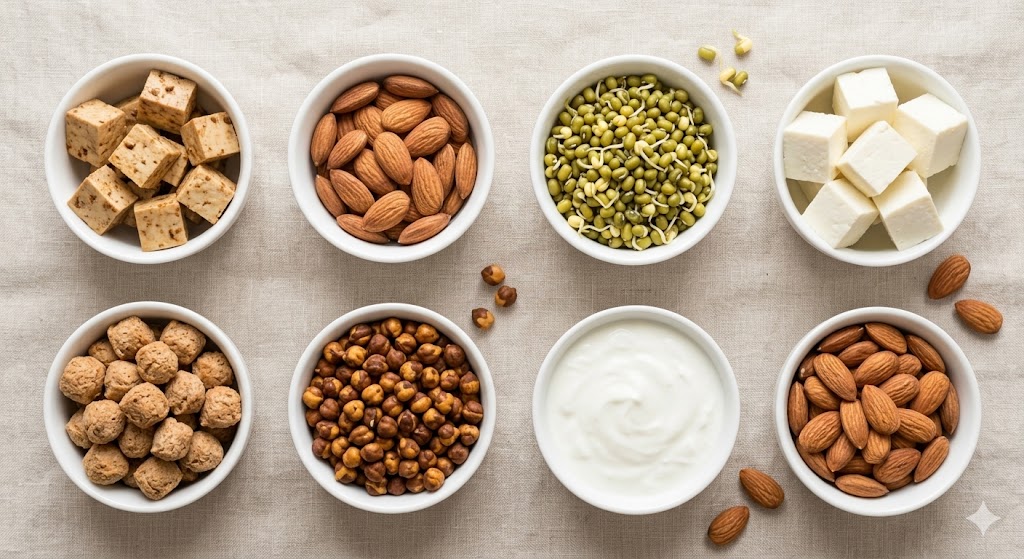
Not all veg sources are created equal. If you want to hit 80g without eating 5,000 calories, you need the heavy hitters.
1. Soy: The Absolute MVP
If protein were a Bollywood movie, soy chunks would be the lead actor. Soya chunks are roughly 52% protein in their dry state—that’s more than chicken or eggs! Plus, they contain all nine essential amino acids, making them a "complete" protein for muscle recovery.
Soy Product | Protein per 100g (Raw/Dry) | Protein per 100g (Cooked/Wet) |
Soya Chunks | 52.0g | ~17.0 - 21.0g |
Soybeans (Boiled) | 36.0 - 38.0g | ~17.0g |
Soya Paneer (Tofu) | 14.19 - 17.5g | ~14.19 - 17.5g |
2. The Dairy Queens: Paneer and Greek Yogurt
Paneer is the original vegetarian icon. With about 18-24g of protein per 100g, it’s a non-negotiable for your 80g goal. Want a pro tip? Swap your standard dahi for Greek yogurt (or "hung curd"). It’s more concentrated, meaning you get double the protein in every spoonful.
3. The "Power Couple": Complementary Pairing
Did you know that rice and beans are basically the "Romeo and Juliet" of nutrition? Individually, they are missing some amino acids. Together, they form a complete protein that your body can actually use to build muscle.
Food Group | What it’s Missing | What it has plenty of | Perfect Match |
Cereals (Wheat/Rice) | Lysine | Methionine | Dals & Legumes |
Legumes (Chickpea/Rajma) | Methionine | Lysine | Roti or Brown Rice |
Sprouting: Giving Your Beans a Glow-Up
Before you cook your moong or chana, give them some "beauty sleep." Soaking and sprouting isn't just for aesthetics; it actually reduces "anti-nutrients" like phytates that block protein absorption. Sprouting can reduce these blockers by up to 81%, making your meal much easier on your gut.
Your 80g Daily Roadmap
Hitting 80g is surprisingly easy when you spread it out. Here’s a sample day that feels like a feast:
Time | What's on the Plate | Highlight Source | Total Protein |
Breakfast | 2 Besan-Moong Chillas with Paneer filling | Besan/Paneer | ~22.0g |
Snack | 1 bowl Sprouted Moong Chaat with peanuts | Sprouts/Nuts | ~10.0g |
Lunch | 100g Soya Chunk Curry + 1 Roti + 1 bowl Curd | Soy/Dairy | ~25.0g |
Evening | 1 cup Roasted Chana + handful of Almonds | Legumes/Nuts | ~9.0g |
Dinner | 100g Grilled Tofu or Paneer with veggies | Soy/Dairy | ~16.0g |
Total | ~82.0g |
Technology is Your New Best Friend
The hardest part of 80g? Counting it all. This is where VoCal comes in. Instead of typing in every single ingredient (who has the time?), you just tap the mic and say, "I had two paneer chillas and a cup of chai."
Voice-based tracking is up to 98% accurate for calories and 93% for protein. It’s hands-free, hassle-free, and keeps you accountable while you’re busy being a boss.
The Bottom Line
Getting 80g of protein on a vegetarian Indian diet isn't just possible—it’s delicious. By prioritizing soy, dairy, and smart pairings, you’ll feel more energized and satiated than ever. Just remember: stay hydrated (aim for 2.5–3 liters a day) and keep that protein coming!
Frequently Asked Questions (FAQ)
1. Is 80g of protein necessary for everyone?
Not necessarily. Protein needs depend on your body weight, activity level, and goals. Sedentary adults may need less, while those into strength training or fat loss may benefit from higher intake.
2. Can I hit 80g protein without soy?
Yes, but it’s harder. You’ll need to rely more on paneer, dairy (especially Greek yogurt), lentils, chickpeas, and nuts. Portion sizes may need to increase.
3. Is too much soy harmful?
Moderate soy consumption is generally safe for most people. Current research shows no strong evidence that normal dietary soy negatively affects hormones in healthy individuals.
4. What’s the best time to consume protein?
Spread your intake across meals. Aim for 15–25g per meal for better absorption and muscle protein synthesis.
5. Are plant proteins inferior to animal proteins?
Not inferior—just different. Many plant proteins lack one or more essential amino acids, but combining foods (like dal + rice) ensures you get a complete amino acid profile.
Disclaimer: This content is for informational purposes only and not a substitute for professional medical advice. Nutritional needs vary by individual. Consult a healthcare provider or dietitian before making major dietary changes. Values mentioned are approximate and may vary by ingredients and preparation.