
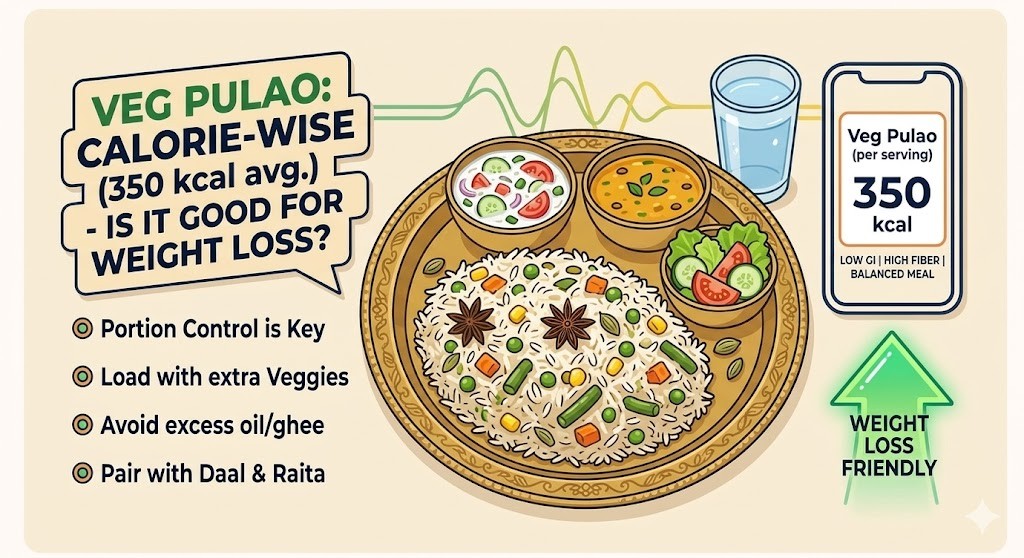
If you’re a fan of Indian cuisine, you’ve likely wondered: can I eat my favorite rice dish and still fit into my favorite jeans? The short answer is a resounding yes! Vegetable pulao isn't just a comfort food; when done right, it’s a nutritional powerhouse that can actually help you on your weight loss journey.
Let’s dive into the data to see how this aromatic dish stacks up.
How Many Calories in 1 Plate Veg Pulao?
The burning question for every fitness enthusiast is: how many calories in 1 plate veg pulao? According to official data from the Indian Council of Medical Research (ICMR) and the National Institute of Nutrition (NIN), a standard 200g serving of homemade vegetable pulao contains approximately 201 to 206 calories.
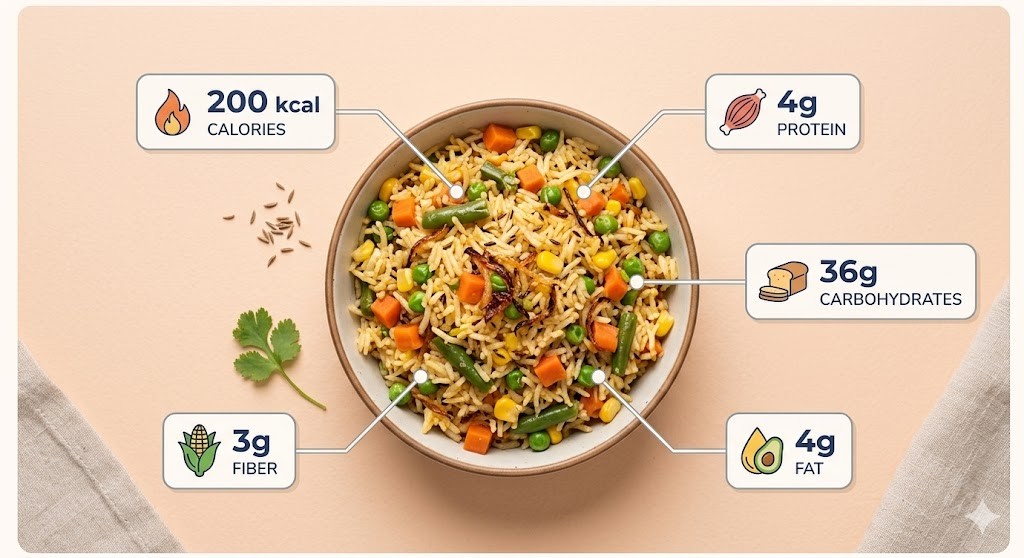
Here is a quick look at what’s actually on your plate:
Nutrient | Amount per 200g Serving |
Energy | 201 - 206 kcal |
Protein | 4.0 - 4.2 g |
Carbohydrates | 36.0 - 37.2 g |
Total Fat | 4.0 - 4.1 g |
Dietary Fiber | 2.8 - 3.3 g |
Values based on IFCT 2017 data.
Watch Out for Restaurant Portions!
While homemade versions are light, restaurant plates are often much larger and "oiler." A large restaurant plate can easily climb to 375–500 calories due to extra ghee and massive portion sizes.
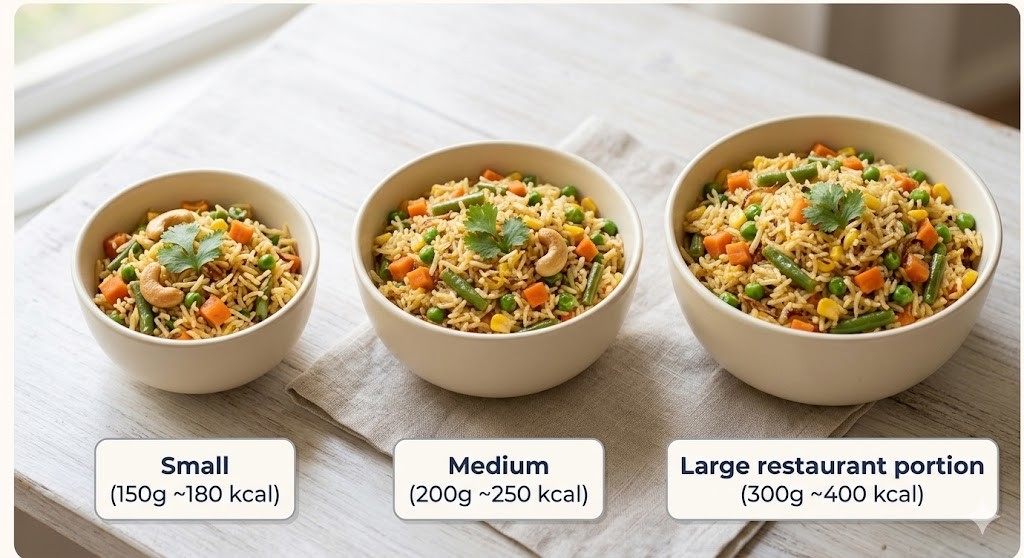
Serving Type | Weight (Grams) | Caloric Content (kcal) |
Small Bowl | 150 g | ~187 kcal |
Medium Bowl (Standard) | 200 g | ~250 kcal |
Large Restaurant Plate | 300 g | ~375 kcal |
Why Veg Pulao is a Weight Loss Winner
It’s not just about the numbers; it’s about how those calories work for you. Vegetable pulao is often better for weight loss than plain white rice because of its fiber content.
Fiber Power: The veggies (carrots, peas, beans) add volume and fiber, which keeps you feeling full longer and prevents "hanger" mid-afternoon.
The "Cool" Factor: Research shows that if you cook pulao and let it cool down (or eat it the next day after reheating), it forms resistant starch. This type of starch acts like fiber and doesn't spike your blood sugar as much!.
Metabolic Spices: Spices like cumin, cardamom, and cinnamon aren't just for smell—they can help improve insulin sensitivity and support your metabolism.
Smart Swaps for Your Pulao
To make your pulao even more weight-loss-friendly, consider the grain you use. Not all rice is created equal!
Rice Type | Why it Matters | |
White Basmati Rice | ~70 - 73 (High) | Quick energy, but can spike sugar. |
Brown Basmati Rice | ~50 - 65 (Medium) | More fiber, keeps you full longer. |
Millets (Foxtail) | ~54 (Low) | High protein and mineral content. |
Protein Boost
Traditional pulao is a bit low on protein. To fix this, simply toss in some soya chunks (which have a whopping 52g of protein per 100g!) or low-fat paneer to help maintain muscle while you lose fat.
Pro-Tips for the Perfect Plate
Veggies First: Aim for a 1:1 ratio of rice to vegetables. This adds volume without the calorie heavy-lifting.
Oil Control: One tablespoon of oil or ghee has about 120 calories. Try using non-stick pans to cut that in half!
Pair it Right: Always serve your pulao with a side of yogurt (raita) or a bowl of dal. The extra protein and probiotics help flatten your blood sugar response.
Effortless Tracking with Vo-cal
Tired of typing every single ingredient into an app? With Vo-cal, you can simply say, "I had a medium bowl of veg pulao with extra peas and a side of curd," and let the AI do the heavy lifting.
Voice-based tracking is up to 98% accurate for calories and significantly faster than manual entry. It’s like having a nutritionist in your pocket who actually listens!
FAQs
How many calories are in 1 plate of restaurant veg pulao?
A standard restaurant plate usually weighs between 300g and 350g and contains approximately 375 to 450 calories. This is higher than homemade pulao due to larger portions and increased use of oil and garnishes.
Can I eat pulao on a low-carb diet?
A standard cup of pulao contains about 36-40g of carbohydrates, which may be too high for strict ketogenic diets (which often limit carbs to 20-50g per day). However, it fits well within a moderate-carb or balanced-diet approach.
Which rice is best for weight loss pulao?
Brown basmati rice or parboiled (Sela) rice are better options due to their lower glycemic index and higher fiber content compared to polished white rice.
Does reheating pulao really lower the calories?
While the total energy content remains similar, reheating increases "resistant starch," which is not fully absorbed. This improves the metabolic response and may help you feel fuller for longer.
Is it better to eat pulao for lunch or dinner?
For weight loss, eating carbohydrate-rich meals like pulao for lunch is often better, as it provides energy for the remainder of the day's activities and prevents high blood sugar levels before sleep.
Disclaimer: This content is for informational purposes only and does not constitute medical advice. Please consult a healthcare professional before starting any new diet or weight loss program.