
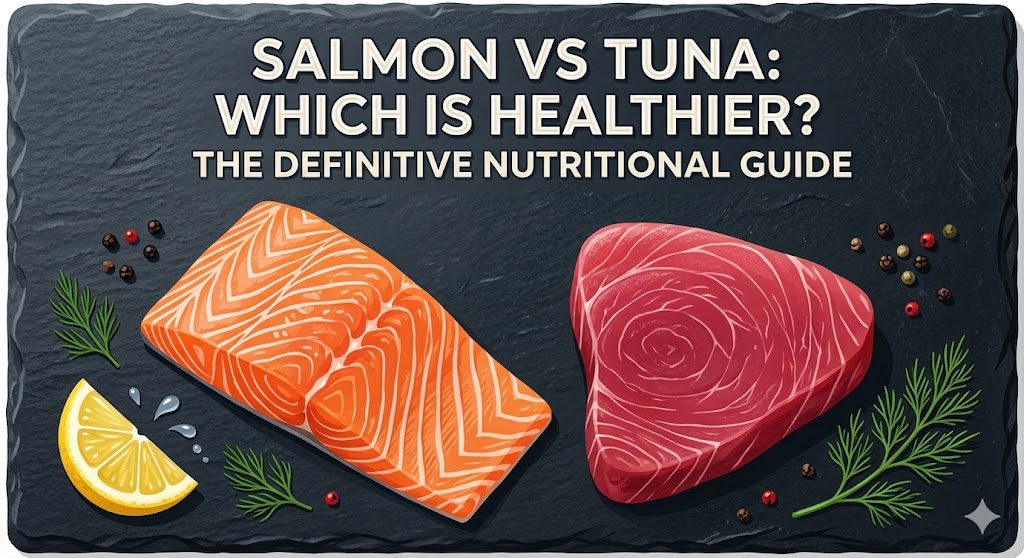
Picture this: You are standing in the grocery store aisle, staring blankly at the seafood section. In one hand, you’ve got a sleek, fresh fillet of salmon. In the other, a handy, budget-friendly can of tuna. Both are absolute superstars in the healthy eating world, but you find yourself asking the ultimate question: salmon vs tuna which is healthier?
It is a classic culinary showdown. While both of these swimming legends serve up high-quality, complete protein, they have completely different nutritional profiles, tastes, and vibes. One is a rich, buttery indulgence, while the other is a lean, mean, protein machine.
Let’s dive deep into the ultimate tuna vs salmon nutrition battle. We’ll look at the healthy fats, the vitamins, the mercury risks, and how to track them effortlessly so you can decide which fish deserves a permanent spot on your plate.
Culinary Differences: Butter vs. Steak
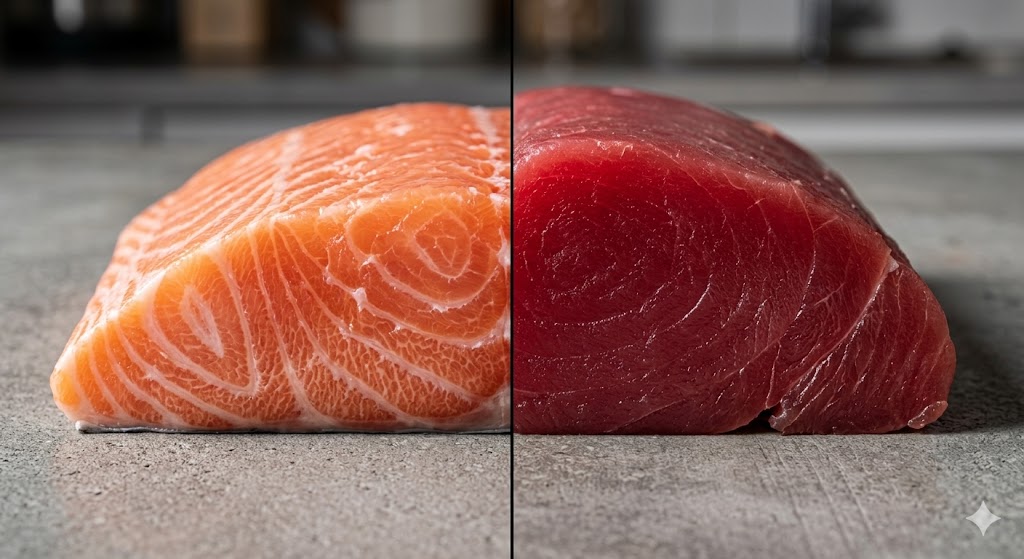
Before we talk numbers, let’s talk flavor and texture. If white fish is the "chicken of the sea," salmon and tuna are the heavy-hitting red meats of the ocean.
Tuna: Tuna is a muscular, incredibly active predator. Because it swims continuously, its muscles contain high levels of myoglobin—an oxygen-binding protein that gives raw tuna its deep red, steak-like color. Once cooked or canned, it turns a light gray or pink. It has a firm, meaty texture and a mild, clean flavor.
Salmon: Salmon owes its gorgeous pinkish-orange color to its diet of krill and tiny, carotenoid-rich shellfish. Thanks to its high fat content, salmon is incredibly moist, tender, and flakes apart beautifully. It has a much richer, oily, and robust flavor that holds up well to grilling, baking, and roasting.
Tuna vs Salmon Nutrition: The Macronutrient Breakdown
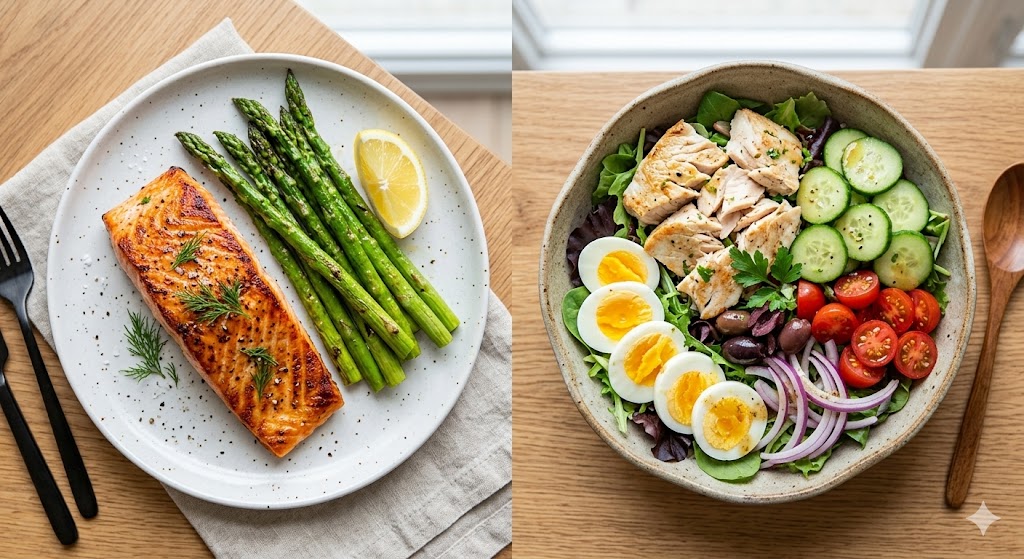
When it comes to the raw numbers, the biggest difference between these two fish comes down to one thing: fat.
Tuna is an ultra-lean protein. It packs a massive protein punch with almost zero fat. Salmon, on the other hand, is a proud "fatty" fish. That means it has more calories, but those calories are packed with incredibly healthy, heart-protective fats.
Here is how a 100-gram (about 3.5-ounce) cooked portion of each fish stacks up :
Seafood Variety (Per 100g Cooked Serving) | Calories | Protein | Total Fat | Saturated Fat | Carbs |
Farmed Atlantic Salmon | 206 | 22.1g | 12.4g | 2.40g | 0.0g |
Wild Atlantic Salmon | 182 | 25.4g | 8.13g | 1.26g | 0.0g |
Wild Sockeye Salmon | 156 | 26.0g | 5.57g | 0.97g | 0.0g |
Canned Light Tuna (Skipjack, in Water) | 116 | 25.5g | 0.80g | 0.20g | 0.0g |
Canned Albacore Tuna (White, in Water) | 128 | 23.6g | 3.00g | 1.00g | 0.0g |
Fresh Yellowfin Tuna | 139 | 29.2g | 1.20g | 0.30g | 0.0g |
Tuna is the calorie-deficit champion: If you are trying to cut calories or lose weight, canned light tuna is a massive win. You get roughly 25 grams of protein for a tiny 114 to 116 calories!
Salmon is the nutrient-dense powerhouse: While salmon has more than double the fat and calories of light tuna, those lipids deliver a motherlode of health benefits.
Salmon vs Tuna Benefits: The Omega-3 Showdown
You’ve probably heard of omega-3 fatty acids. These are essential fats your body can't make on its own, meaning you must get them from your diet. They are famous for lowering blood pressure, reducing systemic inflammation, and protecting your brain and heart.
While plants like flaxseeds contain a basic form of omega-3 called ALA, your body is notoriously bad at converting it into the active forms—EPA and DHA—that your heart and brain actually use. Marine life provides EPA and DHA directly.
And in this category, salmon is the undisputed king.
Fish Species (Per 100g Cooked Portion) | Combined EPA + DHA | Daily Target Equivalent (250mg/day) |
Farmed Atlantic Salmon | 2,260 - 2,648mg | >900% |
Wild Atlantic Salmon | 1,043 - 1,841mg | >400% |
Canned Albacore Tuna | 860mg | 344% |
Canned Light Tuna | 120mg | 48% |
Fresh Yellowfin Tuna | 120mg | 48% |
A single serving of farmed Atlantic salmon provides over 2,200 mg of EPA and DHA. That easily blows past the daily recommended target of 250 mg! Consuming these fats also has massive benefits during pregnancy, reducing the risk of early preterm births (prior to 34 weeks) by a stunning 42%.
Vitamins and Minerals: Sunshine vs. Thyroid Support
Both of these fish are loaded with micronutrients, but they have completely different superpowers :
Vitamin D3 (Salmon’s win): Salmon is one of the very few foods that naturally contains high amounts of Vitamin D3—essential for bone density, calcium absorption, and immune health. A serving of wild sockeye salmon offers 17 mcg (670 IU), covering 84% of your daily needs. Tuna only offers a tiny fraction of that.
Selenium and Iodine (Tuna’s win): Tuna is a powerhouse for your thyroid. It is incredibly rich in selenium, which is required to activate thyroid hormones. A serving of tuna easily exceeds your daily selenium requirement. It also has more iodine than salmon, which is another crucial thyroid nutrient.
Folate: Salmon contains about 17 times more folate (Vitamin B9) than tuna, making it a stellar option for cellular repair and pregnancy support.
Acid vs. Alkaline: Fresh tuna has a higher potential renal acid load (PRAL) score of 14.1 compared to salmon’s 5.9, meaning tuna is slightly more acid-producing in the body.
The Mercury Concern: How Safe is Your Fish?
You can't talk about fish without mentioning mercury. Mercury is a heavy metal that can build up in marine life, and too much of it is toxic to our brains.
Because tuna is a large predator that lives longer and eats smaller fish, it accumulates significantly more mercury than salmon. Salmon is incredibly clean and falls into the FDA's safest category.
Here is how they break down by FDA and EPA guidelines :
Seafood Species | Average Mercury Concentration (ppm) | FDA/EPA Dietary Category | Recommended Weekly Servings |
Canned Salmon | 0.01 | Best Choice | 2 to 3 portions |
Fresh/Frozen Salmon | 0.02 | Best Choice | 2 to 3 portions |
Canned Light Tuna (Skipjack) | 0.13 | Best Choice | 2 to 3 portions |
Canned Albacore (White) Tuna | 0.35 | Good Choice | Max 1 portion (4 oz) |
Yellowfin Tuna | 0.35 | Good Choice | Max 1 portion |
Bigeye Tuna | 0.69 | Avoid | Do not consume |
If you are pregnant, nursing, or feeding young children, salmon and canned light tuna are your safest bets. You should limit albacore or yellowfin to once a week and avoid bigeye tuna entirely.
Does Cooking and Canning Affect the Nutrition?
Yes! How you prepare your fish matters just as much as which fish you buy:
Skip the deep fryer: High-heat deep frying can destroy up to 70% to 85% of those precious omega-3s in fish while soaking up unhealthy oxidized oils. Opt for baking, grilling, or gentle pan-searing instead.
Canned in water vs. oil: When buying canned tuna, always grab the water-packed kind. Tuna packed in vegetable oil introduces large quantities of processed linoleic acid (omega-6), which ruins the healthy, anti-inflammatory omega ratio of the fish.
Is One Better Than the Other?
The short answer? It depends on your personal health goals!
Choose salmon if: You want to support heart health, boost brain function, get plenty of Vitamin D, or need a nutrient-dense meal for pregnancy.
Choose tuna if: You are on a strict low-calorie diet, trying to maximize protein per calorie, meal-prepping on a budget, or need a quick, no-cook protein source.
Summary Comparison
To help you decide at a glance:
Salmon vs tuna which is healthier for heart and brain: Salmon wins.
Salmon vs tuna which is healthier for strict fat loss: Tuna wins.
The perfect strategy? Eat both! Alternating between salmon and tuna gives you the absolute best of both worlds—getting the ultra-lean protein of tuna alongside the heavy-hitting omega-3s and Vitamin D of salmon.
Seamless Food Logging with VoCal
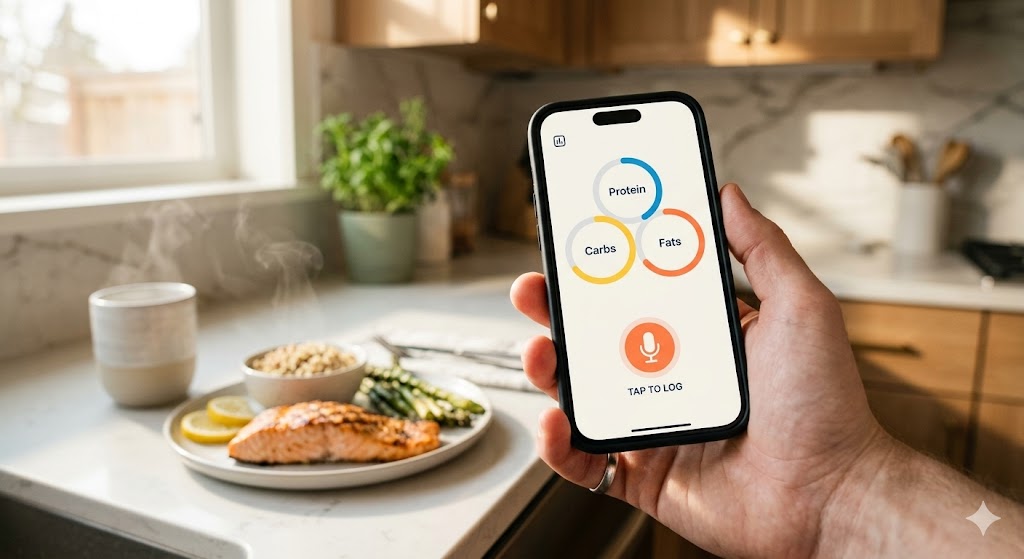
Whether you choose the lean muscle-building power of tuna or the healthy fat indulgence of salmon, keeping track of your daily macros is the key to hitting your health goals.
But let's be real—typing out "4 ounces of baked wild sockeye salmon" into a database every single day is exhausting.
That’s where VoCal makes life easy. It is a voice-activated calorie tracking app that lets you log your meals just by talking. You just tap the mic and say: "I had a grilled salmon fillet with a side of asparagus." Advanced AI instantly calculates the calories, protein, and healthy fats, logging it in 15 seconds flat! It’s the easiest way to stay consistent with your nutrition goals.
Frequently Asked Questions (FAQs)
Is it safe to eat canned tuna every day?
No, daily consumption of canned tuna is generally not recommended due to mercury risks. While canned light tuna is classified as a "Best Choice" by the FDA and EPA, it should still be limited to 2 to 3 servings per week. Canned albacore contains higher mercury levels and should be limited to a maximum of one serving per week.
What are the main nutritional differences between wild and farmed salmon?
Farmed Atlantic salmon typically contains higher total fat and a greater absolute amount of omega-3 fatty acids per serving. However, wild salmon (such as sockeye) is lower in overall calories, has a higher protein density, and contains more potassium, iron, and Vitamin D3.
Is canned salmon with bones safe and healthy to eat?
Yes, canned salmon with bones is safe and highly nutritious. The canning process softens the bones, making them easily digestible. They serve as an exceptional source of dietary calcium, providing between 221 mg and 277 mg of calcium per serving compared to only 15 mg in fresh boneless fillets.
Why does raw tuna have a much darker color than raw salmon?
The color difference is due to the concentration of myoglobin and iron in the muscle tissues. Tuna is a highly active predator that swims continuously, requiring large amounts of oxygen-binding myoglobin, which gives its raw meat a deep red or purple hue. Salmon has a lighter pink or orange hue due to dietary carotenoids absorbed from its marine diet.
Disclaimer: This article is for educational and informational purposes only. Always consult a qualified healthcare professional or registered dietitian before making major changes to your diet or therapeutic nutrition plan.