
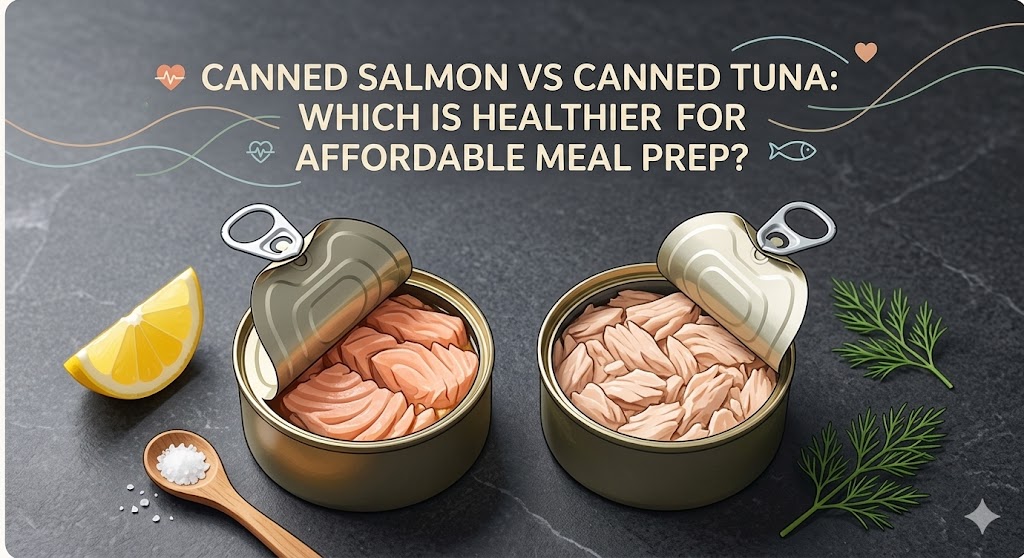
Ah, the canned food aisle. It is Sunday afternoon, you are planning your meals for the week, and you find yourself staring at two shiny cylinders of seafood goodness. In your left hand: a classic, budget-friendly can of light tuna. In your right hand: a sleek, slightly more premium can of wild-caught pink salmon. You ask yourself the ultimate question: salmon vs tuna which is healthier?
The truth is, both of these shelf-stable swimmers deserve a spot in your pantry, but they are definitely not identical twins. While tuna is the undisputed, ultra-lean king of pure protein, canned salmon is a certified heavy-hitter when it comes to healthy fats, brain boosts, and bone-strengthening vitamins.
If you are trying to build a healthier body on a budget, knowing how to choose between them can make or break your grocery list. Let’s dive deep into the ultimate canned fish face-off to find the best canned fish for meal prep for your specific health goals.
The Macronutrient Matchup: Lean Muscle vs. Healthy Fats
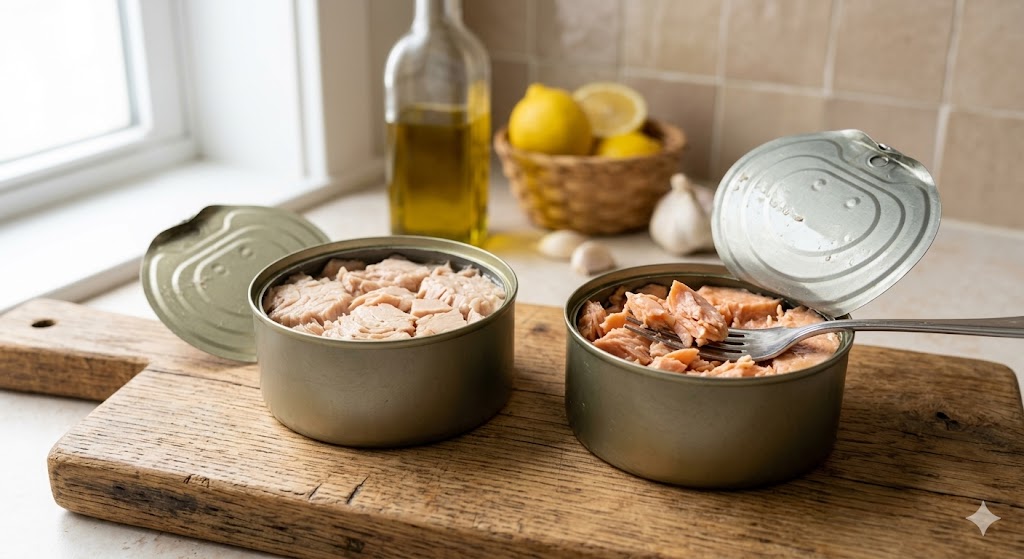
Let’s start with the basics: calories and macros. Depending on whether you are trying to stay in a strict calorie deficit or looking to feel full until dinner, one of these fish has your back.
Tuna is basically the swimmer's version of chicken breast—ultra-lean, packing a massive protein punch with almost zero fat. Salmon, on the other hand, is a fatter cold-water fish. But don't let the word "fat" scare you—this is the glorious, heart-healthy kind of fat that actually helps your body thrive.
To see how they stack up side-by-side, here is the nutritional breakdown per standard 100-gram (about 3.5 ounces) drained serving:
Macronutrient Profiles of Common Canned Fish Varieties (per 100g)
Fish Variety | Calories (kcal) | Protein (g) | Total Fat (g) | Omega-3 EPA+DHA (mg) | Mercury Level (ppm) |
Canned Light Tuna (Skipjack) in Water | 116 | 25.5 | 0.8 | 120 | 0.126 |
Canned Albacore (White) Tuna in Water | 128 | 23.6 | 3.0 | 860 | 0.350 |
Canned Pink Salmon (Drained) | 136 | 23.6 | 5.2 | 1,090 | 0.030 |
Canned Sockeye (Red) Salmon (Drained) | 167 | 24.0 | 7.4 | 1,270 | 0.010–0.022 |
As the numbers show, if you are looking to get 25 grams of pure protein for the fewest possible calories, canned light tuna is the clear champ. You only have to "spend" about 114 to 116 calories to hit that target, compared to 136 calories for pink salmon and 167 calories for sockeye.
However, salmon has a secret weapon: satiety. Those healthy fats slow down gastric emptying, meaning a salmon-packed lunch will keep your stomach quiet and stop you from raiding the office snack cabinet at 3 PM.
Bottom Line: Choose canned tuna if your main goal is getting the absolute most protein for the fewest calories. Choose canned salmon if you want a fatter, more balanced meal that keeps you feeling full and satisfied for hours.
Micronutrient Superpowers: Omega-3s, Vitamin D, and Calcium
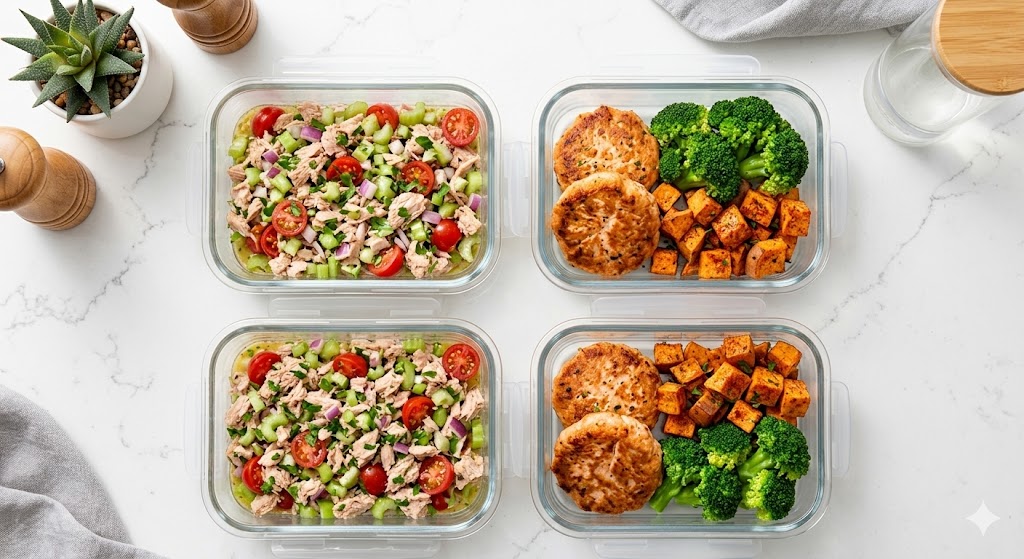
Now let's ask the big question: is canned salmon healthier than canned tuna? When we look past basic protein and peak at the vitamins and minerals, salmon starts to show off.
The Colossal Omega-3 Gap
Your body cannot produce essential omega-3 fatty acids on its own, meaning you have to get them from your diet. These super-fats are famous for fighting systemic inflammation, keeping your brain sharp, and protecting your heart.
When it comes to these anti-inflammatory champions, salmon absolutely dominates tuna. Canned pink salmon packs an impressive 1,090 mg of omega-3s per serving, while canned light tuna has just 120 mg. That means pink salmon has 9 times more omega-3s than light tuna! Even albacore tuna, which is fatter, still cannot match wild salmon's omega-3 power.
The Bone-Building Duo: Vitamin D and Calcium
Did you know that most Americans struggle to get enough Vitamin D? Salmon is one of the exceptionally rare foods that naturally contains it. In fact, canned salmon has about 14 times more Vitamin D than canned tuna! A single serving of canned sockeye salmon offers over 100% of your daily value.
And here is a quirky canned food secret: those tiny, soft bones in canned salmon are a nutritional goldmine. Because of the intense heat used in the canning process, these little pin bones soften to the point where they melt when mashed with a fork. Eating canned salmon with the bones intact gives you a massive calcium boost—roughly 212 mg of highly bioavailable bone-strengthening calcium per serving!
Bottom Line: Canned salmon takes the crown for overall micronutrient density. It is packed with omega-3 fats, natural vitamin D, and bone-building calcium, making it a true superfood.
The Mercury Talk: Safety First
You’ve probably heard warnings about mercury in fish. Mercury is a heavy metal that can build up in your body over time, posing risks to your nervous system and brain health.
So, how do our two shelf-stable contenders compare? It all comes down to where they sit on the marine food chain.
Tuna are large, long-lived predators that eat other fish, which means they absorb and retain more mercury in their muscle tissue. Salmon, however, are smaller, eat lower on the food chain, and have shorter lifespans, meaning they barely accumulate any mercury at all.
The FDA and EPA break it down into simple categories :
Canned Salmon: Rated a "Best Choice". It has microscopic mercury levels (around 0.01 to 0.03 ppm) , making it safe to eat 2 to 3 times a week—even for kids and pregnant women.
Canned Light Tuna (Skipjack): Also a "Best Choice". With about 0.13 ppm of mercury, it's safe for most adults to eat up to three times a week.
Canned Albacore (White) Tuna: Rated a "Good Choice". It has a much higher mercury level (0.35 ppm). You should limit albacore to just one serving (6 ounces) per week.
Bottom Line: Canned salmon is incredibly low in mercury and safe for frequent consumption. Canned light tuna is fine in moderation, but you should limit white albacore tuna to once a week.
Affordable Meal Prep: Saving Cash and Time
If you are on a tight budget, you might be leaning toward tuna simply because of the price tag. And you wouldn't be wrong! Canned light tuna is historically one of the cheapest high-quality protein sources on the planet.
But meal prep isn't just about the raw cost of the can; it’s about how you use it to stay on track. Let’s look at how to get the most bang for your buck.
Comparing the Practical Stuff
Metric / Feature | Canned Light Tuna | Canned Salmon (Pink/Sockeye) | Frozen Salmon Fillets |
Average Cost per 25g Protein | ~$1.10 | ~$2.70 | ~$1.80 |
Preparation Requirement | Zero-prep; ready to eat directly from the container. | Minimal; require draining and optional mashing of pin bones. | Requires cooking (baking, air-frying, or pan-searing). |
Unopened Shelf Life | 2 to 5 Years in a cool, dry pantry. | 2 to 5 Years in a cool, dry pantry. | 3 to 4 Months in a standard freezer. |
Optimal Meal Prep Application | Cold tuna salads, high-protein grain bowls, and low-calorie wraps. | Baked salmon patties, fish burgers, and rich pasta bakes. | Structured roasted meal-prep bowls with starches and vegetables. |
Pro-Tip: Rinsing Away the Salt
One sneaky downside to canned fish is sodium. To preserve the fish and keep it tasty, manufacturers often pack it with salt.
If you're watching your blood pressure or hate feeling bloated after a meal, try this easy kitchen hack: dump your canned fish into a mesh strainer and rinse it under cold water for one minute. Rinsing can cut the sodium content by up to 40%!
Bottom Line: Canned light tuna is the ultimate budget-friendly champion. However, if you want salmon's health benefits without paying premium canned prices, buying frozen salmon fillets in bulk is a fantastic, cost-effective alternative.
The Bottom Line
Both canned tuna and canned salmon are highly nutritious, incredibly convenient, and perfect for your weekly meal prep.
Pick canned tuna if you are on a tight budget, need a low-calorie protein source for weight loss, or want a quick, zero-cook lunch. Just stick to water-packed light tuna for the best calorie-to-protein ratio and lower mercury.
Pick canned salmon if you want to boost your cardiovascular health, load up on anti-inflammatory omega-3s and Vitamin D, or need a fatter fish to keep you feeling full all afternoon.
Can't decide? The ultimate play is a hybrid strategy: grab canned light tuna for 2 to 3 quick lunches during the week, and bake frozen wild-caught salmon fillets for 1 or 2 cozy weeknight dinners. It's the best of both worlds for your body and your bank account!
Keep Your Goals on Track with VoCal
Whether you choose the lean power of tuna or the omega-3 rich goodness of salmon, logging your meals is the secret to smashing your fitness goals.
With VoCal, tracking your tinned fish intake is as easy as talking to a friend. Instead of spending ten minutes searching databases and scanning barcodes, you can simply speak your meal aloud.
Just say: "I logged one can of drained pink salmon with a tablespoon of light Greek yogurt and a squeeze of lemon." Vo-cal’s smart voice-recognition instantly registers the correct macros and healthy fats, helping you keep your calorie budget on lock without the headache.
Frequently Asked Questions
Is canned salmon actually healthier than canned tuna?
Generally, yes. Canned salmon comes out on top because it has much higher amounts of anti-inflammatory omega-3 fatty acids, about 14 times more Vitamin D, and significantly less mercury than canned tuna. However, canned tuna is still the champion for pure, low-calorie, low-fat protein.
Is it safe to eat canned tuna every single day?
It is best not to eat canned tuna daily due to the risk of mercury accumulation. While light canned tuna (skipjack) has lower mercury, albacore (white) tuna has higher levels and should only be eaten once a week. For a daily seafood fix, canned salmon or sardines are much safer, low-mercury options.
Do I really need to eat the bones in canned salmon?
You don't have to, but you definitely should! The high-heat canning process completely softens the salmon's tiny pin bones, making them totally soft and edible. When you mash them into the fish with a fork, they disappear completely while providing a massive boost of dietary calcium.
Does rinsing canned fish actually reduce the sodium?
Yes! Rinsing drained canned fish under cold running water for about a minute can wash away up to 40% of the added sodium. It’s an easy, dietitian-approved trick to make your meal prep even friendlier for your heart.
Disclaimer: This article is for informational and educational purposes only and does not substitute for professional medical advice, clinical diagnosis, or treatment. Always consult with a qualified healthcare professional, physician, or registered dietitian before beginning any new diet, supplement regimen, or making significant changes to your existing nutritional plan.