
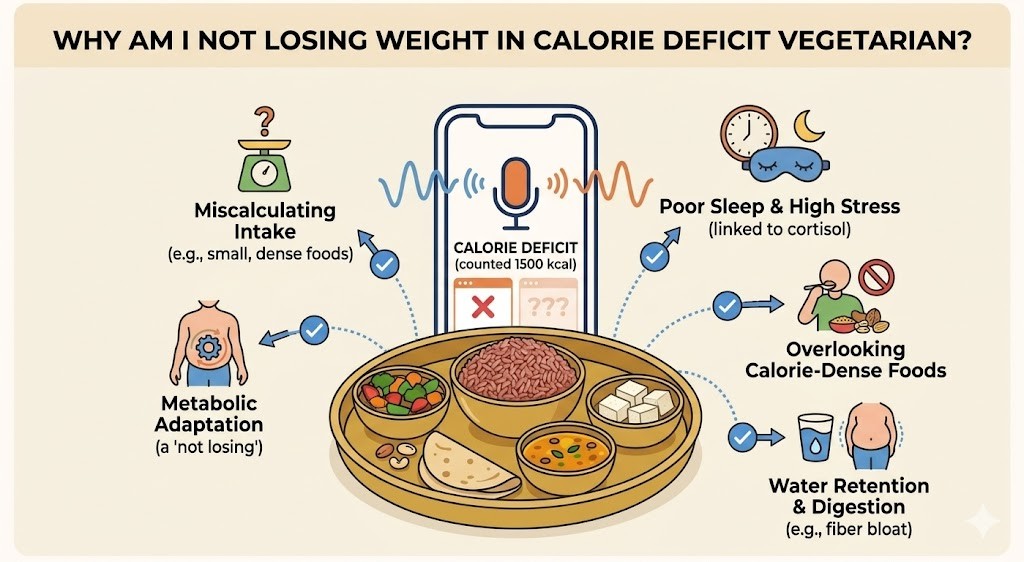
So, you’ve swapped the chicken for chickpeas, loaded up on greens, and you’re pretty sure you’re eating like a saint. But the scale? It’s acting like it’s stuck in superglue. If you’ve been asking yourself, "why am I not losing weight in calorie deficit vegetarian?" you’re definitely not alone!
While a plant-based lifestyle is a total win for your heart and health, weight loss is still a bit of a numbers game. Sometimes, those "healthy" vegetarian choices are a lot more energy-dense than they look. Let’s dive into the common mistakes and how to fix them so you can finally see those results!
The "Health Halo" Trap: Hidden Calories in Healthy Foods
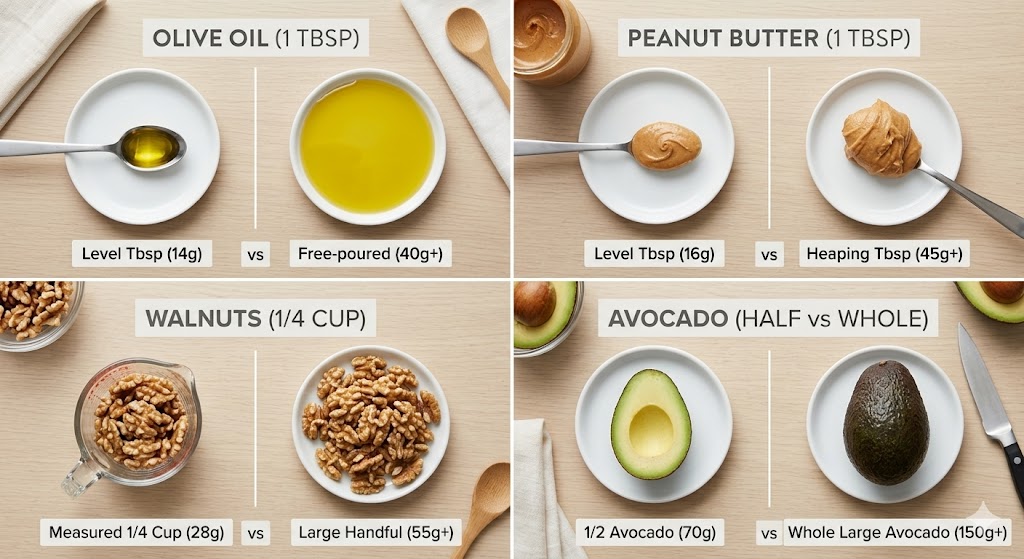
One of the biggest vegetarian diet mistakes is the "Health Halo." This is when we assume a food is low-calorie just because it’s healthy. Take olive oil or avocados—they are nutritional superstars, but they pack a serious caloric punch!
Even small errors in "eyeballing" your portions can accidentally wipe out your entire calorie deficit for the day.
The "Healthy" Vegetarian Food Calorie Guide
The table below shows how easily those "small" portions can add up:
Food Item | Standard Portion | Estimated Calories | Common "Oops" Error |
Olive Oil | 1 Tbsp | 120 kcal | Pouring freely can double this! |
Avocado | 1 Medium | 240-320 kcal | Misjudging the size by half |
Walnuts | 1/4 Cup | 190 kcal | Grabbing "handfuls" as a snack |
Hummus | 2 Tbsp | 70 kcal | Using it as a main dip rather than a topping |
Peanut Butter | 2 Tbsp | 190 kcal | Heaping spoonfuls instead of level ones |
Why the Scale Isn't Moving: The Science of Plateaus
Your body is smarter than a calculator. When you cut calories, your body sometimes enters "survival mode"—scientifically known as metabolic adaptation. It starts becoming more efficient, which means it burns fewer calories to do the same tasks.
To keep your metabolism "fired up," you need to account for your Total Daily Energy Expenditure (TDEE), which is made up of:
Basal Metabolic Rate (BMR): Energy burned just by existing.
Thermic Effect of Food (TEF): Energy used to digest your meals.
NEAT: Energy from daily movement like walking or fidgeting.
Quick Math Tip: To find your baseline, experts often use the Harris-Benedict Formula:
For Women: BMR = 447.593 + (9.247 * weight in kg) + (3.098 * height in cm) - (4.330 * age in years)
High-Volume Heroes: Eat More, Weigh Less!
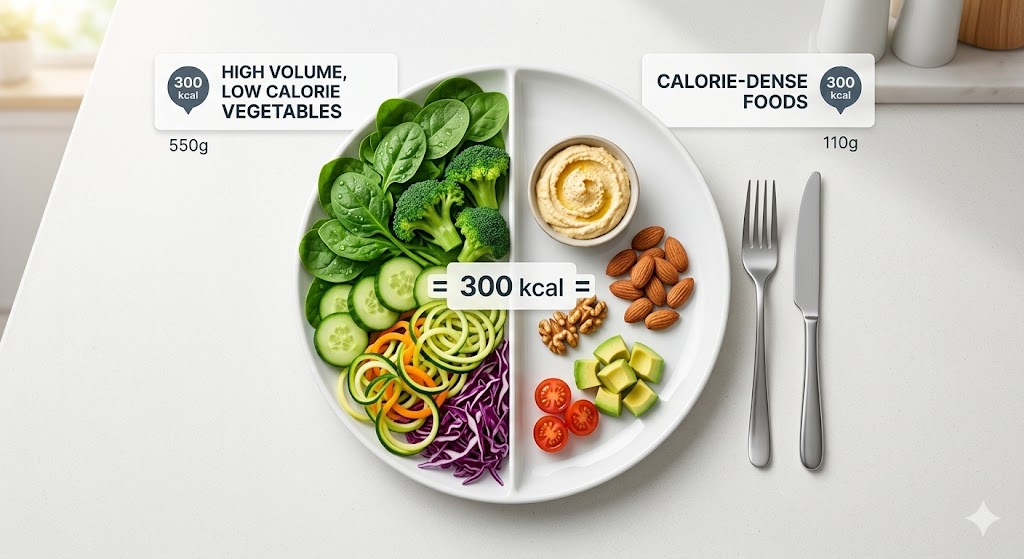
The secret to staying full while in a deficit is Volume Eating. This means choosing foods that have high water and fiber content. You get to fill your plate (and your stomach!) without the calorie overload.
High-Volume Vegetarian Staples (Per 100g)
These are your best friends when hunger strikes:
Food Item | Calories (approx.) | Water Content | Satiety Level |
Cucumber | 10-15 kcal | 95% | Extremely High |
Spinach | 23 kcal | 91% | Very High |
Watermelon | 30 kcal | 91% | High |
Broccoli | 34 kcal | 89% | High (Fiber + Protein) |
Zucchini | 17-27 kcal | 94% | High |
Don't Forget the Protein Leverage!
Protein isn't just for bodybuilders! It’s the most "filling" nutrient and helps protect your muscle mass while you lose fat. If you aren't getting enough plant-based protein, your brain might keep sending hunger signals even if you've eaten enough calories.
Best High-Protein Vegetarian Sources
Aim for these to keep those cravings at bay:
Protein Source | Protein (per 100g) | Why it's Great |
Tempeh | 20.3g | Great for muscle building |
Firm Tofu | 17.3g | Super versatile main protein |
Greek Yogurt (0% Fat) | 10g | High satiety, great snack |
Lentils (Cooked) | 9g | Loaded with fiber too! |
Egg Whites | 11g | Pure protein, very low calorie |
Health Benefits of a Balanced Vegetarian Diet
When done right, a vegetarian diet isn't just about the scale—it's a total body upgrade!
Heart Healthy: Lower saturated fats help keep your cholesterol in check.
Digestive Win: High fiber from beans and veggies keeps your gut happy.
Energy Boost: Whole grains and colorful fruits provide steady, clean energy.
Quick Tips for Success:
The 50% Rule: Fill half your plate with non-starchy veggies like broccoli or peppers.
Move More (NEAT): Aim for 8,000–10,000 steps to keep your metabolism active.
Drink Up: Have a glass of water before every meal to help with fullness.
Enjoy your journey! Weight loss is a marathon, not a sprint. By focusing on whole foods and accurate tracking, you’ll break through that plateau in no time.
The Easy Fix: Precision Tracking
Most of us underestimate our calorie intake by 20% to 40%. That extra splash of milk in your tea or the "taste test" while cooking dinner counts!
This is where VoCal makes life easy. Instead of scrolling through endless databases and typing in every single blueberry, you can just speak your meal. Voice-based tracking is up to 90% faster and significantly more accurate because it captures the details we usually forget.
FAQs
Why am I not losing weight even if I'm eating 1,200 calories?
You might be experiencing "tracking drift." Hidden oils, condiments, or liquid calories often add up to more than we realize. Try using a voice-tracker for 3 days to see if any hidden calories are sneaking in!
Are "vegetarian junk foods" okay?
While soy milk and veggie burgers can be part of a healthy diet, "vegetarian" doesn't always mean "low calorie." Processed snacks like chips and cookies are still high in energy. Focus on whole foods as your base!
How much protein do I really need?
Most adults aiming for weight loss benefit from about 1.5g to 1.8g of protein per kg of body weight to keep their metabolism healthy.
Disclaimer: This content is for informational purposes only and is not medical advice. Consult a healthcare professional before starting any new diet or exercise plan.