
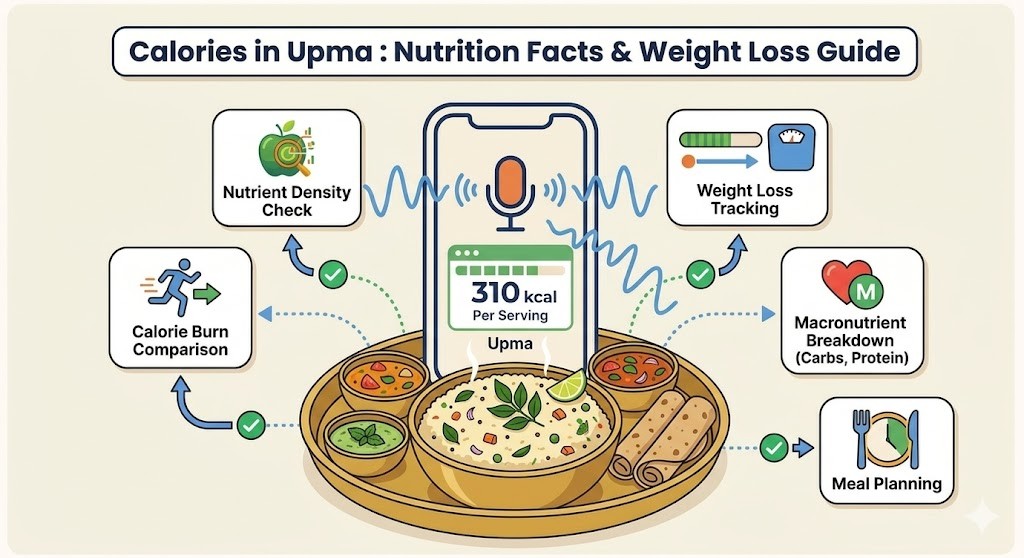
Let’s be honest—we’ve all had those mornings where we need a "superhero" breakfast that’s fast, filling, and actually tastes like home. Enter Upma. Whether you call it Uppumavu in Kerala, Uppittu in Karnataka, or Rulanv in Goa, this savory semolina porridge is the undisputed "emergency breakfast" of India.
But if you’re watching your waistline or tracking your macros, you’ve probably wondered: "What are the actual calories in upma 1 plate?"
Don’t worry! We’ve broken down the numbers using the latest data from the National Institute of Nutrition (NIN) so you can enjoy your morning bowl guilt-free.
What Exactly is Upma?
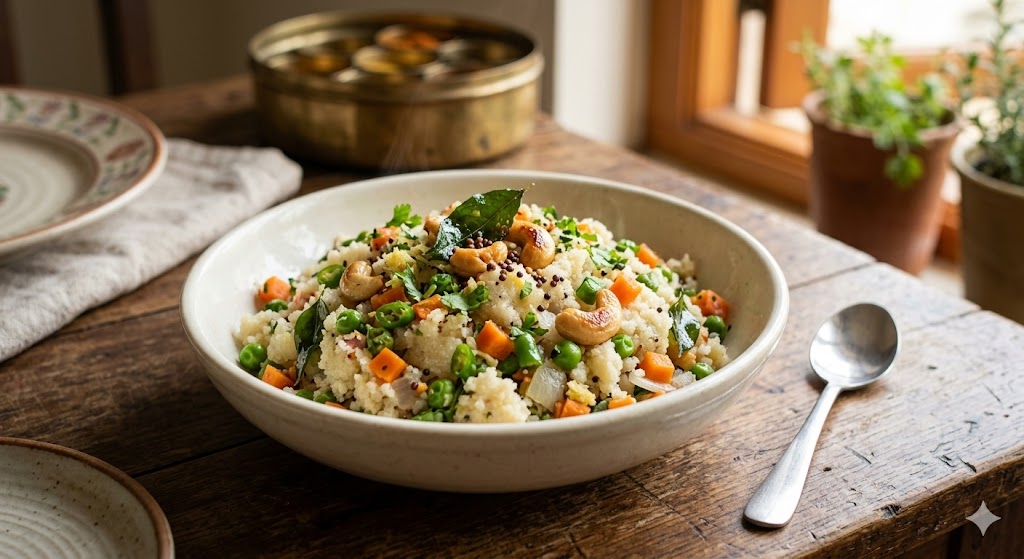
At its heart, traditional upma is made from rava (semolina), which comes from the heart of the wheat kernel. It’s coarse, nutty, and perfect for soaking up flavors. While the classic version uses mustard seeds, curry leaves, and onions, the best part is how customizable it is. Throw in some carrots, peas, or beans, and you’ve turned a simple grain into a nutrient-packed meal.
The Million Dollar Question: Calories in 1 Plate of Upma
A "plate" can mean a lot of things depending on how hungry you are! In the nutrition world, we usually look at weight in grams. A standard medium plate of vegetable upma is about 200g.
Here is how the calories stack up based on your serving size:
Serving Size | Weight (Approx.) | Calories (kcal) |
Small Cup | 100 g | 112 - 208 kcal |
Medium Plate | 200 g | 224 - 416 kcal |
Large Plate | 300 g | 336 - 624 kcal |
Note: The range depends on how much oil, ghee, or cashews you add. More "tadka" means more energy!
Upma Nutrition Facts (Per 100g)
Upma isn't just "empty carbs." It’s actually a great source of fiber and plant-based protein, especially when you add those crunchy lentils (urad and chana dal) in the tempering.
Nutrient | Amount per 100g |
Calories | 208 kcal |
Carbohydrates | 38 g |
Protein | 6.5 g |
Fat | 4 g |
Fiber | 3 g |
Data sourced from NIN/ICMR research.
Which Upma is Best? (Rava vs. Oats vs. Millets)
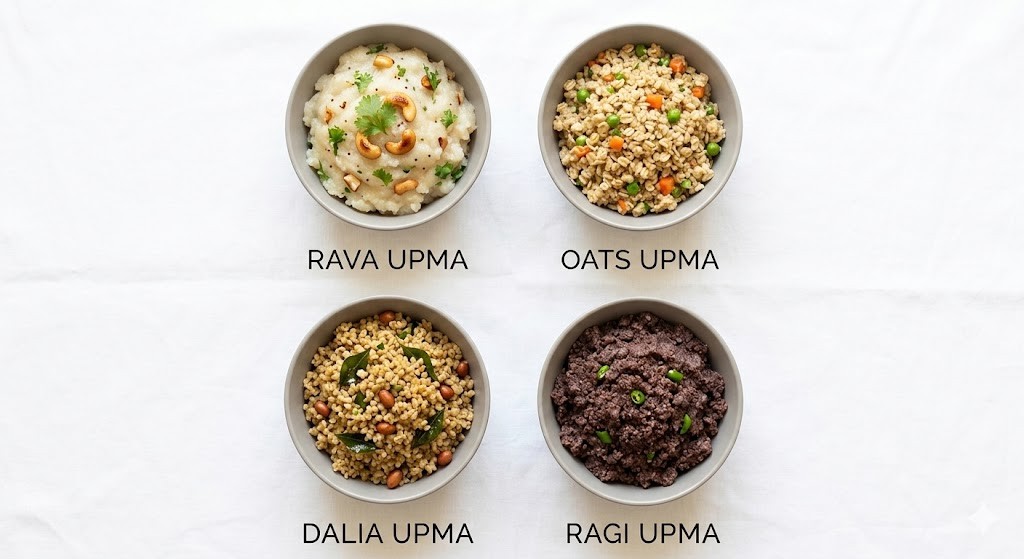
If you’re looking to switch things up, you don't have to stick to rava. Different grains offer different "superpowers." For example, Dalia (broken wheat) upma is a champion for blood sugar control because of its low Glycemic Index.
Type of Upma | Calories per 100g | Key Benefit |
Rava Upma | 208 kcal | Rich in B-vitamins & Iron |
Oats Upma | 172 kcal | High fiber (beta-glucan) |
Dalia Upma | 166 kcal | Lowest GI (51.7), great for diabetics |
Ragi Upma | 232 kcal | Amazing Calcium source |
Why Upma is a Weight Loss Rockstar
If you’re trying to shed a few kilos, upma is your best friend. Why?
It Keeps You Full: Thanks to the fiber and the way semolina absorbs water, you feel full much longer than if you ate white bread or sugary cereal.
Sustained Energy: The complex carbs provide a steady stream of energy, so you won't hit that "11 AM slump".
Veggie Power: By filling half your plate with vegetables like carrots and peas, you get more food for fewer calories.
Stop Guessing, Start Speaking: Track with VoCal!
We know that logging Indian food can be a headache. Does your app know the difference between "low oil" home upma and a "ghee-loaded" restaurant plate? Most don't.
That’s where VoCal comes in. It’s a voice-based calorie tracker designed specifically for Indian food.
Speak Naturally: Just say, "Maine ek plate vegetable upma khaya" (I ate one plate of veg upma).
11 Languages: It understands Hindi, Tamil, Telugu, Marathi, and more .
95% Accuracy: The AI knows Indian portion sizes and cooking styles, making tracking take 15 seconds instead of 15 minutes .
The Bottom Line
Upma is a versatile, heart-healthy, and delicious way to start your day. By picking the right grain and keeping an eye on your oil, you can make it a staple in your weight loss journey. And with tools like Vo-cal, keeping track of your "calories in upma 1 plate" has never been easier.
Frequently Asked Questions (FAQs)
1. Is upma high in protein?
Yes! A standard plate can give you 5g to 14g of protein. You can boost this by adding peanuts, sprouts, or using millet as a base.
2. Can I eat upma at night?
Absolutely. It's light on the stomach and easy to digest, making it a great light dinner option.
3. Is semolina (suji) gluten-free?
No, semolina is made from wheat and contains gluten. If you need a gluten-free option, try upma made from Ragi or Jowar.
4. How many calories are in 1 plate of restaurant upma?
Be careful! Restaurant versions often use more ghee and oil, which can push a single plate up to 500+ calories.
Disclaimer: This content is for informational purposes only and does not constitute medical advice. Always consult with a healthcare professional or nutritionist before making significant changes to your diet.