
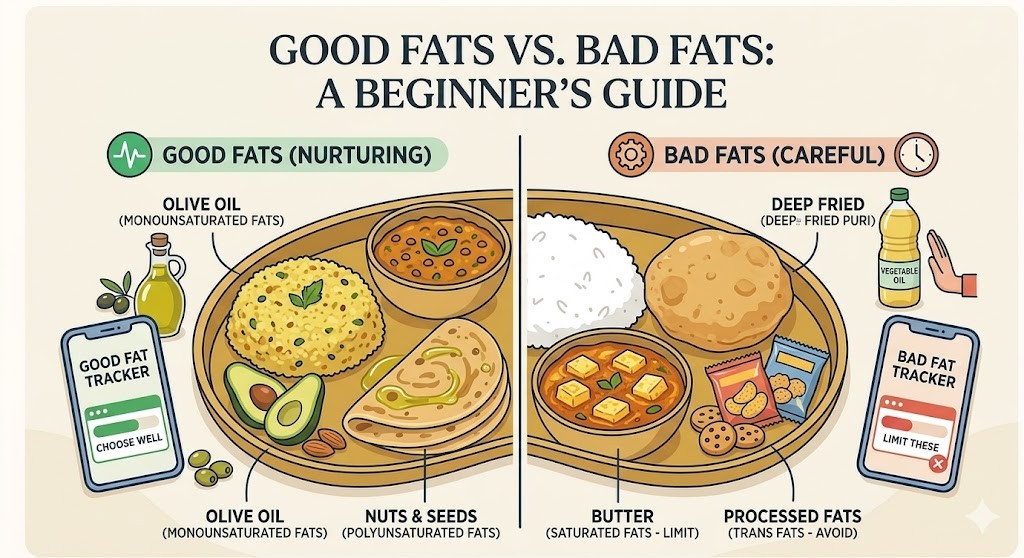
For a long time, "fat" was the ultimate three-letter word in the nutrition world. In the '80s and '90s, we were told to flee from it like it was a villain in a horror movie, leading to an era of sad, dry, fat-free cookies that tasted like cardboard.
But here’s the good news: the "all fat is bad" era is officially over. Today, we know that your body doesn’t just want fat—it needs it to thrive. The secret isn't cutting out fat entirely; it’s learning to tell the difference between the "Heart-Healthy Heroes" and the "Metabolic Villains."
Whether you are a lifelong vegetarian or just starting your plant-based journey, this guide will help you master your lipid profile without the headache.
Why Your Body Loves Fat
Before we dive into the good vs. bad, let’s talk about why fat is actually a VIP in your body. It’s not just about flavor; lipids are essential for:
Brain Power: Your brain is roughly 60% to 70% fat. It needs high-quality lipids to keep your "gears" turning.
Vitamin Delivery: Vitamins A, D, E, and K are fat-soluble, meaning they need fat to hitch a ride into your system.
Cell Support: Every single cell membrane in your body is built with fatty acids.
The Bottom Line Fat is an essential macronutrient. The goal isn't to eat less fat, but to eat the right fat.
The Bad Fats: The Villains of the Story
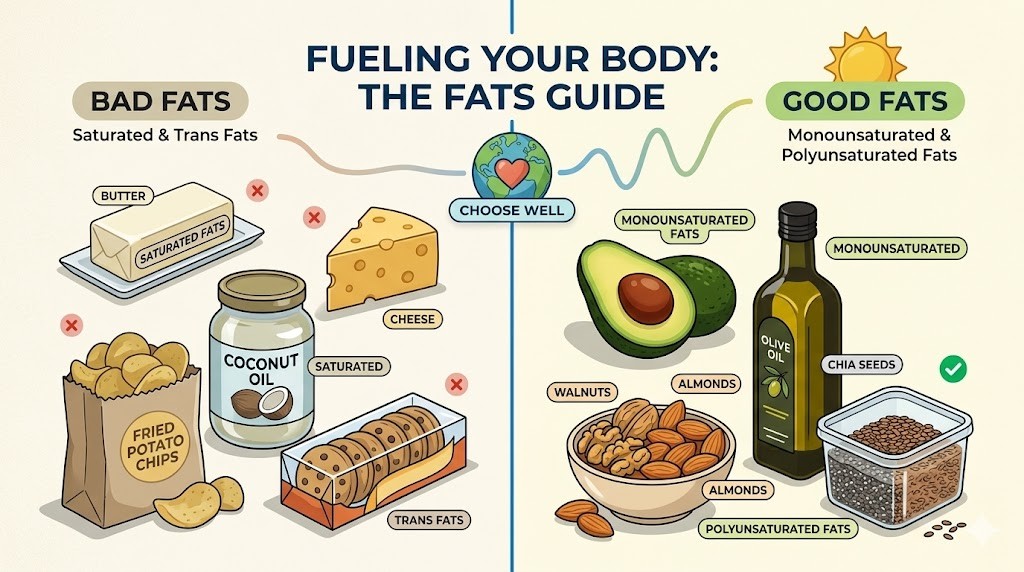
When people talk about "bad" fats, they are usually referring to two main types: Trans fats and Saturated fats.
1. Trans Fats (The "Avoid At All Costs" Group)
Trans fats are the undisputed villains. Most are created through an industrial process called partial hydrogenation, which turns liquid oil into a solid to make processed foods last longer.
They are a "double whammy" for your heart: they raise your "bad" (LDL) cholesterol and lower your "good" (HDL) cholesterol. While many countries have banned them, they can still hide in some processed snacks or imported treats.
2. Saturated Fats (The "Limit" Group)
Saturated fats aren't as evil as trans fats, but they aren't exactly health food either. They are typically solid at room temperature. In a vegetarian diet, these mostly come from tropical oils and full-fat dairy.
The general rule from the American Heart Association (AHA) is to keep these to less than 10% of your daily calories. For a 2,000-calorie diet, that’s about 22 grams.
Vegetarian Sources of Saturated Fats to Watch Out For:
Vegetarian Saturated Fat Source | Typical Saturated Fat Content | Health Recommendation |
Coconut Oil | ~87-92% | Limit; replace with olive or canola oil. |
Palm Oil | ~50% | Limit; often found in processed foods. |
Butter | ~60-65% | Replace with avocado or olive oil. |
Full-Fat Cheese | High (varies) | Opt for low-fat versions or use sparingly. |
Whole Milk | ~4-5g per cup | Switch to 1% or plant-based milks. |
The Good Fats: Your Heart-Healthy Heroes
Now for the fun part! These are the fats you want to invite to every meal. They are usually liquid at room temperature and come primarily from plants.
1. Monounsaturated Fats (MUFAs)
These are the superstars of the Mediterranean diet. They help lower "bad" LDL cholesterol while keeping your "good" HDL cholesterol in check.
Where to find them: Extra virgin olive oil, avocados, almonds, cashews, and peanuts.
2. Polyunsaturated Fats (PUFAs)
These include the "essential" fats—Omega-3s and Omega-6s—that your body can't make on its own.
Omega-3s (The Anti-Inflammatory Kings): Essential for heart and brain health. For vegetarians, these come in the form of ALA.
Where to find them: Walnuts, flaxseeds, chia seeds, hemp seeds, and canola oil.
Healthy Swaps for Your Kitchen
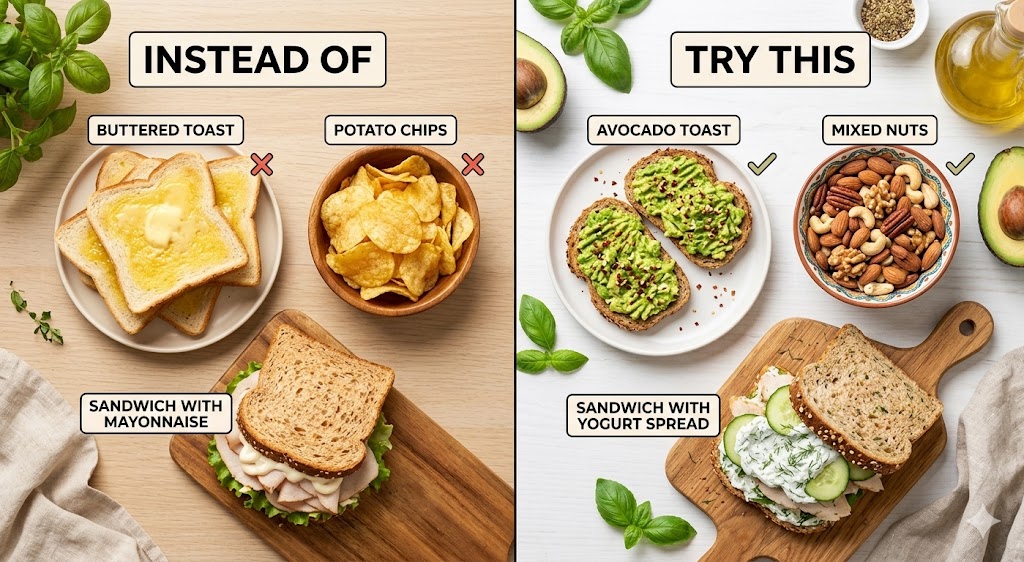
Mastering your fats doesn't have to be a chore. It’s all about the "Great Swap."
Instead of Butter: Try mashed avocado on your toast or dipping your bread in olive oil.
Instead of Mayo: Use a dollop of Greek yogurt or a homemade tahini dressing.
Instead of Chips: Grab a handful of walnuts or almonds for that crunch.
Pro Tip: Watch the Smoke Point Even good fats can go bad if you burn them! Use Avocado Oil for high-heat roasting (smoke point ~520°F) and save your Extra Virgin Olive Oil for low-heat sautéing or salad dressings.
Tracking Your Fats (Without the Stress)
Knowing the difference between an Omega-3 and a Trans fat is half the battle. The other half? Actually keeping track of it.
Traditional calorie counting can feel like a part-time job. That’s where voice-activated technology like VoCal comes in. Instead of scrolling through endless databases to find "half an avocado," you just say it out loud: "I had an avocado toast with hemp seeds."
The AI does the heavy lifting, instantly logging your healthy fats so you can get back to living your life. It turns your smartphone into a digital nutritionist that helps you maintain that perfect lipid balance.
The Bottom Line
Not all fats are created equal. By ditching the trans fats, limiting the saturated ones, and loading up on plant-based unsaturated fats, you are giving your heart and brain exactly what they need to thrive.
Remember: Your body is a high-performance machine. Give it the high-quality fuel it deserves!
Frequently Asked Questions (FAQs)
Q: Is coconut oil actually healthy? A: Despite the hype, coconut oil is very high in saturated fat. It’s fine for occasional flavor, but olive and canola oils are better for your heart.
Q: How many nuts should I eat a day? A: A small handful (about 1 ounce or 30g) is the "Goldilocks" amount—just enough to get the benefits without overdoing the calories.
Q: Can vegetarians get enough Omega-3? A: Absolutely! Flaxseeds, chia seeds, and walnuts are great sources of ALA. You can also look into algae-based supplements for a direct hit of EPA and DHA.
Disclaimer: This report is for informational purposes only and does not constitute medical advice. Always consult a healthcare professional before making major dietary changes.