
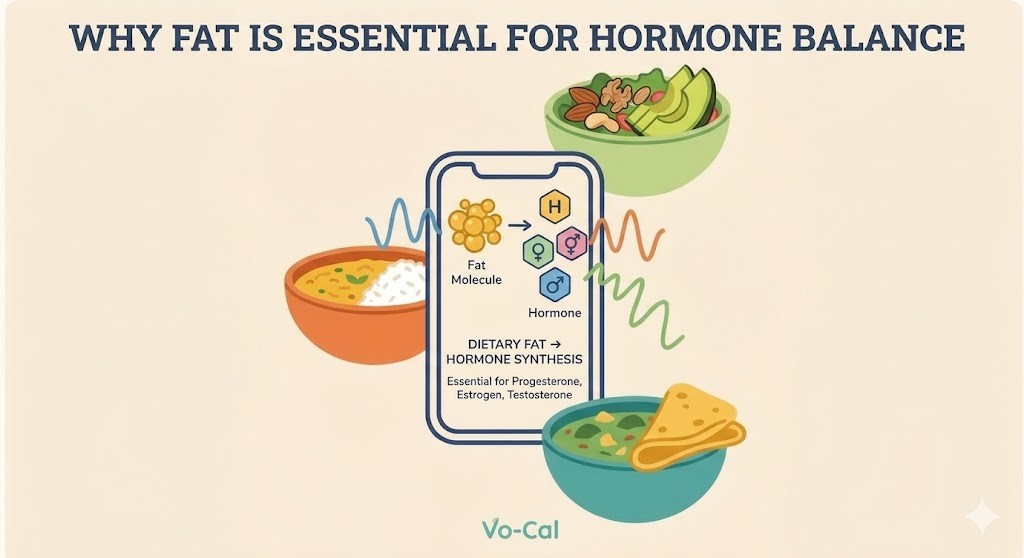
For years, dietary fat was the "villain" of the nutrition world. But if your hormones had a voice, they’d be telling a very different story. Far from being the enemy, healthy fats are the literal building blocks of your endocrine system.
Whether you are navigating the complexities of PCOS or just trying to stay energized through a busy Indian workday, understanding fat for hormone balance is a game-changer.
The "Bad" Reputation vs. The Reality
We’ve all heard it: "Fat makes you fat." However, research reveals that fat is actually an evolutionary superpower. It’s a highly efficient energy storage molecule that helped our ancestors survive famines.
More importantly, your hormones—especially steroid hormones like estrogen, progesterone, and testosterone—are made from cholesterol. When you cut fat too low, you aren't just losing weight; you are essentially starving your hormone production line.
How Hormones Direct Your "Fat Traffic"
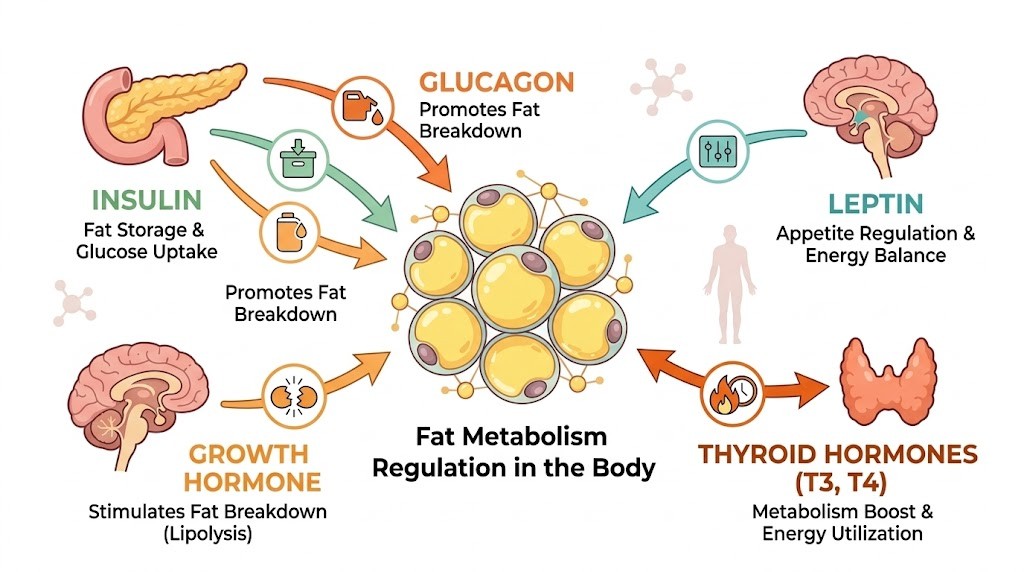
Hormone | Primary Effect on Lipid Metabolism | Mechanism of Action |
Insulin | Stimulates Lipogenesis | Increases glucose uptake in adipose cells; activates SREBP-1c and ChREBP |
Growth Hormone (GH) | Stimulates Lipolysis | Reduces de novo lipogenesis; increases fat mobilization |
Leptin | Inhibits Fat Storage | Stimulates fatty acid oxidation; down-regulates lipogenic genes |
Thyroid Hormones (T3/T4) | Regulates Metabolic Flux | Increases enzymes for fatty acid oxidation and cholesterol metabolism |
Glucagon | Stimulates Fat Mobilization | Activates hormone-sensitive lipase (HSL) during fasting |
How Fat Benefits Men vs. Women
While the endocrine system is universal, dietary fats play specific roles depending on your biological needs.
For Men: The Testosterone Foundation
For men, healthy fats are the cornerstone of physical vitality. Testosterone is synthesized directly from cholesterol, making high-quality fats like Ghee and nuts essential for maintaining healthy levels. Beyond hormone production, stable saturated fats provide sustained energy and support muscle recovery after physical exertion without the "crash" associated with high-carb meals. Zinc-rich seeds, such as sesame (til) and pumpkin seeds, further support male reproductive health and hormone regulation.
For Women: Cycle Regularity and Life Stages
For women, fats act as the primary regulator for the menstrual cycle and reproductive health. Adequate intake of healthy fats ensures the production of estrogen and progesterone, which are vital for regular ovulation and fertility.
PCOS & Insulin: Healthy fats like those found in Ghee (CLA) can improve insulin sensitivity by up to 35%, helping to lower the excess androgens that cause acne and hair growth.
Menopause: Traditional fats help mitigate bone density loss and can reduce the frequency of hot flashes by up to 45%.
Pregnancy: The "first 1000 days" concept emphasizes that a mother’s fat intake (especially Omega-3s) is critical for fetal brain development and long-term metabolic programming.
Traditional Indian Fats: The Ghee Glow-Up
The ICMR-NIN 2024 guidelines have recently shifted the focus back to fat quality, emphasizing the importance of eliminating trans-fats and choosing diverse, healthy lipid sources.
The ICMR-NIN 2024 Guidelines — What Changed?
Nutritional Aspect | 2011 Guidelines | 2024 Guidelines | Endocrine Significance |
Total Fat | General limitation | Focus on quality: <7% saturated fat, zero trans-fat | Improves insulin sensitivity and reduces inflammation |
Omega-3 | Basic mention | Increased emphasis (fish, flaxseeds, walnuts) | Regulates stress hormones and brain health |
Nutrient Sources | Cereal/pulse focus | Emphasis on oilseeds, nuts, and millets | Provides Zinc and Magnesium for hormone synthesis |
Sugar Limits | General restriction | Strict target: <5% of total calories | Prevents insulin spikes that disrupt ovarian function |
Desi Ghee and Coconut Oil
Pure A2 ghee is rich in Butyrate and Conjugated Linoleic Acid (CLA). Studies suggest CLA can improve insulin sensitivity in women with PCOS, helping to restore ovulation. Meanwhile, coconut oil is packed with Medium-Chain Triglycerides (MCTs) that go straight to the liver for energy, giving a boost to a sluggish thyroid.
The "Hormone-Smart" Indian Plate
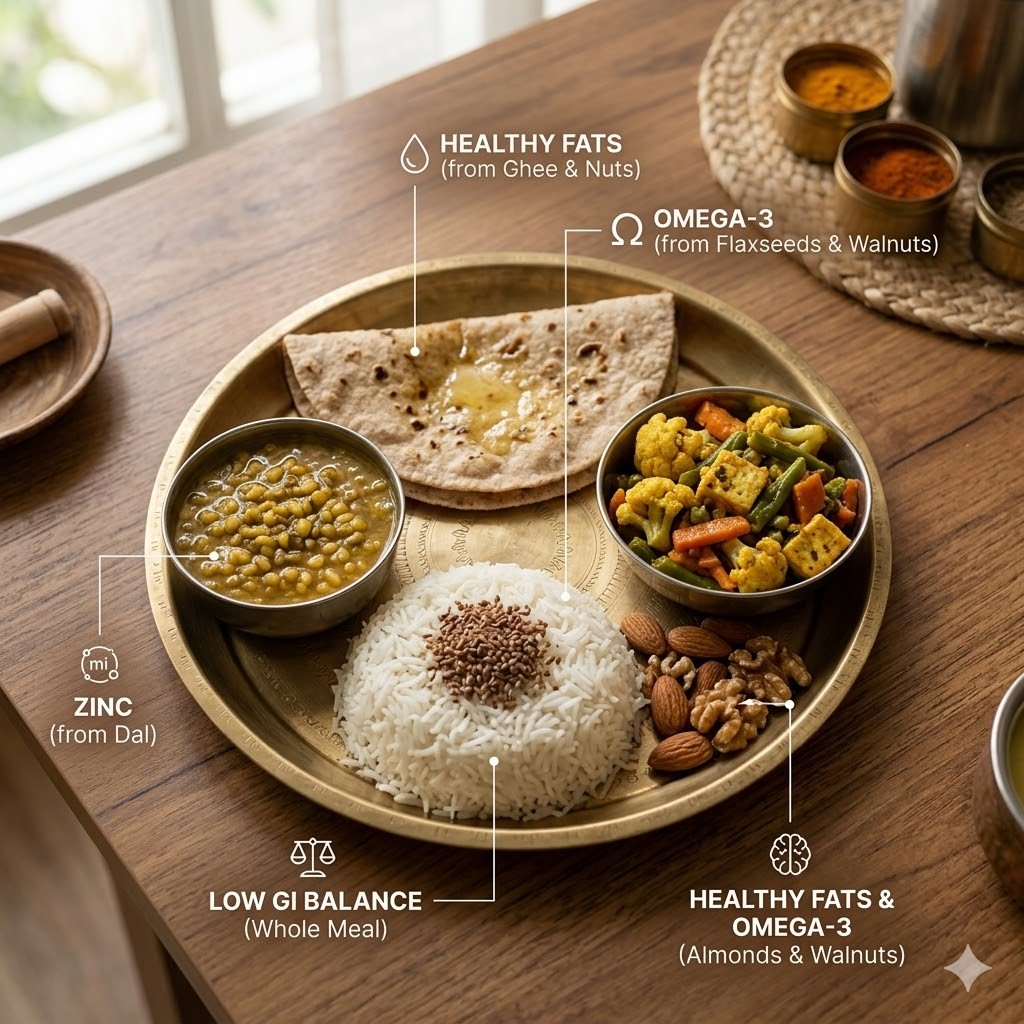
Indian Carbohydrate | The Smart Addition | Endocrine Benefit |
White Rice | Add flaxseed powder and a drizzle of Ghee | Lowers GI; provides lignans for estrogen balance |
Poha / Upma | Add peanuts, curry leaves, and mustard seeds | Provides monounsaturated fats and antioxidants |
Whole Wheat Roti | Spread with white butter (makhan) or Ghee | Supports absorption of vitamins in vegetables |
Fruit (Mango/Banana) | Pair with a handful of walnuts or almonds | Slows sugar absorption; provides Zinc for health |
How to Track "Invisible" Fats Without Losing Your Mind
Tracking the oil in a tadka or the Ghee in a paratha is often the hardest part of an Indian diet. This is where Vo-cal steps in.
As a voice-based calorie tracking app, Vo-cal allows you to simply speak your meal in your native language—including Hindi, Tamil, or Telugu. Instead of searching through Western databases, you can say, "Maine do roti ghee ke saath aur ek katori dal khayi," and the AI calculates your macros in 15 seconds.
The Summary
Forget the old "low-fat" myths—your hormones are actually staging a protest if you skip the healthy stuff. Far from being a dietary villain, fat is the biological "raw material" your body needs to function. Hormones like estrogen, testosterone, and cortisol are steroid-based, meaning they are synthesized directly from cholesterol. Without enough dietary fat, your endocrine production line essentially shuts down, leading to fatigue, mood swings, and metabolic stalls.
FAQs
1. Is Ghee okay to eat if I have PCOS?
Yes! In moderation, Ghee helps improve insulin sensitivity and provides the cholesterol needed for reproductive hormones.
2. Which Indian oil is best for a slow thyroid?
Coconut oil and Ghee are often recommended because they provide MCTs and fat-soluble vitamins that support metabolic health.
3. How can I track Indian home-cooked meals easily?
Traditional apps are tough, but voice-activated tools like Vo-cal.com understand regional dishes and the "invisible" fats used in Indian tempering.
Disclaimer: This content is for informational purposes only and does not constitute medical advice, diagnosis, or treatment. Always consult a healthcare professional before making significant dietary changes or managing a medical condition.