
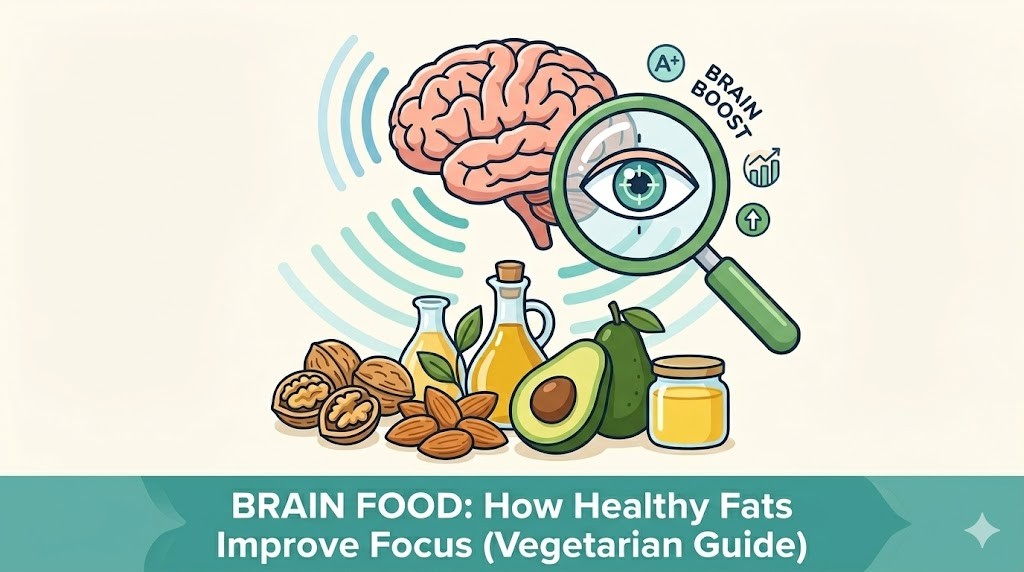
If someone calls you a "fathead," take it as a compliment! Your brain is actually the fattiest organ in your body, made up of about 60% fat. While we often hear that fat is something to avoid, when it comes to your gray matter, the right kind of fat is the ultimate high-performance fuel for focus, energy, and long-term health.
For the vegetarian crowd, getting these "brain fats" is all about picking the right plant-based superstars. Let’s dive into why your brain needs these lipids and how to load up on them without ever touching a piece of fish.
The Architect: Building a Better Brain
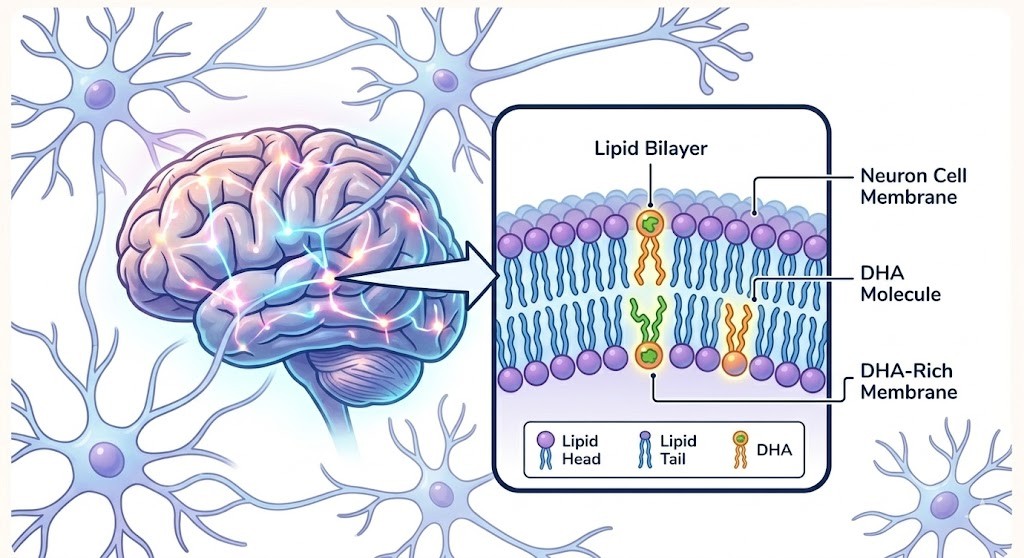
Think of fats as the literal bricks and mortar of your brain cells. They build the membranes that let your neurons talk to each other. Without enough healthy fat, your brain’s communication system starts to lag—hello, brain fog!
The star of the show is an omega-3 called DHA. It makes up a massive chunk of your brain and is essential for keeping those cell membranes flexible and ready for action.
Lipid Component | Percentage in Brain/Retina | Primary Function |
DHA | 20-30% of brain lipids; 50-60% of retinal lipids | Membrane fluidity, neuroprotection, signal speed |
ARA | Significant in cerebral cortex | Growth and repair of neurons; inflammatory signaling |
Phospholipids | Majority of membrane mass | Structural integrity and cell-to-cell communication |
Cholesterol | ~25% of total body cholesterol is in the brain | Myelin sheath maintenance and synapse formation |
The Battery: Fats for Mental Energy
We used to think the brain only ran on sugar (glucose), but new research shows that neurons can actually tap into "fat droplets" for fuel, especially when you’re working hard on a complex task. Inside your cells, tiny "power plants" called mitochondria use healthy fats to create ATP, the energy currency that keeps your focus sharp.
Mitochondrial Process | Role of Healthy Fats | Implications for Focus |
Proton Channeling | Cardiolipin stabilizes the IMM structure | Efficient energy transfer for sustained concentration |
Fatty Acid beta-oxidation | Conversion of lipids to ATP via CPT1 transport | Prevents energy "crashes" during intense mental work |
Membrane Fusion/Fission | Phospholipid exchange maintains organelle health | Consistent neurotransmitter production and release |
Good Fats vs. Bad Fats: The Inflammation Battle
Not all fats are invited to the brain party. Saturated fats (found in butter and processed snacks) can be pro-inflammatory, which is like throwing a wrench in your brain's gears. On the flip side, unsaturated fats (like those in olive oil and avocados) act like an anti-inflammatory shield, protecting you from "brain aging".
Fat Type | Effect on Inflammation | Impact on Brain Health |
Saturated Fats | Pro-inflammatory (increases IL-6, TNF-alpha) | Linked to memory decline and plaque formation |
Trans Fats | Highly pro-inflammatory; resistant to breakdown | Increased risk of stroke and cognitive impairment |
Monounsaturated | Anti-inflammatory; improves lipid profile | Enhances blood flow and metabolic health |
Polyunsaturated | Strong anti-inflammatory; neuroprotective | Improves memory, focus, and structural integrity |
The Vegetarian's Guide to Omega-3s
For vegetarians, the main omega-3 is ALA. Your body converts ALA into the brain-essential DHA and EPA. While the conversion is a bit slow, eating plenty of ALA-rich foods like walnuts and flaxseeds can help you meet your needs.
Life Stage | Recommended Daily ALA (Grams) | Vegetarian Sources |
Adult Men | 1.6 g | 1 tbsp Flaxseeds (2.4g) |
Adult Women | 1.1 g | 1 oz Walnuts (2.6g) |
Pregnancy | 1.4 g | Algae-based DHA supplements |
Lactation | 1.3 g | Chia seeds (5g per oz) |
Your Vegetarian Brain-Boosting Menu
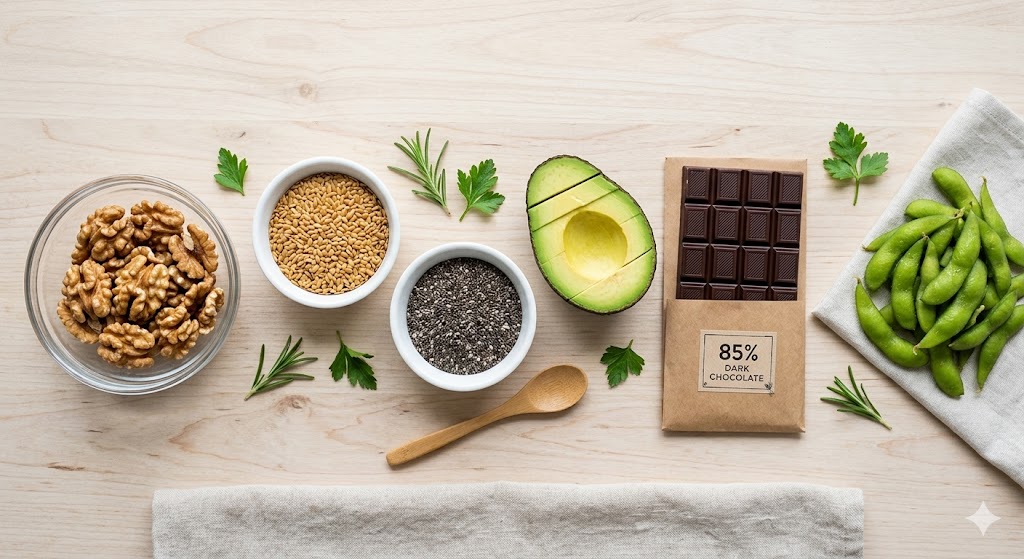
Ready to eat your way to a sharper mind? Here are the vegetarian superstars you need on your plate.
Vegetarian Food | Key Brain Nutrient | Focus/Energy Benefit |
Walnuts | ALA, Vitamin E, Polyphenols | Improved memory and executive function |
Flaxseeds | High-dose ALA | Structural support and anti-inflammatory |
Avocados | Monounsaturated fats, Lutein | Sustained focus and healthy blood flow |
Dark Chocolate | Caffeine, Flavonoids, Magnesium | Immediate alertness and antioxidant protection |
Edamame | ALA, Protein, Choline | Communication between brain cells |
Smart Tracking with VoCal
To keep your brain firing on all cylinders, consistency is key. Use VoCal to log your healthy fat intake by simply saying, "Logged a handful of walnuts" or "Added flaxseeds to my smoothie." By tracking your daily and noting how you feel, you can find the perfect "energy balance" that keeps you focused all day long.
FAQs
What’s the best snack for a study session?
Try dark chocolate (85% cocoa) and walnuts. You get a quick caffeine buzz from the chocolate and long-lasting energy from the walnuts.
Can I get enough DHA without eating fish?
Yes! Your body can make it from flax and chia seeds, or you can go straight to the source with microalgae supplements.
Is coconut oil good for focus?
While popular, most experts recommend limiting saturated fats like coconut oil and sticking to olive oil for better long-term brain health.
Disclaimer: This information is for educational purposes and not a substitute for professional medical advice. Always consult your healthcare provider before starting a new diet or supplement routine.