
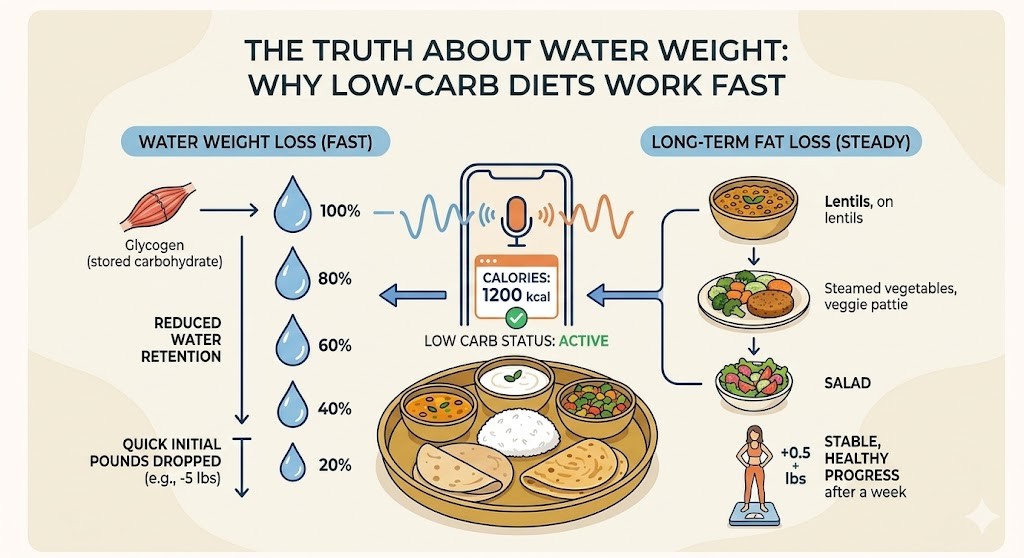
If you’ve ever started a low-carb diet, you know the feeling. You hop on the scale after just three days and—poof—you’re down 2 kilos! It feels like magic, but before you start picking out your "goal weight" outfit, it’s helpful to understand what’s actually happening under the hood.
While that initial "whoosh" on the scale is exciting, most of that early weight isn't fat—it's water. Let’s dive into the science of why the scale moves so fast in the beginning and how you can turn those temporary results into long-term health.
Definition
A low-carb diet limits carbohydrates—the sugars and starches found in bread, pasta, and starchy veggies—and focuses on proteins and healthy fats. While a standard diet might include 200 to 300 grams of carbs daily, a low-carb approach typically stays under 130 grams, with "keto" dipping as low as 20 to 50 grams.
Purpose: Why the Scale "Tricks" You
The primary reason people choose low-carb is for weight loss, but it's also used to manage blood sugar or heart health. The reason it works so fast in week one is due to how your body stores energy.
The Glycogen "Sponge"
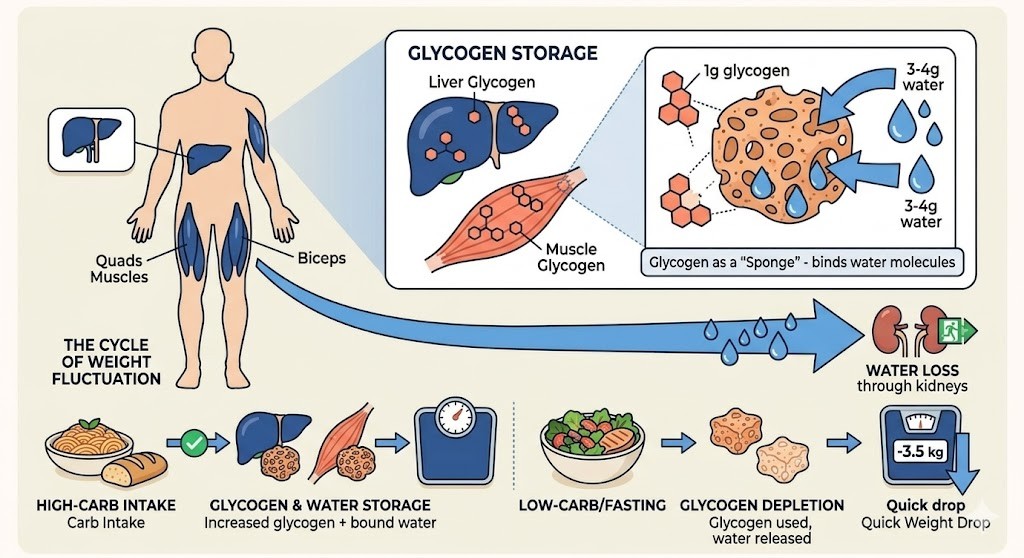
Your body stores extra carbs in your muscles and liver as glycogen. Think of glycogen as an energy sponge: it’s great at holding onto water. In fact, for every 1 gram of glycogen your body stores, it brings along about 3 to 4 grams of water.
When you stop eating carbs, your body burns through that stored glycogen for fuel. As the "sponge" empties, all that bound water gets released and sent to your kidneys. The result? A dramatic drop on the scale that is mostly H2O.
Diet Details: The Vegetarian Low-Carb Way
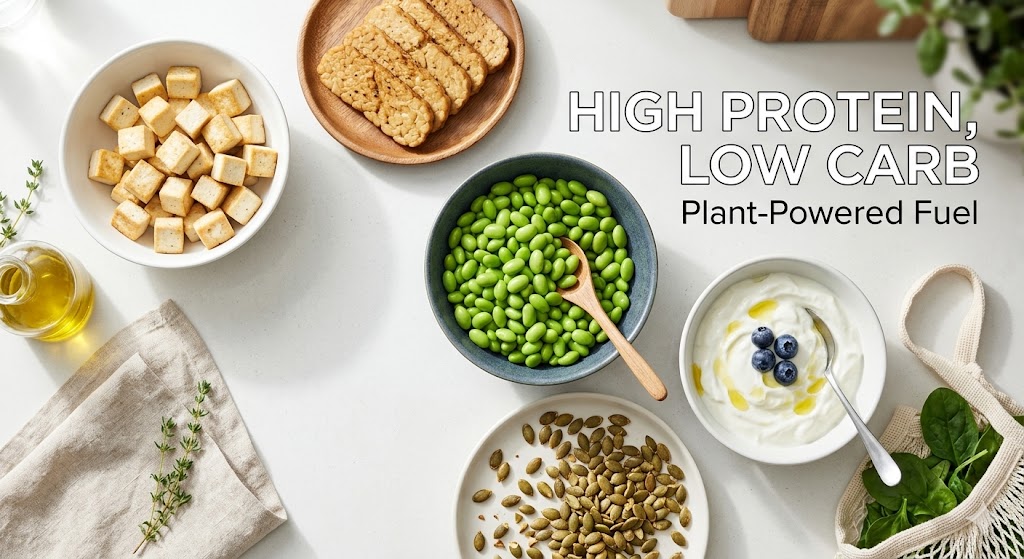
Many people think low-carb means "all the steak you can eat," but you can absolutely see amazing results on a vegetarian plan. The key is focusing on plant-based proteins that don't come packed with starch.
Top Vegetarian Protein Sources
To keep your energy up while the water weight drops, focus on these vegetarian powerhouses:
Food (Veg Source) | Serving Size | Protein (g) | Net Carbs (g) |
Firm Tofu | 100g | 17.3g | 1.0g |
Tempeh | 100g | 20.3g | 3.0g |
Seitan | 100g | 19.1g | 3.0g |
Edamame | 100g | 18.2g | 4.0g |
Pumpkin Seeds | 30g | 5.3g | 2.0g |
Greek Yogurt | 100g | 7.3g | 3.5g |
Sources: USDA National Nutrient Database
Results: What to Expect
Weight loss on a low-carb diet usually happens in phases. Understanding this timeline helps you stay motivated when the initial "water rush" slows down.
Phase | Duration | What’s Happening? | Typical Scale Change |
The Whoosh | Days 1–7 | Glycogen depletion and water loss. | 2 – 10 lbs |
The Shift | Weeks 2–4 | Body starts burning fat (ketosis). | 1 – 2 lbs/week |
The Groove | Month 2+ | Steady, sustainable fat loss. | 0.5 – 2 lbs/week |
Note: Results vary based on starting weight and activity level.
Using VoCal to Stay on Track
Precision is everything when you're trying to find your carb "sweet spot." Traditional logging can be a chore, but VoCal makes it as easy as talking to a friend.
Hands-Free Logging: Just say, "I had two eggs and half an avocado for breakfast," and Vo-cal handles the rest.
Hydration Alerts: Because you lose so much water in the first week, staying hydrated is crucial to avoid the "Keto Flu" (headaches and fatigue).
Macro Awareness: Vo-cal helps you track "Net Carbs" instantly so you don't accidentally overdo it on hidden sugars.
Risks and Side Effects
Rapidly losing water weight isn't all sunshine and rainbows. As your body flushes out fluid, it also flushes out electrolytes like sodium and potassium. This can lead to:
The "Keto Flu": Fatigue, headaches, and irritability.
Muscle Cramps: Usually a sign you need more magnesium or potassium (hello, spinach and avocados!).
Thirst: You'll likely find yourself heading to the water cooler more often.
A note on safety: If you have kidney disease or are on blood pressure medication, talk to your doctor before going low-carb, as the rapid shift in fluids can affect your levels.
Summary
The "fast" results of a low-carb diet are a great psychological boost, but the real magic happens after the first week when your body settles into burning fat. By choosing high-quality vegetarian proteins and using tools like VoCal to keep your macros in check, you can move past the water weight and achieve lasting health.
Disclaimer: The information provided is for educational purposes only and is not a substitute for professional medical advice, diagnosis, or treatment. Always seek the advice of your physician or other qualified health provider with any questions you may have regarding a medical condition or dietary changes.