

Whether you’re logging your macros on the VoCal app or just staring blankly into your fridge at 7 AM, choosing how to fuel your morning is a big deal. And if you're trying to keep your ticker running in top shape, you've probably run headfirst into the classic eggs vs oatmeal breakfast comparison.
On one side of the ring, we have eggs—the low-carb, protein-dense muscle builders. On the other side, we have oatmeal—the fiber-rich, warm, and comforting whole grain. But when it comes to cardiovascular health and keeping your blood lipid levels in check, what does the actual scientific research say? Let's scramble the facts and layout the science-backed truth so you can build the ultimate breakfast.
Key Takeaways
The Cholesterol Truth: For 75% of healthy people, the dietary cholesterol in eggs does not drive up blood cholesterol—saturated fats are the real culprits.
Oatmeal’s Active Defense: Oatmeal contains a unique soluble fiber called beta-glucan that actively traps cholesterol in your gut, helping your body sweep it away.
Satiety Showdown: Eggs rule when it comes to keeping you full via pure protein power, while oatmeal relies on slow-digesting viscous gel.
The Hybrid Win: You don't have to choose! Pairing whole eggs with oatmeal gives you the best of both worlds—maximum satiety and blood lipid management.
Whole Eggs vs. Oatmeal: The Nutritional Tale of the Tape
Before we dive into the cardiovascular science, let’s look at how these breakfast heavyweights stack up on paper. Here is the breakdown comparing two large hard-boiled eggs against one cup of cooked, water-prepared oatmeal using the USDA FoodData Central database.
Nutrient Parameter | Two Large Whole Hard-Boiled Eggs (approx. 100g) | One Cup Cooked Oatmeal (Water-Prepared, approx. 234g) |
Energy (Calories) | 155 kcal | 166 kcal |
Protein | 12.6 g | 5.9 g |
Total Carbohydrates | 1.12 g | 28.1 g |
Dietary Fiber | 0.0 g | 4.0 g |
Soluble Fiber (Beta-Glucan) | 0.0 g | ~2.0 g |
Total Fat | 10.6 g | 3.6 g |
Saturated Fat | 3.28 g | 0.73 g |
Monounsaturated Fat | 4.08 g | 1.02 g |
Polyunsaturated Fat | ~2.0 g | 1.31 g |
Dietary Cholesterol | 372 mg | 0 mg |
Choline | 252 mg | 40.4 mg |
Manganese | Trace | 1.36 mg |
Thiamine (Vitamin B1) | 0.04 mg | 0.18 mg |
Vitamin D | 82 IU | 0.0 mcg |
Let’s Crack the Cholesterol Code (The Science of Eggs)
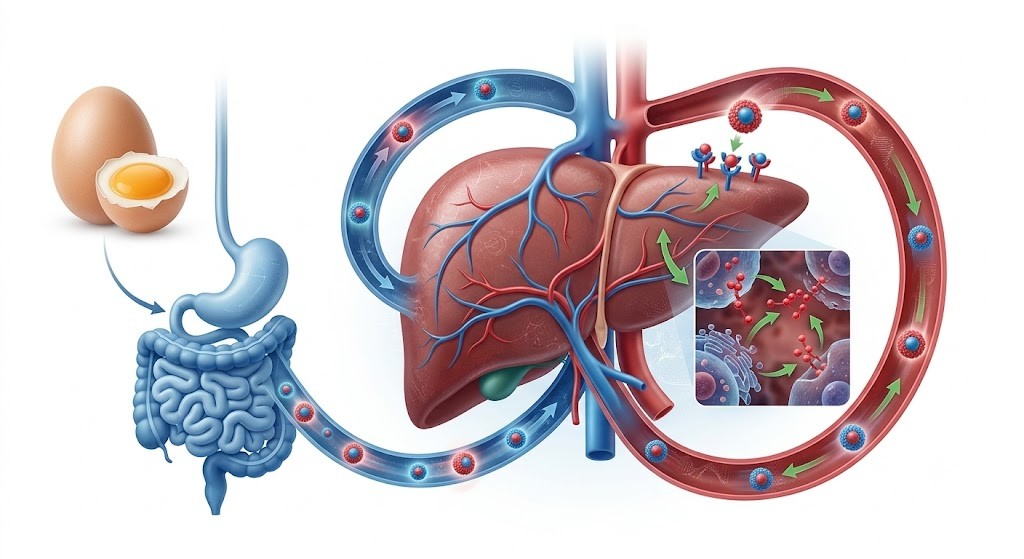
For decades, eggs were treated like the bad guys of breakfast nutrition because of their high dietary cholesterol—one large yolk has about 186 milligrams. But modern science has finally cleared the air: dietary cholesterol and blood cholesterol are entirely different things.
Here is how your body actually manages it: your liver produces the vast majority of your circulating cholesterol on its own. When you eat more cholesterol (like having a couple of morning eggs), your liver simply downregulates its own production to keep things balanced.
The real drivers of high blood LDL cholesterol are saturated fats and trans fats. Saturated fats block the receptors in your liver that clean LDL out of your blood. While eggs do have cholesterol, they are actually very low in saturated fat, packing only about 1.6 grams per egg.
To put this to the test, researchers at the University of Connecticut ran a trial where healthy young adults ate either two eggs or a bowl of oatmeal every day for breakfast. The result? While the egg eaters saw slight parallel increases in both LDL (bad) and HDL (good) cholesterol, their overall LDL/HDL ratio—the key metric doctors use to measure heart disease risk—remained completely unchanged.
Bottom Line: For most healthy people, the dietary cholesterol in eggs is a non-issue. Saturated and trans fats are the true heart-health villains, making eggs a safe and highly nutritious choice for your morning routine.
Oatmeal’s Secret Weapon: The Ultimate LDL Sweeper (The Science of Oats)
While eggs are generally neutral for your blood lipid levels, oatmeal acts as an active, heart-protecting superhero. The FDA even allows oat products to carry a specific health claim linking them directly to a reduced risk of coronary heart disease.
Oatmeal's secret weapon is beta-glucan, a highly viscous soluble fiber found in the grain's endosperm. When you eat oatmeal, beta-glucan mixes with water in your stomach to form a thick, sticky gel. This gel acts like a biological magnet, trapping cholesterol-rich bile acids in your gut and sweeping them out of your body.
To replace those lost bile acids, your liver has to pull bad LDL cholesterol straight out of your blood.
A massive meta-analysis of 58 randomized controlled trials showed that eating a modest dose of 3.5 grams of oat beta-glucan daily significantly lowered LDL cholesterol, non-HDL cholesterol, and even Apolipoprotein B (ApoB)—the specific proteins that build dangerous arterial plaques.
Bottom Line: Oatmeal is like a daily biological cleanup crew for your cardiovascular health. Its soluble fiber traps cholesterol-rich bile, forcing your liver to clear bad LDL from your blood to replace it.
Satiety Wars: Staying Full Until Lunch
A crucial part of any breakfast nutrition strategy is satiety—how well your food keeps you from reaching for the office donut box by 10 AM.
The Egg Effect (Endocrine Satiety): Eggs are a complete protein, meaning they pack all nine essential amino acids. Protein is the king of satiety. When you eat egg protein, it shuts down ghrelin (your "feed me!" hunger hormone) and boosts fullness hormones. In the UConn crossover study, the egg-based breakfast left participants feeling significantly fuller and less hungry throughout the day compared to an energy-matched oatmeal breakfast.
The Oatmeal Effect (Viscous Satiety): Oatmeal takes a mechanical approach. The thick beta-glucan gel slows down how fast your stomach empties. This ensures a slow, steady release of glucose and insulin, avoiding the rapid energy crashes that trigger hunger. As the fiber travels to your colon, gut bacteria ferment it into short-chain fatty acids, signaling your brain that you are completely satisfied.
The Fasting Trap: Thinking of skipping breakfast entirely to save calories? Think again. A Columbia University trial found that while breakfast skippers lost a little weight, they also experienced a significant spike in total cholesterol compared to those who ate oatmeal or cornflakes. Starting your day with a solid breakfast is always the healthier move!
Bottom Line: If your goal is raw, protein-fueled hunger suppression, eggs take the crown. But if you want slow-burning energy and stable blood sugar, oatmeal's gel-forming fiber has your back.
Are You a Hyper-Responder? Special Dietary Rules
While eggs and oatmeal are fantastic foods, a one-size-fits-all recommendation doesn't work when it comes to clinical cardiovascular health.
The Genetic "Hyper-Responders": About 25% of the population are highly sensitive to dietary cholesterol, often due to genetic factors like carrying the ApoE4 gene. For hyper-responders, eating whole eggs can cause blood LDL levels to rise significantly, making oatmeal a much safer daily option.
Type 2 Diabetes & Heart Issues: Observational data suggests a potential link between high egg consumption and increased heart disease risk in people with diabetes. Because of this, the American Heart Association recommends that individuals with diabetes or existing heart disease limit their intake to three yolks per week, while enjoying egg whites freely.
Subpopulation Group | Suggested Egg Limit | Clinical Rationale |
Healthy Adults | 1–2 whole eggs daily | Neutral effect on blood lipid ratios; improves satiety |
Diabetic / Heart Patients | Max 3 yolks per week | Potential cardiovascular risk link in metabolic syndrome |
ApoE4 Hyper-Responders | Limit whole eggs strictly | Elevated blood LDL response to dietary cholesterol |
Oatmeal Lovers | Unlimited daily servings | Active LDL reduction and cardiovascular protection |
Bottom Line: If you're a genetic hyper-responder or managing type 2 diabetes, keep your whole egg intake modest and let oatmeal be your morning MVP.
The Hybrid Breakfast: Why Not Both?
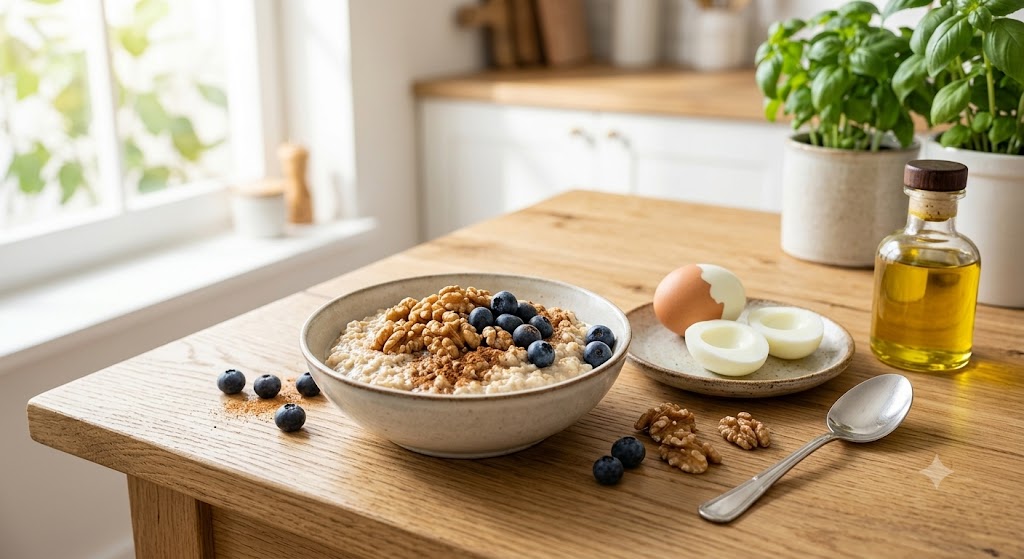
You don't need to choose sides in the breakfast showdown. The ultimate heart-health hack is the Hybrid Breakfast Model—combining the lipid-clearing power of oats with the protein-packed satiety of eggs.
Try this tomorrow morning:
Cook up 1/2 cup of old-fashioned rolled oats in water or unsweetened plant milk. Top it with a handful of raw walnuts for some healthy unsaturated fats.
Pair it with one whole egg and one egg white boiled, poached, or scrambled in a tiny splash of olive oil.
This dream combo delivers the 3 grams of beta-glucan needed to actively lower your cholesterol, along with over 12 grams of high-quality protein to keep you full and focused until lunch.
Track Your Breakfast Hands-Free with VoCal
Say goodbye to the mathematical headache of typing out your ingredients, weights, and portions every single morning. With VoCal, tracking your eggs and oatmeal is as easy as speaking!
Just tap your screen and say, "I had a half-cup of rolled oats with walnuts and two scrambled eggs." Our voice-based calorie tracker automatically breaks down your protein, carbs, healthy fats, and soluble fiber so you can stay focused on crushing your health goals.
Just one thing: Next time you scramble your eggs, drop the butter or bacon grease. Use a splash of heart-healthy olive or avocado oil instead to keep your saturated fat intake low and your heart happy!
Frequently Asked Questions (FAQ)
Is it safe to eat eggs every day?
Yes! For most healthy individuals, eating 1 to 2 eggs a day is perfectly safe and won't negatively affect blood cholesterol or heart health.
Does instant oatmeal lower cholesterol?
While instant oats still contain beta-glucan, they have a higher glycemic index, meaning they spike your blood sugar faster. Plus, instant packets are often loaded with added sugars. Stick to steel-cut or old-fashioned rolled oats for the best metabolic benefits.
Do egg whites have cholesterol?
No, the cholesterol and fat are found entirely in the yolk. However, the yolk is also where all of the brain-boosting choline, vitamin D, and antioxidants live. If you want the protein without the cholesterol, mixing one whole egg with one egg white is an excellent strategy.
Disclaimer: This article is for informational purposes only and does not substitute for professional medical advice, diagnosis, or treatment. Always consult with a qualified healthcare provider before making significant changes to your diet, especially if you have pre-existing cardiovascular conditions, diabetes, or suspect you are a cholesterol hyper-responder.