

You're bleary-eyed in the kitchen on a Monday morning, debating the ultimate breakfast choice: a warm, cozy bowl of oatmeal or a quick scramble of eggs. Both are legendary breakfast staples, but they fight hunger in completely different ways.
If you are trying to maximize your morning focus, avoid a pre-lunch stomach rumble, and get the most out of your morning meal, the eggs vs oatmeal breakfast comparison is a metabolic showdown you need to understand. Let's break down the science of how these two heavyweights stack up in the battle of the bowl versus the skillet.
Key Takeaways
Eggs are the Hormonal Satiety Champs: They are a complete protein-fat matrix that directly suppresses your hunger hormones and keeps your blood sugar flat.
Oatmeal is the Physical Fullness Hero: Its unique soluble fiber (beta-glucan) absorbs water, expanding in your stomach to physically slow down your digestion.
Preparation is Everything: Highly processed instant oats will leave you hungry quickly, whereas adding healthy fats and protein to steel-cut oats dramatically boosts their staying power.
Head-to-Head: The Nutritional Showdown
To understand why these breakfasts behave so differently in your body, we have to look at their chemical blueprints. When matched for calories, their macronutrients tell a fascinating story:
Nutritional Parameter | Whole Chicken Eggs (2 Large, Boiled) | Rolled Oatmeal (1/2 Cup Dry, Cooked in Water) | Physiological and Metabolic Significance |
Caloric Density | ~140-150 kcal | ~150 kcal | Baseline energy equivalence for clinical satiety trials. |
Protein Content | ~12.0-13.0 g | ~5.3 g | Primary driver of amino-acid-induced brain satiety signals. |
Protein Quality | Complete (100% essential amino acids) | Incomplete (limited by lysine and threonine) | Indispensable amino acid profile regulates protein synthesis and fullness. |
Total Carbohydrates | < 1.0 g | ~27.0-27.4 g | Determines glycemic response and insulin secretion. |
Dietary Fiber | 0.0 g | ~4.0 g (soluble & insoluble) | Delays gastric transit and slows carbohydrate absorption. |
Total Lipids | ~10.0-11.0 g | ~2.5-2.6 g | Promotes satiety by delaying gastric emptying and releasing fats. |
Glycemic Index (GI) | ~0 | ~57 (Rolled) to ~53 (Steel-Cut) | Governs postprandial glucose stability and insulin response. |
The Protein Power of Eggs: The Brain’s "I’m Full" Signal
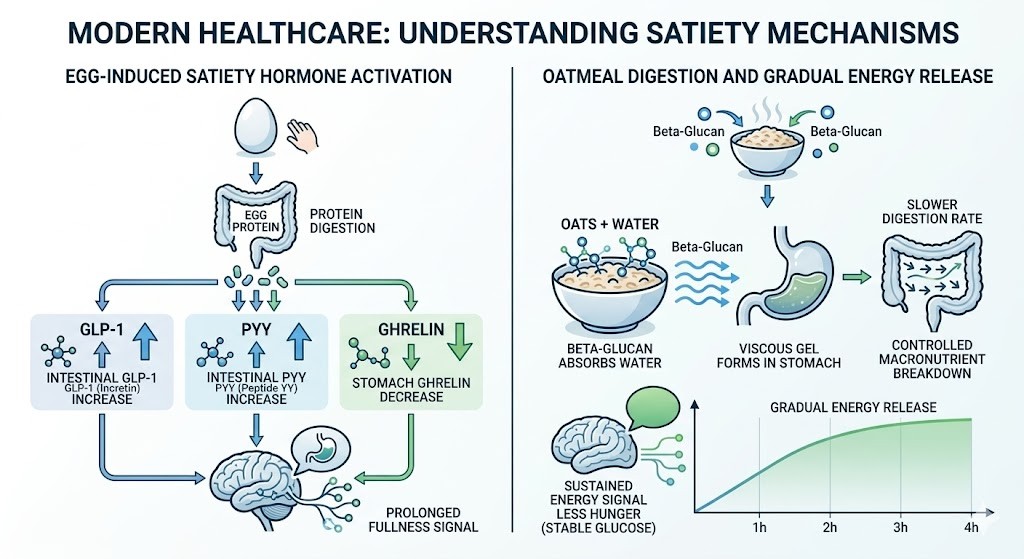
Eggs fight hunger on a chemical level. When you eat whole eggs, you are consuming a highly bioavailable complete protein, meaning it has all nine essential amino acids your body can't make on its own.
As your body breaks down these egg proteins, they act as direct chemical messengers to your brain. This digestion process stimulates the release of key fullness hormones, including Peptide YY (PYY) and GLP-1, which send a clear "stop eating" signal to your central nervous system.
At the same time, eggs put a tight lid on ghrelin, the notorious "hunger hormone" produced by your stomach that makes your belly growl.
In a landmark clinical study from the University of Connecticut, researchers had participants eat either two eggs or a packet of oatmeal every morning. The result? The egg breakfast significantly suppressed ghrelin, leaving people feeling noticeably more satisfied throughout the day—all while maintaining a perfectly healthy heart-cholesterol ratio.
This isn't just true for adults. Studies show that when kids eat an egg-based breakfast, they naturally eat about 70 fewer calories at lunch compared to when they start their day with oatmeal or sugary cereal. Another study found that swapping out a high-carb bagel breakfast for eggs kept adults full longer and reduced their overall calorie intake over the next 24 hours.
The Fiber Magic of Oatmeal: The Slow-Digesting Sponge
While eggs rely on chemical signaling, oatmeal uses physical mechanics to keep you full.
Oats are packed with beta-glucan, a unique type of soluble fiber. Think of beta-glucan as a microscopic sponge. When it mixes with water in your digestive tract, it swells up to form a thick, viscous gel.
This gel does two major things for your appetite:
Stretches Your Stomach: The physical volume of the gel stretches your stomach walls, activating tension receptors that tell your brain you are physically full.
Slows Down Gastric Emptying: It acts like a speed bump in your digestive system, slowing down how quickly food leaves your stomach and enters your intestines. This gradual transit ensures a slow, steady release of energy instead of a sudden crash.
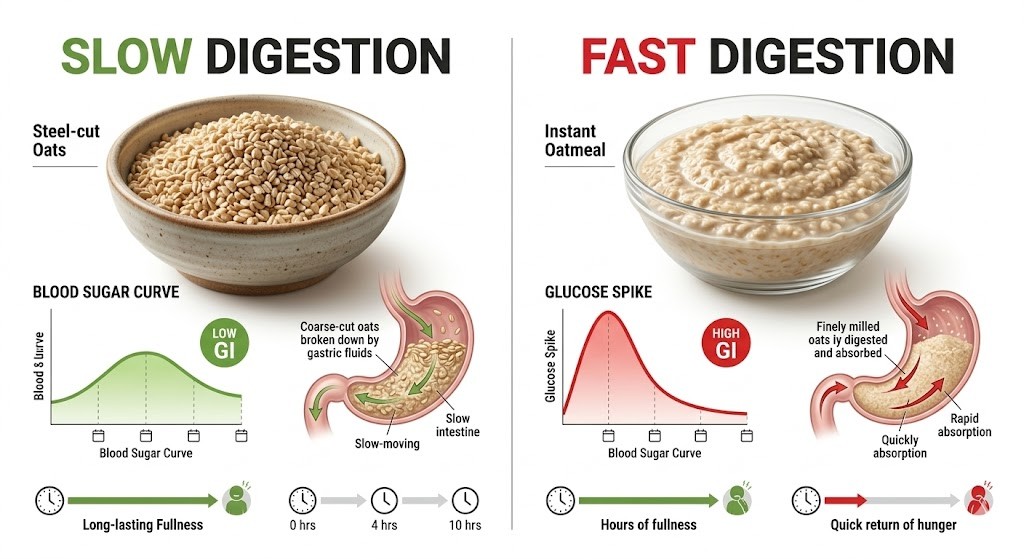
However, the magic of oatmeal depends entirely on processing. Steel-cut oats are minimally processed and take longer to digest, giving them a lower glycemic index and excellent staying power.
On the other hand, highly processed instant oats have had their starch barriers pre-broken down. They digest rapidly, causing a quick spike in blood sugar followed by an early return of hunger unless you slow them down by adding protein or healthy fats.
Blood Sugar and Inflammation: The Skillet vs. The Bowl
If you have ever experienced that shaky, foggy feeling around 10:30 AM, you have experienced a blood sugar crash (also known as reactive hypoglycemia).
Because whole eggs have virtually zero carbohydrates, they do not cause postprandial blood sugar spikes, keeping your energy and insulin levels incredibly stable.
But the health benefits of eggs go even deeper. In a clinical trial involving adults with type 2 diabetes, researchers compared eating one egg per day to a bowl of oatmeal paired with milk. While both breakfasts were safe for blood sugar, the egg-eating group saw a significant reduction in TNF-alpha (a major marker of chronic inflammation) and AST (a key liver enzyme). This suggests that a daily egg-based breakfast can actually quiet systemic metabolic inflammation.
Still, oatmeal remains a heart-healthy powerhouse. While eggs excel at short-term glycemic stability and inflammatory control, clinical trials show that a six-week daily oatmeal habit is highly effective at lowering total and LDL ("bad") cholesterol, protecting your cardiovascular system over the long term.
How Satiety Works (The Quick Comparison)
Satiety Pathway | Whole Eggs | Oatmeal |
Primary Mechanism | Chemical & hormonal (protein and lipids trigger brain fullness signals). | Physical & mechanical (soluble fiber stretches the stomach and slows digestion). |
Hormonal Impact | Suppresses ghrelin (hunger) and boosts PYY/GLP-1 (fullness). | Modulates ghrelin slightly, but has limited direct effect on PYY. |
Blood Sugar Stability | Extremely flat; zero glycemic impact. | Low to moderate rise depending on oat processing level. |
Best For | Steady morning energy, insulin management, and preventing mid-morning snack attacks. | Slower glucose release, heart health (lowering LDL cholesterol), and high-fiber diets. |
Why Your Tracker Needs the Details (Enter VoCal)
If you are tracking your breakfast to manage your energy and health, simply typing "eggs" or "oatmeal" into a basic calorie counter doesn't give you the whole picture. How you prepare your food changes how your body digests it.
With a voice-activated food tracker like VoCal, logging the vital details of your breakfast is as easy as speaking. You don't have to navigate endless drop-down menus; you just speak naturally:
"Two scrambled whole eggs with a teaspoon of butter" tells the system to map a rich protein-lipid profile that will keep your blood sugar steady for hours. It also captures the brain-boosting choline and fat-soluble vitamins packed inside the yolk that you would miss if you only logged egg whites.
"One cup of cooked steel-cut oats with almond butter" tells the tracker that you are consuming low-glycemic, slow-digesting carbs paired with healthy fats to help prevent a mid-morning crash.
By using voice logging on VoCal, you can effortlessly capture preparation methods, added proteins, and processing levels. This allows the app to accurately project your personal satiety curve and help you map out a day of steady, crash-free energy.
The Verdict: Skillet or Bowl?
If your goal is to maximize morning focus, maintain rock-solid blood sugar, and naturally eat less at your next meal, eggs take the crown. Their high-quality protein and bioavailable fats offer superior hormonal control over your appetite.
However, if you love starting your day with a warm bowl of oatmeal, you don't have to give it up! To match the exceptional satiety of eggs, give your oats a protein upgrade. Cook them in milk instead of water, stir in a scoop of your favorite protein powder, or top them with a spoonful of almond butter, walnuts, or chia seeds. By balancing those complex carbs with proteins and healthy fats, you can build a breakfast that keeps you energized all morning long.
Frequently Asked Questions (FAQs)
Does oatmeal always spike blood sugar more than eggs?
Typically, yes. Because eggs contain virtually zero carbs, they have a glycemic index of near zero and cause almost no change in blood sugar. Plain oatmeal contains carbohydrates, which will cause a moderate rise in blood sugar. However, using steel-cut oats (which have a lower glycemic index of 53) and pairing them with healthy fats and proteins can keep that rise very gentle and steady.
Can I eat only egg whites, or do I need the yolk for fullness?
While egg whites are a great source of pure, low-calorie protein, the yolk contains the healthy fats and fat-soluble nutrients that slow down your stomach's emptying rate. To get the maximum hunger-suppressing benefits and release appetite-regulating hormones like CCK, eating the whole egg is highly recommended.
How can I make my morning oatmeal as filling as a plate of eggs?
To give your oatmeal the same staying power as eggs, you need to alter its macronutrient balance. Try cooking your oats in milk or soy milk instead of water, stirring in a scoop of protein powder, or adding toppings rich in healthy fats and proteins like chia seeds, hemp hearts, walnuts, or almond butter.
Is it safe to eat eggs every day if I am watching my cholesterol?
For the vast majority of healthy individuals, clinical studies show that eating two eggs per day does not adversely affect the markers associated with cardiovascular disease risk. While eggs do contain dietary cholesterol, research has demonstrated that dietary cholesterol has very little impact on blood cholesterol for most people.
Disclaimer: This article is for informational and educational purposes only and is not intended as medical advice, diagnosis, or treatment plans. Individuals with type 2 diabetes, pre-existing dyslipidemia, or cardiovascular concerns should consult a qualified physician or registered dietitian before making significant changes to their daily dietary routine.