
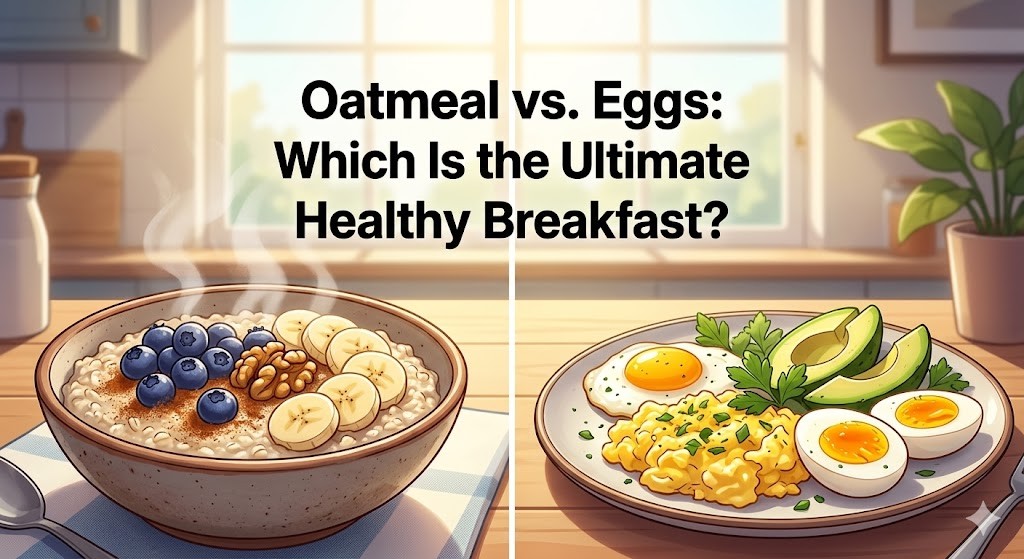
Are you a savory scramble fanatic or a sweet-and-cozy oatmeal lover? Starting your morning with a nourishing breakfast is one of the easiest ways to kick-start your metabolism and secure steady energy for the day. But when it comes to the heavy hitters of the breakfast table, a viral debate has nutritionists and health enthusiasts taking sides: the eggs vs oatmeal breakfast comparison.
On one side, we have eggs—the complete-protein champion that low-carb and keto fans swear by. On the other, we have oatmeal—the heart-healthy, cozy bowl packed with cholesterol-lowering soluble fiber.
Let’s crack this debate wide open and see which breakfast option deserves a permanent spot in your morning routine.
The Morning Matchup: Nutrition Facts
At first glance, eggs and oatmeal look like they belong to two completely different culinary universes. One is animal-derived, lipid-rich, and practically carb-free, while the other is plant-based, fiber-rich, and carbohydrate-dense.
Here is how a standard serving of two large boiled eggs stacks up against a half-cup of uncooked, rolled oats cooked in water:
Nutrient | Two Large Boiled Eggs | 1/2 Cup Dry Oats (Rolled) |
Calories | 144 | 152 |
Protein | 12.8g | 5.4g |
Carbohydrates | 1.12g | 27.5g |
Dietary Fiber | 0g | 4g |
Total Fat | 10.6g | 2.4g |
Saturated Fat | 3.2g | 0.4g |
Cholesterol | 372mg | 0mg |
The Sunny Side: Health Benefits of Eggs
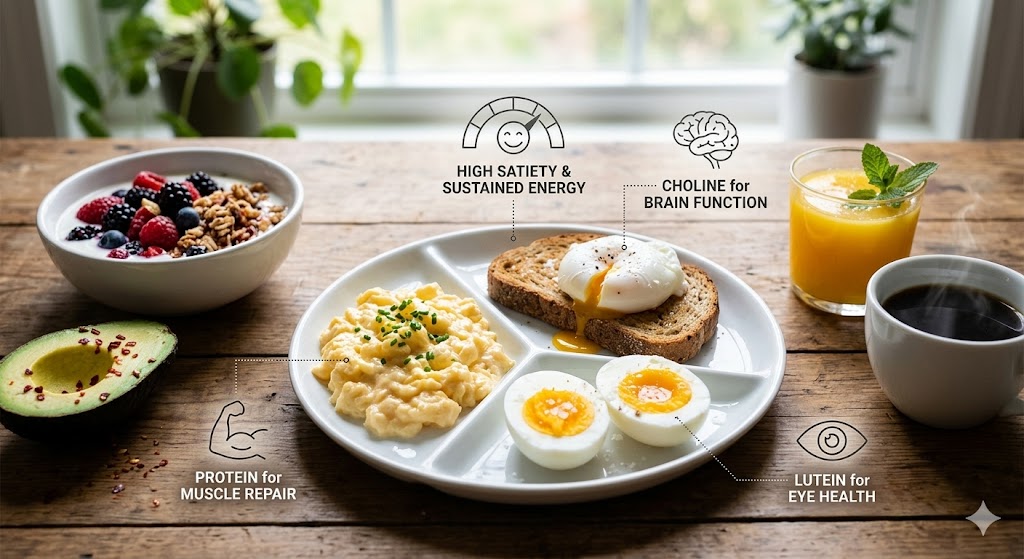
Eggs are one of nature's most perfect, nutrient-dense whole foods. If you love starting your morning with a scramble or a couple of hard-boiled eggs, here are the physical perks you are scooping up:
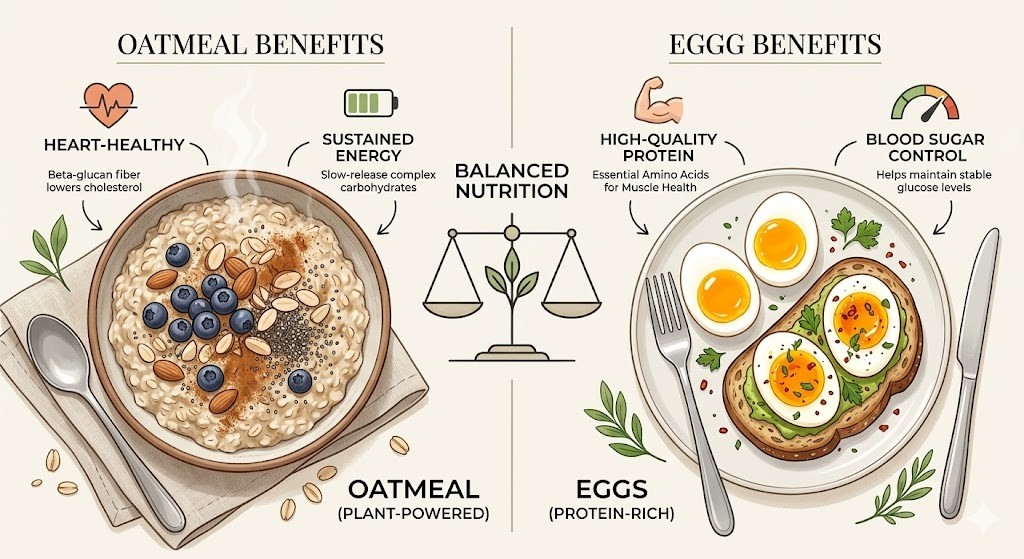
They deliver complete protein. Eggs are considered the gold standard for dietary protein because they contain all nine essential amino acids—the building blocks of protein—in perfect proportions. This complete protein structure is highly bioavailable, meaning your body can easily absorb it to build and maintain lean muscle.
They protect your brain and eyes. Don't skip the yolk! While many people discard them to avoid fat, egg yolks contain key nutrients like choline (essential for brain function and memory) and the antioxidant carotenoids lutein and zeaxanthin, which protect your eyes from macular degeneration as you age.
They suppress your hunger hormones. The protein and healthy fats in whole eggs trigger the release of fullness hormones like peptide YY (PYY) and cholecystokinin (CCK), while actively lowering levels of ghrelin—your body's primary hunger hormone.
The Fiber Champion: Health Benefits of Oatmeal
Unlike refined breakfast cereals, whole-grain oats contain all three parts of the grain (the bran, germ, and endosperm), meaning they keep all their natural nutrients intact. Oatmeal offers its own stellar resume of health benefits:
They fight "bad" cholesterol. Oats contain a powerful soluble fiber called beta-glucan. When digested, beta-glucan forms a thick, gel-like substance in your gut that binds to cholesterol-rich bile acids and sweeps them out of your body, actively lowering your blood LDL cholesterol levels.
They offer slow-release, steady energy. Oatmeal is a complex carbohydrate, meaning your digestive system breaks it down slowly. This slow digestion provides a steady, gradual release of glucose into your bloodstream, preventing the aggressive blood sugar spikes and crashes that leave you craving snacks by mid-morning.
They boost vascular health. Oats are highly unique because they contain plant antioxidants called avenanthramides. Studies show that avenanthramides increase the body’s production of nitric oxide, which helps dilate and relax blood vessels, leading to better blood flow and lower blood pressure.
How to Choose the Best Option for You
Because both foods are incredibly nutritious, the "healthier" choice ultimately depends on your personal wellness goals and medical needs.
If You Want Blood Sugar Control and Metabolic Stability
If you deal with prediabetes, type 2 diabetes, or insulin resistance, morning glucose control is crucial.
The Winner: Eggs. Eggs have a glycemic index (GI) near zero. Eating eggs for breakfast prevents postprandial glucose spikes and can help improve insulin sensitivity.
The Oatmeal Caveat: Oatmeal is an excellent choice for diabetics, but how it is prepared matters tremendously. Minimally processed steel-cut oats have a low GI and slow absorption, while highly processed instant oats can cause rapid blood sugar spikes.
If You Want Heart Health and Active Cholesterol Defense
If you are actively trying to lower your cardiovascular risk markers, your dietary strategy should focus on fiber and saturated fat management.
The Winner: Oatmeal. Oats have an FDA-approved health claim for reducing heart disease risk. Consuming at least 3 grams of oat beta-glucan soluble fiber daily is highly effective at reducing total and LDL cholesterol.
The Egg Caveat: While dietary cholesterol in eggs does not impact blood cholesterol as much as previously thought, eggs still contain saturated fat. The American Heart Association suggests healthy adults can eat one whole egg a day, but if you have high cholesterol or heart disease, it is wise to limit yourself to four yolks per week and prioritize fiber.
Which Is Best for Weight Loss?
If you are looking to lose weight or hold on to muscle, both eggs and oatmeal are fantastic allies—but they control your appetite using completely different physiological pathways.
According to the famous Satiety Index, which measures how full common foods keep you compared to white bread, porridge (oatmeal) scores an incredible 209%, while boiled eggs score a respectable 150%. Oatmeal’s high score is driven by physical volume. The beta-glucan fiber absorbs water during cooking, expanding in your stomach to physically stretch your stomach wall and trigger stretch receptors that signal fullness to your brain.
However, eggs offer a major metabolic advantage. Clinical crossover studies show that people who consume an egg breakfast experience lower levels of the hunger hormone ghrelin and eat significantly fewer ad-libitum calories later in the day compared to those who eat oatmeal.
The Verdict: It's a tie! If you love a physically large, high-volume meal that keeps your stomach stretched and satisfied, go for oatmeal. If you want to quiet your systemic "hunger signals" and prevent overeating at lunch, eggs are your secret weapon.
5 Tips to Upgrade Your Breakfast (and Effortlessly Track It)
You don't actually have to choose one over the other! Here are five practical tips to make your morning meals even healthier, plus how to monitor them without the headache:
Whisk Egg Whites Into Your Oats: It sounds unusual, but it is a culinary game-changer. Whisking liquid egg whites into your oatmeal during the last minute of simmering creates an incredibly fluffy, custardy texture while sneaking in an extra 3.5 grams of complete protein per egg white.
Swap Your Cooking Fats: Frying eggs in heavy butter or bacon grease adds unnecessary saturated fat. Instead, use non-tropical, liquid plant oils like olive, canola, or avocado oil, which are loaded with heart-healthy monounsaturated fats.
Choose Steel-Cut or Rolled Oats: Ditch the instant, sugary maple-flavored packets. Opt for minimally processed steel-cut or old-fashioned rolled oats, which keep your glycemic index low and keep you full longer.
Embrace Savory Oats: Cook your rolled oats in water or vegetable broth, and top them with sautéed spinach, mushrooms, and a soft-poached egg for the ultimate savory, nutrient-packed power bowl.
Ditch Food-Logging Fatigue with VoCal: Let's be honest—weighing your ingredients and manually entering food items into a phone screen is the fastest way to abandon your health goals. That is where the VoCal app comes in.
VoCal is a hands-free, voice-activated calorie and macronutrient tracking app. Instead of searching database menus with cooking prep on your hands, you can simply tap the microphone and say: "I had two soft-boiled eggs, half a cup of cooked rolled oats, and a handful of fresh blueberries." VoCal’s AI instantly understands the foods and portions, logs your calories, and tracks your saturated fat and fiber in real-time to keep you aligned with your health goals effortlessly.
The Takeaway
Choose eggs if your main priorities are immediate glycemic control, appetite suppression, and high-quality, complete protein delivery.
Choose oatmeal if your main goals are active cardiovascular support, lowering bad LDL cholesterol, and securing slow-release complex carbs for steady energy.
For the best of both worlds, combine them, and log your breakfast hands-free with VoCal to make healthy habits stick.
Frequently Asked Questions (FAQs)
1. Is it healthy to eat both eggs and oatmeal together?
Absolutely! In fact, combining them is a dietary "power couple" move. Oats bring cholesterol-lowering soluble fiber and steady energy, while eggs provide high-quality complete protein and healthy fats. Eating them in the same meal maximizes both physical volume and chemical satiety.
2. Does eating eggs every day raise your blood cholesterol?
For the general, healthy population, eating one egg per day (including the yolk) does not adversely affect your critical LDL/HDL cholesterol ratio. Science now shows that saturated fats have a much greater impact on blood lipids than dietary cholesterol itself. However, if you have diagnosed heart disease, type 2 diabetes, or high cholesterol, experts suggest limiting yourself to four yolks per week.
3. Which type of oatmeal is best for blood sugar control?
Steel-cut oats are the least processed, followed by old-fashioned rolled oats. Both of these choices have a low-to-medium glycemic index, meaning they release glucose slowly. Avoid instant oat packets, as they are highly processed and often loaded with added sugars that cause rapid spikes.
4. Can egg whites keep me as full as whole eggs?
Egg whites are an excellent source of pure protein, but they lack the healthy lipids and micronutrients found in the yolk. The fat in the yolk slows down digestion, which is key for long-term satiety. If you are looking to cut down on fat but still want staying power, try combining two egg whites with one whole egg.
Disclaimer: The information in this article is intended for educational and informational purposes only. It is not a substitute for professional medical advice, diagnosis, or treatment. Always consult with a qualified healthcare provider, such as a doctor or registered dietitian, before making major changes to your diet or lifestyle.