
Ah, Poha. It is the golden child of Indian breakfasts—literally! Whether you are a student rushing to a 9 AM lecture or a fitness enthusiast looking for a pre-workout fuel, a steaming plate of homemade poha with peanuts is usually the answer. But if you have ever found yourself staring at your bowl wondering about the calories in poha with peanuts, you are in the right place.
Let’s dive into the world of this "beaten rice" and see why it is more than just a tasty treat; it is a nutritional MVP (Most Valuable Player).
The "Big Question": How Many Calories are in Poha with Peanuts?
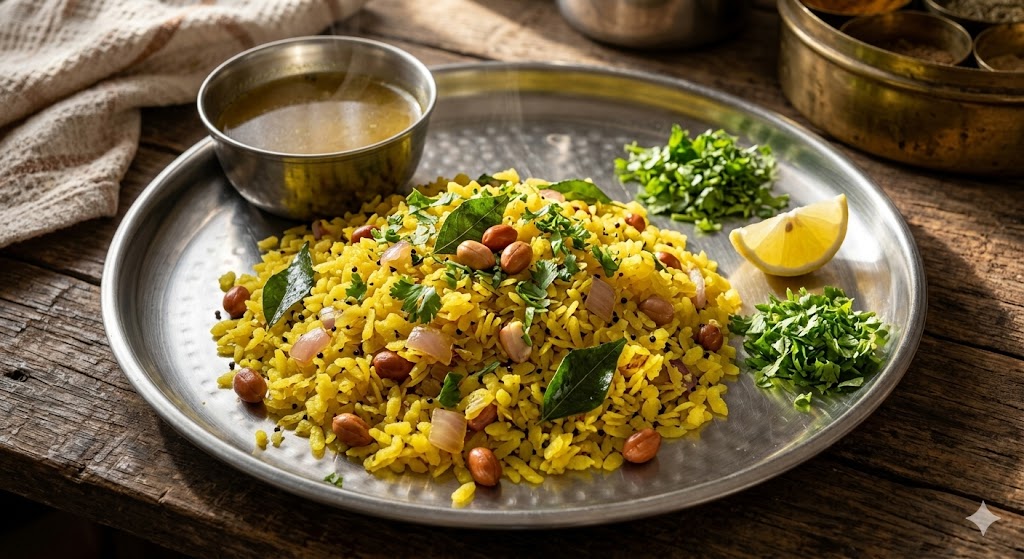
We get it—you want the numbers. The thing about homemade poha is that it is a bit of a shapeshifter. The calories can change depending on how many peanuts you toss in or how much oil you use for that perfect tadka.
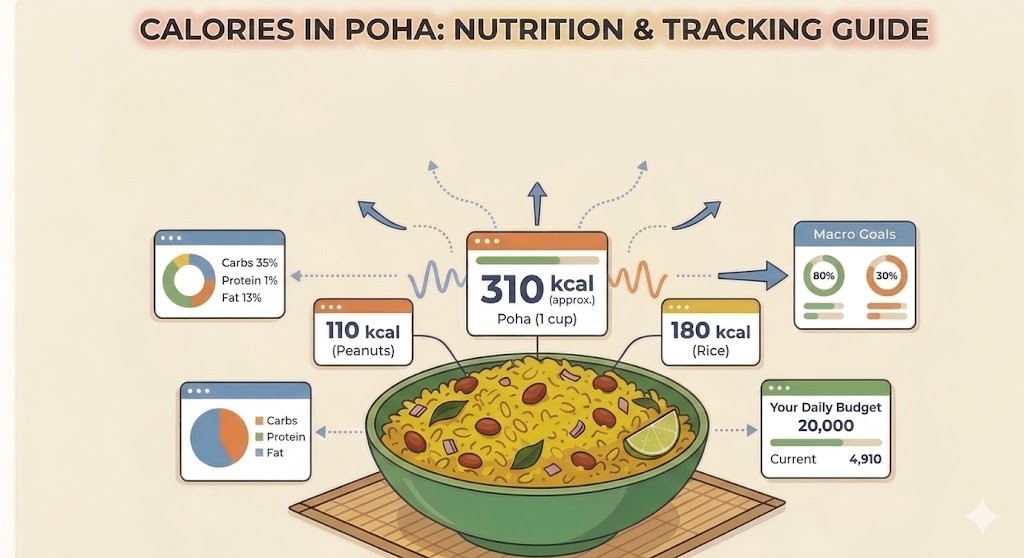
On average, a standard serving of cooked poha with peanuts ranges between 250 to 350 calories. Here is a quick breakdown based on serving sizes to help you visualize your plate:
Serving Size | Total Calories (Approx.) | Carbohydrates | Protein | Total Fat |
Small Bowl (100g cooked) | 130 – 140 kcal | 27 – 28 g | 2.6 – 3.3 g | 0.8 – 3.3 g |
Medium Bowl (200g cooked) | 260 – 280 kcal | 54 – 56 g | 5.2 – 6.6 g | 1.6 – 6.6 g |
Large Plate (300g cooked) | 390 – 420 kcal | 81 – 84 g | 7.8 – 9.9 g | 2.4 – 9.9 g |
Note: These figures are based on standard Indian Food Composition Tables (IFCT) data.
The Macro Breakdown: Carbs, Protein, and Healthy Fats
Poha is primarily a carbohydrate source, which is why it gives you that instant "wake up" energy. But when you add peanuts, you are basically giving your breakfast a protein and fat upgrade.
1. The Carb King
Raw poha contains about 77g of carbohydrates per 100g. These are complex carbs that release energy slowly, making it a great option for managing blood sugar levels compared to polished white rice.
2. The Peanut Protein Punch
Adding peanuts is the secret sauce. Peanuts are tiny powerhouses of plant-based protein (about 25.8g per 100g). Just 2 tablespoons of peanuts add roughly 7g of protein and heart-healthy monounsaturated fats to your meal.
3. The Iron Bonus
Did you know that the process of making poha involves iron rollers? This actually boosts the iron content of the flakes. Pro-tip: Squeeze some fresh lemon juice on your poha. The Vitamin C helps your body absorb that iron up to 300% better!
Which Poha Should You Choose?
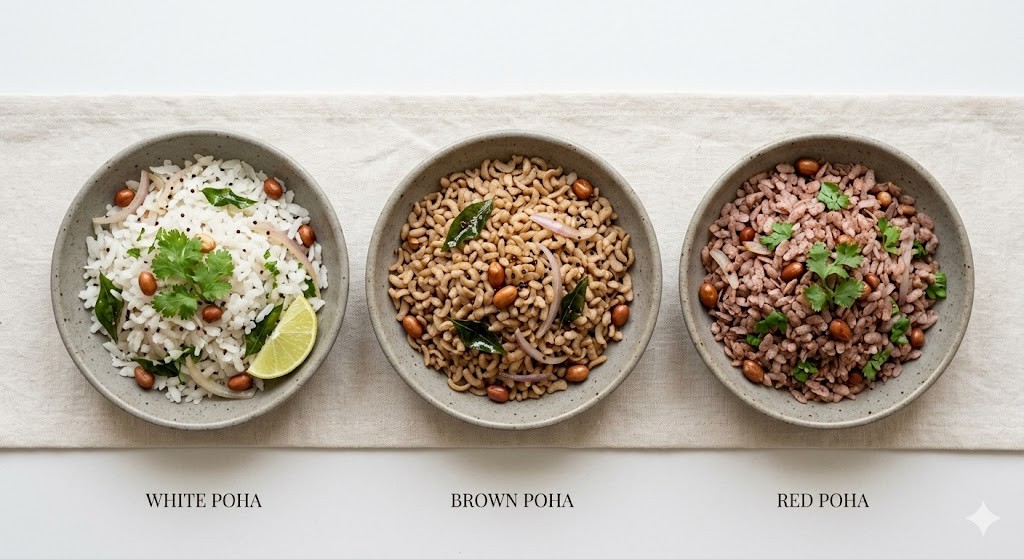
Not all flakes are created equal. Depending on your health goals, you might want to swap your standard white poha for a more colorful cousin.
Nutrient (per 100g raw) | White Poha | Red Poha | Brown Poha |
Energy (kcal) | 354 kcal | ~350 kcal | ~370 kcal |
Fiber | 3.46 g | ~5.0 g | ~6.0 g |
Iron | 4.46 mg | ~20.0 mg | ~18.0 mg |
Best For | Quick Digestion | Low GI / Diabetes | Weight Management |
Fun Fact: Lord Krishna’s Favorite Snack?
Poha isn't just a modern "fit-food." Its roots go back to the Vedic period. In Indian mythology, it is famously known as the humble gift Sudama brought for Lord Krishna. Krishna was so thrilled by the simple, heart-felt offering of poha that it remains a symbol of pure, unpretentious friendship today.
Why Tracking Poha Can Be Tricky (And How to Fix It!)
Tracking the calories in poha with peanuts can feel like a math exam. Did you add 1 teaspoon of oil or 2 tablespoons? Did you use a handful of peanuts or just a sprinkle?
This is where VoCal saves the day. Instead of spending 15 minutes searching through Western databases that don't understand "Kanda Poha," you can just say it!
Voice Logging: Simply say, "I had a medium bowl of kanda poha with extra peanuts" in English, Hindi, Marathi, or 8 other Indian languages.
AI Smart Analysis: The app understands Indian cooking methods and regional dishes with 95% accuracy.
Log in 15 Seconds: It is 10x faster than traditional apps, letting you get on with your day while it calculates your macros.
Summary: A Healthy, People-First Breakfast
Homemade poha with peanuts is a balanced, gluten-free, and gut-friendly meal. Because it is partially fermented during its production, it even offers some probiotic benefits! To keep it weight-loss friendly, load up on veggies like carrots, peas, and onions to add volume without the heavy calories.
FAQs
Is poha with peanuts good for weight loss?
Yes! It is high in fiber and protein (thanks to the peanuts), which keeps you full for longer. Just watch the oil and "sev" toppings.
Can diabetics eat poha?
Yes, but in moderation. Adding plenty of vegetables and peanuts lowers the overall Glycemic Index (GI), preventing sugar spikes.
Is poha better than oats?
Poha is significantly higher in iron and easier to digest for many people, though oats offer more soluble fiber. Both are great, but poha is the local superfood!
Disclaimer: This content is for informational purposes only and does not replace professional medical advice. Always consult a healthcare professional before making significant dietary changes