
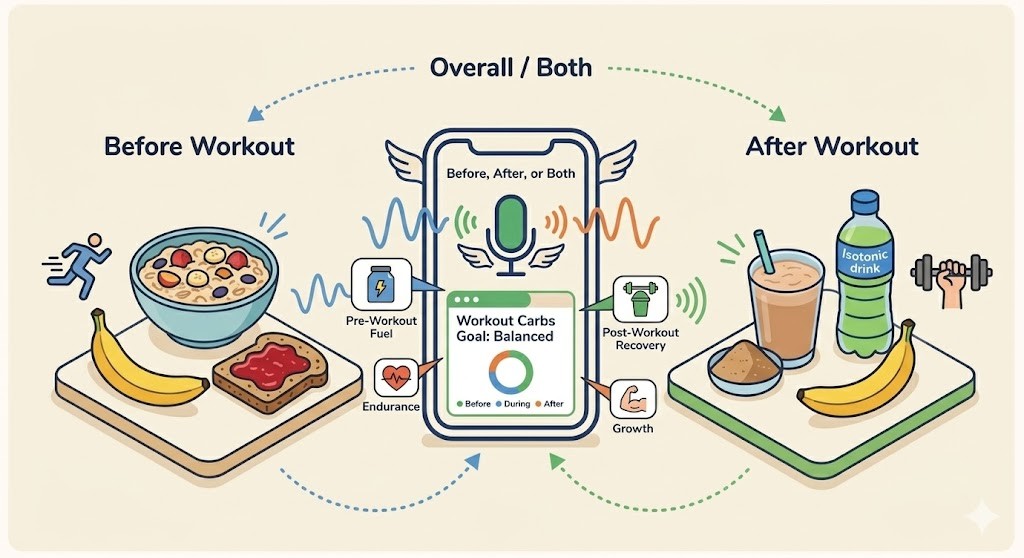
If you’ve ever felt like your legs were made of lead halfway through a run or hit a "wall" during a lifting session, you’ve met the consequences of low muscle glycogen . In the fitness world, carbohydrates are the high-octane fuel your body craves for performance. But with so much talk about "good" vs. "bad" carbs, the timing can feel like a complex puzzle.
Should you fuel up before you sweat, or refuel once you're done? Spoiler alert: The answer is usually both, but the type of carb you choose makes all the difference .
The Carb Showdown: Simple vs. Complex
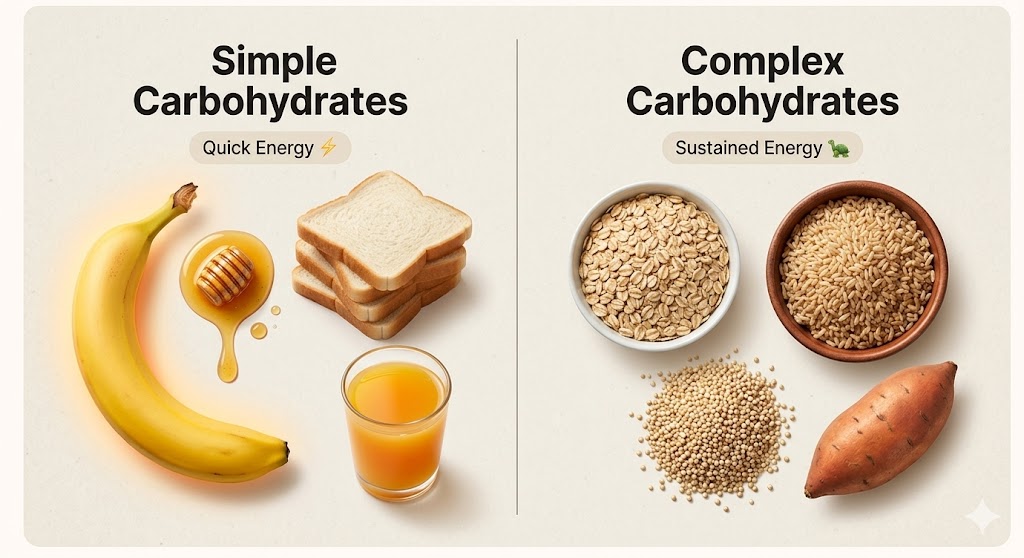
Think of carbohydrates as the "gas" in your car. Not all fuel burns the same way:
Simple Carbohydrates (The Sprinters): These are small sugar molecules that your body breaks down fast. Think fruit, honey, or energy gels. They give you a quick energy burst but can lead to blood sugar spikes followed by a "crash" if not timed right .
Complex Carbohydrates (The Marathoners): These are made of long, branched chains of sugar molecules. Because they are fiber-rich, they take longer to digest, providing a steady energy release without the rollercoaster of blood sugar highs and lows .
For most of your day, you want to stick with the "Slow Burn" of complex carbohydrates like oats, sweet potatoes, and quinoa to keep your energy stable.
Your Master Fueling Cheat Sheet
Workout Phase | Timing | Carb Strategy | Why It Works |
Pre-Workout | 2–4 hours before | High complex carbohydrates | Provides a steady "slow burn" of energy for the whole session `` |
Pre-Workout | 30–60 mins before | Easy-to-digest simple carbs | Prevents pre-gym hunger and gives a quick glucose top-off `` |
During Workout | Every 15–30 mins | 30–60g of carbs per hour | Only necessary for intense sessions lasting over 60 minutes `` |
Post-Workout | Within 30–60 mins | Simple carbs + high-quality protein | Spikes insulin to drive nutrients into "hungry" muscle cells |
Daily Recovery | 2–4 hours later | Return to balanced complex carbs | Restocks long-term glycogen stores and keeps you full `` |
Pre-Workout: Priming the Pump
Your goal before exercise is to make sure your "tank" is full of muscle glycogen so you don't "bonk" (hit the wall) early.
The 2–4 Hour Window
This is the time for a balanced meal featuring complex carbohydrates. A bowl of oatmeal with fruits or a brown rice bowl provides the sustained energy you need to power through a long session.
The 30–60 Minute Scramble
If you’re heading to the gym soon and need a quick boost, swap the heavy fiber for something easy to digest. A banana or a piece of toast with a little nut butter is perfect for that last-minute energy punch without the tummy ache.
During the Sweat: Keeping the Fire Lit
If your workout is a quick 45-minute HIIT class, water is usually enough. But if you’re out for a 90-minute bike ride or a long trail run, your body needs a mid-game refill. Aim for 30–60 grams of carbohydrates per hour to keep your brain and muscles happy and prevent hypoglycemia (low blood sugar).
Post-Workout: The Recovery Party
Once you’ve crushed your workout, your muscles are like sponges—they are primed and ready for glycogen replenishment.
To maximize recovery, aim for a 3:1 or 4:1 ratio of carbs to protein within 30 to 60 minutes of finishing. This is one of the few times where "fast" carbs (like white rice or a fruit smoothie) are actually preferred because they spike insulin, which helps drive nutrients into your muscles to start the repair process .
Stop Guessing, Start Tracking with VoCal
We get it—measuring "40 grams of complex carbohydrates" sounds like a math homework assignment you didn't ask for. That’s where VoCal comes in.
Instead of spending 15 minutes scrolling through endless databases, you can just tap a button and say, "I had a medium bowl of dal makhani and two rotis". Our AI understands over 100,000 Indian dishes and regional home-cooked meals with 95% accuracy, logging your macros in about 15 seconds.
Whether you're tracking your pre-workout oats or your post-workout protein shake, VoCal takes the friction out of nutrition so you can stay focused on your gains.
FAQs
Is it okay to eat carbs at night? Absolutely! Your body doesn't have a clock. If you work out in the evening, eating complex carbohydrates at dinner is vital for muscle recovery and can even help you sleep better.
What are the best "clean" complex carbs? Oats, sweet potatoes, brown rice, chickpeas, and quinoa are all gold-medal winners. They provide the vitamins and fiber your body needs for long-term health.
Can I lose weight and still eat carbs? Yes! In fact, the fiber in complex carbohydrates keeps you feeling full longer, which actually helps with weight management ``. Gram for gram, carbs have fewer than half the calories of fat.
Disclaimer: This content is for informational purposes only and is not medical advice. Always consult a healthcare professional or registered dietitian before starting a new diet or exercise program.