
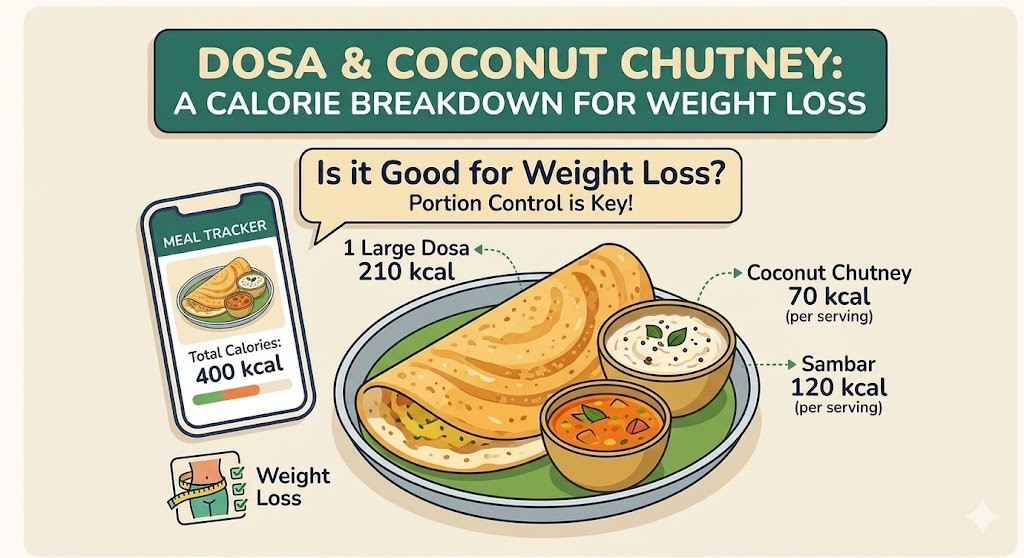
Who doesn’t love the sound of a crispy, golden dosa sizzling on a tawa? It’s the ultimate comfort food! But if you’re on a weight loss journey, you might be staring at that delicious plate and wondering: "How many calories in 1 dosa with coconut chutney?"
Whether you’re using VoCal (our voice-based calorie tracker) to log your breakfast or just trying to eat mindfully, we’ve got the full scoop. Spoiler alert: You don't have to give up your favorite South Indian treat to see results!
The "Magic" Number: 245 Calories
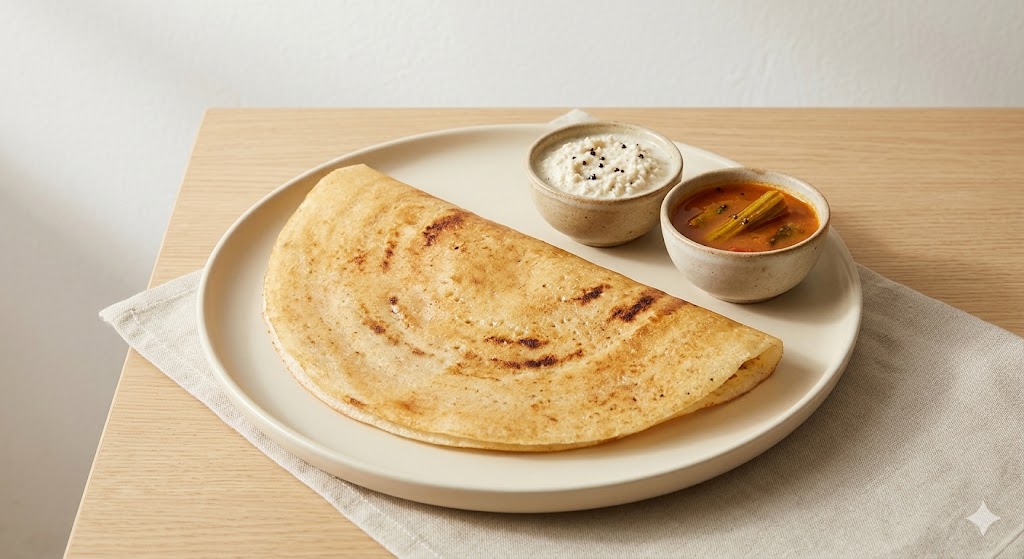
According to the National Institute of Nutrition (NIN), a standard home-cooked plain dosa and a side of traditional coconut chutney clock in at approximately 245 calories.
But wait! Not all dosas are created equal. Depending on whether you're at a fancy restaurant or your grandma's kitchen, the numbers can wiggle.
Dosa Calorie Breakdown (Per Unit)
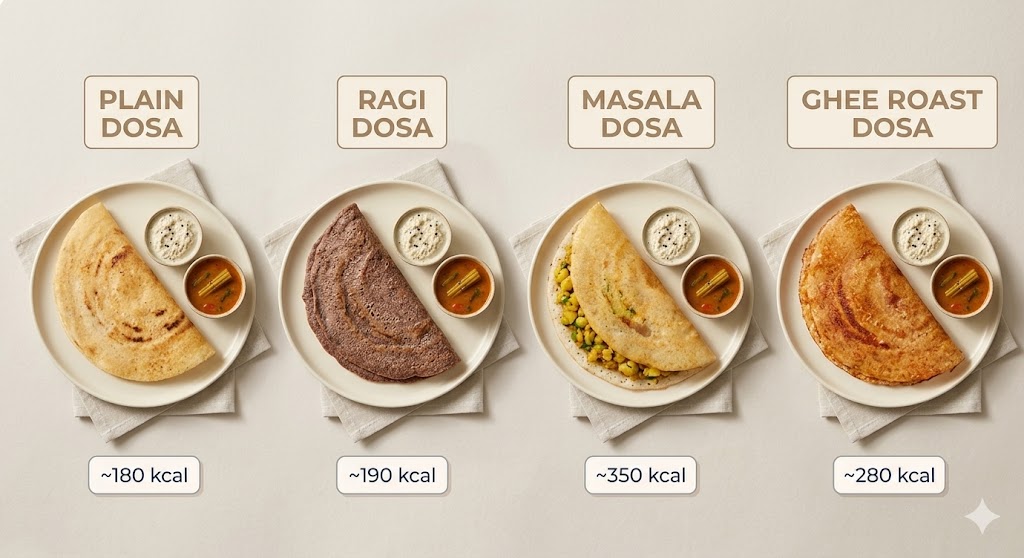
Dosa Type | Calories (kcal) | Protein (g) | Fun Fact |
Plain Dosa (Homemade) | 125 | 2.8 | The gold standard for weight loss! |
Ragi (Millet) Dosa | 115 | 3.2 | Higher fiber, stays in your belly longer. |
Masala Dosa (Potato) | 200 | 4.0 | The filling adds about 70–80 calories. |
Restaurant Ghee Roast | 350+ | 3.5 | Often uses 3x the oil—track with care! |
VoCal Tip: When logging, just say: "Hey VoCal, I had one medium homemade plain dosa." It’s that easy!
Why Dosa is a Weight Loss "Superfood" (Really!)
It’s not just about the calories. The way a dosa is made—through fermentation—makes it a metabolic powerhouse.
1. Happy Gut, Happy You
Dosa batter is fermented for 8 to 12 hours. This process invites "good" bacteria (probiotics) like Lactobacillus plantarum to the party. A healthy gut microbiome is a secret weapon for weight loss because it reduces inflammation and helps control those pesky cravings.
2. The Protein Power-Up
Vegetarians, rejoice! By mixing rice and urad dal (black gram), you create a complete protein. This synergy gives you all nine essential amino acids your body needs to build muscle while you burn fat.
Coconut Chutney: The "Good" Fat
Many people avoid coconut chutney because of the fat content, but there’s a scientific twist! Coconut is rich in Medium-Chain Triglycerides (MCTs).
Unlike the fats in butter, MCTs go straight to your liver to be used for instant energy rather than being stored as body fat.
Chutney Calorie Comparisons
Chutney Style | Serving Size | Calories (kcal) | Weight Loss Impact |
Traditional Coconut | 2 Tbsp | 120 | High satiety, keep to 2 spoons. |
Mint-Coconut Blend | 2 Tbsp | 25 | Best of both worlds! |
Fresh White (No Oil) | 2 Tbsp | 35 | The leaner, meaner option. |
3 Pro-Tips to Make Your Dosa Diet-Friendly
The Non-Stick Trick: Use a high-quality non-stick pan to skip the oil or ghee. You’ll save 45 calories for every teaspoon you skip!
Add Veggie Volume: Grate some carrots or bottle gourd directly into your batter. More fiber = more fullness for the same calories.
The 2-Tablespoon Rule: Coconut chutney is healthy, but calorie-dense. Stick to a 2-tablespoon serving to stay in your deficit.
Summary
Dosa and coconut chutney are a fantastic duo for weight loss when eaten mindfully. The combination of complete proteins, gut-friendly probiotics, and energy-boosting MCT fats makes it a functional meal that keeps you full and fueled.
Ready to track your breakfast? Open VoCal and just say what you ate!
FAQs
Can I eat 2 dosas for weight loss?
Yes! Two plain homemade dosas with a small serving of chutney and lots of vegetable-filled sambar stay under 400 calories, making it a perfect, filling meal.
Is coconut chutney okay for diabetics?
In moderation, yes. The healthy fats in coconut actually help slow down the absorption of sugar from the rice in the dosa, preventing sharp spikes.
How do I track a restaurant dosa?
Restaurants often use more oil. Use Vo-cal and specify "Restaurant Masala Dosa" to ensure the app accounts for the hidden butter or ghee!
Disclaimer: Always consult a healthcare professional before starting a new weight loss diet, especially if you have underlying conditions like diabetes.