
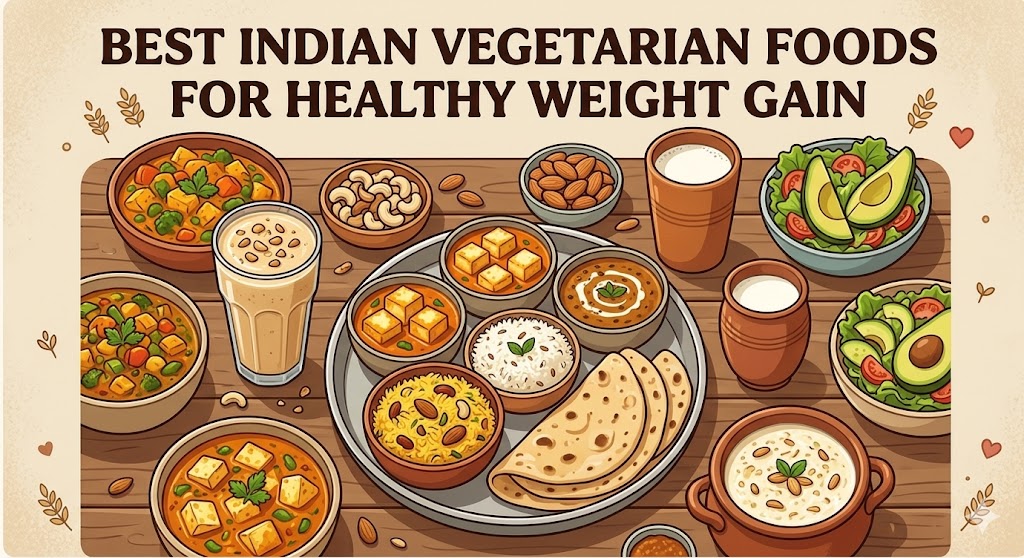
Are you tired of being told to "just eat more"? If you are trying to gain weight on an Indian vegetarian diet, you know it is not just about the quantity of food, but the quality. Whether you have a lightning-fast metabolism or are recovering from a health slump, gaining weight can be just as challenging as losing it.
The secret? It is all about a "healthy" surplus—building muscle and energy rather than just adding empty calories. Let's dive into the delicious world of Indian superfoods that will help you bulk up the right way.
The Simple Science: Eat More than You Burn
At its heart, weight gain is a math problem. To grow, you need a caloric surplus. This means consuming more energy than your body burns for daily activities and basic functions. For a steady, healthy gain, experts suggest aiming for about 300 to 500 extra calories a day.
Are You Underweight?
Before starting, it helps to know where you stand. The Body Mass Index (BMI) is a quick way to check your current status:
BMI Category | Range (kg/m2) |
Underweight | < 18.5 |
Healthy Range | 18.5 – 24.9 |
Overweight | 25.0 – 29.9 |
Obese | > 30.0 |
What Does Your Plate Need?
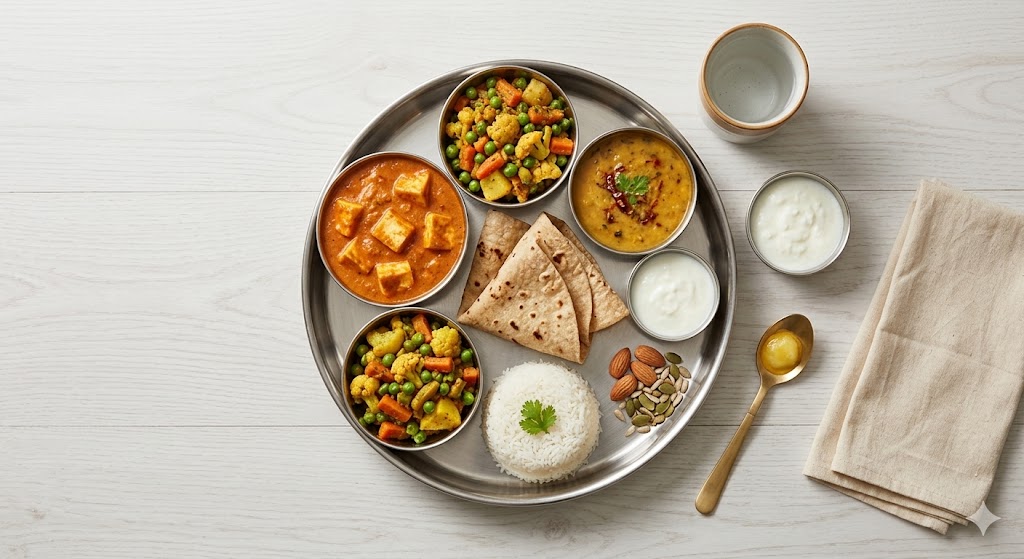
The Indian Council of Medical Research (ICMR-NIN) recently updated their 2024 guidelines, focusing on a "My Plate" model. For healthy weight gain, you don't just need more rice—you need more of everything, especially protein and healthy fats.
The Ideal Daily Balance
According to the latest recommendations, here is what a balanced daily intake looks like for a typical adult:
Food Group | RDA for Adult Man (Sedentary) | RDA for Adult Woman (Sedentary) |
Cereals/Millets | 250 g/day | 190 g/day |
Pulses/Legumes | 85 g/day | 75 g/day |
Vegetables | 400 g/day | 400 g/day |
Fruits | 100 g/day | 100 g/day |
Milk/Curd | 300 ml/day | 300 ml/day |
Nuts/Oilseeds | 30 g/day | 30 g/day |
Fats/Oils (Visible) | 25 g/day | 20 g/day |
Source:
Vegetarian Protein Powerhouses
Protein is the building block of muscle. Without enough of it, those extra calories might just turn into fat instead of strength.
1. Dairy Delights
Paneer is the king of vegetarian bulking. Just 100g can pack up to 20g of protein and 300 calories. Mix it into parathas, toss it in a curry, or grill it as a snack. Whole milk and Greek yogurt (curd) are also excellent for adding easy calories and calcium.
2. The Mighty Pulses
Dals, chickpeas (chana), and kidney beans (rajma) are non-negotiable. When you pair your dal with rice or roti, you create a "complete protein" that helps your body repair and build tissue.
Legume/Pulse Variety | Approx. Calories per 100g (Raw) | Approx. Protein per 100g (Raw) |
Moong Dal (Green Gram) | 348 | 24 g |
Rajma (Kidney Beans) | 346 | 23 g |
Chana (Chickpeas) | 360 | 20 g |
Urad Dal (Black Gram) | 341 | 25 g |
Energy-Dense Staples: Fats & Grains
Fats are your best friends when you want to increase calories without feeling too full. They provide 9 calories per gram—more than double what carbs or protein offer.
Ghee: A spoonful on your roti or in your dal adds flavor and healthy fats.
Nuts and Seeds: A handful of almonds or cashews is a 160-calorie "bomb" of goodness.
Whole Grains: Swap refined flour for millets like Ragi (high in calcium) or Bajra (rich in iron) to fuel your growth.
Regional Favorites for Weight Gain
India's diverse kitchen offers some fantastic high-calorie options. Here is how different regions help you bulk up:
Region | Sample High-Calorie Dish | Key Ingredients | Estimated Calories (Serving) |
North | Paneer Butter Masala | Paneer, cream, butter, cashews | 450–550 |
South | Ghee Roast Dosa | Fermented rice/dal batter, ghee | 350–400 |
West | Puran Poli | Wheat, chana dal, jaggery, ghee | 300–350 |
East | Aloo Dum | Potatoes, mustard oil, spices | 250–300 |
Traditional Wisdom: The "Brimhana" Way
Ayurveda calls weight gain therapy Brimhana (which literally means "bulk promoting"). It is not just about eating; it is about digesting. Spices like ginger and cumin help your "digestive fire" (Agni) so your body actually uses the extra food instead of feeling bloated.
Your 2800 Calorie Sample Day
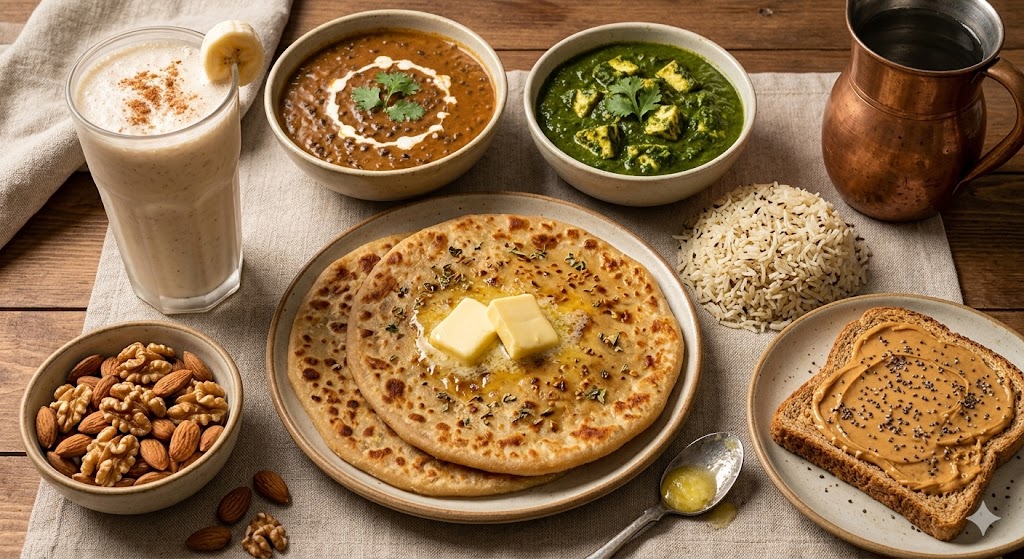
Meal | What to Eat | Estimated Calories |
Early Morning | Full-fat milk + 5 soaked almonds/walnuts + 1 banana | 300 kcal |
Breakfast | 2 Paneer-stuffed Parathas with ghee + 1 cup thick curd | 650 kcal |
Mid-Morning | Bowl of sprouts salad with peanuts + coconut water | 250 kcal |
Lunch | Dal Makhani + 2 Ghee Rotis + 1 cup Jeera Rice + Veg Sabzi | 850 kcal |
Evening Snack | Peanut butter on whole-wheat toast + Banana milkshake | 450 kcal |
Dinner | Palak Paneer + 2 Missi Rotis with ghee | 600 kcal |
Bedtime | Warm milk with honey and turmeric | 150 kcal |
Why Tracking Matters (and How VoCal Makes it Easy!)
One of the biggest reasons people fail to gain weight is "calorie fatigue"—they think they are eating a lot, but they aren't consistent. Research shows that people who track their food are much more likely to hit their goals.
But let's be honest, typing every meal into an app is a chore. This is where VoCal changes the game.
Talk, Don't Type: Just say, "I had two paneer parathas with ghee," and you're done!
Better Results: Studies show voice-based logging leads to 1.7 times more entries and 1.5 times more active days compared to typing.
Focus on the Food: Spend less time on your screen and more time enjoying your meal.
Summary: Your Path to Growth
Maintain a Surplus: Eat 300-500 calories above your maintenance level.
Pick High-Quality Proteins: Prioritize paneer, curd, and mixed pulses.
Use Healthy Fats: Don't fear the ghee, nuts, and seeds.
Track Effortlessly: Use voice tracking at vo-cal.com to stay consistent without the stress.
FAQs
Q: Can I gain weight without eating junk?
Absolutely. In fact, "clean bulking" using whole grains, dairy, and pulses ensures you gain muscle and energy, not just fat.
Q: How much weight should I aim to gain?
A safe and sustainable rate is about 0.25 to 0.5 kg per week.
Q: Is exercise necessary?
Yes! Resistance training (like lifting weights) 3-5 times a week ensures those extra calories go toward building muscle.
Disclaimer: This article is for informational purposes only. Consult with a healthcare professional or registered dietitian before starting any new diet or exercise program.