
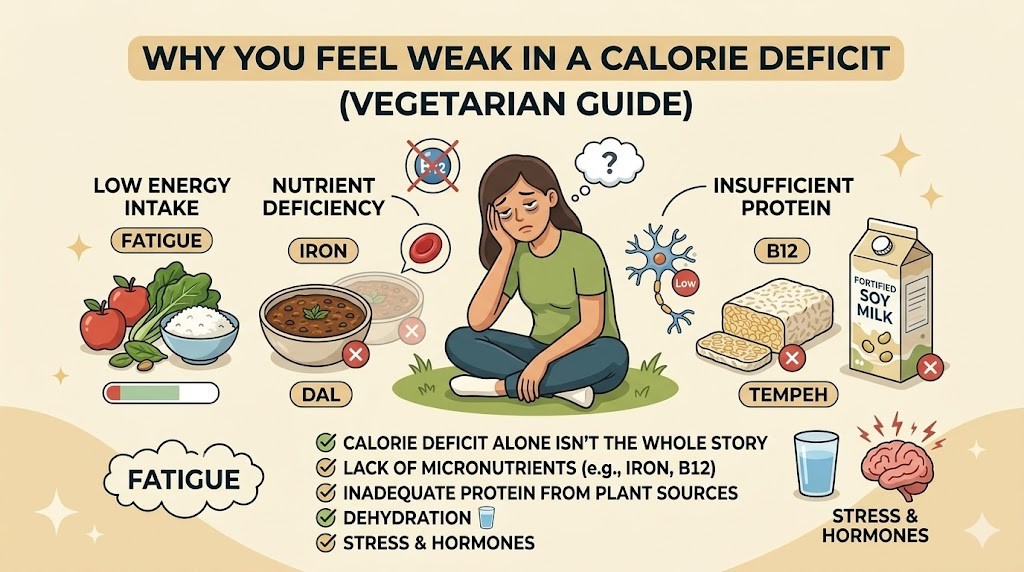
So, you’ve decided to hit your weight loss goals by going plant-based and cutting calories. You’re eating your greens, skipping the burgers, and yet... you feel like a phone on 1% battery. Why does a calorie deficit feel so much heavier on a vegetarian diet?
Feeling weak isn't just "part of the process." It’s actually your body sending a frantic text message that something in your metabolic engine needs a tune-up. Let’s dive into why your energy is dipping and how to get that spring back in your step—veg style.
The Energy Tug-of-War: Why Your Body Slows Down
When you eat fewer calories than you burn, your body enters a "survival mode" known as metabolic adaptation. It starts looking for ways to save energy, which can make you feel sluggish or "hangry".
Your brain and muscles primarily run on glucose (sugar). On a vegetarian diet, you likely eat plenty of carbs, but if your deficit is too steep, your glycogen stores (the "backup batteries" in your liver and muscles) run dry. This can lead to that heavy-limbed feeling during workouts.
How Your Body Spends Energy
To understand the weakness, you have to look at where your energy goes. When you cut calories, your body tries to slash the "budget" in these areas:
Metabolic Component | Description | Impact of Calorie Deficit |
BMR | Energy for vital functions at rest. | Decreases to conserve fuel. |
TEF | Energy used to digest food. | Decreases because you're eating less. |
NEAT | Fidgeting, walking, daily movement. | Often drops without you noticing. |
EAT | Intentional exercise. | Performance dips due to low fuel. |
Iron: The "Oxygen Uber" for Your Cells
One of the biggest reasons vegetarians feel weak is a lack of bioavailable iron. Iron is responsible for carrying oxygen to your brain and muscles. Without enough, you’re basically trying to run an engine without enough air.
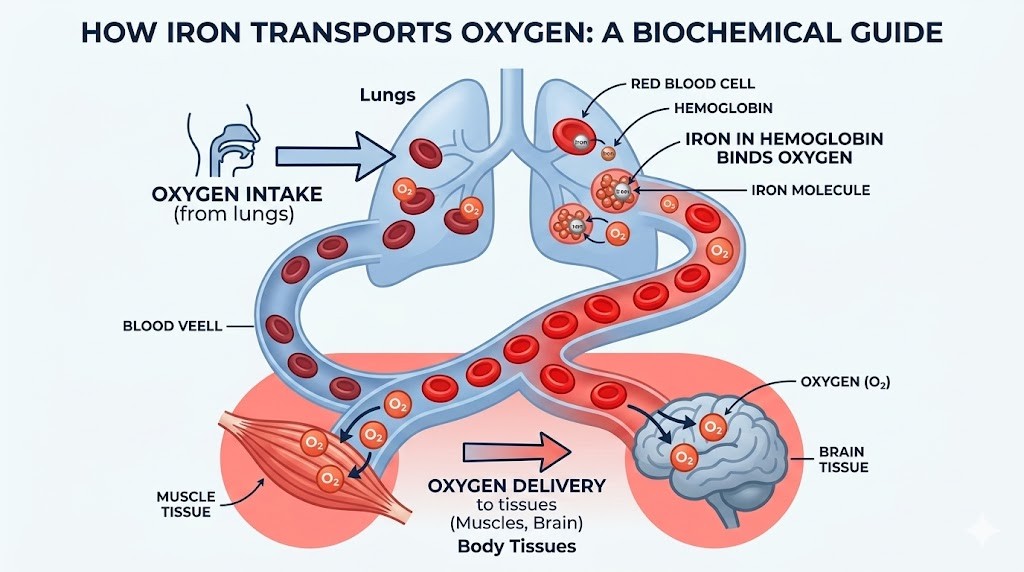
Plant-based iron (non-heme) is a bit "shier" than animal iron; it’s harder for your body to absorb. Because of this, vegetarians actually need about 1.8 times more iron than meat-eaters.
Boost Your Iron Game
To fight off fatigue, you need to pair your iron with Vitamin C, which acts like a "key" to unlock iron absorption.
Iron-Rich Veggie Food | Serving Size | Iron (mg) | Pro-Tip: Vitamin C Pairings |
Lentils (cooked) | 1 cup | 6.6 | Add a squeeze of lemon juice. |
Tofu (firm) | 1/2 cup | 6.6 | Sauté with red bell peppers. |
Pumpkin Seeds | 1 ounce | 2.5 | Eat with a side of strawberries. |
Spinach (cooked) | 1/2 cup | 3.2 | Mix with tomato-based sauces. |
Quinoa (cooked) | 1 cup | 2.8 | Top with sliced oranges or kiwi. |
Vitamin B12: The Neurological Power Cord
If iron is the "Uber," Vitamin B12 is the power cord for your nervous system. B12 is essential for making red blood cells and keeping your brain sharp. The catch? It’s almost exclusively found in animal products.
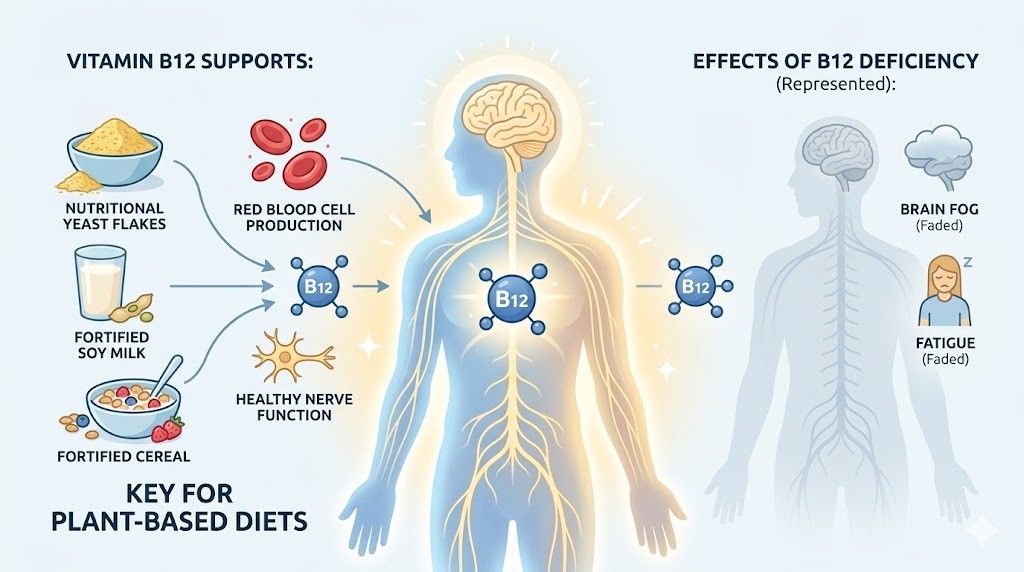
When you’re in a calorie deficit, you might be eating less dairy or eggs, which can push a "borderline" B12 level into a full-blown deficiency. This leads to weakness, "brain fog," and even tingling in your hands and feet.
Top Vegetarian B12 Sources
If you aren't eating meat, you must look toward fortified foods or supplements to keep your energy up.
B12 Source | Serving Size | % Daily Value | Why It Matters |
Nutritional Yeast | 1 tbsp | 100-500% | The "holy grail" for veg energy. |
Greek Yogurt | 1 cup | 40% | Keeps blood cells healthy. |
Fortified Soy Milk | 1 cup | 50% | Easy energy for your nerves. |
Large Egg | 1 unit | 20% | Great for general metabolism. |
Protein: Protecting Your "Metabolic Currency"
Muscle is your body's metabolic currency—the more you have, the better your metabolism works. In a calorie deficit, your body might try to "burn the furniture to keep the house warm," meaning it breaks down muscle for energy.
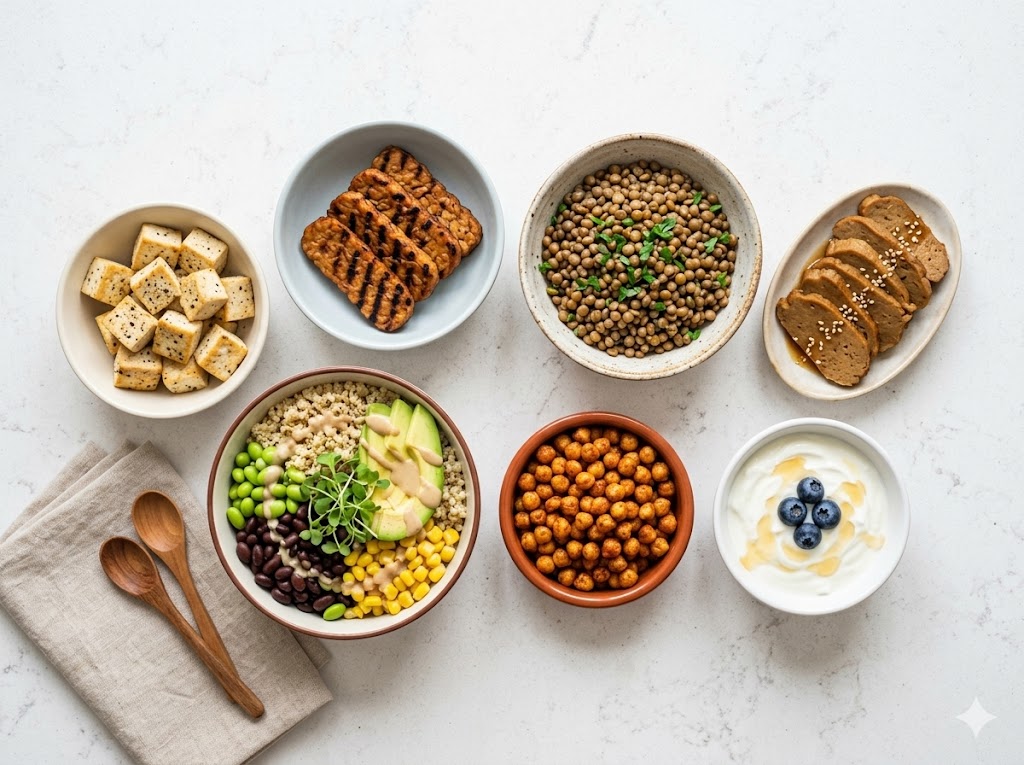
Vegetarians often struggle with the "leucine threshold." Leucine is an amino acid that tells your body to build muscle instead of breaking it down, and it's less common in plant proteins. To stay strong, aim for 1.2 to 2.0 grams of protein per kilogram of body weight.
Vegetarian Protein | Calories | Protein (g) | Why We Love It |
Seitan | 104 | 21 | Massive protein, low calorie. |
Tempeh | 192 | 19 | Great for gut health, too. |
Extra Firm Tofu | 83 | 10 | The ultimate versatile complete protein. |
Cottage Cheese | 80 | 12 | Slow-release energy for your muscles. |
Lentils | 116 | 9 | Keeps you full with high fiber. |
The "Stealth" Minerals: Zinc, Iodine, and Magnesium
If you've checked your iron and B12 and still feel like a zombie, it might be these "stealth" minerals:
Magnesium: Required for ATP (cell energy) production. If you've cut out nuts and seeds to save calories, you might be low.
Iodine: Essential for your thyroid, the "thermostat" of your metabolism. Low iodine = slow metabolism = feeling weak.
Zinc: Helps with cell growth and processing the carbs and fats you eat.
Stop the "Hangry" Cycle with Smart Carbs
Not all carbs are created equal. High-glycemic carbs (like white bread or sugary snacks) cause an insulin spike followed by a "crash," leaving you feeling shaky and weak.
Switching to low-glycemic, fiber-rich carbs ensures a steady "drip" of energy rather than a flood and a drought.
Swap This (Crash Carbs) | For This (Steady Energy) | The Benefit |
White Bagels | Steel-Cut Oats | No mid-morning slump. |
Fruit Juice | Whole Berries | Slower sugar absorption. |
White Rice | Quinoa or Brown Rice | More B-vitamins and minerals. |
Sugary Cereals | Fortified Bran Cereal | Bonus Iron and B12. |
Tracking Success with VoCal
VoCal changes the game by using AI Voice Recognition. Instead of searching databases for 15 minutes, you just say, "I had a bowl of lentil soup with a side of spinach and a squeeze of lemon."
10x Faster: Log a meal in 15 seconds.
95% Accuracy: Our AI understands complex vegetarian dishes and portion sizes.
Zero Friction: No photos, no manual typing, just your voice.
By accurately tracking your macros and micros, you can finally see if your weakness is coming from a lack of protein or a missed iron goal.
Summary: Your Energy Roadmap
Don't "Crash" Diet: Aim for a steady 1-2 lbs per week loss by keeping a moderate 500-calorie deficit.
The Vitamin C Rule: Always pair your greens and beans with citrus.
Fortify Your Life: Look for B12-fortified milks and cereals.
Hydrate: Sometimes weakness is just mild dehydration—drink 8 cups of water a day.
Track Smarter: Use VoCal to take the guesswork out of your plant-based journey.
FAQs
Can I exercise in a calorie deficit?
Yes! But keep it moderate. Intense workouts without enough carbs can lead to "hitting the wall".
How long does it take to feel better?
If you're correcting a deficiency (like iron), you might see improvements in 2-4 weeks.
Should I take supplements?
Always consult a doctor first, but many vegetarians benefit from B12 and Vitamin D supplements.
Disclaimer: This content is for informational purposes only and does not constitute medical advice. Always consult with a healthcare professional before starting a new diet or supplement regimen.