

Let’s be honest: walk into any hardcore gym, and you’ll hear a lot of talk about protein powder, chicken breasts, and pre-workout drinks. But if you’re trying to build serious muscle, recover like a superhero, and actually have the energy to crush your next leg day, you need to talk about carbs. Specifically, the king of complex carbs: the humble sweet potato.
While some people treat carbs like the boogeyman, elite athletes know they are the ultimate high-octane fuel for your muscles. And when it comes to the "sweet potato for gym" debate, this orange power-tuber is practically a cheat code.
Let’s dive into why this delicious root vegetable deserves a permanent spot in your gym bag, how to time it perfectly, and how to track your macros hands-free with the VoCal voice-based calorie tracker.
The Ultimate Carb Champ: Why Sweet Potatoes Are Gym Gold
Think of your body like a sports car. You wouldn't put cheap gas in a Ferrari, right? Sweet potatoes (Ipomoea batatas) are the premium, unleaded fuel your muscles crave.
A standard, 5-inch medium baked sweet potato (about 130 grams) packs roughly 112 calories, 26 grams of complex carbohydrates, 4 grams of digestion-friendly fiber, and 2 grams of protein. Best of all? They are naturally fat-free and cholesterol-free, making them incredibly clean burning fuel.
Here is how raw, boiled, and baked orange-fleshed sweet potatoes stack up per 100-gram serving, according to the USDA FoodData Central :
Nutrient (per 100g) | Raw Sweet Potato | Boiled Sweet Potato | Baked Sweet Potato |
Calories (kcal) | 86 | 76 | 90 |
Carbohydrates (g) | 20.1 | 17.7 | 20.7 |
Dietary Fiber (g) | 3.0 | 2.5 | 3.3 |
Total Sugars (g) | 4.2 | 5.7 | 6.5 |
Protein (g) | 1.6 | 1.4 | 2.0 |
Fat (g) | 0.05 | 0.14 | 0.15 |
Potassium (mg) | 337 | 230 | 475 |
Magnesium (mg) | 25 | 18 | 27 |
Vitamin C (mg) | 2.4 | 12.8 | 19.6 |
Vitamin A (mcg RAE) | 709 | 573 | 961 |
Beyond the basic macros, these sweet orange spuds are overflowing with micronutrients. We’re talking about massive amounts of beta-carotene (which your body converts to Vitamin A for immune support) and Vitamin C to fight off the physical stress of heavy lifting. Plus, they provide 20% of your daily recommended fiber in one go, keeping your digestion smooth and preventing energy crashes.
The Bottom Line: Sweet potatoes aren't just empty starch. They are a functional superfood loaded with vitamins, minerals, and clean carbs to keep you operating at peak capacity.
Sweet Potato Before Workout: Powering Your Heavy Lifts

Want to lift heavier, run faster, and avoid hitting the dreaded "wall" mid-workout? You need to saturate your muscle glycogen stores. Glycogen is your body's preferred chemical fuel when you're under a heavy barbell, and sweet potatoes are one of the absolute best ways to load it up.
Steady Energy, Zero Blood Sugar Crashes
Unlike sugary sports drinks or processed snacks that spike your blood sugar and leave you feeling sluggish 30 minutes later, sweet potatoes release glucose slowly. The complex starches and soluble fiber drag out the digestion process, feeding a steady stream of energy directly to your working muscles.
In fact, a clinical study published in the Journal of Applied Physiology showed that whole-food potato preparation is just as effective as expensive, commercial carbohydrate sports gels at keeping your blood sugar stable and keeping your stamina high. Save your money—eat the tater!
Timing Your Pre-Workout Spud
To avoid a heavy stomach while you're trying to squat, timing is everything :
2 to 4 Hours Before: Eat a full, solid meal combining sweet potatoes with a lean protein source (like chicken breast or turkey).
1 Hour Before: Keep it small and easy to digest. A small portion of thoroughly cooked or mashed sweet potatoes works best. Keep the fats and extra fiber low here so your stomach doesn't get upset mid-set.
Here is how much boiled sweet potato you should aim for before your workout based on your body weight, matching the American College of Sports Medicine (ACSM) guidelines of 1 to 2 grams of carbs per kilogram :
Athlete Body Weight (kg / lbs) | Target Carbohydrates (g) | Serving Size: Boiled Sweet Potato (g) | Recommended Timing Window |
60 kg / 132 lbs | 60g | 340g | 2 Hours Before Workout |
70 kg / 154 lbs | 70g | 395g | 2 Hours Before Workout |
80 kg / 176 lbs | 80g | 450g | 2 Hours Before Workout |
90 kg / 198 lbs | 90g | 510g | 2 Hours Before Workout |
The Bottom Line: Eating boiled or steamed sweet potatoes a couple of hours before you train keeps your energy high and your stamina locked in.
Tired of manually searching through endless food databases to log your pre-workout meal? With the VoCal voice-tracking app, you can just tap the mic and say: "I had 300 grams of boiled sweet potato and a chicken breast for lunch." VoCal logs it instantly with 95% accuracy! Check it out to simplify your tracking.
Sweet Potato After Workout: Your Ticket to Speed Recovery
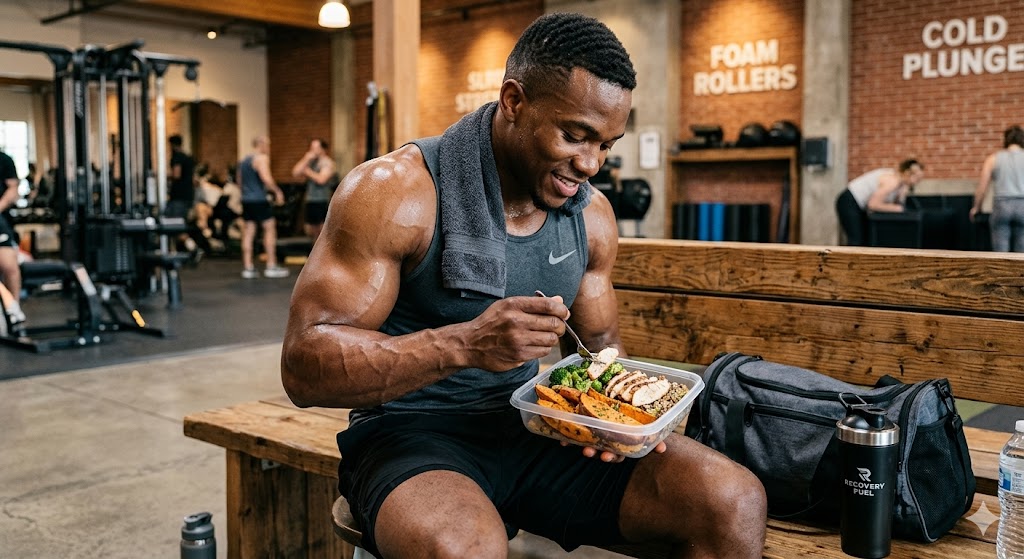
The hard work doesn't stop when you rack the weight. What you eat post-workout determines how fast you bounce back. A single intense training session can drain your muscle glycogen stores by up to 40%. You need to refill that tank fast!
Rapid Refueling and Starch Retrogradation
Right after a workout, your muscles are highly sensitive to insulin and acting like dry sponges, ready to soak up carbs. To speed up recovery, baked or roasted sweet potatoes are highly effective. The high heat of baking breaks down the starches, raising the glycemic index (GI) so the carbs hit your system faster and kickstart the recovery process.
Pairing your post-workout sweet potato with a high-quality protein in a 3:1 or 4:1 carb-to-protein ratio is the gold standard for muscle recovery. The carbs trigger an insulin response that helps shuttle amino acids straight into your damaged muscle fibers to repair them.
Banishing Muscle Cramps and Inflammation
Intense workouts create micro-tears in your muscles, leading to soreness and inflammation. Sweet potatoes are loaded with antioxidants like beta-carotene, Vitamin C, and manganese, which help tame that inflammation and protect your joints.
They also replenish vital electrolytes lost in sweat. A single baked sweet potato serves up a massive dose of potassium and magnesium to keep your muscles contracting smoothly and prevent painful nighttime cramps.
Recovery Metric | Target Post-Workout Range | Contribution of 200g Baked Sweet Potato | Physiological Recovery Role |
Potassium (mg) | 500 - 1000 mg | 950 mg (20% DV) | Regulates fluid balance, prevents cramping |
Magnesium (mg) | 100 - 150 mg | 54 mg (13% DV) | Powers ATP production and relaxes muscles |
Manganese (mg) | 1.0 - 2.0 mg | 0.99 mg (43% DV) | Rebuilds connective tissue and joint cartilage |
Vitamin C (mg) | 50 - 100 mg | 39.2 mg (44% DV) | Limits oxidative cell damage and boosts immunity |
The Bottom Line: Post-workout sweet potatoes quickly restock your empty glycogen tank while supplying the essential electrolytes and antioxidants your muscles need to repair and grow.
Sweet Potato for Muscle Gain: Eat Big to Get Big
If you want to build serious muscle mass, you have to be in a clean caloric surplus. But did you know that carbs actually protect your hard-earned muscle from being burned as fuel?
The Protein-Sparing Shield
When you skimp on carbs, your body panics. To find energy, it raises cortisol levels and starts a process called gluconeogenesis—literally breaking down your muscle tissue to convert those valuable amino acids into glucose.
By eating enough complex carbs like sweet potatoes, you create a "protein-sparing" shield. This ensures that the protein you eat is used for what it was meant for: building massive arms and a powerful back, not just keeping the lights on.
Calculating Your Bulking Target
To support muscle hypertrophy, sports nutrition guidelines recommend getting 4 to 7 grams of carbohydrates per kilogram of body weight daily.
If you want to get 50% of your clean carbs from sweet potatoes, here is what your daily plate needs to look like :
Athlete Weight (kg / lbs) | Daily Hypertrophy Carb Target (g) | 50% Carb Goal from Sweet Potatoes (g) | Equivalent Baked Sweet Potato Serving |
60 kg / 132 lbs | 240 - 420 g | 120 - 210 g | 580 - 1010 g (approx. 5 to 8 medium potatoes) |
70 kg / 154 lbs | 280 - 490 g | 140 - 245 g | 675 - 1180 g (approx. 6 to 10 medium potatoes) |
80 kg / 176 lbs | 320 - 560 g | 160 - 280 g | 770 - 1350 g (approx. 7 to 11 medium potatoes) |
90 kg / 198 lbs | 360 - 630 g | 180 - 315 g | 870 - 1520 g (approx. 8 to 13 medium potatoes) |
Clean Bulking Without the Flab
One of the biggest struggles of a bulking phase is avoiding packing on excess body fat. Sweet potatoes are a lifesaver here. Because they are high in fiber and water, they trigger a 20% increase in satiety compared to low-fiber refined carbs. This helps you feel incredibly satisfied while fueling your muscle gains cleanly.
Plus, clinical research linked higher potassium intake to a significantly lower risk of muscle mass loss, making the sweet potato's rich mineral profile a direct ally in your quest for a strong, muscular physique.
The Bottom Line: Sweet potatoes are the ultimate tool for a clean bulk. They shield your muscles from breakdown, provide steady energy, and keep your appetite in check so you gain muscle, not fat.
Sweet Potato vs Rice for Bodybuilding: The Grand Carb Showdown
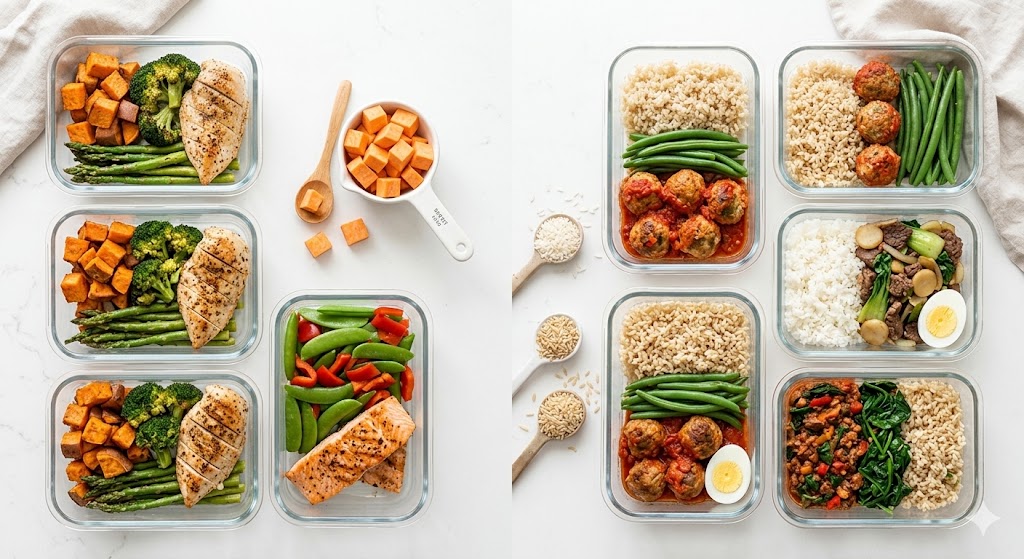
For decades, plain white rice has been the default starch on every bodybuilder's meal prep container. But how does it actually match up against the mighty sweet potato? Let’s put them head-to-head!
Here is the nutritional breakdown per 100 grams cooked :
Nutrient (per 100g) | Boiled Sweet Potato | Cooked White Rice | Cooked Brown Rice |
Calories (kcal) | 86 | 130 | 111 |
Carbohydrates (g) | 20.0 | 28.0 | 23.0 |
Dietary Fiber (g) | 3.0 | 0.4 | 1.8 |
Protein (g) | 1.6 | 2.4 | 2.6 |
Fat (g) | 0.1 | 0.2 | 0.9 |
Potassium (mg) | 230 | 26 | 43 |
Calcium (mg) | 27 | 3 | 10 |
Vitamin A (mcg RAE) | 573 | 0 | 0 |
Vitamin C (mg) | 12.8 | 0 | 0 |
Fiber, Glycemic Index, and Daytime Energy
Sweet potatoes absolutely crush white rice when it comes to fiber, containing nine times as much per serving. This fiber slows down digestion, keeping the GI of a boiled sweet potato around 44 to 61, compared to white rice’s steep 70 to 89.
While white rice is perfect immediately post-workout because it spikes insulin to rapidly replenish glycogen, sweet potatoes are far superior for steady daytime energy, keeping you focused and energized without the afternoon food coma.
Vitamin and Mineral Dominance
Sweet potatoes are a nutrition powerhouse compared to rice. They deliver massive amounts of immune-boosting Vitamins A and C, alongside essential minerals like potassium and calcium, which are practically non-existent in white or brown rice.
The Verdict: When to Eat Which?
Choose Sweet Potatoes: For fat loss, overall health, clean bulks, and steady daytime energy.
Choose Rice: If you have extremely high calorie goals (like 4,000+ calories a day) and struggle to eat enough food without feeling physically stuffed.
The Bottom Line: Sweet potatoes win easily on vitamins, fiber, and steady energy, while rice is useful when you need to force-feed high amounts of easy-to-digest carbs.
Not All Taters Are Cooked Equal: The Glycemic Index Game
Here is a wild sports nutrition secret: cooking methods completely change how a sweet potato behaves in your body! It’s not just what you eat, it’s how you cook it.
From Slow-Burning Fuel to Rapid Spike
When you boil or steam a sweet potato, you keep its starch structure intact, keeping the Glycemic Index low (between 44 and 61). This is your perfect pre-workout meal.
However, if you bake or roast a sweet potato for an hour, the high heat breaks down the resistant starch and caramelizes the natural sugars. This shoots the GI up to a high 82 to 94—making it act more like white rice. This is your perfect post-workout recovery meal!
Food and Cooking Method | Glycemic Index (GI) | Glycemic Load (GL) per 150g Serving | Metabolic Action and Starch State |
Baked Russet White Potato | 94 - 111 | 33 - 39 | High GI; fast energy release |
Baked Sweet Potato | 82 - 94 | 28 - 32 | High GI; ideal post-workout |
Steamed Sweet Potato | 55 - 65 | 19 - 22 | Moderate GI; sustained energy |
Boiled Sweet Potato (Hot) | 44 - 61 | 15 - 21 | Low-to-Moderate GI; pre-workout champion |
Boiled Sweet Potato (Cooled) | 41 - 55 | 14 - 19 | Low GI; packed with resistant starch |
The Cool Down Hack
Want to lower the GI even further? Cook your sweet potatoes ahead of time and let them cool overnight in the fridge. This process (called starch retrogradation) turns digestible starches into resistant starches that behave like fiber, lowering the GI of your potatoes and feeding your healthy gut bacteria!
The Bottom Line: Boil or steam your sweet potatoes for long-lasting, steady energy before your workout. Bake or roast them when you want fast-digesting carbs to recover right after your training.
Busting Sweet Potato Gym Myths
Myth 1: Sweet Potatoes are Only Good for Losing Weight
The Reality: While they are amazing for fat loss due to their high fiber content, sweet potatoes are a power-building staple. Their clean carbohydrate profile protects your muscles from breakdown and supports the heavy lifting necessary to pack on serious size.
Myth 2: You Must Eat Them Completely Plain to Stay Healthy
The Reality: Eating dry, choking-hazard sweet potatoes is a recipe for diet failure. Adding a source of healthy fat, like a dollop of grass-fed butter, a drizzle of olive oil, or some almond butter, actually slows down digestion and improves how your body absorbs fat-soluble vitamins like Vitamin A!
Tracking Your Gym Nutrition Effortlessly with VoCal
Consistently hitting your macros is the absolute foundation of gym success, but typing everything into a traditional tracking app can feel like a part-time job. Who wants to spend 15 minutes scrolling through endless databases trying to find the exact difference between "baked sweet potato with skin" and "boiled sweet potato without skin"?
That’s where VoCal comes in.
VoCal is a revolutionary, voice-first calorie tracking app. Instead of typing, you just speak to it naturally like you're talking to a friend.
Whether you say "I just had two cups of mashed sweet potatoes, four ounces of salmon, and a handful of almonds," or log your meals, VoCal’s smart AI converts your voice directly into accurate calorie and macro breakdowns in under 15 seconds. It is designed specifically to eliminate tracking fatigue so you can focus on lifting heavy, not typing food logs.
Frequently Asked Questions
What is the best way to cook sweet potatoes for pre-workout energy?
Boiling or steaming is the best option. It keeps the starches intact, keeping the Glycemic Index low (between 44 and 61) to give you slow, steady energy that lasts your entire workout.
How do sweet potatoes compare to white potatoes for recovery?
Both are fantastic carb sources, but sweet potatoes pack far more micronutrients, including Vitamin A, Vitamin C, and potassium, which help combat workout-induced inflammation and protect your joints.
Can eating sweet potatoes daily help prevent muscle cramps?
Absolutely! Sweet potatoes are loaded with potassium and magnesium. These essential electrolytes maintain fluid balance and nerve function, helping to keep painful muscle cramps at bay.
Does the sweet potato skin provide any athletic benefits?
Yes! Much of the fiber and potassium is concentrated in and right under the skin. Scrub them clean, cook them with the skin on, and eat it all to get the maximum athletic benefit.
Disclaimer: This guide is for educational and informational purposes only and does not substitute for professional medical advice, diagnosis, or treatment. Always consult a qualified healthcare professional before beginning any new fitness or nutrition regimen.