

Let’s be honest: at some point, we’ve all stood in our kitchen staring blankly at a shaker bottle, wondering if we should just chug some chocolate whey or actually turn on the stove to cook a chicken breast.
It’s the ultimate modern fitness dilemma: protein shake vs real food. Whether you're trying to build lean muscle, lose weight, or just stay healthy, figuring out how to get your daily protein can feel like a part-time job.
But does a powdered shake really replace a home-cooked meal? And more importantly, which one is friendlier on your stomach? Let’s dive into the science of digestion, fullness, and how to get the most bang for your nutritional buck.
What’s the Big Deal, Anyway?
Before we pit them against each other, let’s define our contenders:
Protein Shakes: These are the ultra-convenient speedsters of the fitness world. They’re made by isolating protein from milk (like whey and casein) or plants (like soy, peas, or hemp) and turning it into a powder. Just add water, shake, and drink.
Real Food Protein: This is protein in its natural habitat—think chicken breast, wild-caught salmon, eggs, lentils, and tempeh. They deliver amino acids inside a complex "food matrix" alongside natural fats, fiber, vitamins, and minerals.
Quick heads-up: While optimizing your protein is great, always check with a doctor or registered dietitian before making massive shifts in your diet, especially if you have pre-existing digestive or kidney concerns.
The Digestibility Speed Run: Liquid vs. Solid
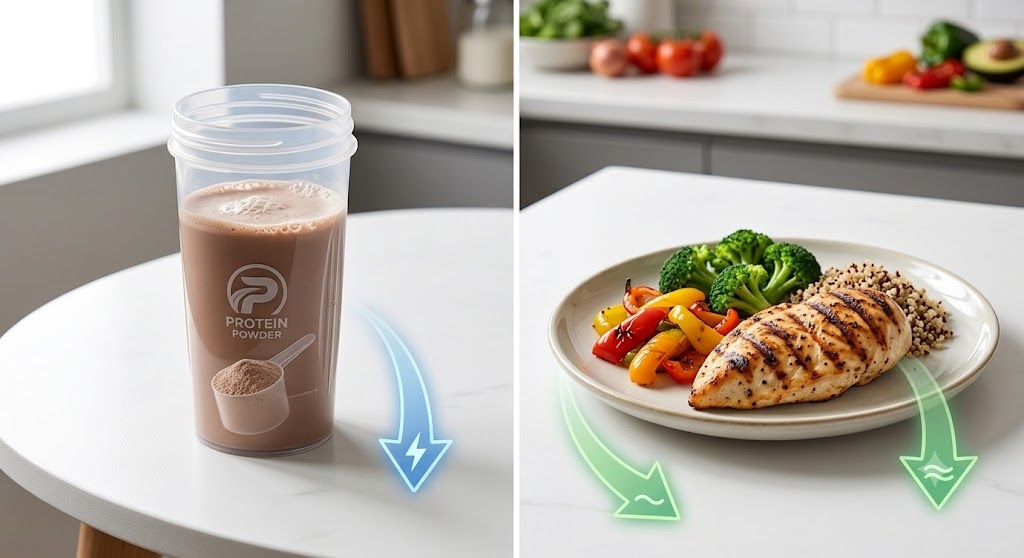
When you gulp down a protein shake, your stomach basically gets a free pass. Because it’s already liquid and stripped of structural matrices, it bypasses the chewing phase and zips right through your stomach to be absorbed in your small intestine.
But when you eat a solid protein like steak or cooked lentils, your stomach has to put on its hard hat, crank up the acid engines, and physically grind things down. This slow-and-steady process is called gastric emptying, and it determines how fast amino acids flood your bloodstream.
Even among shakes, digestion speeds vary drastically:
Whey Protein: The speed demon. It stays liquid in your stomach and absorbs at a fast pace of about 8 to 10 grams per hour, giving your muscles a quick hit of recovery fuel.
Casein Protein: The slow burner. It reacts with your stomach acid to form a thick gel, slowing down transit time and feeding your body amino acids for up to 7 hours.
Plant-Based Isolates: Soy, pea, and hemp isolates are great dairy-free options that digest relatively quickly, though they sometimes have a slightly lower overall absorption score compared to animal products due to their physical plant structures.
Here is how the digestion kinetics stack up across different protein sources:
Table 1: Digestion kinetics and metabolic outcomes of protein formats
Protein Source | Physical Form | Est. Absorption Rate (g/h) | Peak Amino Acid Availability | Primary Metabolic Influence |
Whey Isolate | Liquid | 8-10 | Rapid (1-2 hours) | Maximizes acute muscle protein synthesis |
Casein | Liquid / Gastric Gel | 6 | Sustained Plateau (3-7 hours) | Inhibits systemic protein breakdown |
Chicken Breast | Solid Whole Food | 3-4 | Gradual, Delayed Release | Sustained muscle repair & steady amino acid levels |
Cooked Lentils | Solid Whole Food | 2-3 | Highly Delayed | Slow absorption due to fiber and phytate content |
Interestingly, if you compare a protein shake to an ingredient-matched protein bar, the speed of amino acid absorption is almost identical. This proves that the actual nutrient makeup—not just whether it's a liquid or a solid—is what truly dictates digestion speed.
The Bottom Line: Shakes are engineered for a fast, acute spike in amino acids, making them amazing post-workout. Real food provides a slow, steady trickle of nutrients that keeps your system stable.
The Hunger Games: Why Shakes Don't Stop the Munchies
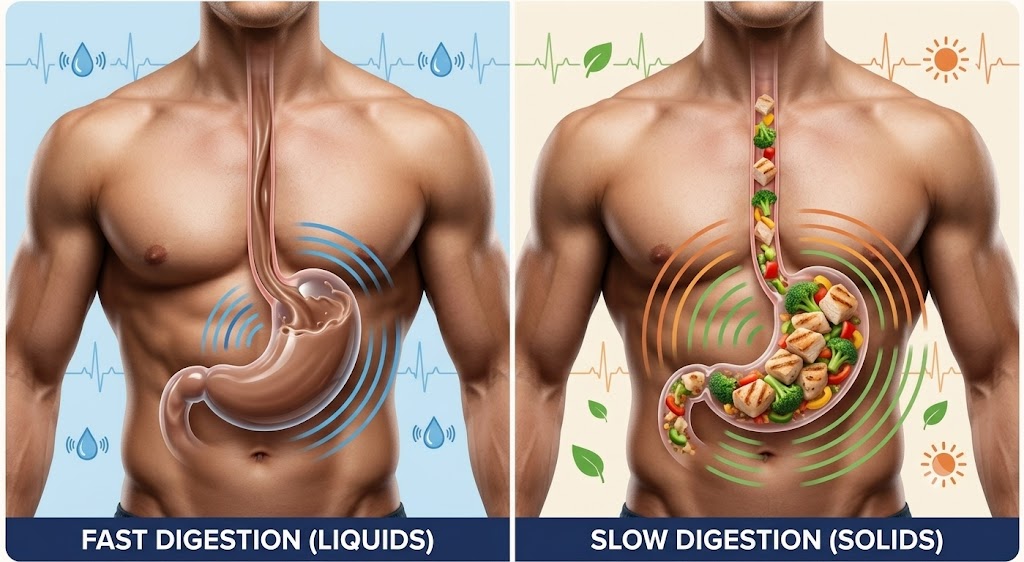
Have you ever downed a 250-calorie protein shake only to find yourself rummaging through your pantry for snacks 45 minutes later? You aren't crazy—it’s biology.
Real food protein reigns supreme when it comes to keeping you full. This is because solid foods activate your body's satiety triggers in a way liquids simply can't:
Chewing (Mastication): The physical act of chewing sends a direct "food is coming!" signal to your brain, kicking off the fullness process early.
The "Ileal Brake": When solid protein and fats slowly reach the end of your small intestine, it triggers a biological feedback loop that slows down your entire digestive tract, keeping you full for hours.
Hormone Hype: Real food triggers a higher, more sustained release of gut hormones like Peptide YY (PYY) and Cholecystokinin (CCK) while lowering your hunger hormone, ghrelin.
The Thermic Burn: Protein has a high Thermic Effect of Food (TEF). Your body has to work hard to break down solid protein, burning off 20% to 30% of its calories just during digestion. For liquid protein shakes, that burn drops to only 10% to 15%.
Table 2: Satiety profiles and hormonal responses of solids vs. liquids
Parameter | Solid Whole Food Protein | Liquid Protein Shake |
Gastric Emptying Time | 4-6 hours (Slow) | 1-2 hours (Rapid) |
Thermic Effect of Food (TEF) | 20%-30% energy expenditure | 10%-15% energy expenditure |
Mastication Requirement | High (triggers oral satiation) | None (bypasses oral signals) |
Satiety Hormone Trigger | High (sustained PYY, CCK, GLP-1) | Moderate to Low (transient release) |
Satiety Duration | Sustained (4-5 hours) | Short-lived (1-2 hours) |
The Bottom Line: Drinking your calories skips the physiological triggers that tell your brain you’ve eaten, often leading to "phantom hunger". Solid protein keeps you satisfied, boosts your metabolism, and keeps cravings at bay.
Nutritional Synergy: Mother Nature’s Secret Sauce
When we isolate protein in a factory, we lose the magic of the food matrix. Real foods don't just give you amino acids; they give you a synergistic package of health boosters.
Animal Proteins: Chicken, beef, fish, and eggs aren't just muscle builders; they are packed with B vitamins, heme iron, energy-supporting zinc, and anti-inflammatory omega-3 fatty acids. These micronutrients help your blood vessels transport oxygen to tired muscles.
Plant Proteins: Legumes, nuts, seeds, and tofu deliver prebiotic fiber and antioxidants that fuel your gut microbiome and keep your immune system running strong.
The Soy Story: Take soy, for instance. It's been a nutrition powerhouse since 2838 B.C. in China. It has a perfect 1.0 score on the Protein Digestibility-Corrected Amino Acid Score (PDCAAS), making it just as effective as animal protein. But while a processed soy isolate shake gives you pure protein, eating tempeh or edamame gives you the natural fiber and flavonoids that support heart health.
The Muscle-Building Angle: Who Takes the Crown?
If your main goal is hitting your gym targets, you’ve probably heard of leucine. This superstar amino acid acts as the biological light switch to turn on muscle protein synthesis (MPS).
To flip that switch, you need about 2 to 3 grams of leucine per meal.
Whey protein is incredibly rich in leucine (about 11%), meaning you can maximize your muscle building with just a 20-gram scoop.
Steak or chicken has slightly less leucine (around 8%), so you'd need to eat about 36 to 40 grams of real-food protein to trigger the exact same muscle-building signal.
To maximize your lean mass over time, aim to spread your protein intake across the day, targeting about 0.4 grams per kilogram of body weight per meal, across four meals.
The Dark Side of the Shaker
While protein shakes are convenient, relying on them too heavily comes with risks:
The Regulation Gap: Unlike medical products, the FDA doesn't strictly regulate protein powders for safety. Some commercial brands can carry hidden sugars, artificial thickeners, or heavy metal contaminants.
Keto Side Effects: If you use shakes to jump into an ultra-low-carb diet (under 60 grams of carbs a day), a rapid drop in carbs can cause headaches, bad breath, fatigue, muscle cramps, and constipation due to a lack of fiber.
Tummy Troubles: Chugging highly concentrated milk or plant isolates can trigger bloating, food intolerances, or general digestive discomfort if your gut isn’t used to handling large, rapid doses of processed protein.
Your Ultimate Protein Cheat Sheet
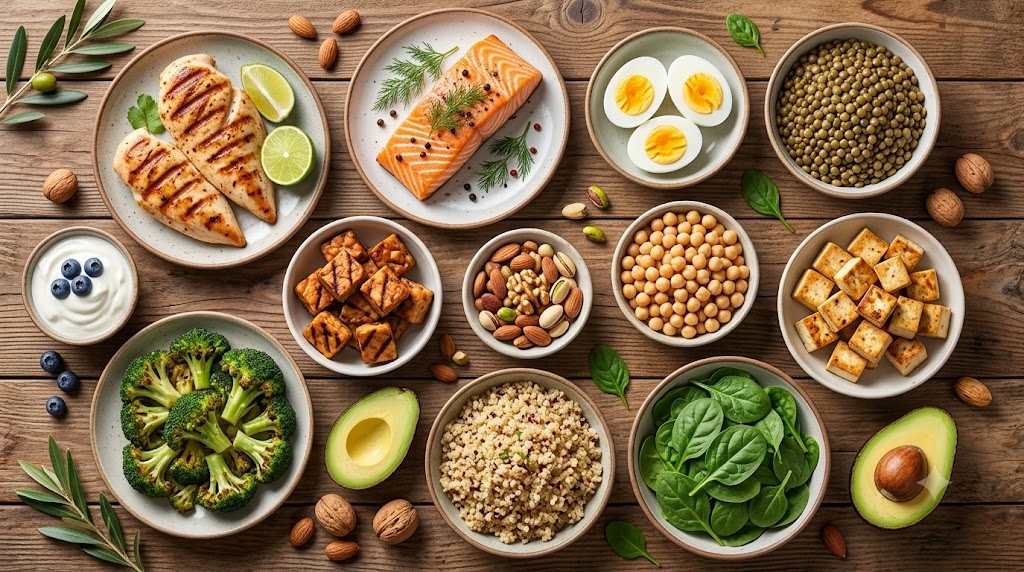
To keep your health, digestion, and muscles in tip-top shape, registered dietitians recommend a "food-first" approach: try to get at least two-thirds of your daily protein from real foods, using protein shakes as supportive helpers to fill in the gaps.
To help you plan your next grocery run, here is a handy breakdown of typical whole-food protein yields and their nutritional benefits:
Table 3: Protein yields of typical whole food sources
Food Source | Serving Size | Protein Yield (g) | Caloric Cost (kcal) | Nutrient Density Advantage |
Lean Chicken Breast | 3.5 ounces | 31 | 165 | Rich in Vitamin B3, Selenium, and Zinc |
Cooked Salmon | 3.5 ounces | 24 | 200 | High in Vitamin D, B12, and Omega-3 fatty acids |
Cooked Beans/Lentils | 1 cup | 18 | 230 | Loaded with Folate, Iron, and Prebiotic Fiber |
Plain Greek Yogurt | 6 ounces | 17 | 100 | Excellent source of Calcium and Probiotics |
Cooked Tempeh | 3 ounces | 16 | 160 | Highly bioavailable fermented plant protein |
Mixed Nuts | 1/2 cup | 14 | 400 | High in monounsaturated fats and Vitamin E |
Large Grade A Egg | 1 whole | 6 | 70 | Highly bioavailable Choline and Lutein |
The Action Plan:
Set Your Targets: Aim for 1.2 to 1.6 grams of protein per kilogram of body weight per day.
Build with Whole Foods First: Fill your plates with chicken, wild fish, eggs, and fiber-rich legumes to get those essential micronutrients.
Use Shakes Tactically: Keep a tub of high-quality whey or plant isolate on hand for busy workdays or immediately post-workout when your muscles need quick recovery.
Log with Your Voice: Ditch the database doom-scrolling. Tap the mic on VoCal, talk your meal into existence, and get back to enjoying your day!
No More Database Doom: Log It in 15 Seconds with VoCal
Here is the hard truth: eating whole foods is clinically better for you, but tracking them is a nightmare. Traditional calorie apps make you search endless databases, weigh your food, or take pictures of every meal—wasting up to 15 minutes per meal. Honestly, who has time for that?
That's where VoCal comes in.
VoCal is a voice-powered calorie and macro tracking app that works with over 95% AI accuracy. Instead of typing, you just speak naturally.
Simply tap the microphone and say:
"I had three ounces of grilled salmon, a cup of cooked brown rice, and a side of steamed broccoli."
In under 15 seconds, VoCal’s advanced AI deconstructs your meal, calculates your exact protein, carbs, fats, and calories, and logs it to your day.
Zero Photo Fatigue: No need to awkwardly photograph your plate at a restaurant.
Sustainable Consistency: Because VoCal eliminates logging friction, it helps you stay consistent enough to hit your macro goals and build real, lasting habits.
You can download VoCal with a 3-day free trial on the App Store to make nutrition tracking completely effortless.
Frequently Asked Questions (FAQs)
1. Is whey protein really better than chicken breast for building muscle?
Not necessarily. While whey protein contains a slightly higher concentration of the muscle-building amino acid leucine and digests faster, chicken breast provides long-lasting satiety and essential micronutrients like B vitamins, selenium, and zinc that shakes lack. They both have their places: whey is great post-workout, while chicken is perfect for meals.
2. Why do protein shakes make me hungry so much faster than solid food?
Shakes are liquids, meaning they pass through your digestive system quickly and don't require chewing (which triggers early satiety signals in your brain). Solid proteins stay in your stomach longer and activate the release of fullness hormones like Peptide YY (PYY) and Cholecystokinin (CCK).
3. Can I replace all my daily protein with protein powders?
No. Registered dietitians recommend that protein powders make up no more than one-third of your daily protein intake. Powders lack the "food matrix" of whole foods, meaning you miss out on crucial vitamins, minerals, healthy fats, and gut-healthy fiber.
4. Which plant-based whole foods are complete proteins?
Soy foods like tofu, tempeh, and edamame are complete plant proteins with a high digestibility score. Combining different plant foods, such as beans and rice, also ensures you get all nine essential amino acids across your day.
Disclaimer: The information presented in this article is for educational and informational purposes only and should not be taken as medical or individual nutritional advice. Always consult with a qualified healthcare professional or a registered dietitian before starting any new diet, supplement regimen, or weight-loss program, especially if you have pre-existing health conditions such as diabetes or kidney disease.