

We’ve all been there. You’re standing in the grocery store aisle, looking at a bag of frozen broccoli, then looking over at the fresh produce display. A little voice in your head whispers, "If you really cared about your health, you'd buy the fresh stuff."
It’s a classic food rule we've been taught for decades: fresh is best, and processed is second-rate. But what if we told you that when it comes to frozen vegetables vs fresh nutrition, that chilly bag in the freezer is actually a nutritional powerhouse hiding in plain sight?
Before you spend half your paycheck on organic leafy greens that might turn into liquid mush in your crisper drawer by Thursday, let's look at the actual science. It turns out "nature's pause button" has a lot to offer your health, your wallet, and your peace of mind.
Cold, Hard Truths: Do Frozen Veggies Actually Lose Nutrients?
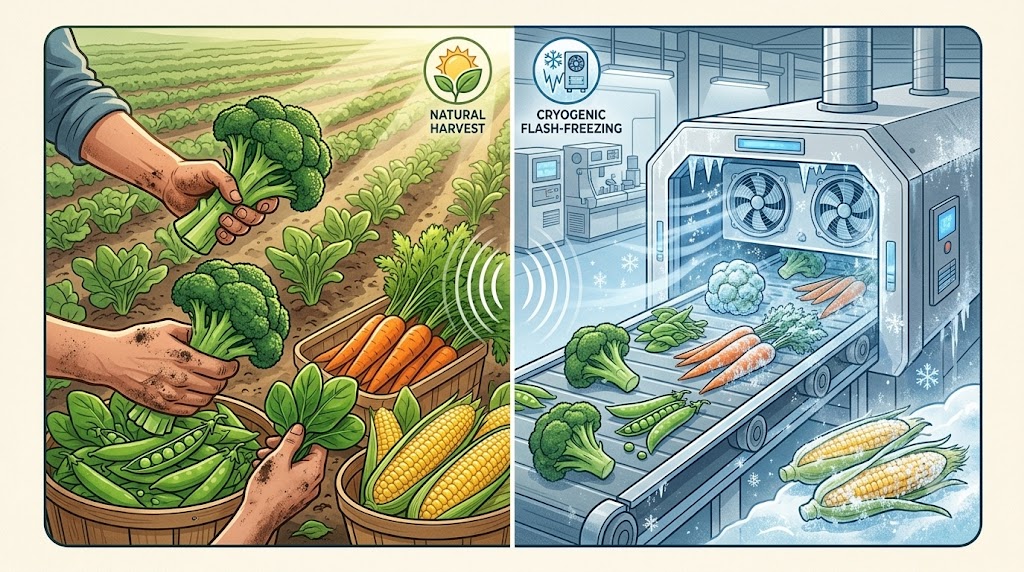
To understand how frozen vegetables compare to fresh ones, we have to look at what happens to a vegetable the moment it's harvested.
Vegetables are living tissues. Once they are picked, they don't just shut down; they keep breathing, aging, and breaking down. During transit from the farm to the wholesale market, and finally to your local supermarket display, fresh produce is exposed to light, air, and varying temperatures. This causes volatile nutrients—especially water-soluble vitamins like vitamin C and folate—to degrade rapidly.
By the time you actually cook and eat "fresh" vegetables, they may have lost anywhere from 15% to 55% of their original vitamin C.
Frozen vegetables, on the other hand, are harvested at peak ripeness when their nutrient levels are highest. Within hours, they are blanched (briefly dipped in boiling water or steam) to stop ripening enzymes in their tracks. Then, they are flash-frozen to 0°F (-18°C) or lower. This rapid freeze creates tiny ice crystals that preserve the plant's cellular structure, locking in those high-quality vitamins.
Preservation Phase | Biological Process | Impact on Micronutrients |
|---|---|---|
Fresh Storage (5–10 Days) | Cellular respiration, oxidation, and enzymatic stress | High degradation of water-soluble vitamins (e.g., Vitamin C, Folate) |
Industrial Blanching | Rapid thermal exposure (boiling water or steam) | Minor initial leaching of water-soluble nutrients; inactivates degradative enzymes |
Flash Freezing (0°F / -18°C) | Cryopreservation and ice crystal minimization | Locks in peak nutrients; slows microbial growth and chemical degradation |
Long-term Home Freezing | Sub-zero storage; potential temperature fluctuation | Slow oxidation occurs; cellular lysing can happen in frost-free units |
Major studies from top institutions like the University of Georgia and the University of California, Davis, have backed this up. Dr. Ronald Pegg at the University of Georgia compared fresh vegetables stored in a home fridge for five days with their frozen counterparts.
The results? Frozen peas actually had higher levels of vitamin C and beta-carotene than fresh peas stored in a fridge. Similarly, frozen corn, blueberries, and peas retained significantly more folate.
Meanwhile, UC Davis researchers found that fat-soluble nutrients like vitamin E can actually become more bioavailable after freezing. The quick heat and freeze break down tough plant cell walls, making it easier for your body to absorb the nutrients.
Kitchen Hacks: How to Prepare Frozen Veggies Without Leaching the Good Stuff

Getting those nutrients home is only half the battle. How you cook your frozen veggies can mean the difference between eating a vitamin goldmine and pouring those vitamins down the kitchen sink.
Water-soluble vitamins (like vitamin C and the B-complex family) are highly sensitive to heat and water. If you boil your frozen vegetables in a large pot of water, those precious nutrients will dissolve right into the cooking liquid. In fact, boiling can drain up to 34% of the vitamin C from broccoli and strip leafy greens of key minerals like potassium and magnesium.
To keep your nutrients on your plate, use these cooking methods instead:
The Microwave Steam: Believe it or not, your microwave is a nutrient saver. Because it heats food incredibly fast and requires almost no added water, it prevents nutrient leaching. Steaming veggies in a covered, microwave-safe glass dish preserves up to 90% of their vitamin C and nearly 80% of their folate.
Vapor Steaming: Suspending your frozen vegetables in a steam basket above boiling water cooks them via heat vapor rather than direct water contact. This keeps the nutrients locked inside the vegetable fibers.
The Flash Sauté or Stir-Fry: Toss frozen veggies into a hot pan with a quick spray of heart-healthy oil. Cooking them rapidly at high heat leaves them tender-crisp and preserves fat-soluble vitamins like A and E.
Preparation Method | Water Contact | Average Vitamin C Retention | Mechanical/Nutritional Mechanisms |
|---|---|---|---|
Boiling | Extreme (Submersion) | 30%–50% | High solute diffusion; vitamins and minerals leach into discarded water |
Microwaving | Negligible (Self-moisture) | 90% | Ultra-fast heating via molecular agitation; minimal thermal exposure |
Vapor Steaming | None (Vapor contact) | 80%–90% | Sustained heat without direct liquid dissolution; prevents leaching |
Sautéing / Pan-Roasting | None (Lipid coating) | High (80%–85%) | High-temperature flash heating; fat-soluble vitamins (A, D, E, K) are preserved |
Pro Tip on Thawing: Small items like peas, corn, and chopped spinach can go straight from the freezer to the pan. Larger items like broccoli florets can be thawed slowly in the refrigerator. Keeping them below 41°F (5°C) prevents them from entering the "Temperature Danger Zone," where bacteria can multiply rapidly.
Cans vs. Cryo: The Ultimate Preservation Battle
Freezing and canning are both excellent ways to make sure you always have vegetables on hand, but they affect plant biology in very different ways.
Canning requires heavy, prolonged heat sterilization (known as retorting) to make sure the food is shelf-stable for years. While minerals and dietary fiber remain highly stable during this process, water-soluble vitamins B and C take a massive hit. Canned carrots and peas, for example, can lose up to 85% to 95% of their natural vitamin C.
However, canning does have one unique trick up its sleeve: heat can actually release bound antioxidants, making them more bioavailable. A classic example is canned tomatoes, which contain higher levels of bioavailable lycopene than raw tomatoes.
The biggest drawback to canned vegetables is often what's added to them. Many canned vegetables are stored in a sodium chloride (salt) solution to preserve texture and flavor. Frozen vegetables, on the other hand, are typically packaged completely plain with zero added sodium or preservatives, since the cold temperature itself acts as the preservative.
If you do buy canned, you can significantly cut down the sodium by draining the liquid and rinsing the vegetables under cold, running water. Just keep in mind that this rinsing step will wash away a small portion of the remaining water-soluble vitamins.
Vegetable | Original Sodium (per 100g) | Drained Sodium (Reduction) | Rinsed Sodium (Reduction) | Water-Soluble Nutrient Loss |
|---|---|---|---|---|
Sweet Peas [cite: 33] | 261 mg | 249 mg (5% reduction) | 231 mg (11.5% total reduction) | 6% Vitamin C loss |
Green Beans [cite: 33] | 231 mg | Minimal change | 214 mg (7% total reduction) | 10% Vitamin C loss |
Sweet Corn [cite: 33] | 205 mg | 185 mg (10% reduction) | 162 mg (21% total reduction) | 21% Vitamin C loss; significant loss of simple sugars |
Freezer Magic: Are Frozen Veggies Your Best Weight Loss Weapon?
If your goal is weight loss or managing a metabolic condition like type 2 diabetes, frozen vegetables are a massive advantage.
It all comes down to volumetric eating—or managing the energy density of your meals. Low-energy-density foods are high in water and dietary fiber but incredibly low in calories. Non-starchy vegetables like broccoli, cauliflower, and spinach contain fewer than 30 calories per cup.
When you pack your plate with these high-volume foods, they physically stretch your stomach walls. This physical distension activates stretch receptors in the gut, sending a biological signal to your brain that you are full. This trigger activates a cascade of appetite-reducing hormones:
Ghrelin (the "I'm starving!" hormone) is suppressed.
GLP-1 and Peptide YY (the fullness hormones) are released into your bloodstream, slowing down digestion and keeping you satisfied for hours.
Furthermore, non-starchy frozen vegetables have a negligible glycemic load. Their structural fiber forms a gel-like matrix in your digestive tract, which slows the absorption of glucose into your bloodstream. This keeps your blood sugar stable and prevents insulin spikes.
This is incredibly helpful if you are transitioning to a low-carb or ketogenic lifestyle. In the first week or two of eating low-carb, your body sheds a massive amount of water weight and stored sodium as insulin levels drop. Keeping a steady supply of high-fiber, nutrient-dense frozen vegetables on hand helps support your body during this metabolic shift, keeping you hydrated and full without adding excess carbs.
The Dietitian-Approved "Top 10" Frozen Veggies to Stock Up On
Not sure which bags to grab? Here are the ten best frozen vegetables for nutrition, ranked by their nutrient density and dietary versatility:
Frozen Spinach (The Weight-Loss Multiplier): Fresh spinach bags wilt and spoil within days, shedding vitamins along the way. Frozen spinach blocks are pressed together, meaning you get multiple servings of folate, iron, and vitamin K packed into a small, long-lasting space. Toss a handful into smoothies, egg scrambles, or soups. You won't even taste it, but it will dramatically lower the caloric density of your meal.
Frozen Broccoli (The Cellular Protection Standard): Rich in vitamin C and glucosinolates (which convert into the powerful antioxidant sulforaphane). Steaming is great, but roasting frozen broccoli with a quick light spray of olive oil doubles your chewing time and can keep you full for up to four hours.
Frozen Green Peas (The Plant-Protein Champion): Peas are a fantastic, budget-friendly source of plant protein and fiber, boasting about 8 grams of each per cup. Flash-freezing preserves their sweet flavor and locks in peak vitamin C.
Frozen Cauliflower (The Low-Glycemic Substitute): A mild, nutrient-dense vegetable packed with vitamin C and choline. Because it’s extremely low in carbs, riced cauliflower makes a perfect, low-glycemic swap for white rice or potatoes.
Frozen Zucchini (The Caloric Dilution Standard): Boasting a very high water-to-fiber ratio, zucchini is perfect for adding volume and hydration to your meals without piling on the calories.
Frozen Carrots (The Carotenoid Powerhouse): Carrots are loaded with beta-carotene (provitamin A) and alpha-carotene. While fresh carrots can dry out, frozen carrots retain these fat-soluble nutrients exceptionally well. Cooking them with a tiny splash of healthy fat helps your body absorb the carotenoids.
Frozen Asparagus (The Prebiotic Standard): Asparagus is a rich source of prebiotic fiber, which feeds the healthy bacteria in your gut. Frozen asparagus keeps its structure beautifully, retaining up to 90% of its vitamin C.
Frozen Brussels Sprouts (The High-Fiber Crucifer): Densely packed with vitamin K and soluble fiber, Brussels sprouts help slow digestion and promote long-term fullness. Air-frying them directly from frozen caramelizes their edges for an incredibly satisfying crunch.
Frozen Green Beans (The Mineral-Preserved Basic): High in fiber and bone-supporting silicon, green beans maintain their mineral integrity perfectly during freezing, making them a cheap, reliable staple year-round.
Frozen Kale (The Nutrient Powerhouse): One of the most micronutrient-dense greens on the planet, kale is packed with calcium, lutein, and vitamin K. Flash freezing keeps it from yellowing and wilting, keeping it ready for your morning smoothies.
The Bottom Line
When it comes to the debate between frozen vegetables vs fresh nutrition, there is no need for grocery aisle guilt.
While farm-fresh veggies eaten immediately after harvest are wonderful, frozen vegetables are a highly nutritious, incredibly convenient, and cost-effective alternative that locks in peak vitamins and prevents food waste.
By stocking up on a variety of plain frozen vegetables and using quick, water-less cooking methods like microwaving or roasting, you can easily hit your daily nutritional goals. And with voice-first tools like VoCal, tracking those healthy, volumetric meals is as easy as speaking a single sentence.
Ditching the Tracker Fatigue: How VoCal Makes Healthy Eating Easy
We all know we should be eating more vegetables, but actually keeping track of our diet can feel like a part-time job.
Most traditional calorie-tracking apps are incredibly tedious. You have to open the app, type in the food, search through a confusing database of conflicting entries, and guess the exact gram weight of your portion. If you’re making a home-cooked meal with multiple ingredients—like a vegetable stir-fry or a classic soup—the manual entry alone can take up to 15 minutes a day. It’s no wonder most people quit within the first week.
That is where VoCal steps in to completely change the game.
VoCal is a voice-first calorie tracking app designed to eliminate the friction of logging your meals. Instead of typing, searching databases, or dealing with photo-upload fatigue, you simply speak to the app naturally.
You can say: "I had a cup of roasted frozen Brussels sprouts, some sautéed chicken breast, and a half-cup of brown rice." Within five seconds, VoCal’s advanced speech recognition and natural language processing translate your voice into structured nutritional data with up to 98% accuracy. It even supports 11 different languages—including English, Hindi, and regional variations—making it incredibly intuitive for diverse dietary habits.
By making food logging as simple as having a five-second conversation, VoCal takes the mental burden out of tracking. It allows you to build a consistent, sustainable habit, giving you clear insights into your fiber, protein, and overall daily nutrient intake without the headache.
Frequently Asked Questions (FAQs)
Are frozen vegetables considered "processed food"?
Technically, yes, but they are minimally processed. The only steps involved are washing, peeling, cutting, blanching, and freezing. Unlike highly processed convenience foods, plain frozen vegetables contain no added sodium, chemical preservatives, trans fats, or sugars.
Can I refreeze frozen vegetables if they have thawed?
If the vegetables still contain ice crystals or have been kept below 41°F (5°C) in the refrigerator, it is generally safe to refreeze them. However, the physical thawing and refreezing process will break down plant cell walls further, which may result in a mushier texture and some loss of water-soluble vitamins.
How long do frozen vegetables last in the freezer?
When kept constantly at 0°F (-18°C) or lower, frozen vegetables are safe to eat indefinitely because bacterial growth is completely halted. However, for the best taste, texture, and nutrient density, it is recommended to use them within 8 to 12 months.
Is it better to cook frozen vegetables from frozen or thaw them first?
Small vegetables like peas, corn, and chopped spinach should be cooked directly from frozen to preserve their texture and prevent them from getting soggy. Larger, chunkier vegetables like broccoli or thick carrots can be lightly thawed in the fridge first to ensure they cook evenly.
Disclaimer: This is for informational purposes only. For medical advice or diagnosis, consult a qualified healthcare professional.