

Remember when we were kids, and the "food pyramid" was the holy grail of healthy eating? Fast forward to today, and our busy, on-the-go lives have changed the game completely. Between crushing your morning workouts, surviving traffic, and endless work meetings, sitting down for a balanced meal can feel like a luxury.
Enter the shaker bottle.
With the global protein supplement market exploding past 9.69 billion dollars in 2023, more and more of us are swapping real food for a quick liquid shake. But it raises a massive question: in the ultimate matchup of protein shake vs real food, can a powdered drink actually replace a home-cooked meal?
Whether you are trying to lose weight, build muscle, or simply survive a busy Tuesday, let's break down the science behind liquid calories, the hidden risks of supplements, and how to use voice-based calorie tracking with tools like VoCal to keep your nutrition on point.
Defining the Contenders: Protein Shakes vs. Meal Replacements
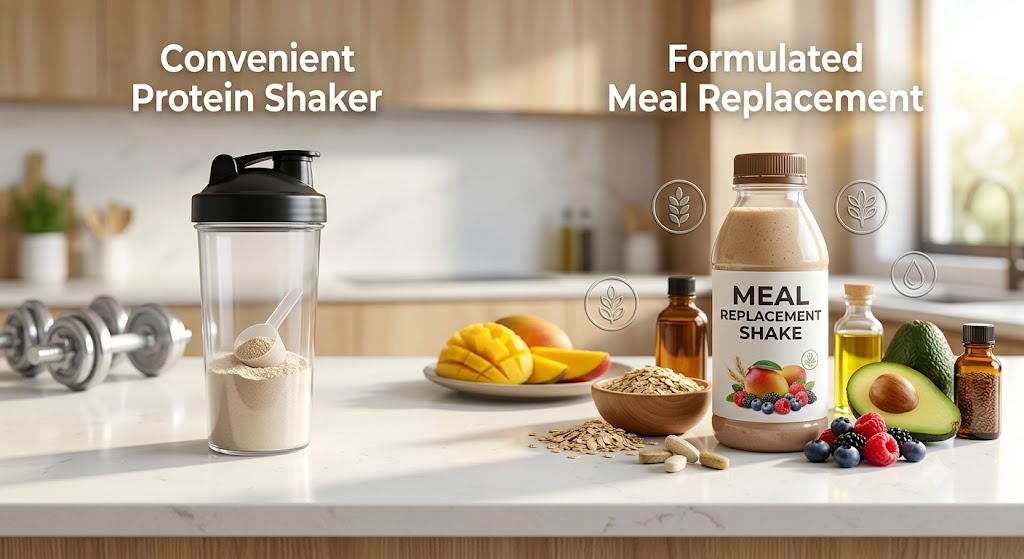
To understand if a shake can replace a meal, we first have to look at what is actually inside your shaker cup. Not all powders are created equal! In fact, they generally fall into two very different categories:
Standard Protein Shakes: These are the pure protein powerhouses. Think whey, casein, pea, or soy isolate. They are designed to deliver 20 to 30 grams of protein with almost zero fats, fiber, or carbs. They are perfect for muscle recovery but lousy at being a full meal.
Meal Replacement Shakes: These are formulated to act like "food in a bottle". They are packed with added vitamins, minerals, fats, carbs, and fiber to mimic the nutritional profile of an actual solid meal.
Because liquid drinks are processed, they bypass the heavy-duty mechanical digestion that solid food requires, which completely changes how your body processes them.
Nutritional Architecture Comparison
Nutritional Parameter | Standard Protein Shake | Formulated Meal Replacement | Whole-Food Diet |
Primary Biological Role | Muscle recovery | Convenient calorie control | Whole-body health |
Protein Density (per serving) | High (20 g to 30 g) | Moderate (12 g to 20 g) | Variable (15 g to 35 g) |
Fiber Content | Trace to none | Moderate (3 g to 8 g) | High in plant sources |
Lipid Profile | Trace amounts | Added oils or MCTs | Natural healthy fats |
Micronutrients | Limited unless fortified | Synthetically fortified | Natural, highly bioavailable |
Thermic Effect (TEF) | Minimal | Low to moderate | High |
Whole Foods: The Undefeated Champion of Nutrition
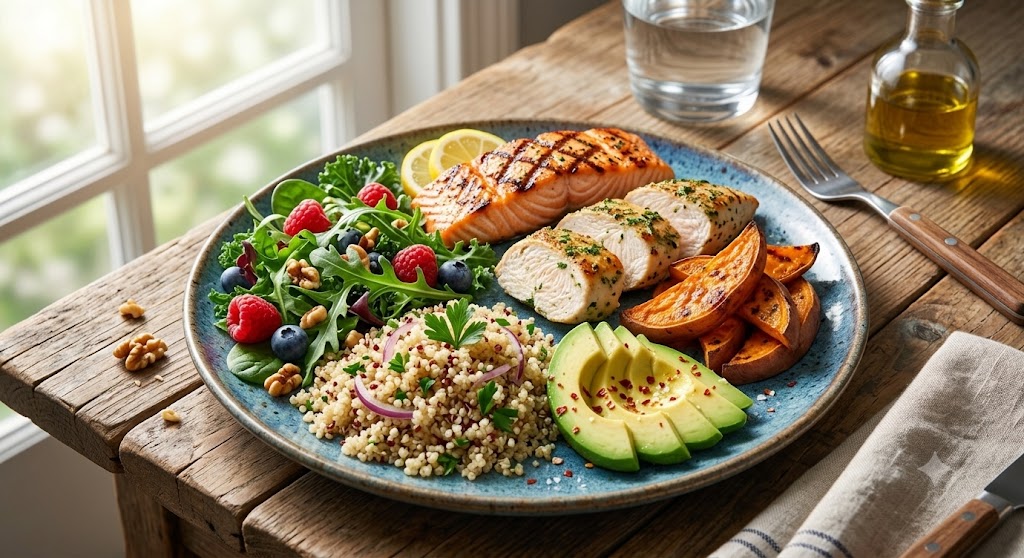
If protein shakes are a shortcut, whole foods are the scenic route—and your body loves the journey.
When you eat real food, you benefit from what scientists call the food matrix effect. This means the nutrients in whole foods don't just sit there; they interact with each other to make digestion better and nutrient absorption stronger. For example, studies show that drinking whole milk builds more muscle than drinking fat-free milk with the exact same amount of protein. The natural fats and structures in the whole food work together to keep your body thriving.
On top of that, whole foods require chewing and active digestion. This digestion process actually burns calories itself, known as the Thermic Effect of Food (TEF). Plus, natural plant foods provide fiber and unique compounds like anti-inflammatory flavonoids that keep your gut microbiome happy—something a highly refined shake just can't do.
Protein Shake vs Real Food: Head-to-Head Comparison
How do these two options stack up when life gets real? Let's look at the science of satiety, muscle building, safety, and weight loss.
Satiety and Appetite Control: The Mind-Body Connection
Have you ever drank a 300-calorie protein shake and felt starving just an hour later? You aren't imagining things.
Your brain registers fullness through mechanical stretch receptors in your stomach walls. Because liquid calories slide through your digestive tract lightning-fast, they fail to activate those receptors.
In one study, older adults drank a liquid meal replacement on one day and ate a solid meal replacement bar on another. After drinking the liquid, participants felt significantly hungrier and ended up eating 13.4% more calories at their next meal.
Another 4-week trial compared standard protein shakes to balanced meal replacements. The protein-only group struggled with intense "head hunger" and afternoon blood sugar crashes. In fact, 44% of the protein shake users admitted to afternoon snacking to cope with the hunger, while the meal replacement group stayed full and lost double the weight.
The VoCal Advantage: When you are trying to stay in a calorie deficit, those quick-drinking liquid shakes can easily slide under your mental radar. With a hands-free tracking tool like VoCal, you don't have to navigate confusing menus to log your food. Just say, "Log one vanilla protein shake and a handful of almonds," and it is recorded instantly. This keeps you honest about those liquid calories and prevents unexpected weight loss plateaus!
Muscle Building: Amino Acid Kinetics
To build and repair muscle, you need a steady distribution of high-quality protein throughout the day. Experts suggest aiming for around 0.4 grams of protein per kilogram of body weight per meal, spread across four meals:
Optimal Daily Protein = 0.4 * 4 =1.6
This formula represents a targeted intake of 0.4 g/kg per meal across a minimum of four meals to reach a baseline of 1.6 g/kg/day.
But what about protein quality? Scientists measure this using the Digestible Indispensable Amino Acid Score (DIAAS), which looks at how well your small intestine absorbs amino acids:
DIAAS% = 100 * (Digestible Amino Acid in Test Protein / Same Amino Acid in Reference Protein)
While whey isolates are incredibly fast-absorbing and perfect right after a heavy lifting session, whole foods provide sustained amino acid release to keep your muscles nourished for hours.
Protein Source | PDCAAS | DIAAS | Digestibility Potential |
Whey Protein Concentrate | 1.00 | 1.07 | Rapidly digested; high leucine content. |
Whole Egg | 1.00 | 1.13 | High bioavailability; healthy lipids. |
Beef | 0.92 | 1.12 | Slower digestion; rich in iron and zinc. |
Soy Protein Isolate | 1.00 | 0.84 | High-quality plant protein. |
Pea Protein Concentrate | 0.75 | 0.62 | Lower amino acid density; needs blending. |
Cooked Lentils | 0.60 | 0.58 | Slow-digesting; highly fibrous. |
For vegetarians and vegans, hitting high daily protein targets purely through whole plants can sometimes bring along unwanted carbs and fats. This is where a clean plant-based protein powder can be a huge help to bridge the gap.
Safety and Contamination: The Regulatory Reality

Here is a truth bomb: the FDA does not evaluate the safety, purity, or labeling of protein powders before they hit store shelves.
In a massive study by the Clean Label Project, researchers tested 160 top-selling protein powders for heavy metals and toxins. The results were eye-opening:
Heavy Metals: 47% of all tested protein powders exceeded California Proposition 65 safety levels for heavy metals like lead, cadmium, arsenic, or mercury.
The Plant-Based Surprise: Organic, plant-based protein powders actually contained three times more lead and five times more cadmium than whey powders. Why? Because plants easily absorb heavy metals directly from the soil.
Flavor Matters: Chocolate-flavored powders had a jaw-dropping 110 times more cadmium than vanilla, because cacao plants are natural magnets for heavy metals in the ground.
Protein Powder Category | Prop 65 Lead Exceedance | Cadmium Level | Primary Source |
Plant-Based Protein | 77% | High | Soil absorption by crops |
Organic Protein | 79% | High | Farmland bioaccumulation |
Chocolate Flavored | 65% | Extreme | Naturally in cocoa beans |
Whey Protein | 28% | Very Low | Low dairy accumulation |
Collagen Protein | 26% | Very Low | Animal tissue extraction |
Managing Weight: The Low-Carb Shift
Many people use protein shakes as a tool for low-carb or ketogenic diets. Restricting carbs (usually to between 20 and 130 grams per day) forces your body to burn fat for fuel instead of glucose.
This can lead to amazing health outcomes, including:
Targeting Visceral Fat: Low-carb diets are highly effective at burning deep abdominal fat, which is linked to inflammation and heart issues.
Cardiometabolic Health: Cutting processed carbs lowers fasting insulin and dramatically reduces blood triglycerides.
However, going too low on carbs too quickly can trigger the "keto flu" (fatigue, headaches, and muscle cramps) and spike your cortisol (stress hormone) levels.
Tracking with VoCal: Transitioning to a low-carb lifestyle is a lot easier when you don't have to stress about typing in every ingredient. VoCal allows you to verbally track your daily carbs, healthy fats, and fiber-rich greens hands-free, making sure you stay balanced and hydrated without the headache.
Practical Recommendations: When Shakes Actually Make Sense
So, should you throw away your shaker bottle? Absolutely not! While whole foods are the ideal baseline, protein shakes and meal replacements are incredibly useful in specific scenarios.
When to Grab a Shake:
Post-Workout Recovery: Within an hour of a grueling training session, a fast-absorbing whey or plant shake delivers amino acids directly to your recovering muscles.
Appetite Loss & Healthy Aging: For older adults facing sarcopenia (age-related muscle loss) or recovering from an illness, drinking a fortified shake is an easy way to get essential nutrients when solid food feels overwhelming.
Bariatric Maintenance: Post-surgery patients with limited stomach space often use shakes to hit high protein goals (100 g to 110 g per day) while keeping their calories safely restricted.
In a Pinch: A shake is always a better option than skipping a meal entirely or hitting the fast-food drive-thru!
Final Thoughts
At the end of the day, you don't have to choose between a protein shake and real food—they can both play a role in your health routine!
Think of whole foods as your nutritional foundation, and protein powders as your supportive assistants. Aim to get at least two-thirds of your daily protein from clean, whole sources like eggs, poultry, fish, beans, and nuts, and save the shakes for post-workout recovery or busy mornings.
And when you do use shakes, make sure to pick products that are third-party tested for purity (look for NSF or Clean Label Project certifications) to keep heavy metals out of your cup.
Ready to simplify your nutrition? Head over to VoCal and start tracking your meals, shakes, and snacks completely hands-free today!
Frequently Asked Questions (FAQs)
1. Can a protein shake replace a meal for weight loss?
No, a standard protein shake is not a complete meal replacement. While it provides a high dose of protein, it lacks the essential fats, carbohydrates, and dietary fiber your body needs to maintain energy and feel full. If you use a basic protein shake as a meal, you are likely to experience an afternoon energy crash and increased cravings.
2. What is the difference between a protein shake and a meal replacement?
The difference lies in their nutritional design. A standard protein shake is a targeted supplement containing mostly isolated protein (20 to 30 grams) with minimal carbs or fats. A meal replacement shake is formulated to mimic a complete, solid meal, containing balanced amounts of protein, carbs, healthy fats, fiber, and essential vitamins and minerals.
3. Is it safe to drink protein shakes every day?
Yes, for most healthy individuals, consuming a daily protein shake is safe. However, relying on them as your main source of nutrition can lead to micronutrient deficiencies and digestive issues due to a lack of fiber. Additionally, some powders contain heavy metals or high amounts of added sugars, so it is important to choose third-party tested products.
4. Can vegetarians get enough protein without using shakes?
Absolutely. While plant proteins generally have a lower digestibility and amino acid score than animal proteins, vegetarians can easily meet their targets by eating a varied diet. Excellent whole-food options include cooked lentils, beans, eggs, Greek yogurt, tempeh, and nuts. Plant-based protein shakes are simply a convenient tool to help bridge any gaps.
Disclaimer: The information presented in this article is for educational and informational purposes only and should not be taken as medical or individual nutritional advice. Always consult with a qualified healthcare professional or a registered dietitian before starting any new diet, supplement regimen, or weight-loss program, especially if you have pre-existing health conditions such as diabetes or kidney disease.