

Hey there, gym warrior! We’ve all been there. You just crushed a brutal lifting session, your legs feel like jelly, and you’re staring down the ultimate post-workout dilemma: protein shake vs real food. Do you go for the quick-and-easy creamy shake, or do you sit down to a massive plate of chicken and rice?
If you're anything like us, you want the absolute best results for your hard work. But navigating the wild world of fitness advice can feel like trying to read a map in a hurricane. Goodbye, old-school nutrition confusion; hello, science-backed clarity!
Before we dive into the details, let's establish the fundamental rule of recovery:
Your muscles are made of woven protein fibers. When you work out, you create tiny microscopic tears in these fibers. To rebuild them bigger, stronger, and less sore, your body must kick off muscle protein synthesis—which is basically your internal construction crew.
But let's be real—the last thing you want to do with sweaty, post-workout hands is tap out a complicated, 15-ingredient food log. That’s where a hands-free, voice-based calorie tracking app like VoCal saves the day. Just speak your meal into your phone immediately after your workout, and let technology handle the math while you focus on catching your breath.
The Magic of Protein Shakes (The Fast-Pass for Recovery)

If convenience had a mascot, it would be a protein shaker bottle. Shakes are the undisputed champions of post-workout convenience. But there’s a real metabolic reason why athletes chug them.
It all comes down to the leucine trigger. Leucine is an essential amino acid that acts as the primary molecular "on-switch" for muscle repair. To fully flip this switch, you need to hit a threshold of about 3 to 4 grams of leucine in your meal.
Whey protein contains a massive 11% leucine content, meaning a standard 20 to 30 gram scoop easily gets your muscle-building engine roaring. Plus, liquid whey gets digested and absorbed incredibly fast, flooding your bloodstream with recovery-boosting amino acids in record time.
The Pros:
Lightning-Fast Absorption: Whey protein isolate bypasses heavy digestion, peaking in your system within 60 minutes.
Hyper-Convenient: No cooking, no meal prep, no cooler bag required.
Clean Protein Density: Low-fat and low-carb isolates deliver straight protein with minimal extra calories.
The Drawbacks:
Lack of Micronutrients: Supplements are heavily processed and lack the vitamins, minerals, and healthy fibers found in real foods.
Contamination Risks: Unlike foods, supplements aren't tightly regulated by the FDA. Some contain hidden heavy metals like lead or arsenic. (Pro-tip: Always look for "NSF Certified for Sport" or "Informed Choice" labels!)
Artificial Junk: Many brands load their powders with chemical thickeners, artificial sweeteners, or sugar alcohols that can leave you bloated and gassy.
The Power of Whole Foods (The Slow & Steady Advantage)
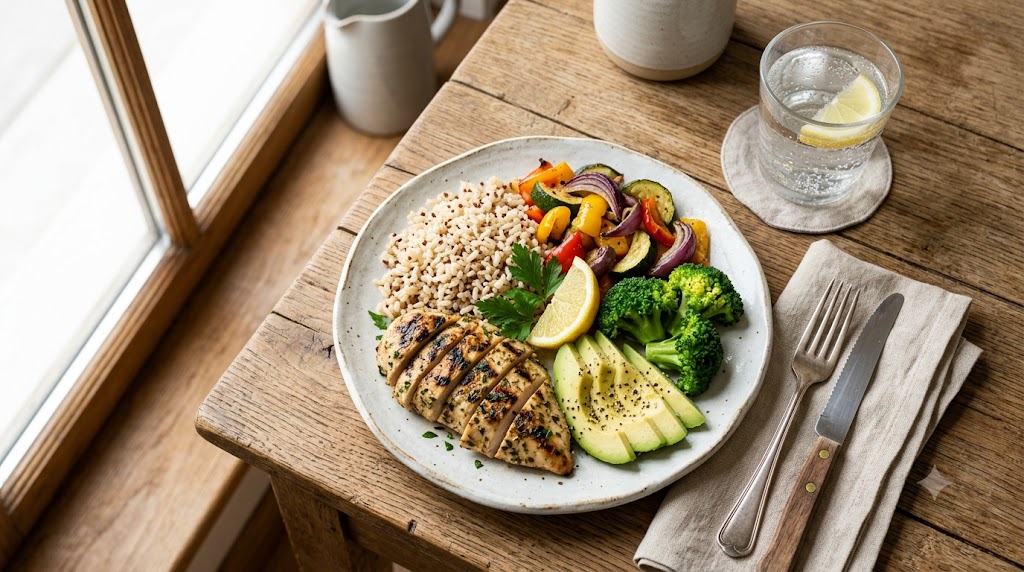
If shakes are the fast-pass, whole foods are the scenic route—and trust us, the view is spectacular. When you eat a piece of steak, a chicken breast, or a bowl of lentils, you aren't just eating protein. You’re eating a food matrix.
A food matrix is the complex, three-dimensional physical structure of real food. Because your stomach has to physically break down this structure, whole foods deliver a slow, sustained release of amino acids into your bloodstream.
While a shake gives you a quick spike, whole foods keep muscle protein synthesis elevated for much longer. For example, a clinical study on beef steak showed that while it digests slower than a liquid, it triggers incredible long-term whole-body protein retention.
But watch out for the fats! If your post-workout meal is swimming in grease, it can stall your recovery. A study comparing high-fat pork (20.6 grams of fat) to low-fat pork (4.4 grams of fat) found that the high-fat version severely delayed leucine absorption, blunting the immediate post-workout muscle-rebuilding spike. Keep those post-workout fats moderate!
The Pros:
Sustained Anabolism: Provides a steady trickle of amino acids to prevent muscle breakdown for hours.
Nutrient Rich: Packed with natural iron, zinc, potassium, and B-vitamins that shakes can only dream of.
Satiety: Real food physically fills your stomach, keeping those post-workout hunger cravings at bay.
The Drawbacks:
Slower to Digest: If you're running on empty or trained fasted, your muscles might have to wait too long for help.
Prep Time: You actually have to cook and pack your meals (no one wants lukewarm salmon sitting in a gym bag for four hours).
What If You’re Plant-Based? (Green Gains)
Great news: you don't need animal protein to build serious muscle. Vegan and vegetarian athletes can crush their recovery goals using high-quality plant isolates like pea protein, brown rice protein, or fava bean protein.
Just keep protein complementation in mind. Because many plants lack certain essential amino acids, combining different sources (like wild rice and black beans) ensures you get a complete, muscle-building amino acid package.
(A quick safety warning: If you have a G6PD deficiency, steer completely clear of fava beans and fava bean isolates to avoid health risks!)
Let’s Look at the Numbers
How do your favorite recovery options stack up? We’ve broken down the stats so you can track them easily with VoCal.
Table 1: Post-Workout Recovery Proteins at a Glance
Recovery Source | Standard Serving Size | Protein Yield (g) | Approximate Leucine Content (g) | Meets 3 g Leucine Trigger? | Primary Nutritional Advantage |
Whey Protein Isolate | 30 g (1 scoop) | 27 g | 2.97 g | Yes (near-threshold) | Rapid absorption; high bioavailability; minimal fat/lactose. |
Casein Protein Powder | 30 g (1 scoop) | 24 g | 2.16 g | No (requires ~42 g) | Slow release; ideal for overnight recovery. |
Lean Ground Beef (95%) | 126 g (4.5 oz) | 30 g | 2.40 g | No (requires ~160 g) | Rich in bioavailable iron, zinc, and B12. |
Whole Eggs | 250 g (5 large) | 30 g | 2.55 g | No (requires ~6 eggs) | Highly anabolic whole-egg lipid matrix. |
Greek Yogurt (Non-Fat) | 298 g (1.8 cups) | 30 g | 2.70 g | Yes (near-threshold) | Rich source of calcium and phosphorus. |
Soy Protein Isolate | 34 g (1 scoop) | 30 g | 2.40 g | No (requires ~42 g) | Complete plant protein; supports heart health. |
Tempeh | 149 g (0.9 cup) | 30 g | 2.10 g | No (requires complementation) | Fermented soy matrix; rich in magnesium and fiber. |
Quinoa (Cooked) | 682 g (3.7 cups) | 30 g | 1.80 g | No (requires complementation) | Gluten-free; complete amino acid profile. |
Table 2: Micronutrient Profiles (Based on a 30g Protein Serving)
Nutrient (% Daily Value) | Whole Milk (750 mL) | Egg Whites (264 g) | Tempeh (149 g) | Soy Isolate Powder (34 g) |
Calcium | 108% | 2% | 15% | 6% |
Iron | 2% | 1% | 18% | 27% |
Magnesium | 25% | 24% | 29% | 4% |
Phosphorus | 114% | 6% | 54% | 38% |
Potassium | 40% | 13% | 17% | 1% |
Sodium | 18% | 20% | 1% | 15% |
Zinc | 27% | 1% | 17% | 10% |
Vitamin B12 | 74% | 4% | 4% | 0% |
The "Goldilocks Zone" and Aging (The Over-35 Slump)
Did you know that after age 35, your body gets a little stubborn? Scientists call this anabolic resistance—a fancy way of saying your muscles don't respond to protein as easily as they did in your twenties.
To combat this, you need to hit the "Goldilocks zone" of daily protein: 0.7 to 0.9 grams of protein per pound of body weight. If you're in this demographic, aiming for the higher end of the range and ensuring your post-workout meal contains at least 30 to 40 grams of protein is key to keeping muscle-building active.
Don't Cut the Carbs! (The Endocrine Trap)
In a rush to drop body fat, many fitness folks keep protein sky-high but slash carbohydrates to near-zero. Big mistake!
Severe carbohydrate restriction is a major physical stressor, especially for active women. It can send your stress hormone cortisol spiking, which in turn suppresses your active thyroid hormone (T3). The result? Low energy, a sluggish metabolism, and even disrupted menstrual cycles.
To prevent this hormonal trainwreck, aim for a 3:1 or 4:1 carbohydrate-to-protein ratio post-workout. This restores your depleted muscle glycogen and keeps your metabolism hummin' happily.
The Verdict: How to Choose
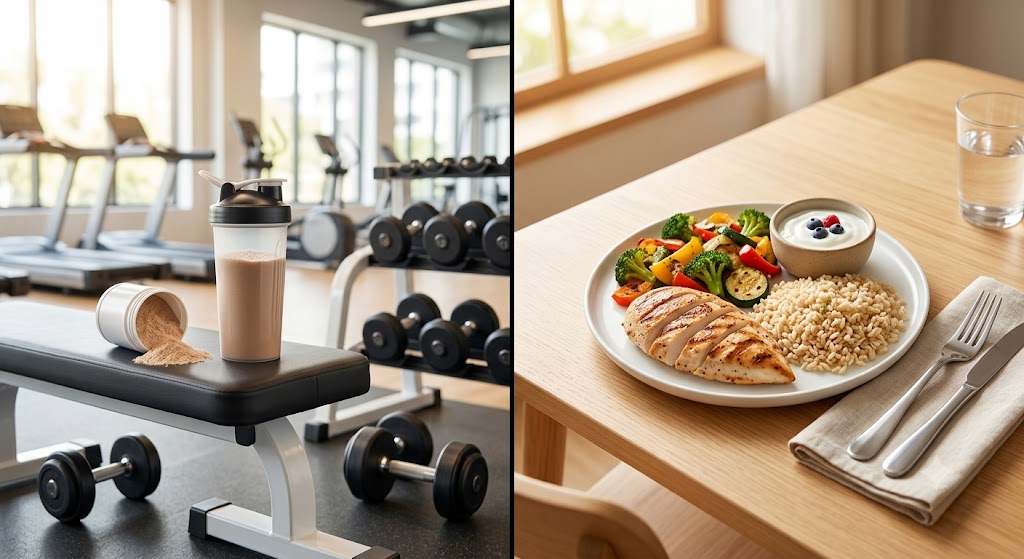
So, what's the ultimate winner? Great news: you don't have to choose! The smartest athletes use a tag-team approach.
Go for a Protein Shake if:
You are on the go, traveling, or stuck in back-to-back meetings right after the gym.
You trained on an empty stomach and need immediate amino acids to stop muscle breakdown.
You have zero post-workout appetite and solid food sounds impossible to choke down.
Go for Real Food if:
You have 1 to 2 hours to sit down and enjoy a balanced, home-cooked meal.
You struggle with digestive bloating or are sensitive to artificial sweeteners.
You want to stay full, satisfied, and energized for the rest of the day.
Whichever route you choose, keeping your nutrition on track is the real key to long-term success. Make it effortless by using VoCal to track your meals via simple voice commands. No typing, no scrolling, no friction—just real-time tracking for real results.
Frequently Asked Questions (FAQs)
Is a protein shake better than real food after a workout?
It depends on your timeline and immediate goals! A protein shake is incredibly convenient and absorbs rapidly to trigger muscle protein synthesis quickly. Real food, however, offers a wider variety of micronutrients and keeps you full longer. A combination of both is often the best strategy for optimal long-term recovery.
How soon after a workout should I consume protein?
While the "anabolic window" is wider than previously thought, consuming 20 to 40 grams of protein within 30 to 60 minutes post-workout is highly recommended, especially if you trained in a fasted state, to support immediate muscle repair.
Can I build muscle with plant-based protein post-workout?
Absolutely! High-quality plant proteins like pea, brown rice, or soy are highly effective for muscle repair, provided you consume enough to trigger muscle protein synthesis and practice protein complementation to obtain all essential amino acids.
How many carbs should I eat with my post-workout protein?
To optimize muscle glycogen replenishment and protect your hormonal health, aim for a 3:1 or 4:1 ratio of carbohydrates to protein.
Disclaimer: This article is for informational purposes only. It is not intended to replace professional medical advice, diagnosis, or treatment. Always consult with a qualified healthcare provider, physician, or registered dietitian before making significant changes to your diet, exercise routine, or supplement regimen.