

Let's face it: the dairy-free milk aisle has gotten wildly out of hand. What started as a modest shelf of soy milk has exploded into a full-blown plant-based universe. Today, about 36% of Americans deal with lactose intolerance, and up to 68% of people worldwide find that dairy simply does not agree with their gut. Add in concerns about commercial dairy farming, skin breakouts, or just wanting a healthier lifestyle, and it is no wonder we are swapping out cow’s milk in droves.
But when you are ordering your morning coffee, which plant-based option should you root for? Almond milk has long been the reigning champion of dairy alternatives, grabbing over 74% of the market share. Meanwhile, ultra-creamy oat milk is rising through the ranks as the ultimate barista favorite.
Despite both being dairy-free, they have completely different nutritional profiles. Let’s dive into the almond milk vs. oat milk showdown to see which one deserves a spot in your fridge—and how to track those sneaky liquid calories effortlessly.
Macronutrients and Calories: The Ultimate Showdown
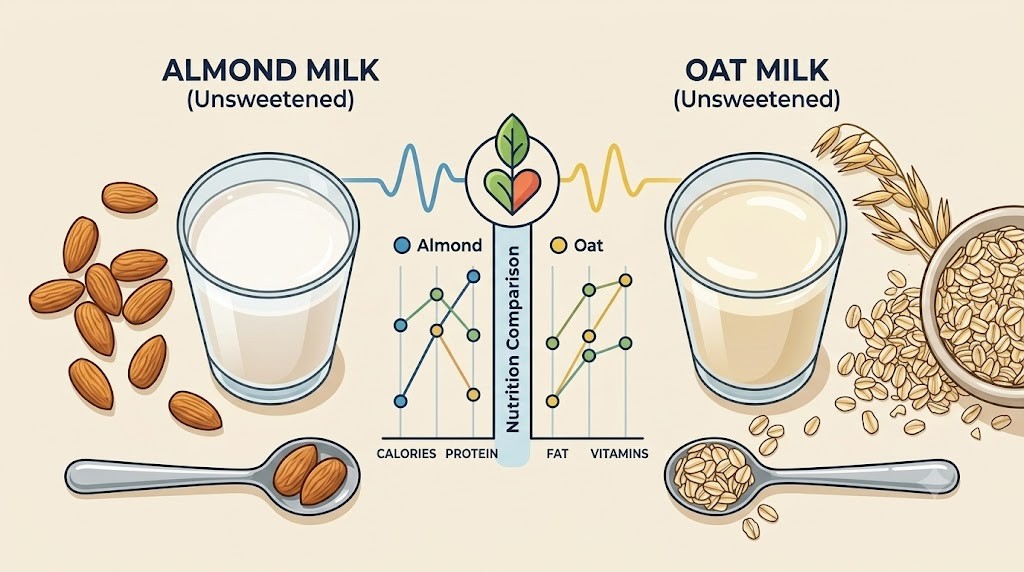
If you are keeping an eye on your weight or trying to stick to a tight macro budget, the calorie and carb differences between these two plant-based milks are major game-changers.
Unsweetened almond milk is the ultimate low-calorie lightweight. Made by blending soaked almonds with water and straining out the pulp, it leaves a thin, refreshing liquid that clocks in at a tiny 30 to 39 calories per cup.
Unsweetened oat milk is a much richer, grain-based beverage. Derived from a liquid extract of oats, its starch is enzymatically broken down during processing to create a naturally smooth and creamy texture. Because oats are naturally carbohydrate-dense grains, a cup of unsweetened oat milk delivers around 91 to 115 calories.
Here is how the numbers stack up side-by-side for a standard 1-cup (240 mL) serving:
Macronutrient Component | Unsweetened Almond Milk (Standard USDA) | Unsweetened Almond Milk (Silk) | Unsweetened Oat Milk (Standard USDA) | Whole Cow's Milk (Baseline) |
Energy (Calories) | 39 kcal | 30 kcal | 91 - 115 kcal | 150 kcal |
Total Protein | 1.0 g | 1.0 g | 2.0 g | 8.0 g |
Total Fat | 2.5 g | 3.0 g | 1.5 - 6.5 g | 8.0 g |
Saturated Fat | 0.2 g | 0.0 g | 0.0 - 0.7 g | 4.5 g |
Carbohydrates | 3.4 g | 1.0 g | 18.0 - 19.0 g | 12.0 g |
Dietary Fiber | 0.5 g | 0.0 g | 2.0 g | 0.0 g |
Total Sugars | 2.1 g | 0.0 g | 4.0 - 6.0 g | 12.0 g |
Net Carbohydrates | 2.9 g | 1.0 g | 16.0 - 17.0 g | 12.0 g |
The "Liquid Calorie" Satiety Paradox
When it comes to fat loss, calories are key. But here is the tricky thing about liquid calories: our brains do not register them the same way they do solid food.
If you drink a 115-calorie latte, your body will not naturally prompt you to eat less at lunch to compensate. Liquid calories behave in a "near-additive" way, meaning they just pile on top of your daily total without keeping you full.
For weight-loss goals, almond milk's incredibly low energy density makes it much easier to maintain a calorie deficit. But if you prefer the creamy texture of oat milk, you have to track it closely so those liquid calories do not quietly halt your progress.
The Carbs and Keto Conundrum
Are you following a low-carb or ketogenic protocol? This is where the gap between these two plant-based milks becomes a canyon. To stay in ketosis, keto dieters typically limit net carbohydrates to 50 grams or less per day.
Unsweetened almond milk fits perfectly, offering only 1.0 to 2.9 grams of net carbs per cup. Oat milk, however, is packed with 16 to 17 grams of net carbs per serving!
Even if the carton says "no added sugar," unsweetened oat milk is naturally rich in simple sugars. The amylase enzymes used during manufacturing break down the oat starches into simpler sugars like maltose and glucose. Consequently, oat milk is not keto-friendly and is a less favorable option for blood sugar management if you have diabetes.
Bottom Line: Unsweetened almond milk is the clear winner for low-carb, keto, or strict weight-loss diets because of its ultra-low calorie and carb footprint. Unsweetened oat milk is significantly more energy-dense and carb-heavy.
Protein Power: Dairy Dupe or Protein Poof?
If you are hoping your plant milk will replace the high-quality, muscle-building protein found in cow's milk, we have some bad news. Cow’s milk naturally boasts 8 grams of complete protein per cup. Neither almond nor oat milk natively comes close to that.
Almond milk contains a negligible 1 gram of protein per serving. Oat milk offers a slight upgrade with 2 grams of protein per cup.
Essential Amino Acid Match-up
Plant proteins are also characterized by limiting amino acids, which can restrict their protein synthesis utility in the body compared to animal proteins. While oat milk contains a broader array of essential amino acids than the trace amounts in almond milk, it is still considered a low-protein source.
Here is how the essential amino acid profiles compare per 100 grams:
Essential Amino Acid (mg per 100 g) | Unsweetened Oat Milk | Whole Cow's Milk |
Histidine | 18 mg | 15.0 - 26.0 mg |
Isoleucine | 25 mg | 25.0 - 62.0 mg |
Leucine | 81 mg | 90.0 - 108.0 mg |
Lysine | 61 mg | 49.0 - 96.0 mg |
Methionine | 10 mg | 17.0 - 27.0 mg |
Phenylalanine | 73 mg | 38.0 - 56.0 mg |
Threonine | 23 mg | 23.0 - 41.0 mg |
Tryptophan | 9 mg | 3.6 - 4.1 mg |
Valine | 33 mg | 33.0 - 53.0 mg |
To hit your daily protein targets (active individuals should aim for up to 1.6 grams of protein per kilogram of body weight), you will need to rely on high-protein solid food sources throughout the day.
Bottom Line: Neither option is a powerhouse protein source. Oat milk wins by a hair with 2 grams per cup, but you should still rely on other complete proteins to reach your daily muscle-building goals.
Micronutrients, Fortification, and Bioavailability
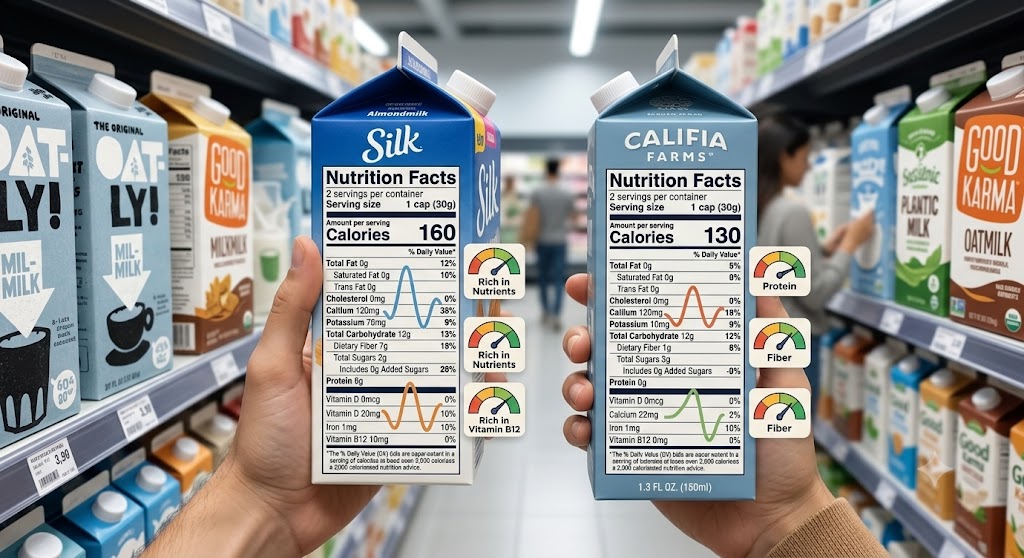
Because unfortified plant extracts naturally lack the calcium, vitamin D, and B-vitamin densities found in animal dairy, manufacturers rely on synthetic fortification to bridge the gap. However, because the FDA does not enforce mandatory fortification standards for plant milks, commercial brands vary wildly.
The Fortification Lottery
Some brands pack their cartons with vitamins, while others leave them bare. Here is the average fortification prevalence across commercial almond and oat milks in the US:
Nutrient Fortification | Almond Milk (% Commercial Prevalence) | Oat Milk (% Commercial Prevalence) | Average Fortified Level (per 1 Cup Serving) |
Calcium | 80.0% | 82.1% | 248 - 470 mg |
Vitamin D | 7.5% | 30.8% | 2.3 - 4.0 mcg |
Vitamin B12 | 20.0% | 28.2% | 0.2 - 1.1 mcg |
Vitamin B2 (Riboflavin) | 17.5% | 23.1% | 0.03 - 0.55 mg |
Vitamin A | 0.0% | 5.1% | 150 - 180 mcg |
Always read nutrition labels carefully to make sure you are buying fortified varieties that contain adequate levels of calcium and vitamin D—two critical nutrients of public health concern.
The Absorption Barrier (Phytates)
Just because a nutrient is listed on the label does not mean your body absorbs 100% of it. Plant foods inherently contain natural compounds called phytates, which can bind to essential minerals like calcium, iron, and zinc, forming insoluble precipitates in your digestive system that block mineral absorption.
This is especially important for vegetarians and vegans. Because plant-source proteins only contain non-heme iron (which has lower bioavailability than animal-derived heme iron) and are rich in phytates, the daily iron requirement is 1.8 times higher for those following a vegetarian or vegan diet.
Bottom Line: Commercial plant milks are often fortified to match cow's milk, but always double-check the label. Keep in mind that natural compounds like phytates can slightly reduce how well your body absorbs these minerals.
Allergies, Digestion, and Hidden Benefits
Beyond standard macronutrients and vitamins, these milks can have drastically different effects on your digestion, allergen safety, and metabolic health.
Almond Milk and Nut Allergies
If you have a tree nut allergy, steer completely clear of almond milk. The primary allergen protein in almonds is called amandin.
Clinical research demonstrates that amandin is highly heat-stable and does not break down during standard pasteurization or commercial processing. This means even highly filtered almond milk can trigger severe, potentially life-threatening allergic reactions in sensitive individuals.
Oat Milk's Cholesterol-Busting Secret
If you can safely drink oat milk, it brings some unique, health-boosting compounds to the table. Oats are loaded with beta-glucan, a soluble dietary fiber that forms a viscous, gel-like matrix in your gut.
One cup of oat milk can provide up to 1.2 grams of beta-glucan. This gel slows down stomach emptying (keeping you full longer) and binds to cholesterol-rich bile acids in your digestive tract, helping to lower circulating LDL (bad) cholesterol levels by 3% to 5%. Oat milk also contains natural anti-inflammatory antioxidants called avenanthramides.
Warning: While oats are naturally gluten-free, they are regularly processed on the same equipment as wheat, rye, and barley. For individuals with celiac disease or gluten sensitivity, buying oat milk that is verified as certified gluten-free is a critical safety step.
Bottom Line: Almond milk is unsafe for those with nut allergies. Oat milk is a great nut-free alternative that boasts cholesterol-lowering beta-glucan fiber, but check for a "certified gluten-free" seal if you are sensitive to gluten.
Daily Decision Matrix
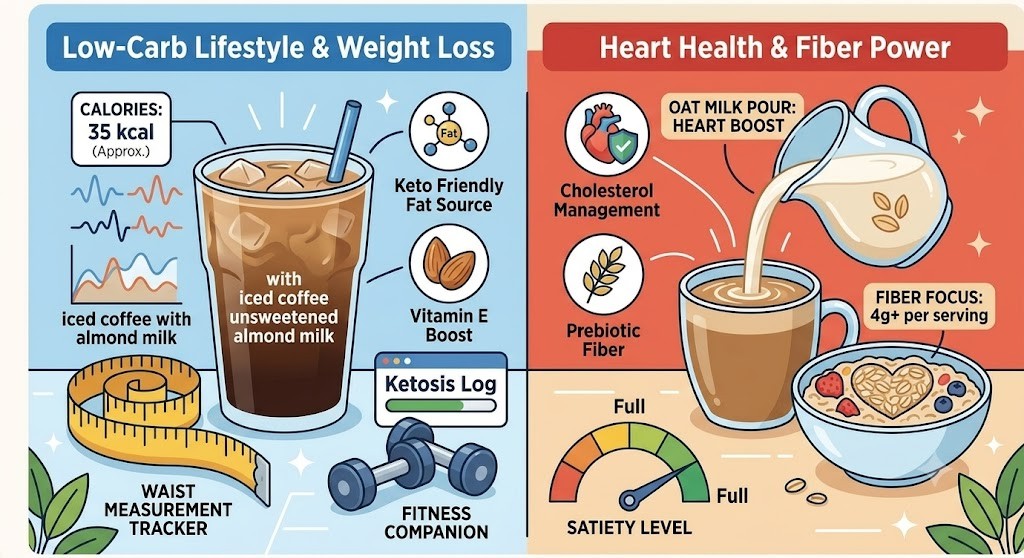
Use this quick clinical selection guide to choose the best plant-based milk for your lifestyle:
Your Health Goal | Best Choice | Clinical Rationale |
Weight Loss & Calorie Deficit | Unsweetened Almond Milk | Super low-energy density (30-39 kcal) to prevent accidental calorie surpluses. |
Keto or Low-Carb Diet | Unsweetened Almond Milk | Contains less than 1.0 to 2.9g net carbs per cup to support nutritional ketosis. |
Diabetes & Blood Sugar Control | Unsweetened Almond Milk | Minimal simple sugars and carbohydrates, preventing postprandial glucose spikes. |
Heart Health & Lowering Cholesterol | Unsweetened Oat Milk | Loaded with soluble beta-glucan fiber that actively binds and lowers LDL cholesterol. |
Nut Allergies | Unsweetened Oat Milk | Naturally tree-nut free, making it safe for allergy sufferers. |
Celiac Disease or Gluten Allergy | Certified Gluten-Free Oat Milk | Specially processed and certified to avoid gluten cross-contamination. |
Bottom Line: Uncompensated liquid calories can quietly derail your fat loss progress. Using a voice-activated logging tool like VoCal makes recording your daily milk choices painless, precise, and completely frictionless.
Tracking Your Liquid Calories Effortlessly with VoCal
Whether you choose Team Almond or Team Oat, those daily splashes in your coffee can quietly sneak up on you.
Imagine swapping a cup of unsweetened almond milk for unsweetened oat milk in your daily latte. That single swap adds an extra 90 calories and 18g of carbohydrates per day. Over a week, that is an extra 630 calories and 126 grams of carbs going entirely untracked! That is more than enough to kick you out of ketosis or completely stall your weight loss progress.
But let's be real—manually typing every single splash of milk, measuring spoon, or carton brand into a traditional tracking app is a tedious chore that leads to tracking fatigue. That's where VoCal comes in.
VoCal is a voice-activated calorie tracking app designed to remove all the manual friction. Just tap a button and say, "Add one cup of unsweetened almond milk to my breakfast," or "Log eight ounces of oat milk."
The app instantly translates your speech, matches the inputs to verified USDA nutrition databases, and structures your daily log hands-free. It is quick, accurate, and keeps you consistent without the headache of manual search terms.
Frequently Asked Questions (FAQs)
Is almond milk better than oat milk for weight loss?
Yes. Unsweetened almond milk has only 30 to 39 calories per cup, while unsweetened oat milk has 91 to 115 calories. For a calorie deficit, almond milk is much easier to fit into your daily weight-loss goals.
Does unsweetened oat milk contain sugar?
Yes, even "unsweetened" oat milk with no added sugar contains around 4 to 6 grams of simple sugars. These sugars are naturally created during manufacturing when starch is broken down by amylase enzymes.
Can I drink oat milk on a keto diet?
Generally, no. With 16 to 17 grams of net carbs per cup, a single serving of oat milk can easily use up almost your entire daily carb allowance on a strict ketogenic diet. Stick to unsweetened almond milk instead.
Which milk is safer if I have a nut allergy?
Oat milk is naturally nut-free and a great alternative. You must avoid almond milk, as the tree nut allergen proteins (amandin) remain fully intact and active even after commercial heat pasteurization.
Disclaimer: This is for informational purposes only. For medical advice or diagnosis, consult a professional.