
Lentils might be small, but they are absolute rockstars in the world of nutrition. These tiny, lens-shaped pulses have been a pantry staple for nearly 10,000 years, appearing in everything from ancient Egyptian feasts to modern-day grain bowls.
If you’re looking for a budget-friendly way to hit your protein goals, manage your weight, or just eat a bit healthier, the "lentils protein and calories breakdown" is something you’ll want to know by heart. Let’s dive into why these legumes are the ultimate plant-based powerhouses.
What’s Inside These Tiny Powerhouses?
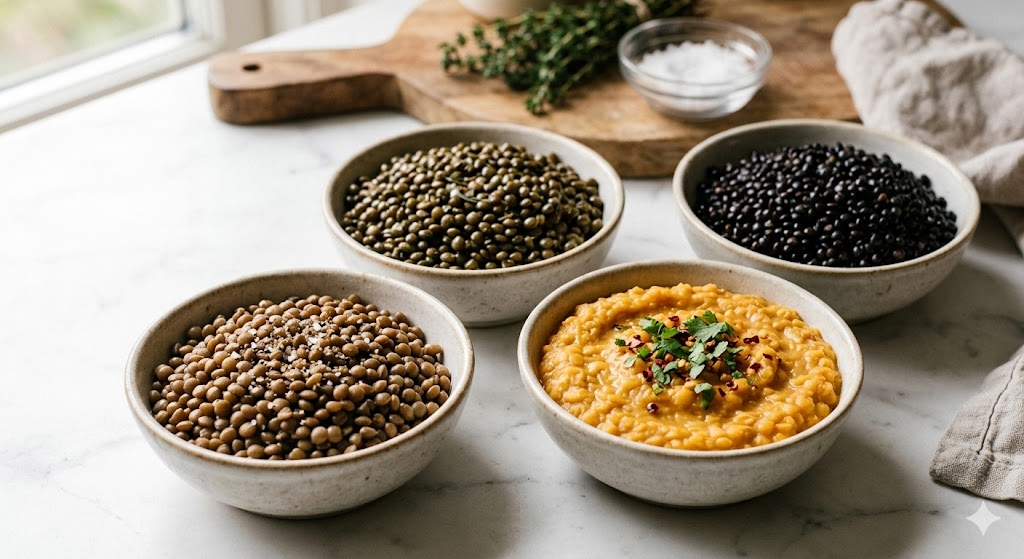
Lentils are essentially a delivery system for high-quality plant protein and fiber. They are very low in fat and contain zero cholesterol, making them a heart-healthy alternative to meat.
The "lentils protein and calories breakdown" depends on whether you're looking at them dry or cooked. Since most of us don't eat them crunchy and raw, we’ll focus on the cooked numbers. On average, a 100-gram serving of boiled lentils gives you about 116 calories and a solid 9 grams of protein.
Nutrient | Per 100g (Cooked) | Per Cup (198g Cooked) | % Daily Value (per cup) |
Calories | 116 kcal | 230 kcal | 11% |
Total Fat | 0.38 g | 0.8 g | 1% |
Saturated Fat | 0.05 g | 0.1 g | 0.5% |
Cholesterol | 0 mg | 0 mg | 0% |
Sodium | 2 mg | 4 mg | 0% |
Total Carbohydrates | 20.1 g | 39.9 g | 14% |
Dietary Fiber | 7.9 g | 15.6 g | 56% |
Total Sugars | 1.8 g | 3.6 g | 7% |
Protein | 9.02 g | 17.9 g | 36% |
The Bottom Line A single cup of cooked lentils packs nearly 18 grams of protein and over half of your daily fiber needs. It’s a nutrient-dense win for any meal.
A Rainbow of Lentils: Which One Should You Pick?
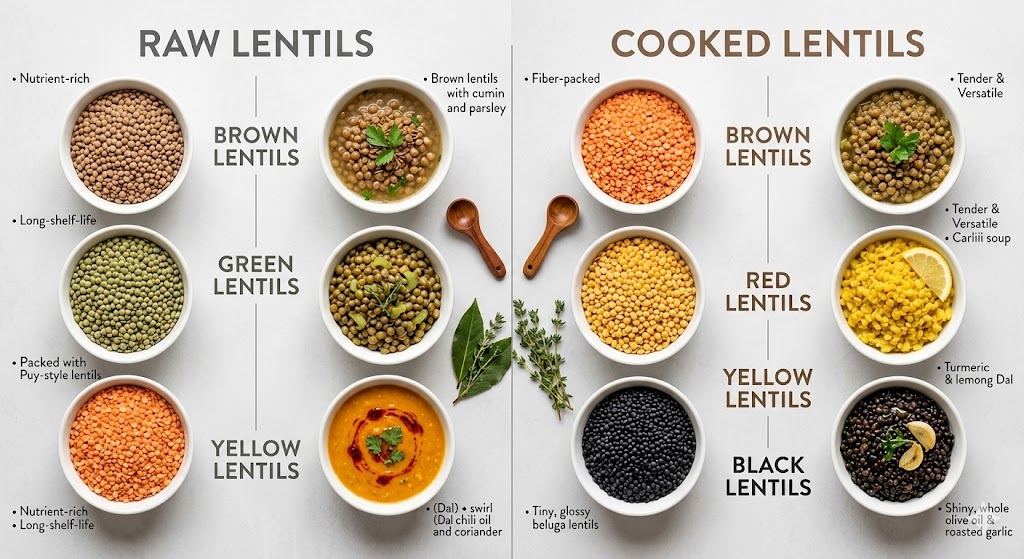
Not all lentils are the same! Their color often tells you how they’ll behave in the kitchen. Whether you want a firm bite in a salad or a creamy base for a soup, there’s a lentil for that.
Brown and Green: The Versatile All-Stars
Brown lentils are the most common and have a mild, earthy flavor. Green lentils (like the peppery French Puy) hold their shape beautifully even after long cooking times. Both are great for veggie burgers or salads.
Red and Yellow: The Quick-Cooking Crew
These are usually sold "split," meaning they cook fast (10–15 minutes) and turn into a delicious, creamy puree. They are the secret to a perfect Indian dal or Middle Eastern soup.
Black Beluga: The Gourmet Choice
Small, shiny, and rich in flavor, these look a bit like caviar. They are often the most protein-dense variety and hold their shape well, making them perfect for elegant side dishes.
Lentil Variety | Cooked Texture | Cooking Time | Best Use Case |
Brown | Softens, slightly mushy | 35–45 min | Soups, stews, veggie patties |
Green (Puy) | Firm, holds shape | 40–50 min | Salads, side dishes, pilafs |
Red (Split) | Purees, disintegrates | 10–15 min | Dals, creamy soups, sauces |
Yellow (Split) | Purees, smooth | 10–15 min | Thickening stews, curries |
Black (Beluga) | Firm, glossy | 20–25 min | Grain bowls, garnishes, salads |
Vitamins and Minerals: The Secret Sauce
Beyond the macros, lentils are like a natural multivitamin. They are particularly famous for their folate content—in fact, they contain more folate than almost any other plant food!
Folate (B9): One cup provides 90% of your daily value. It’s essential for DNA repair and especially important during pregnancy.
Iron: Tired? Lentils provide about 37% of your daily iron needs per cup. Pair them with Vitamin C (like a squeeze of lemon) to help your body absorb that iron better.
Potassium: Helps keep your blood pressure in check by counteracting the effects of salt.
Micronutrient | Amount per Cup (198g) | % Daily Value (DV) |
Folate (B9) | 358.4 mcg | 90% |
Iron | 6.59 mg | 37% |
Manganese | 0.98 mg | 43% |
Phosphorus | 356.4 mg | 29% |
Thiamin (B1) | 0.33 mg | 28% |
Potassium | 730.6 mg | 16% |
Magnesium | 71.3 mg | 17% |
Zinc | 2.51 mg | 23% |
Why Your Body Loves Lentils
Heart Health
The high fiber in lentils helps lower "bad" LDL cholesterol, while potassium and folate support your arteries and blood pressure.
Blood Sugar Control
Lentils have a very low Glycemic Index (GI), usually between 21 and 30. This means they digest slowly, giving you steady energy without the sugar crashes.
Weight Management
Ever feel like you could eat a whole pizza and still be hungry? Lentils are the opposite. The combo of protein and fiber triggers "fullness" hormones, helping you stay satisfied for longer.
Tracking Made Easy with VoCal
If the thought of manual calorie counting makes you want to skip lunch, meet your new best friend: VoCal.
Tracking the "lentils protein and calories breakdown" is effortless with voice tracking. Instead of searching through endless databases for "yellow dal" or weighing your food, you just tap the mic and say: "I had one bowl of red lentil soup."
VoCal uses advanced AI to recognize over 100,000 foods—including complex Indian dishes—and logs your nutrition in seconds. It’s 10x faster than typing, meaning you spend less time on your phone and more time enjoying your meal.
Quick Tips for the Kitchen
Skip the Soak: Unlike other beans, lentils don't need to be soaked overnight. Just rinse and go!
The 3:1 Rule: Use 3 cups of water for every 1 cup of dry lentils.
Salt Late: Add salt after they are cooked to keep the skins tender.
Complete the Protein: Pair your lentils with a whole grain like brown rice or whole-wheat bread to get all the essential amino acids your body needs.
The Bottom Line
Lentils are the ultimate multitaskers. They are cheap, sustainable, and packed with enough protein and fiber to keep you feeling like a superhero. Whether you're trying to lose weight or just want a delicious, heart-healthy meal, lentils are always a good idea. And with voice-tracking apps like VoCal, keeping your nutrition goals on track has never been easier.
Frequently Asked Questions
Which lentil has the most protein?
While all varieties are high in protein, Black (Beluga) lentils often have a slight edge. However, you’ll get about 9 grams of protein per 100g from almost any cooked variety.
Are lentils better for you than beans?
Lentils are generally faster to cook and contain more folate than most other beans. Both are great, but lentils are a "speedy" superfood for busy lives!
Do lentils help you lose weight?
Yes! Their high fiber and protein content make them very "satiating," meaning you feel full longer and are less likely to overeat later.
How do I log a lentil dish in VoCal?
Just speak naturally! Say, "I had a cup of dal makhani" or "two scoops of lentil salad." The AI handles the breakdown for you instantly.
Disclaimer: The information provided is for educational purposes and not medical advice. Always consult a healthcare professional before starting a new diet.