

It is 6:00 PM on a Tuesday. You are exhausted, your stomach is growling, and the thought of firing up the stove makes you want to cry. Suddenly, like a beacon of hope, you see them: a row of hot, glistening, golden-brown rotisserie chickens spinning behind the deli counter. At just five or six bucks, it feels like the ultimate life hack for anyone trying to eat clean, pack on muscle, or stick to a weight loss plan.
But is that store-bought bird actually as healthy as the fresh chicken breast you painfully grill at home? Or are you buying a ticket to a sodium-soaked, preservative-laden guilt trip?
If you are trying to manage your macros, lose weight, or keep an eye on your heart health, the choice between grilled chicken vs rotisserie chicken is more than just a matter of convenience. While both options provide complete protein containing all nine essential amino acids, their processing methods, chemical additives, and sodium profiles differ substantially.
Let's dive into the clinical science of what is actually happening under that crispy skin, and how to track it accurately without stalling your health goals.
Grilled Chicken vs. Rotisserie Chicken: The Tale of the Tape
To evaluate whether store-bought rotisserie chicken is unhealthy compared to grilled chicken, we have to look at the cold, hard numbers. While both preparations start out as the exact same bird, the way they are cooked and processed in factories changes their final nutritional makeup.
The table below breaks down the nutritional profiles of skinless and skin-on cuts for both preparation methods, standardized to a 100-gram (3.5-ounce) cooked portion.
Comparative Nutritional Values (per 100g Cooked Serving)
Poultry Cut & Prep | Calories (kcal) | Protein (g) | Total Fat (g) | Saturated Fat (g) | Sodium (mg) |
Grilled Chicken Breast (Skinless, Unenhanced) | 165 | 31.0 | 3.6 | 1.0 | 74 |
Rotisserie Chicken Breast (Skinless, Store-Bought) | 135 | 27.0 | 3.0 | 0.9 | 331 |
Rotisserie Chicken Breast (With Skin, Store-Bought) | 149 | 22.0 | 7.0 | 2.0 | 420 |
Grilled Chicken Thigh (Skinless, Unenhanced) | 205 | 27.4 | 9.7 | 2.7 | 94 |
Rotisserie Chicken Thigh (Skinless, Store-Bought) | 165 | 21.0 | 9.0 | 3.0 | 452 |
Rotisserie Chicken Thigh (With Skin, Store-Bought) | 192 | 18.0 | 12.0 | 4.0 | 532 |
The data shows that skinless rotisserie chicken breast is still an incredible source of lean protein. However, its sodium content is over four times higher than that of fresh, unenhanced grilled chicken breast. Removing the skin is highly effective for managing overall calorie and lipid intake, as keeping the skin on increases total fat by more than double in breast meat and significantly raises saturated fat in the thigh cuts.
Bottom Line: If you eat it skinless, rotisserie chicken breast is a low-calorie, high-protein superstar. But keep the skin on, and you are basically doubling the fat and sky-rocketing the sodium.
The Science of "Enhanced" Poultry: Why Your Chicken is Injected with Saltwater
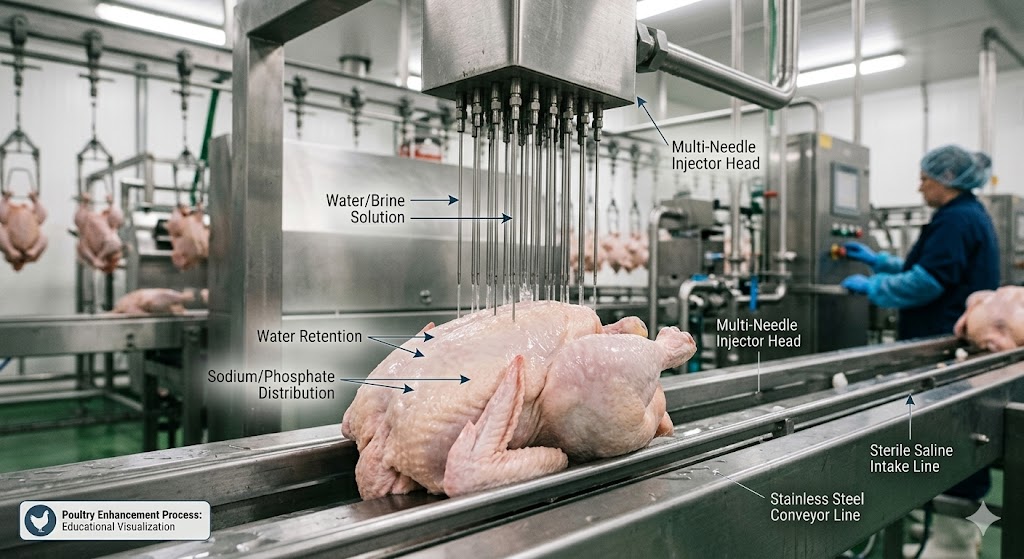
The primary factor driving the nutritional differences between grilled and rotisserie chicken is an industrial practice known as poultry enhancement. While home-grilled chicken is typically prepared from fresh, single-ingredient raw meat, commercial rotisserie chickens undergo an intensive brining process prior to cooking.
Industrial poultry processors inject raw whole birds with a formulated brine solution, which can increase the raw weight of the meat by up to 15 percent. This commercial brine solution consists of water, salt, sodium phosphates, modified food starch, dextrose, and stabilizers like carrageenan.
From a biochemical standpoint, muscle proteins contract after slaughter, expelling natural water molecules. The sodium and phosphate ions in the enhancement solution work together to reverse this contraction :
NaCl +Phosphates -> Myofibrillar Swelling-> Water Retention
The chloride ions in salt bind to the protein filaments, creating repulsive forces that expand the muscle matrix. Simultaneously, sodium phosphates bind to calcium and magnesium ions, releasing the muscle stiffness.
This chemical expansion allows the chicken to retain large volumes of added water during cooking, preventing the meat from drying out. However, this process means that consumers are paying for added saltwater weight while unknowingly consuming high levels of industrial additives.
The presence of these functional additives has led to increased regulatory and legal scrutiny. In early 2026, a high-profile class-action lawsuit was filed against Costco (Kirkland Signature) regarding its popular rotisserie chickens. The litigants argued that Costco’s "no preservatives" labeling was false and misleading because the rotisserie chicken ingredients list included sodium phosphate and carrageenan.
While Costco defended their use strictly as moisture retention and texturizing agents, the chemical properties of these compounds also retard physical deterioration, which legally blurs the line of what constitutes a preservative. Consequently, Costco removed the "no preservatives" claim from its packaging.
Bottom Line: Commercial rotisserie chickens are classified as enhanced poultry, meaning they are chemically injected with a water, salt, and phosphate brine to artificially maximize tenderness, moisture, and retail weight.
Sodium Showdown: How Major US Grocery Stores Compare
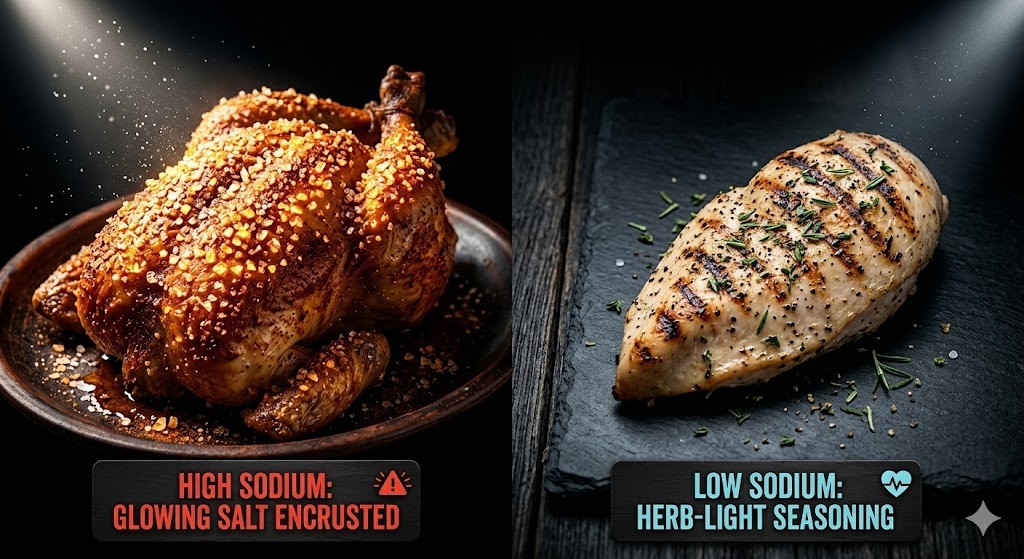
For individuals managing their cardiovascular health, the sodium content in store-bought rotisserie chicken represents a significant nutritional hazard. Plain, unenhanced chicken contains very little natural sodium, but the brining process dramatically inflates these numbers. A single 12-ounce serving of a commercial rotisserie breast can contain between 920 mg and 1,380 mg of sodium, which represents 61 percent to 92 percent of the American Heart Association’s recommended daily limit of 1,500 mg.
The sodium content of pre-cooked rotisserie chicken varies widely depending on the grocery retailer’s proprietary brining formula. The table below outlines the sodium levels in a standard 3-ounce (85g) serving across popular US supermarket chains compared to unenhanced baselines.
Sodium Levels Across Major Retailers (3 oz / 85g Serving)
Retail Source | Sodium Content (mg) | Percentage of AHA Daily Limit (1,500 mg) |
Sam's Club | 550 | 36.7% |
Costco (Kirkland Signature) | 460 | 30.7% |
Wegmans | 95 | 6.3% |
Whole Foods Market | 70 to 120 | 4.7% to 8.0% |
Kroger | 40 | 2.7% |
Homemade Roasted Chicken | 62 | 4.1% |
Plain Grilled Chicken Breast | 40 | 2.7% |
Consuming excess sodium disrupts the body's delicate osmotic balance. To dilute the high concentration of sodium in the extracellular fluid, the kidneys retain water, which increases overall blood volume. This elevated volume puts chronic mechanical pressure on the blood vessels, forcing the heart to work harder to maintain circulation. Over time, this systemic strain can cause arterial stiffening and hypertension, which are primary drivers of heart attacks and strokes.
Bottom Line: Store-bought rotisserie chickens are often heavily brined, with some retail brands containing over ten times more sodium than unenhanced home-grilled chicken.
The Additive Breakdown: What are Phosphates and Carrageenan?
In addition to sodium chloride, the presence of specific food additives in commercial poultry has raised concerns among health advocates and researchers. Understanding the metabolic pathways of these compounds is crucial for evaluating their overall safety.
Inorganic Sodium Phosphates and Renal Stress
The inorganic sodium phosphates used in commercial brining are highly soluble and rapidly absorbed by the human digestive tract. While naturally occurring organic phosphorus found in whole foods has an absorption rate of only 50 percent, over 90 percent of added inorganic phosphates are absorbed directly into the bloodstream.
For individuals with optimal kidney function, healthy renal clearance can manage standard dietary phosphate levels. However, research indicates that consuming more than 700 mg of inorganic phosphorus daily can negatively affect bone metabolism.
When blood phosphate levels rise, the body may draw calcium from the bones to restore mineral balance, potentially weakening the skeletal structure over time. For individuals with chronic kidney disease (CKD) or cardiovascular conditions, excess phosphorus poses a severe risk. Compromised kidneys cannot efficiently filter these inorganic ions, leading to hyperphosphatemia, which can cause calcium-phosphate crystals to deposit in blood vessels and accelerate arterial calcification.
Carrageenan and Gut Inflammation
Carrageenan is a seaweed-derived polysaccharide used as a thickening and texturizing binder in various food products, including processed deli meats and rotisserie chicken. Because carrageenan is resistant to human digestive enzymes, it passes through the small intestine largely intact, acting as a form of dietary fiber in the colon.
The scientific controversy surrounding carrageenan focuses on the difference between food-grade, undegraded carrageenan and degraded carrageenan, also known as poligeenan. Poligeenan is classified by the International Agency for Research on Cancer (IARC) as a Category 2B "possible human carcinogen". Animal models have shown that high doses of poligeenan can cause localized intestinal lesions, mucosal ulcerations, and inflammatory bowel-like symptoms.
While food-grade carrageenan is strictly regulated to prevent significant poligeenan contamination, some consumers experience subjective gastrointestinal distress, including abdominal pain, bloating, and diarrhea, after eating processed foods containing this additive.
Bottom Line: Inorganic sodium phosphates and carrageenan are approved food additives, but they can pose health risks for vulnerable groups, including individuals with chronic kidney disease or sensitive digestive systems.
Fire vs. Warm Lamps: Food Safety and Cook Chemistry
The physical methods used to cook and hold commercial rotisserie chickens introduce unique biochemical and microbiological variables that are absent in fresh grilled chicken.
Enzymatic Tenderization vs. High-Heat Charring
The slow, continuous rotation of a rotisserie spit allows the poultry to cook evenly while self-basting in its own rendered fat. This slow thermal exposure allows endogenous enzymes, such as cathepsin B, to remain active during the initial cooking phase, peaking between 140°F and 160°F (60°C and 71°C). These active enzymes naturally break down tough muscle fibers, contributing to the tender texture of rotisserie meat.
In contrast, grilling involves rapid, direct heat, which can easily lead to localized charring on the surface of the chicken. While grilling is a highly efficient cooking method, this charring can promote the formation of heterocyclic amines (HCAs) and polycyclic aromatic hydrocarbons (PAHs).
These mutagenic compounds have been linked to an increased risk of cancer when consumed regularly in high amounts. Because rotisserie chicken is cooked using indirect heat, it naturally minimizes the formation of these charred compounds.
Microbiological Risks of Hot-Holding Stations
The primary food safety risk associated with store-bought rotisserie chicken occurs after the cooking process is complete. To prevent bacterial growth, retail supermarkets must keep cooked birds at or above a hot-holding temperature of 140°F (60°C).
However, USDA Food Safety and Inspection Service (USDA-FSIS) audits have revealed that up to 32 percent of retail rotisserie holding stations fail to maintain these temperatures during peak shopping hours.
When holding temperatures fall into the danger zone of 125°F to 135°F (52°C to 57°C), the warm, moist environment becomes ideal for bacterial proliferation. Under these conditions, the doubling time for foodborne pathogens like Salmonella can drop to just 9.8 minutes.
Because home-grilled chicken is typically cooled quickly and stored immediately, it is far less susceptible to the bacterial risks associated with commercial hot-holding displays.
Bottom Line: While rotisserie cooking minimizes the carcinogens associated with high-heat grilling char, commercial hot-holding stations present a potential food safety risk if temperatures drop into the danger zone.
Tracking Traps: Why Enhanced Chicken Messes with Your Calorie App
For users of a voice calorie tracker or a standard calorie tracking app, accurately logging chicken can be surprisingly complex. The chemical enhancement of commercial poultry introduces significant variables in weight, water loss, and subsequent calorie calculations.
Cooking meat naturally removes water, which concentrates its protein and fat densities. For instance, 100g of raw, skinless chicken breast contains roughly 120 calories, whereas 100g of cooked, grilled breast contains approximately 165 calories due to a 25 percent to 30 percent reduction in water weight.
Because commercial rotisserie chickens are injected with a sodium brine, their pre-cooked weight is artificially inflated. While some of this added water evaporates during roasting, a significant portion remains bound within the muscle tissue by the sodium phosphates and carrageenan.
This artificial water retention can easily lead to logging errors on calorie tracking platforms. If a user weighs their cooked rotisserie chicken and logs it using a generic "raw chicken breast" entry, they will significantly underreport their actual intake.
For example, logging 150g of cooked, enhanced rotisserie breast as raw meat can result in an underestimation of approximately 45 to 60 calories. If these entries are consistently mislogged, a user could easily underreport their daily intake by 80 to 120 calories, slowing their progress toward weight loss goals.
Using a voice tracker like VoCal makes it easy to avoid this trap. Simply say: "Log four ounces of cooked, skinless rotisserie chicken breast" to ensure the app grabs the correct, cooked, enhanced USDA data instead of a raw guess.
Bottom Line: To maintain tracking accuracy, users must select database entries that account for the cooked, enhanced state of commercial rotisserie chicken rather than using generic raw baselines.
Quick Hacks to Eat Rotisserie Chicken the Healthy Way
While store-bought rotisserie chicken contains higher sodium and additive levels than home-grilled chicken, consumers can easily reduce these health risks with a few simple adjustments.
Discard the Skin: The vast majority of added sodium, fats, seasonings, and chemical stabilizers accumulate on the skin and the outer layers of the meat. Peeling away the skin before eating can reduce total fat by up to 75 percent and significantly lower sodium intake.
Select Lower-Sodium Brands: Sodium levels vary widely by grocery chain. Choosing birds from retailers with lower-sodium brining policies (like Whole Foods or Wegmans) over heavily brined options (like Costco or Sam's Club) can reduce sodium intake by up to 80 percent per serving.
Source Certified Organic Options: Under USDA organic guidelines, certified organic rotisserie chickens cannot contain synthetic stabilizers like carrageenan. Reading the ingredient label is the most reliable way to confirm the absence of these additives.
Cool and Store Safely: To eliminate microbiological risks, carve and cool rotisserie chicken quickly. Place the meat in shallow containers and refrigerate it at or below 38°F (3.3°C) within two hours of purchase.
Frequently Asked Questions
Is store-bought rotisserie chicken considered a processed food?
Yes. Because commercial rotisserie chickens are injected with an enhancement solution containing sodium chloride, sodium phosphates, starches, and carrageenan, they are classified as minimally to moderately processed meats.
Can individuals with high blood pressure eat rotisserie chicken?
Those with hypertension should exercise caution when consuming store-bought rotisserie chicken. Due to high sodium levels (often exceeding 450 mg per serving), it is advisable to remove the skin, limit portion sizes, and select lower-sodium brands or opt for home-cooked grilled poultry prepared without added salt.
Do the phosphates in rotisserie chicken pose a risk to bone health?
For the general population with healthy kidneys, the moderate amount of inorganic phosphate absorbed from a standard serving of rotisserie chicken is safely cleared by the body. However, a diet highly concentrated in processed foods and inorganic additives (exceeding 700 mg of phosphorus daily) can potentially disrupt bone metabolism and calcium balance over time.
Why is the texture of rotisserie chicken sometimes described as mushy?
The distinctively soft, tender texture of rotisserie chicken is a result of both chemical and physical processes. The injected sodium phosphate and carrageenan bind high volumes of water within the muscle fibers, while the prolonged, slow-roasting process allows natural tenderizing enzymes to break down tough muscle proteins.
Is grilled chicken better than rotisserie chicken for weight loss?
Plain grilled chicken breast prepared without added oils or sodium is generally superior for weight loss and precise calorie tracking. It contains fewer additives, minimizes excess water retention, and avoids the high sodium levels of store-bought rotisserie chicken, which can cause temporary fluid retention.
Disclaimer: This article is for informational and educational purposes only and does not substitute for professional medical advice, diagnosis, or treatment. Always consult with a qualified healthcare provider or registered dietitian before making significant changes to your diet, especially if you have underlying cardiovascular, renal, or gastrointestinal health conditions.