

Picture this: You’ve just walked into the grocery store, and that warm, buttery, rotisserie chicken aroma hits you right in the face. It’s cheap, it's hot, and it requires zero cooking. But wait! You also have some raw chicken breasts in your fridge waiting for the backyard grill.
If you’re trying to build muscle, drop a few pounds, or just eat healthier, you’ve probably asked yourself: in the battle of grilled chicken vs rotisserie chicken, which one actually reigns supreme?
Let's break down the delicious science of poultry, compare the numbers, and figure out which bird belongs on your plate.
What’s the Big Deal, Anyway?

Before we dive into the juicy details, let’s define our contenders:
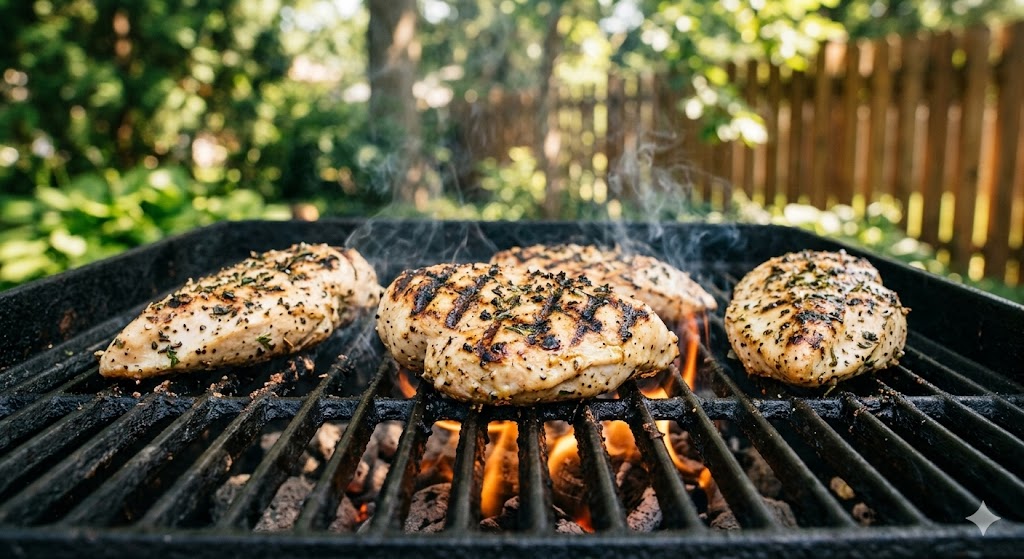
Grilled Chicken: This is your classic home-cooked hero. Chicken cooked over direct heat on a metal grate, usually seasoned with a simple dry rub, a splash of marinade, or a tiny bit of olive oil.
Rotisserie Chicken: The ultimate lazy-day lifesaver. This bird spins slowly on a rotating metal spit in a high-heat convection oven, basting in its own juices until the skin gets perfectly golden brown.
While both are fantastic ways to get your daily protein fix, they have surprisingly different nutritional profiles. Everything from how much fat they keep to how much salt is injected into them can change your daily calorie count.
Why We’re Obsessed with Poultry
There is a reason why health nut communities and cardiologists agree on lean poultry. It makes up more than 15% of the average American's daily energy intake and a whopping 40% of our daily protein.
Chicken is a "complete" protein, meaning it has all nine essential amino acids your body needs to repair muscle, boost immunity, and keep your metabolic engine hummin'. Plus, high-protein meals keep you feeling full for longer, making it way easier to ignore the potato chips calling your name from the pantry.
Breast vs. Thigh: The Great Cut Debate
Before we blame the cooking method, we have to talk about the cut of meat.
White Meat (The Breast): The holy grail for macro-trackers. It is incredibly lean, packed with protein, and very low in fat.
Dark Meat (The Thigh & Drumstick): Juicier, more flavorful, and slightly higher in fat. On the plus side, dark meat actually packs more bioavailable iron and zinc than white meat.
Fun science fact: When chicken cooks, it loses water weight. This actually concentrates the calories and protein, making cooked chicken more nutrient-dense gram-for-gram than raw chicken! But because rotisserie chickens spin for hours, they render out a lot of their natural fat —though grocery stores often make up for that lost moisture by injecting them with a salty brine.
The Tale of the Tape: Calories and Protein Comparison
Let's look at the cold, hard data. Sourced straight from the USDA FoodData Central database, here is how a 100-gram (about 3.5 ounces) serving of cooked chicken stacks up :
Chicken Cut & Cooking Method | Calories (kcal) | Protein (g) | Total Fat (g) | Sodium (mg) | Cholesterol (mg) |
Grilled Breast (Skinless) | 165 | 31.0 | 3.6 | 74 | 85 |
Rotisserie Breast (Skinless) | 140 | 28.1 | 2.8 | 313 | 95 |
Grilled Thigh (Skinless) | 192 | 24.1 | 9.9 | 411 | 174 |
Rotisserie Thigh (Skinless) | 194 | 24.7 | 10.6 | 313 | 131 |
Grilled Thigh (with Skin) | 229 | 23.0 | 15.0 | 425 | 174 |
Rotisserie Thigh (with Skin) | 226 | 21.2 | 14.1 | 353 | 147 |
Looking at the numbers, skinless grilled chicken breast is your absolute champion if you want pure, low-fat protein. However, you’ll also notice a massive difference in sodium levels—rotisserie chicken is a salt magnet!
The Good, the Bad, and the Salty
The Sodium Bomb
Why is rotisserie chicken so ridiculously juicy? Because grocery stores inject those raw birds with a brine made of salt, sodium phosphates, and sometimes sugar or corn syrup to keep them from drying out under the warming lamps. This commercial processing spikes the sodium by 30% or more compared to home-cooked grilled chicken. If you are watching your blood pressure, home-grilled is definitely the safer bet.
The Crispy Skin Trap (and HCAs)
We get it—chicken skin is the best part. But it's also where the fat, calories, and chemicals live. When meat is cooked at very high temperatures, it forms mutagenic chemical compounds called Heterocyclic Amines (HCAs).
A study from Kansas State University found that while rotisserie meat has a tiny 1.9 ng/g of HCAs, the rotisserie skin has a massive 16.3 ng/g! This is because the skin has low moisture and high fat, which is the perfect breeding ground for HCAs under heat. The moral of the story? If you eat rotisserie, peel off the skin first.
Talk Healthy: Tracking with VoCal
Keeping track of skinless vs. skin-on, thighs vs. breasts, and grilled vs. rotisserie can feel like a part-time math job. Traditional apps make you type, search endless databases, and guess your weights for 15 minutes a meal.
That’s where VoCal comes in. It is a smart, voice calorie tracker app that lets you log your food by simply speaking.
Just tap the mic and say: "I ate 150 grams of skinless rotisserie breast and a cup of brown rice."
VoCal’s advanced AI parses your cooking methods, cuts, and portion sizes with over 95% accuracy in under 15 seconds. It makes macro tracking effortless, so you can spend less time typing and more time eating!
Frequently Asked Questions
Q: Is grilled chicken or rotisserie chicken better for weight loss?
Both are amazing, but skinless grilled chicken breast has a slight edge because it contains less sodium and fewer additives, keeping your fluid retention low and your protein-to-calorie ratio extremely high.
Q: Can I just buy a rotisserie chicken and peel the skin off?
Absolutely! Removing the skin slices off a chunk of fat and calories, and it also gets rid of most of the sodium and cancer-causing HCAs concentrated on the outer layer.
Q: Why does my rotisserie chicken have so much sodium?
Grocery stores inject rotisserie chickens with saltwater solutions to plump them up. If you want a low-sodium option, grilling at home with your own spices is the way to go.
Q: What is the healthiest cut of chicken?
The boneless, skinless breast is the leanest, lowest-calorie option. But if you need more iron or zinc, skinless thighs are a great, juicy alternative.
Disclaimer: This article is for informational and educational purposes only and does not substitute for professional medical advice, diagnosis, or treatment. Always consult a qualified healthcare professional or registered dietitian before starting any new diet plan or making significant changes to your nutrition, especially if you are managing underlying cardiovascular or metabolic health conditions.