
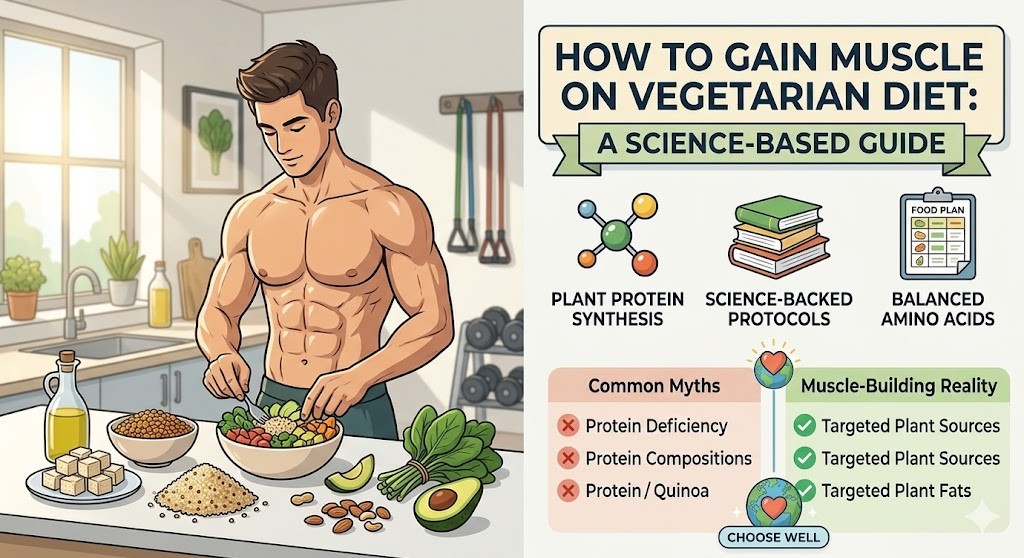
Gone are the days when building muscle meant you had to live on a diet of plain chicken and broccoli. Science has officially given the green light to meat-free gains. Whether you’re a long-time vegetarian or just looking to cut back on meat, you can absolutely pack on lean tissue while sticking to plants.
The secret isn’t just "eating more salad." It’s about understanding the logistics of protein quality and hitting the right numbers. With the right strategy and a little help from modern tech like VoCal, building a powerful physique on a vegetarian diet is easier than ever.
The Anabolic Trigger: Why Protein Source Doesn't Matter (Much)
Your muscles don't actually have a "meat sensor." At the cellular level, they just want amino acids—the building blocks of tissue repair. Research shows that as long as you get enough total protein, the source (plant vs. animal) doesn't change your results.
A landmark study found that young adults on a high-protein vegan diet had the same muscle growth as meat-eaters when protein was matched at high levels. The "golden range" for hypertrophy is between 1.6 to 2.2 grams of protein per kilogram of body weight.
Bottom Line: Total protein intake is the king of muscle growth. If you hit your daily targets, your muscles will grow regardless of whether that protein came from a steak or a soy burger.
Cracking the Leucine Code
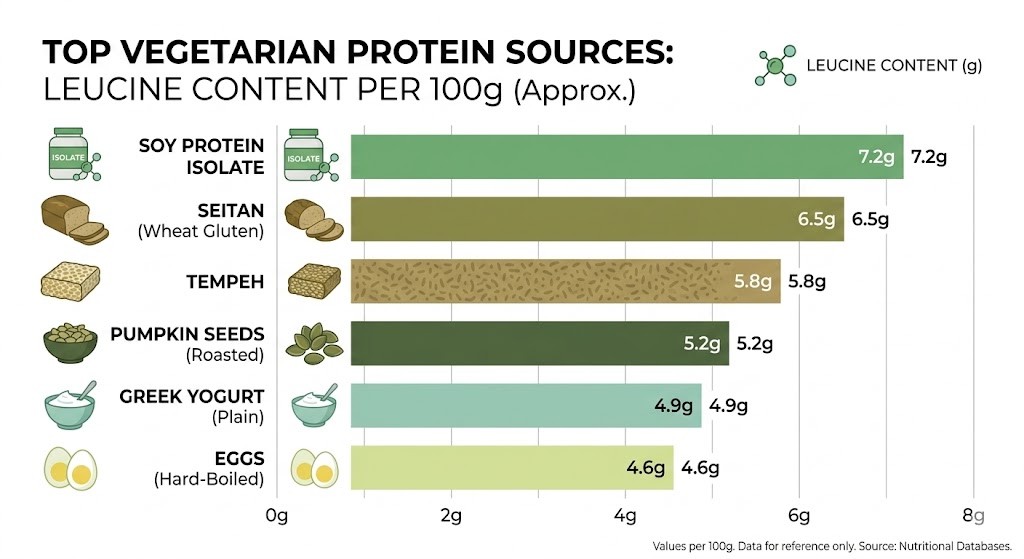
While total protein is key, Leucine is the "on switch" for muscle growth. It’s a specific amino acid that tells your body to start building. To flip that switch, you need about 2 to 3 grams of leucine per meal.
Animal proteins are naturally high in leucine, but you can reach the threshold by choosing specific plant-based powerhouses. Check out how these vegetarian staples stack up:
Protein Source | Leucine (g per 100g) | Protein Status |
Soy Protein Isolate | ~6.5 - 7.0 | Complete |
Pumpkin Seeds | ~2.4 | Complete |
Tempeh | ~1.5 | Complete |
Seitan | ~1.8 | High Lysine Needed |
Hard Boiled Egg | ~1.1 | Complete |
Greek Yogurt | ~1.0 | Complete |
Fueling the Bulk: Macros and Surplus
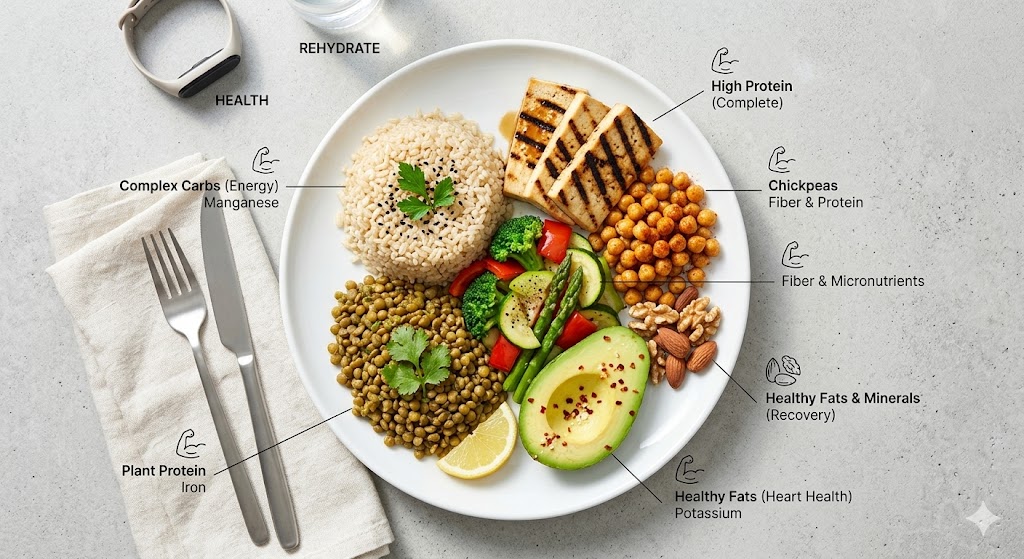
Building muscle is an energy-intensive process. You need to be in a caloric surplus, which is a fancy way of saying you need to eat more than you burn. A surplus of 10% to 20% (about 300–500 extra calories a day) is the "sweet spot" for gaining muscle without too much extra fat.
Because vegetarian foods are often high in fiber, they can be very filling. This makes it easy to accidentally under-eat. Incorporating healthy fats like avocados, nuts, and olive oil can help you hit those calorie goals without feeling stuffed.
Nutrient | Goal (per kg Body Weight) | Why it Matters |
Protein | 1.6g - 2.2g | Rebuilds and repairs muscle |
Carbohydrates | 5.0g - 7.0g | Fuels your intense workouts |
Fats | 0.5g - 1.5g | Keeps your hormones in check |
Bottom Line: Don't fear the carbs. They spare your protein so it can be used for building muscle rather than being burned for fuel.
Strategic Plant Pairings
You might have heard of "complete proteins." While you don't need to stress about "complementary proteins" at every single bite, eating a variety throughout the day ensures your body has all nine essential amino acids.
Try these classic power combos to cover your bases:
Legumes + Grains: Like rice and beans or hummus and pita.
Grains + Seeds: Like whole-grain toast with peanut butter.
Soy Staples: Tofu, tempeh, and edamame are rare plant-based "complete" proteins.
Track Like a Pro with VoCal
The biggest hurdle for vegetarian athletes isn't the food—it's the tracking. Manually logging a complex lentil curry or a multifaceted stir-fry can be a headache. Traditional apps require endless searching and measuring, which often leads to giving up.
VoCal changes the game by using AI-driven voice recognition. Instead of typing, you just speak your meal.
15 Seconds vs. 15 Minutes: Log your entire meal naturally with your voice.
Zero Friction: No searching databases or taking photos in public.
Multilingual Support: Supports English, Hindi, and 10 other Indian languages—perfect for regional vegetarian dishes.
Bottom Line: Consistency is the #1 predictor of muscle-building success. Using a voice-based tracker like VoCal makes staying consistent nearly effortless.
Frequently Asked Questions
Can I build muscle as a vegan as effectively as a vegetarian?
Yes! Vegans just need to be more intentional with sources like seitan, soy, and legumes. Since plant-based proteins are slightly less digestible, aim for the higher end of the protein range (+10-20%).
Is creatine necessary for vegetarians?
While not mandatory, it’s highly recommended. Since vegetarians don't eat meat (the main source of creatine), they often see massive performance boosts from supplementing with 3-5g daily.
How much weight should I gain per month?
Aim for a "clean bulk" of 0.5 to 1.0 kg (1-2 lbs) per month. Gaining faster than this usually means you're adding more fat than muscle.
Disclaimer: This guide is for informational purposes only. Consult a healthcare professional before starting a new diet or exercise regimen.