
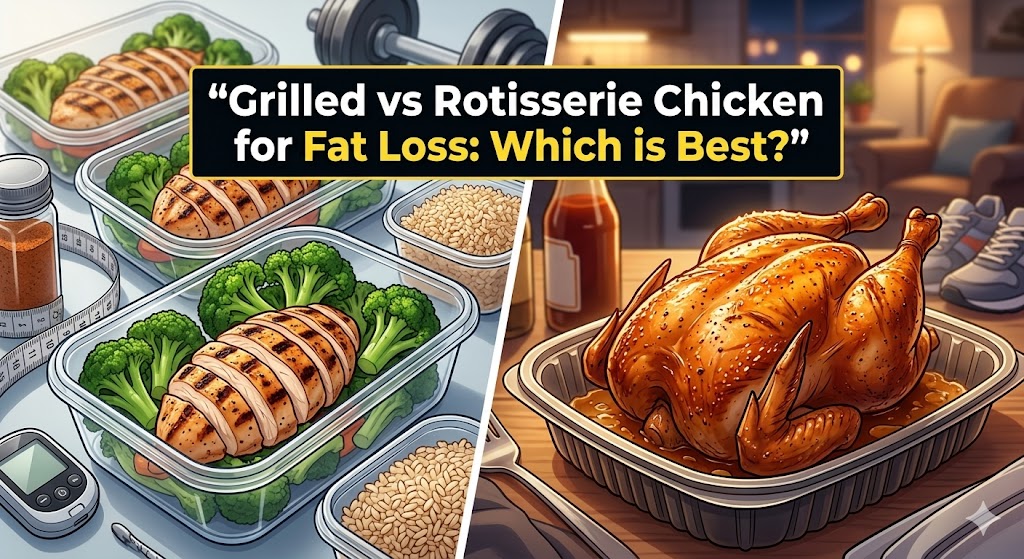
We've all been there. You're trying to lose weight, staring down a menu or wandering the grocery store aisles, wondering how to hit your protein goals without eating cardboard. Enter chicken—the undisputed king of fitness food. But when it comes to the battle of the birds, which reigns supreme: the home-grilled chicken breast or that hot, juicy rotisserie chicken calling your name from the deli counter?
Let’s dive into this ultimate showdown of grilled chicken vs rotisserie chicken to see which one actually helps you drop fat faster, featuring a full chicken comparison and a complete nutrition breakdown that won't make your eyes glaze over.
How Does the Cooking Method Affect Your Bird?
The way you cook your poultry changes more than just the taste; it physically alters the meat's final calorie and fat count.
Grilling is a straightforward dry-heat method. You take a skinless chicken breast, toss it on a hot grate, and let the heat do its magic. Because there is no skin and no rotating spit, any natural intramuscular fats simply melt and drip away into the flames. The result? A super-lean, protein-packed powerhouse with almost zero added fats.
Rotisserie cooking, on the other hand, is a whole different beast. The chicken is cooked whole on a rotating spit. As the bird spins, the melting fat from the skin continuously washes over the meat, keeping it tender and juicy in a process called "self-basting". While this makes the meat incredibly delicious, it also means the muscle fibers absorb some of those extra saturated fats.
Additionally, store-bought rotisserie chickens are usually injected with a high-sodium brine solution to keep them plump and fresh under the deli heat lamps.
Bottom Line: Grilling lets excess fat drip away, making it the leanest cooking method. Store-bought rotisserie chicken is juicy and convenient, but self-basting and brining add extra fat and sodium.
The Tale of the Tape: A Complete Nutrition Breakdown
When you're trying to lose fat, every calorie counts. To make things easy, we’ve put together a complete nutrition breakdown comparing 100-gram (about 3.5 ounces) cooked portions of various poultry preparations:
Poultry Cut & Cooking Style (100g Portion) | Calories (kcal) | Protein (g) | Total Fat (g) | Saturated Fat (g) | Sodium (mg) |
Skinless Grilled Breast | 151 | 30.5 | 3.2 | 0.8 | 52 |
Skinless Rotisserie Breast | 137 | 28.0 | 2.8 | 0.8 | 347 |
Rotisserie Breast with Skin | 184 | 27.5 | 8.2 | 1.8 | 347 |
Skinless Rotisserie Thigh | 195 | 24.1 | 11.0 | 3.0 | 337 |
Rotisserie Thigh with Skin | 232 | 22.5 | 16.0 | 4.0 | 345 |
As the numbers show, if you stick strictly to the skinless breast, the difference in calories and fat between grilled and rotisserie is surprisingly small. But look at that sodium column! Store-bought rotisserie breast has nearly seven times more sodium than its home-grilled cousin.
Bottom Line: If you ditch the skin, both grilled and rotisserie chicken breast are remarkably lean and high in protein. However, rotisserie chicken packs a massive sodium punch.
White Meat vs. Dark Meat: The Full Chicken Comparison
A full chicken comparison isn't complete without addressing the eternal debate: white breast meat or dark thigh meat?
White Meat (The Breast): Composed of fast-twitch muscle fibers, white meat is naturally very low in fat and incredibly high in protein. It’s the gold standard for pure, efficient calorie cutting.
Dark Meat (Thighs and Drums): Composed of slow-twitch fibers built for endurance, dark meat contains more myoglobin and intramuscular fat. This makes thighs incredibly flavorful and moist, but it also doubles the fat content compared to breast meat.
On the plus side, dark meat is a nutritional goldmine. It contains up to three times more iron, zinc, and energy-boosting B vitamins like B-12 than white meat.
But beware of the skin! Chicken skin is essentially pure fat. Leaving the skin on either cut adds an extra 30 to 50 empty calories per serving, which can quickly shrink your weight-loss margin.
Bottom Line: White meat is the ultimate calorie-saver, but skinless dark meat offers crucial micronutrients and better flavor at a higher caloric cost. Discarding the skin is non-negotiable for fast fat loss.
The Sodium Shock: Why the Scale Might Lie to You
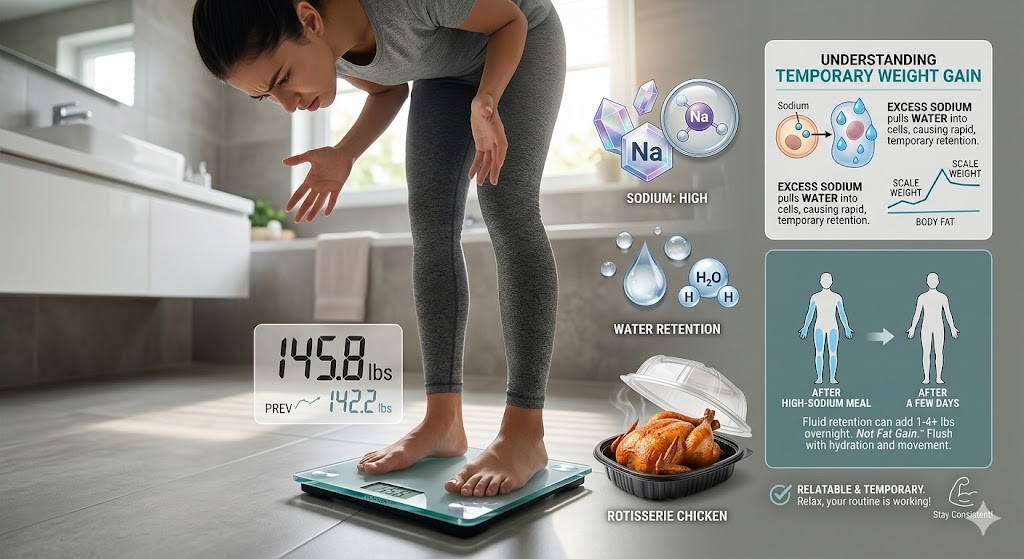
If you step on the scale the morning after a rotisserie chicken feast, you might see the numbers jump. Don’t panic—you didn’t gain body fat overnight!
Store-bought rotisserie chickens are heavily brined, which skyrockets their sodium levels. While dietary sodium doesn't cause you to gain actual body fat, it causes your kidneys to temporarily retain water to keep your body's fluids balanced.
A clinical study published in PubMed tracked obese individuals on identical low-calorie diets, with one group eating low-salt meals and the other eating a standard diet. The low-salt group lost more total weight on the scale, but body scans showed that the difference was entirely due to water weight loss, not actual fat loss.
So, while rotisserie chicken won't stop you from burning fat, the extra sodium might cause a temporary bloat that hides your progress on the scale.
Bottom Line: High sodium in store-bought rotisserie chicken causes temporary fluid retention. It won't stall actual fat loss, but it might mess with your head when you step on the scale.
What if You Want to Skip the Chicken?
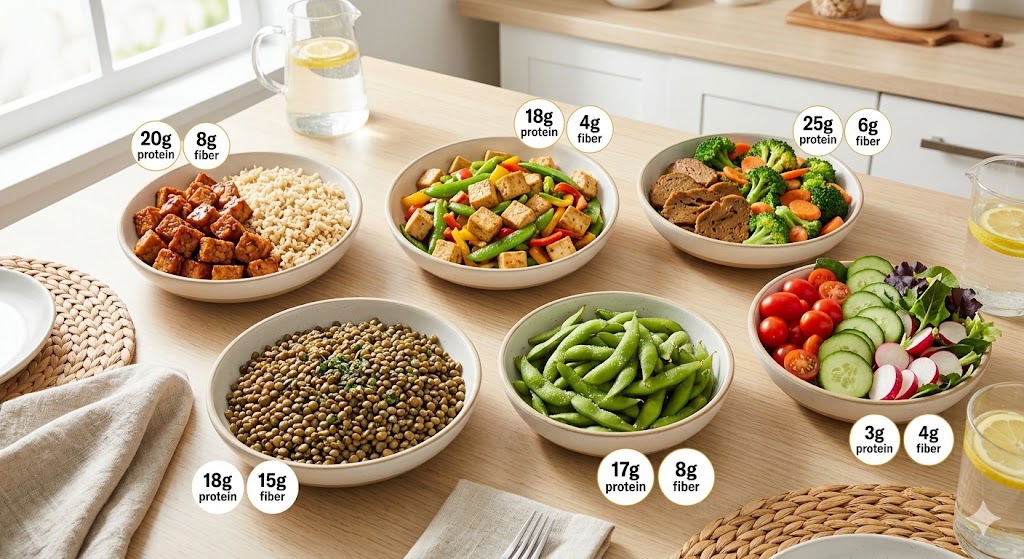
If you're looking to mix things up or follow a vegetarian lifestyle, you don't have to give up on your high-protein goals. In fact, diversifying your protein is great because chicken contains zero dietary fiber.
Check out these awesome, high-protein plant-based alternatives :
Plant-Based Protein Source (100g Cooked) | Calories (kcal) | Protein (g) | Total Fat (g) | Dietary Fiber (g) | Key Micronutrients |
Seitan (Wheat Gluten) | 370 | 25.0 | 1.9 | 0.0 | Selenium, Phosphorus, Iron |
Tempeh (Fermented Soy) | 193 | 20.3 | 11.0 | 8.0 | Calcium, Potassium, Probiotics |
Tofu (Extra Firm) | 120 | 12.7 | 7.0 | 2.0 | Calcium, Magnesium, Iron |
Lentils (Legume) | 116 | 9.0 | 0.4 | 8.0 | Folate, Iron, Manganese |
Edamame (Immature Soy) | 121 | 11.8 | 5.2 | 5.2 | Folate, Vitamin K, Fiber |
Adding these to your diet brings in heart-healthy fiber, which slows down digestion and keeps you feeling full much longer than meat alone.
Bottom Line: High-protein vegetarian alternatives like tempeh and seitan are excellent for fat loss, providing comparable protein density along with gut-healthy fiber that poultry lacks.
How to Choose for Your Goals
To lose fat as fast as possible, keep these tips in mind on your next grocery run:
Go with Skinless Grilled Breast: This is your best weapon for rapid fat loss. It has the lowest calories, lowest sodium, and highest protein density.
Enjoy Rotisserie with Care: It’s totally fine to grab a rotisserie chicken when you're busy! Just peel off and discard the skin before eating to save tons of fat calories.
Drink Extra Water: If you choose store-bought rotisserie chicken, drink plenty of water to help your body flush out the excess sodium and beat the bloat.
Log It Instantly: Keep yourself honest by speaking your meals directly into VoCal.
Ditch the Keyboard: Log Your Food with Your Voice
Let’s be real—manually typing every single ingredient into a tracking app is exhausting. It's the number one reason people give up on tracking their food.
That’s where voice-activated calorie tracking on VoCal comes in. Instead of typing "skinless cooked rotisserie chicken breast," you simply speak to your phone: "I just ate a cup of shredded rotisserie chicken breast and a side salad."
The built-in AI instantly parses your voice, identifies the food items, calculates the correct serving sizes using the USDA database, and logs it all in seconds. It's fast, incredibly accurate, and keeps you consistent without the headache.
Bottom Line: Voice-logging with VoCal eliminates the friction of traditional tracking, making it easier than ever to remain in a fat-burning calorie deficit.
Frequently Asked Questions
Is store-bought rotisserie chicken bad for weight loss?
Not at all! As long as you peel off the fatty skin, the breast meat is incredibly lean and high in protein. Just keep an eye on the high sodium content, which can cause temporary water bloat.
Does grilling chicken make it healthier than roasting?
Grilling allows natural fats to drip away from the meat, making it slightly leaner than roasting. However, both are excellent options for a fat-loss diet compared to pan-frying or deep-frying.
Can I eat dark chicken meat and still lose fat?
Yes, you can! Chicken thighs and drumsticks are highly nutritious and packed with iron and zinc. However, because dark meat has double the fat of white breast meat, you’ll need to adjust your portions to stay within your daily calorie budget.
What is a good vegetarian substitute for chicken protein?
Seitan and tempeh are outstanding plant-based substitutes. Seitan offers 25 grams of protein per 100g, which matches chicken breast, while tempeh offers 20.3 grams of protein alongside 8 grams of digestive fiber.
Disclaimer: While we love food science, this article is for informational purposes only. Always consult a healthcare professional before making major changes to your diet!