

It’s Friday night, you’re at your favorite local pub or coastal eatery, and that irresistible aroma hits you: golden, beer-battered white fish paired with a heap of hot, crispy french fries. Few comfort foods satisfy quite like classic fish and chips. But if you’re keeping an eye on your daily fitness goals, a big question pops up before you take that first crunchy bite: How many calories are in fish and chips, and how does it fit into your diet?
The short answer? It depends entirely on portion size, batter thickness, and whether you drown it in creamy tartar sauce. While a standard restaurant portion can easily take up a big chunk of your daily energy budget, smart preparation tweaks and quick voice logging make it totally possible to enjoy this classic meal without derailing your progress.
Let's dive into the complete nutritional breakdown of fish and chips, compare pub orders to homemade versions, uncover hidden health perks, and see how hands-free tracking with VoCal takes the guesswork out of mealtime.
The Calorie Baseline: How Many Calories Are in Fish and Chips?
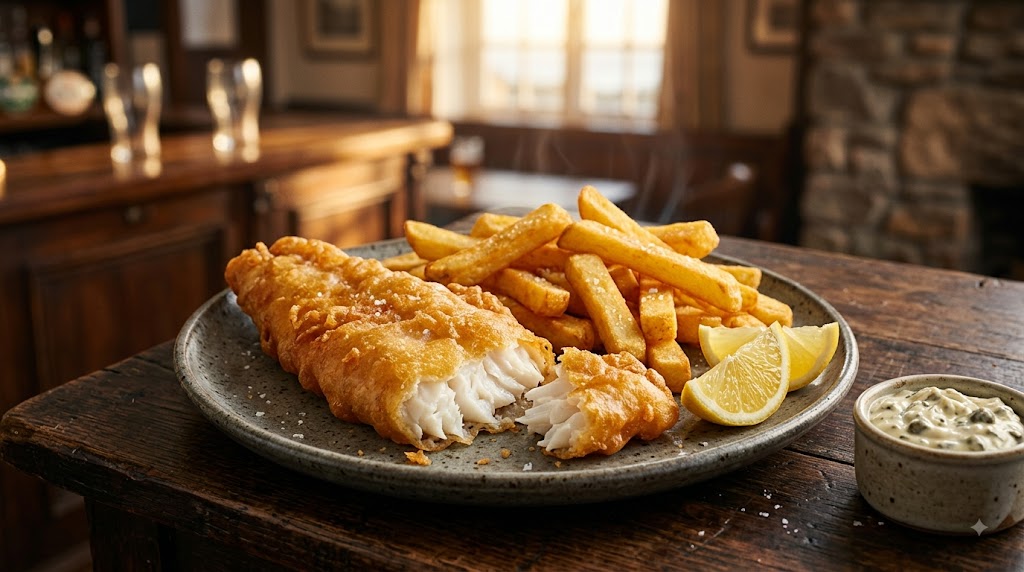
At its core, fish and chips combines two very different ingredients: super-lean marine protein (like Atlantic cod, haddock, or Alaska pollock) and naturally nutrient-dense potatoes. However, when both drop into high-temperature frying oil, the energy density changes dramatically.
On average, deep-fried battered fish and chips packs about 220 calories per 100-gram serving. Here is how that translates to real-world plates:
Standard Quick-Service Portion (300g / 10.5 oz): Roughly 660 calories, 36 grams of protein, 39 grams of fat, and 42 grams of carbohydrates.
Large Pub Portion (~450g / 16 oz): Can easily reach 800 to 1,000+ calories for the meal alone.
Why does the calorie count jump so quickly? It all comes down to oil absorption. Raw cod or pollock fillets are naturally low in fat, delivering around 70 to 130 calories per 100 grams. But as the fish cooks in hot oil, moisture escapes as steam, creating porous spaces where frying oil gets soaked up by the batter.
A similar magic—and calorie surge—happens with potatoes. While plain boiled potatoes contain just 87 calories per 100 grams, deep frying them into french fries boosts energy density by over 250%, resulting in 312 calories per 100 grams.
Metric / Nutrient | Per 100 g Base | Standard Serving (300 g) | Large Restaurant Portion (~450 g) |
Energy (Calories) | 220 kcal | 660 kcal | 990 kcal |
Total Protein | 12.0 g | 36.0 g | 54.0 g |
Total Fat | 13.0 g | 39.0 g | 58.5 g |
Saturated Fat | 2.3 g | 6.9 g | 10.4 g |
Total Carbohydrates | 14.0 g | 42.0 g | 63.0 g |
Dietary Fiber | 1.0 g | 3.0 g | 4.5 g |
Sodium | 410 mg | 1,230 mg | 1,845 mg |
Bottom Line: A standard 300-gram plate of fish and chips sits right around 660 calories. Deep frying increases fat content significantly, but the lean white fish inside provides a solid 36-gram protein base.
Hold the Mayo: Fish and Chips Calories Without Tartar Sauce
If you want an easy way to cut calories without shrinking your portion size, take a close look at your sauce cup.
Tartar sauce is traditionally made with mayonnaise, oil, egg yolks, diced pickles, and capers. Because mayonnaise is mostly oil, tartar sauce is extremely calorie-dense. Just 2 tablespoons (30 grams) of commercial tartar sauce add 90 calories and 9 grams of fat to your plate.
In many restaurants, portion cups hold 4 to 6 tablespoons, quietly adding 180 to 270 extra fat calories before you’ve even taken a second bite.
By looking at fish and chips calories without tartar sauce, you instantly trim down total energy intake while keeping 100% of the meal's protein. Swapping mayo-based sauces for traditional malt vinegar or fresh lemon juice gives you a zesty flavor punch for almost zero added calories.
Meal Configuration | Serving Size | Total Energy | Fat (g) | Carbohydrates (g) | Protein (g) |
Fish & Chips with 4 tbsp Tartar Sauce | 300 g + 60 g sauce | 840 kcal | 57.0 g | 48.0 g | 36.0 g |
Fish & Chips Without Tartar Sauce | 300 g | 660 kcal | 39.0 g | 42.0 g | 36.0 g |
Commercial Tartar Sauce | 2 tbsp (30 g) | 90 kcal | 9.0 g | 3.0 g | 0.0 g |
Malt Vinegar Substitution | 1 tbsp (15 ml) | 3 kcal | 0.0 g | 0.2 g | 0.0 g |
Fresh Squeezed Lemon Juice | 1 tbsp (15 ml) | 4 kcal | 0.0 g | 1.2 g | 0.1 g |
Bottom Line: Skipping tartar sauce or switching to malt vinegar or lemon juice instantly saves you 180 to 270 calories and trims up to 27 grams of fat off your meal.
Restaurant vs. Homemade Fish and Chips Calories
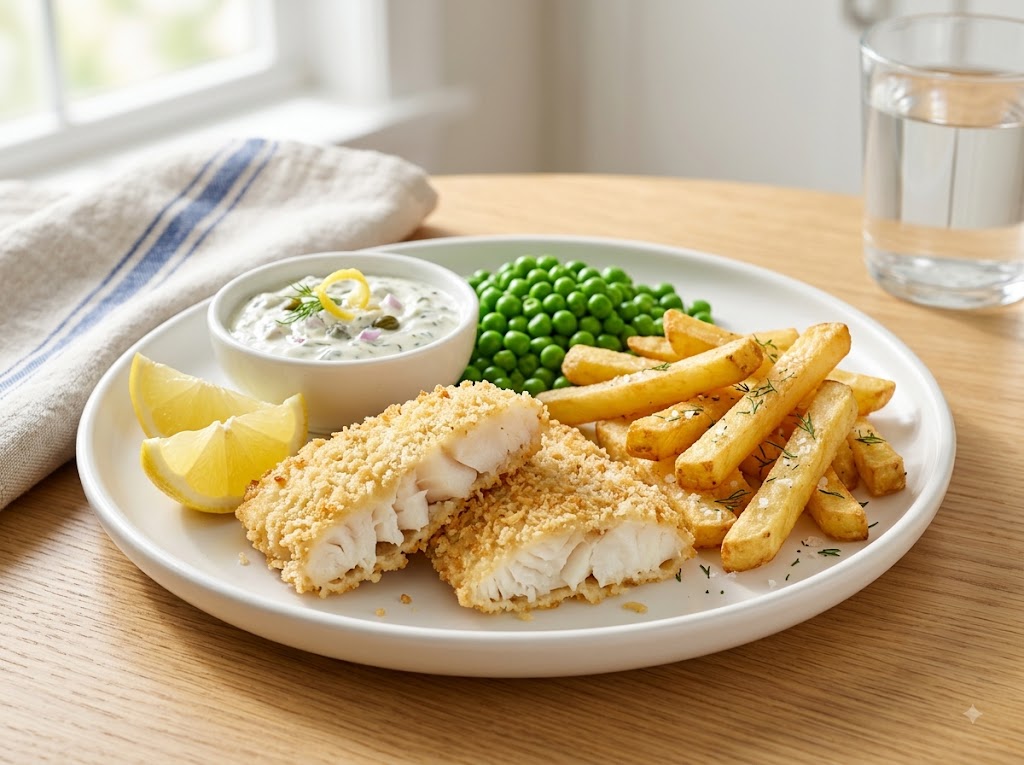
Comparing homemade vs restaurant fish and chips calories highlights how your kitchen setup changes the nutritional makeup of your food. Pubs and restaurants rely on deep commercial fryers, rich batters, and thick-cut fries that soak up substantial oil.
Grocery store frozen battered fillets average roughly 230 calories, 11 grams of fat, and 23 grams of carbs per fillet before cooking. When served deep-fried at a restaurant alongside a full basket of chips, the whole meal often pushes past 1,000 calories.
At home, you are in total control. Baking unbreaded cod fillets with a light panko crust and making homemade oven-roasted potato wedges tossed in a touch of olive oil cuts the caloric load down to under 450 calories. Air frying is another total game-changer, delivering that crispy outer crunch with up to 75% less added fat.
Preparation Style | Primary Cooking Method | Energy per 300 g Meal | Total Fat (g) | Primary Macro Focus |
Commercial Pub / Diner | Deep Oil Immersion | 800–1,000 kcal | 45.0–58.0 g | Elevated Lipids & Refined Starch |
Frozen Retail / Baked | Conventional Oven | 550–650 kcal | 22.0–28.0 g | Moderate Fat & Carbohydrates |
Homemade Air-Fried | Convection Air Fryer | 400–480 kcal | 10.0–14.0 g | High Protein & Complex Starch |
Homemade Oven-Baked | Sheet Pan Baking | 350–420 kcal | 6.0–9.0 g | Lean Protein Focus |
Bottom Line: While pub versions can hit 1,000 calories, switching to air frying or sheet-pan oven baking at home creates a delicious, high-protein meal under 450 calories.
Can You Actually Eat Fish and Chips for Weight Loss?
If you’re working on a weight loss goal, you might wonder: is fish and chips good for weight loss?
Weight loss comes down to maintaining a consistent daily calorie deficit. Traditional deep-fried fish and chips can make staying in a deficit tricky for a few reasons:
High Energy Density: Packing ~220 calories per 100 grams, a large restaurant plate eats up a big chunk of your daily allowance without offering much fiber.
Carbs + Fat Combination: Combining 42 grams of refined starches with 39 grams of fat creates a savory, highly palatable meal that is easy to overeat.
The Good News? The Protein Powerhouse Inside! Fish and chips has one huge advantage over many fast foods: high-quality lean protein. White fish supplies 36 grams of protein per standard serving. Protein helps kickstart satiety hormones like peptide YY (PYY) and GLP-1, keeping you full and satisfied long after your meal.
When you bake or air-fry your meal at home, fish and chips transforms into an ideal, high-protein weight loss option that fits effortlessly into your calorie target.
Bottom Line: Deep-fried pub fish and chips is high in calories and fat, making it a meal to enjoy mindfully. But homemade baked or air-fried versions offer fantastic protein-driven fullness that easily fits into a weight loss plan.
Unlocking the Secret Micronutrients in Your Basket
Counting macros is great, but don't overlook the rich micronutrient benefits tucked inside white fish and real potatoes!
Selenium: White fish is packed with selenium (20 mcg per serving, or 36% of your Daily Value), which powers your body's cellular antioxidant defense system.
Vitamin B12: White fish provides 1.2 mcg of Vitamin B12 per 100g (50% DV), supporting nerve function, energy metabolism, and red blood cell production.
Potassium & Phosphorus: Potatoes deliver 280 mg of potassium per 100g to support muscle function and heart health, while phosphorus supports strong bones and cellular energy transfer.
Heart-Healthy Marine Minerals: Cod, pollock, and haddock contribute essential iodine for thyroid health and natural omega-3 fatty acids (EPA & DHA) for heart and brain wellness.
Bottom Line: Fish and chips isn't just comfort food—it delivers key essential minerals like selenium, B12, potassium, and omega-3s that support your overall health.
4 Smart Hacks to Cut Calories Without Losing the Crunch
Want to enjoy the crispiness of fish and chips while keeping your macros tight? Try these simple kitchen hacks:
Air-Fry Everything: Swap the deep fryer for an air fryer to get maximum crunch with a fraction of the oil.
Light Panko Breading: Use a light dusting of seasoned panko breadcrumbs or cornstarch instead of heavy flour batter to reduce absorbed fat and carbs.
Acidic Flavor Boosts: Trade mayonnaise tartar sauce for malt vinegar, fresh lemon wedges, or a quick homemade Greek yogurt tartar sauce.
Add Veggie Volume: Swap half your french fry portion for a side of steamed green peas, a fresh side salad, or red cabbage slaw tossed in lemon juice.
Track Your Pub Meals Effortlessly with VoCal Voice Technology
Trying to estimate complex pub meals in traditional calorie apps can feel frustrating. Trying to search database entries for batter weight, fry counts, and sauce side cups takes time and often leads to guessing.
That’s where VoCal comes in. VoCal uses natural voice recognition powered by verified USDA reference data to let you log complex meals in seconds.
Instead of typing out four separate items, just tap record and say:
"Logged six ounces of beer-battered cod fillet with a medium order of french fries and two tablespoons of tartar sauce."
VoCal automatically breaks down your description, calculates your calories, fat, protein, and carbs, and updates your daily macros instantly. No typing, no stress—just easy, accurate logging.
Bottom Line: Skip the manual searching. Hands-free logging with VoCal turns meal tracking into a simple 3-second voice command.
The Bottom Line
Fish and chips is a classic comfort food that can easily find a place in a balanced lifestyle. Whether you’re enjoying a traditional pub order or whipping up a light air-fried version at home, understanding your macros gives you total control over your health goals.
Cooked Nutrition Summary (Standard 300g Serving)
Metric | Deep-Fried Pub Portion | Homemade Air-Fried Version |
Calories | 660 kcal | 420 kcal |
Protein | 36.0 g | 38.0 g |
Total Fat | 39.0 g | 11.0 g |
Carbohydrates | 42.0 g | 40.0 g |
Sodium | 1,230 mg | 450 mg |
Frequently Asked Questions
How many calories are in a standard pub serving of fish and chips?
A standard quick-service or restaurant portion of deep-fried fish and chips (300g / 10.5 oz) averages around 660 calories, 36g protein, 39g fat, and 42g carbohydrates. Larger pub servings can reach 800 to 1,000+ calories.
How many calories do I save by skipping tartar sauce?
Skipping tartar sauce saves about 180 to 270 calories and up to 27 grams of fat, depending on restaurant portion sizes. Replacing it with malt vinegar or fresh lemon adds under 5 calories.
Is baked or air-fried fish and chips healthier than fried?
Yes! Baking or air frying reduces added oil absorption significantly, cutting fat content by up to 75% and lowering total meal calories down to 350–450 kcal while preserving all the lean protein.
Can I fit fish and chips into a weight loss diet?
Absolutely. While deep-fried pub meals are best enjoyed mindfully due to high calorie density, homemade air-fried or baked fish and chips provides high protein and strong satiety, making it great for weight management.
How do I log fish and chips accurately in VoCal?
Simply open VoCal and speak your meal naturally, such as "VoCal, log 6 ounces of baked cod with oven-baked fries and a lemon wedge." VoCal handles the macro calculations automatically.
Disclaimer: This article is for informational purposes only and does not substitute for professional medical, nutritional, or dietary advice, diagnosis, or treatment. Always consult a qualified healthcare professional or registered dietitian with any questions regarding your health, personal calorie requirements, or dietary changes.