

If you've ever told someone you were trying to gain weight, you probably got an eye-roll and a comment like, "Must be nice! Just eat ice cream on the couch."
If only it were that easy!
For anyone with a fast metabolism, a light appetite, or a goal to pack on lean muscle, gaining weight healthily can feel like hard work. Clinical underweight status—defined as a Body Mass Index (BMI) under 18.5 or sitting 15% to 20% below standard weight for your age—comes with real challenges like low energy and slow recovery.
And stuffing your face with ultra-processed junk food isn't the fix. "Dirty bulking" usually leaves you feeling bloated and storing extra belly fat instead of solid, lean mass.
To build weight healthily, you need nutrient-dense foods, a realistic plan, and a reliable calorie tracker to gain weight like VoCal to keep you in a steady surplus without the headache.
The Energy Surplus Cheat Code
At its core, body weight relies on energy balance: eat more energy than your body burns, and you gain weight.
Your Total Daily Energy Expenditure (TDEE) is what you burn breathing, digesting, and moving around each day. To gain weight safely, aim for a controlled caloric surplus:
The Surplus: Add 10% to 20% extra calories over maintenance needs (~200 to 500 extra calories daily).
The Target Rate: Aim to gain 0.25% to 0.50% of your body weight per week (~2 to 3 pounds per month). This ensures new weight is mostly muscle, not excess fat.
Pairing this extra energy with strength training triggers insulin release, helping push amino acids straight into muscle cells to rebuild them bigger and stronger.
Macros: Building Muscle, Not Just a Belly
To ensure surplus calories turn into lean tissue, balance your primary macronutrients:
1. Protein: The Muscle Builder
Target 1.6 to 2.2 grams of protein per kilogram of body weight daily (~0.7 to 1.0 g/lb). Spread this across meals and aim for ~3 grams of leucine per meal (found in eggs, whey, poultry, fish, tofu, and dairy) to kick off muscle synthesis.
2. Carbohydrates: The High-Octane Fuel
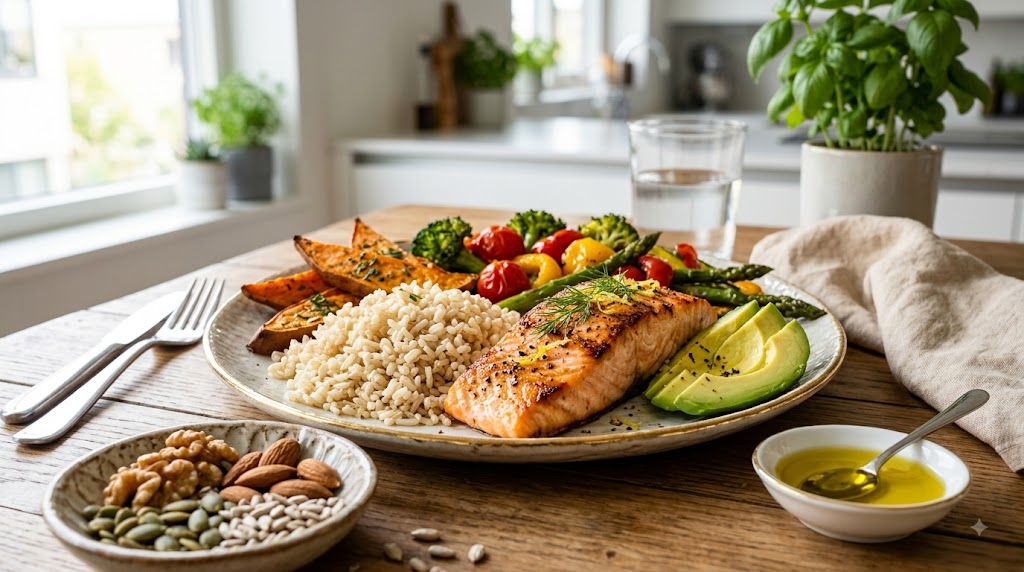
Carbs fuel intense workouts and restock muscle energy stores. Stick mostly to complex carbs like oats, brown rice, sweet potatoes, and whole grains.
3. Healthy Unsaturated Fats: The Secret Calorie Weapon
Fats supply 9 calories per gram (versus 4 for carbs and protein). Adding healthy unsaturated fats helps you scale up calories without getting uncomfortably full. Great choices include olive oil, avocados, nut butters, and seeds.
Macronutrient / Parameter | Target Range (Novice / Intermediate) | Target Range (Advanced) | Why It Matters |
Caloric Surplus | +10% to +20% above maintenance | +5% to +10% above maintenance | Provides energy needed to construct new muscle tissue. |
Protein Intake | 1.6 – 2.2 g/kg/day | 1.6 – 2.2 g/kg/day | Supplies building blocks for muscle repair and recovery. |
Per-Meal Leucine | ~3.0 grams per meal | ~3.0 grams per meal | Triggers the key pathway that tells your body to build muscle. |
Healthy Fats | 0.5 – 1.5 g/kg/day | 0.5 – 1.5 g/kg/day | Packs dense calories into smaller food volumes so you don't feel stuffed. |
Carbohydrates | Remaining calories (3 – 5 g/kg) | Remaining calories (3 – 5 g/kg) | Restores muscle energy reserves and fuels workouts. |
Weight Gain Rate | 0.25% – 0.50% body weight/week | ~0.25% body weight/week | Keeps gains focused on lean mass rather than fat. |
Beat Early Fullness with Smart Eating Hacks
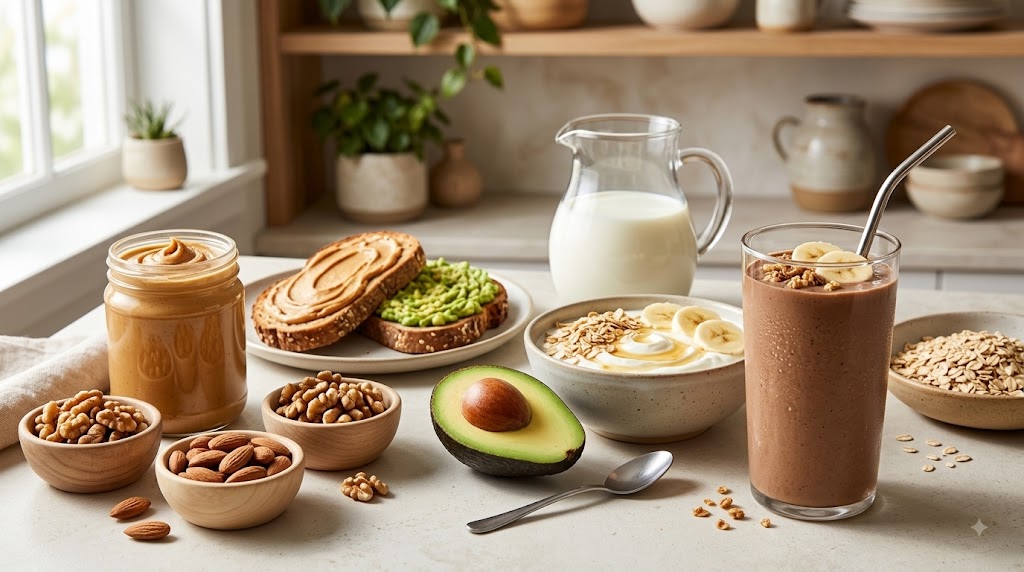
When eating gets tough, try these simple hacks to hit your surplus:
Switch to 5–6 "Mini-Meals": Eat smaller portions every 2 to 3 hours instead of 3 giant, overwhelming meals.
Drink Your Calories: Liquid meals bypass mechanical chewing and don't trigger fullness as fast. Blend whey or plant protein with whole milk, peanut butter, oats, and a banana for a fast 500-calorie shake.
Use Calorie "Toppers": Drizzle extra virgin olive oil on warm meals, stir nut butter into oatmeal, or mix cheese and milk powder into soups to boost calories without adding bulk.
Food Category | Diet Options | High-Calorie Selections | Calorie Density | Quick Hack |
Nuts & Seeds | Veg / Vegan | Almonds, Walnuts, Pumpkin Seeds | ~160–200 kcal / 1 oz | Sprinkle over oats, yogurt, or salads. |
Plant Oils | Veg / Vegan | Extra Virgin Olive Oil, Avocado Oil | ~120 kcal / 1 tbsp | Drizzle over rice, pasta, and cooked veggies. |
Dairy Products | Vegetarian | Whole Milk, Full-Fat Greek Yogurt, Cheese | ~150–200 kcal / serving | Add extra cheese to meals or dry milk to soups. |
Nut Butters | Veg / Vegan | Peanut Butter, Almond Butter | ~190 kcal / 2 tbsp | Spread thickly on whole-grain toast or blend in shakes. |
Proteins/Fish | Non-Veg | Salmon, Mackerel, Chicken Thighs | ~200–250 kcal / 4 oz | Cook in olive oil and pair with brown rice or sweet potatoes. |
Strength Training: Turning Food into Gains
Without a physical stimulus, surplus calories are stored as fat. Use progressive resistance training to convert food into lean tissue:
Prioritize Compound Lifts: Squats, deadlifts, bench presses, and rows work multiple muscles and signal your body to grow.
Keep Cardio Moderate: Stick to short HIIT sessions or moderate walks so you don't burn off your exact calorie surplus.
Prioritize Rest: Aim for 7 to 9 hours of quality sleep to boost natural growth hormone and keep stress hormones low.
Effortless Tracking with VoCal

Eating 5 to 6 mini-meals a day makes manual calorie tracking exhausting. Searching databases, scanning barcodes, and adjusting gram weights for every snack leads to "logging fatigue," causing people to skip entries and miss their surplus goals.
VoCal fixes this with voice tracking. Just speak naturally:
"I had a morning smoothie with one scoop of chocolate whey protein, a cup of whole milk, two tablespoons of peanut butter, and a banana."
VoCal instantly breaks down the ingredients, calories, and macros in seconds.
Tracking Feature | Traditional Manual Apps | Barcode Apps | VoCal Voice Tracking |
Logging Speed | Slow (60–120s per entry) | Moderate (30–60s) | Ultra-Fast (3–5s) |
5–6 Mini-Meals | High friction; easy to give up | Needs packaged foods | Effortless; speak right after eating |
Shakes & Smoothies | Painful multi-item searches | Scans single items only | Parses full recipes from a single voice note |
Oils & Toppers | Frequently forgotten | Easily missed | Simple to mention in natural speech |
Frequently Asked Questions
1. How many extra calories do I need daily to gain weight safely?
Aim for a surplus of 200 to 500 calories per day above maintenance. This supports steady gains of 2 to 3 pounds per month, focusing weight gain on muscle rather than excess fat.
2. Is a calorie tracker to gain weight really necessary if I eat a lot?
Yes! People with fast metabolisms often overestimate how much they consume. A voice tracker like VoCal ensures you reliably hit your daily surplus without falling back into maintenance intake.
3. Can vegetarians and vegans build healthy weight easily?
Definitely. Nut butters, seeds, avocados, lentils, tofu, whole grains, and plant-based protein shakes deliver high calorie density and quality protein.
4. What should I do if my weight gain hits a plateau?
If your weight stays flat for two weeks, add 150 to 250 calories to your daily target. The easiest fix is adding a tablespoon of olive oil or extra nut butter to daily meals.
Disclaimer: This article is for educational and informational purposes only and does not replace personal medical advice. Always consult with a qualified healthcare provider or registered dietitian before starting any new dietary or exercise program.