

Ah, breakfast—the most important meal of the day, and sometimes the most stressful one if you are trying to keep your blood sugar in check. If you have type 2 diabetes, walking into the kitchen in the morning can feel like facing a metabolic crossroad. Do you go for the protein-packed egg scrambler or the warm, comforting bowl of oatmeal?
This classic morning showdown is more than just a matter of taste. It is a fundamental choice between two different nutrition styles: low-carbohydrate protein and fat versus slow-burning complex carbohydrates and fiber.
To help you navigate your morning menu, we have put together a detailed eggs vs oatmeal breakfast comparison. We will look at how each option affects your blood sugar, daily hunger, and heart health so you can plan the perfect diabetic-friendly morning.
Key Takeaways
Both are great, but different: Eggs and steel-cut oatmeal can both be part of a healthy diet for type 2 diabetes without causing major blood sugar issues.
Eggs for inflammation: A daily egg breakfast has been shown to reduce key markers of liver stress and systemic inflammation more than oatmeal.
Oats for cholesterol: Oatmeal is rich in a special soluble fiber called beta-glucan, which acts like a sponge to help lower "bad" LDL cholesterol.
Watch the processing: Not all oats are created equal. Steel-cut and overnight oats keep blood sugar stable, while instant oatmeal can cause sharp spikes similar to white bread.
The yolk limit: If you have diabetes, experts recommend keeping your intake to four whole egg yolks or fewer per week, though egg whites are unlimited.
Eggs vs. Oatmeal: The Nutritional Showdown
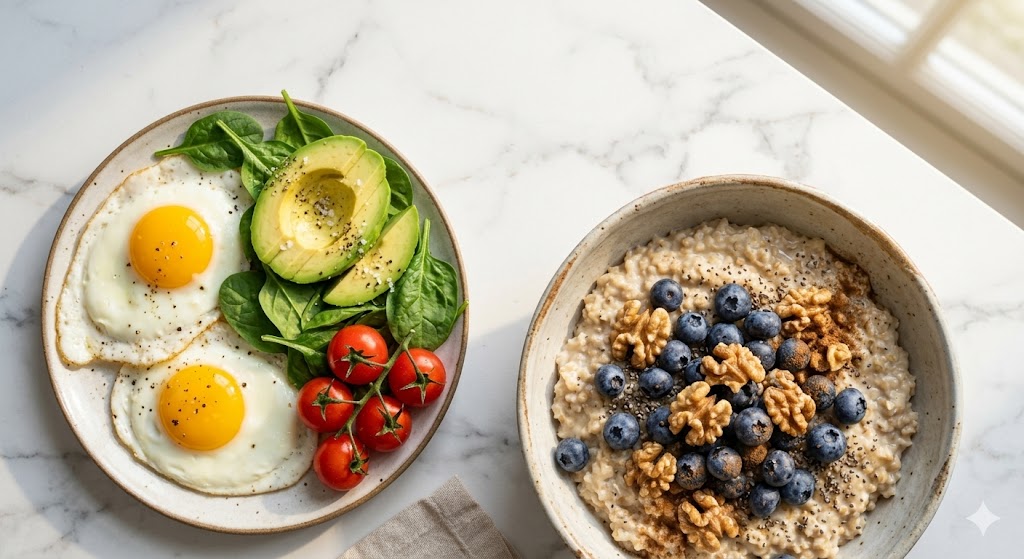
To understand how these foods affect your body, it helps to look at their basic nutritional values. Here is how whole large eggs compare to whole-grain steel-cut oats, based on data from the USDA FoodData Central database.
Nutrient (per 100g raw) | Whole Large Eggs | Whole Grain Steel-Cut Oats |
Energy (kcal) | ~143 | ~375-389 |
Protein (g) | ~12.5-13.0 | ~12.5-16.9 |
Total Fat (g) | ~9.5-10.0 | ~6.25-7.5 |
Saturated Fat (g) | ~3.1 | ~1.2 |
Monounsaturated Fat (g) | ~3.8 | ~2.2 |
Polyunsaturated Fat (g) | ~1.4 | ~2.5 |
Total Carbohydrate (g) | ~0.72 | ~66.3-67.7 |
Total Dietary Fiber (g) | 0.0 | ~10.0-11.6 |
Soluble Fiber (Beta-Glucan) (g) | 0.0 | ~4.0 |
Choline (mg) | ~294 | ~40.4 |
Lutein + Zeaxanthin (mcg) | ~252 | 0.0 |
Iron (mg) | ~1.8 | ~4.5-5.0 |
Sodium (mg) | ~140 | ~5.0 |
How Eggs and Oats Affect Your Blood Sugar
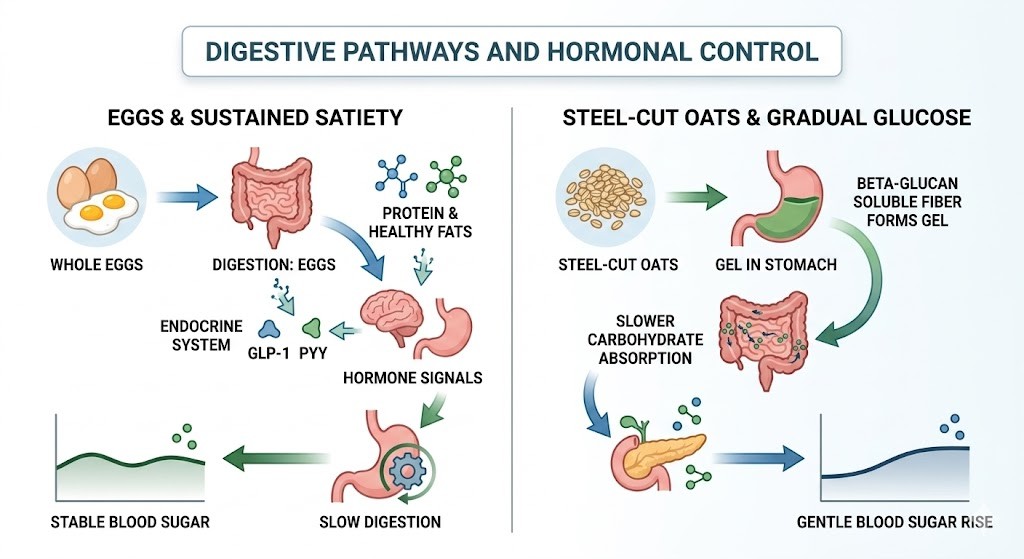
The main difference between eggs and oatmeal is how they signal your cells and digestive system to process energy.
The Low-Carb Protein Path (Eggs)
Because eggs contain almost zero carbohydrates, they do not cause a direct rise in blood sugar. Instead of triggering a glucose spike, the amino acids and healthy fats in eggs prompt your gut to release fullness hormones like GLP-1 and peptide YY (PYY). These hormones naturally slow down your digestion and signal your pancreas to release insulin smoothly, keeping your blood sugar stable.
The Slow-Fiber Path (Oats)
Oatmeal is primarily a carbohydrate, but it is unique because of its high amount of beta-glucan, a soluble fiber. When beta-glucan mixes with water in your stomach, it forms a thick, gel-like barrier. This gel slows down your digestive enzymes, meaning the carbs are broken down into glucose and absorbed into your bloodstream very gradually. This slow digestion helps prevent the sudden spikes and crashes associated with refined grains.
What the Science Says: Glycemia and Inflammation
Researchers have put these two breakfast options to the test in clinical trials with patients managing type 2 diabetes.
In a five-week study, participants ate either one whole egg per day or a standard serving of oatmeal (40g of oats cooked in lactose-free milk) for breakfast. The results showed some interesting trends:
Stable Glucose and HbA1c: There were no significant differences in fasting blood sugar, insulin levels, or HbA1c (your three-month average blood sugar) between the egg and oatmeal phases. Both foods were safe and highly effective choices.
Lower Inflammation with Eggs: Surprisingly, during the egg-eating phase, participants had significantly lower levels of tumor necrosis factor-alpha (TNF-alpha), a major marker of systemic inflammation. This difference was statistically significant at
$p < 0.01$.Happier Liver Markers: Levels of AST, an enzyme that can indicate liver stress or fatty liver build-up when elevated, were also significantly lower during the egg phase.
Why the anti-inflammatory boost? Egg yolks are rich in antioxidants like lutein and zeaxanthin. Because these nutrients are packaged with the natural fats in the yolk, they are highly bioavailable, meaning your body can easily absorb and use them to fight cellular stress.
Satiety: Which Breakfast Keeps You Fuller Longer?
Weight management is a major part of diabetic diet planning because reducing body fat helps improve your cellular insulin sensitivity.
The Egg Advantage: Eggs are excellent for fat loss and muscle maintenance. In a 12-week clinical trial, adults with type 2 diabetes who ate eggs daily saw significant reductions in body mass index (BMI), waist circumference, and body fat percentage compared to those who avoided eggs.
The Oatmeal Advantage: The water-attracting beta-glucan in oatmeal stretches your stomach walls, which sends a strong signal to your brain that you are full.
However, physical processing plays a major role in how long that full feeling lasts. In appetite studies, children who ate a breakfast of instant oatmeal ended up eating 81% more calories at lunch compared to those who ate eggs. Even those who ate minimally processed steel-cut oats consumed 51% more at lunch than the egg group. This suggests that the solid protein-and-fat structure of eggs provides a longer-lasting sense of fullness than warm porridge.
The Oatmeal Processing Spectrum
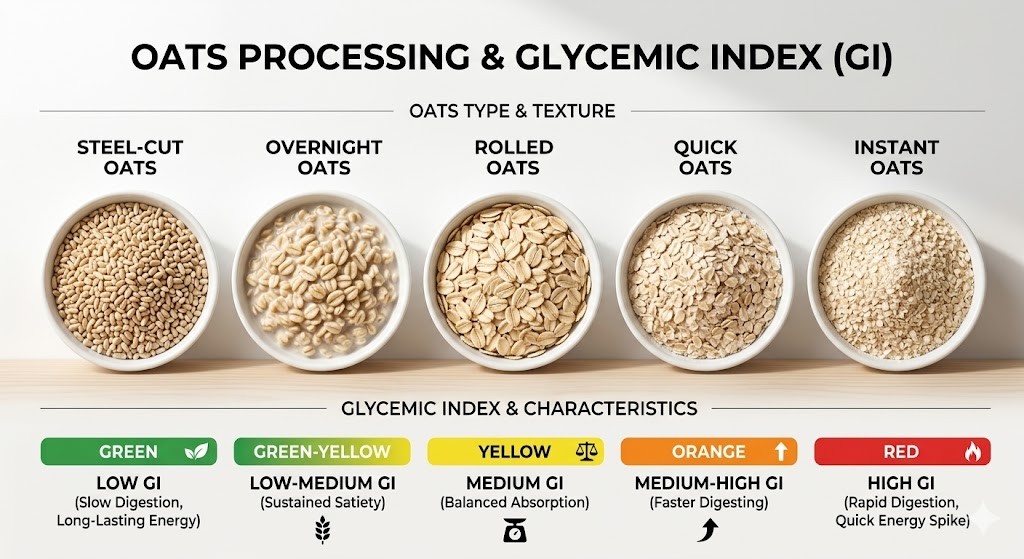
If you love oatmeal, it is important to know that processing can change its health benefits. The more an oat is chopped, rolled, flattened, and pre-cooked, the higher its glycemic index (GI) becomes.
Oat Variety | Processing Method | Glycemic Index (GI) | Glycemic Load (GL) per 40g dry serving | Satiety & Glycemic Impact |
Steel-Cut (Irish) | Whole groats sliced into 2-3 pieces; no steaming or rolling | ~42-50 (Low) | ~11-13 (Low) | Prolonged satiety; gradual glucose release |
Overnight Oats (Rolled) | Steamed, rolled, and soaked cold for 8+ hours without cooking | ~48-55 (Low) | ~12-15 (Low-Med) | High satiety; retrograded starch slows enzyme access |
Rolled (Old-Fashioned) | Groats steamed and flattened between heavy rollers | ~55-65 (Medium) | ~14-17 (Medium) | Moderate satiety; balanced glucose curve |
Quick Oats | Pre-sliced groats rolled into thin flakes | ~65-70 (Medium) | ~17-19 (Medium) | Brief satiety; rapid starch digestion |
Instant Oats (Plain) | Pre-cooked, rolled ultra-thin, and dehydrated | ~70-75 (High) | ~19-21 (High) | Poor satiety; rapid glucose spike |
Instant Oats (Flavored) | Pre-cooked with added sugars, sodium, and thickeners | ~75-83 (High) | ~22-28 (High) | Very poor satiety; immediate glucose spike and crash |
The Secret Power of Overnight Oats
If you prefer a quick, no-cook morning option, rolled oats soaked in liquid in the fridge overnight are an excellent choice. The cold soaking process triggers "starch retrogradation," which converts digestible starch into resistant starch. This resistant starch moves through your small intestine undigested, acting as fuel for your beneficial gut bacteria and keeping your blood sugar stable.
The Heart Health Debate: What About Cholesterol?
Because cardiovascular disease is a common concern for people with diabetes, managing cholesterol and heart health is highly important. This is where the debate around eggs gets a bit complicated.
The Heart-Healthy Fiber: Oatmeal is excellent for your heart. Its soluble fiber binds to cholesterol-rich bile acids in your digestive tract and carries them out of your body, which helps lower your overall LDL ("bad") cholesterol.
The Dietary Cholesterol Question: Eggs contain about 200mg of cholesterol per yolk. While the dietary cholesterol in eggs does not impact blood lipids for most healthy adults, long-term studies have shown that high egg consumption can be associated with increased cardiovascular risk specifically for individuals with pre-existing type 2 diabetes.
Because of this, clinical dietitians from Harvard-affiliated medical institutions generally recommend that individuals with type 2 diabetes limit their whole egg intake to four yolks per week. You can enjoy egg whites as often as you like, as they are pure protein and contain no cholesterol or fat.
The Best of Both Worlds: The Hybrid Breakfast
You do not have to choose between eggs and oatmeal! Pairing them together allows you to combine the cholesterol-lowering fiber of oats with the high-quality, filling protein of eggs.
Here are three delicious, easy ways to try this combination:
1. Savoury High-Protein Oats (Non-Vegetarian)
Cook 40g of steel-cut oats in water or low-sodium vegetable broth on the stove. During the last two minutes of cooking, whisk in 100g of liquid egg whites. Stir continuously until the oats are fluffy and creamy. Top with a handful of spinach and mushrooms sautéed in a teaspoon of olive oil for a savory, low-glycemic meal.
2. High-Protein Overnight Oat Jar (Vegetarian)
Stir together 40g of rolled oats, 100g of unsweetened plain Greek yogurt, 50g of low-fat milk, and a tablespoon of chia seeds in a jar. Let the mixture sit in the fridge overnight to create blood-sugar-friendly resistant starch. In the morning, top with a handful of walnuts or almonds for healthy fats and extra crunch.
3. Cinnamon Protein French Toast (Vegetarian)
Whisk together 100g of liquid egg whites, a splash of low-fat milk, a pinch of cinnamon, and a drop of vanilla extract. Dip two slices of sprouted, whole-grain bread into the mixture, then cook on a nonstick skillet. Top with half a cup of fresh blueberries or raspberries for a fiber-rich, satisfying breakfast.
Simplify Your Breakfast with VoCal
Managing your nutrition does not have to involve tedious calculations. With macronutrient tracking tools like VoCal, keeping an eye on your breakfast is as simple as speaking into your phone.
Instead of typing in ingredients, searching through databases, and guessing portion sizes, you can simply say:
"I had a half cup of steel-cut oats cooked with three egg whites and topped with ten raw almonds."
The natural language processing (NLP) engine at VoCal instantly breaks down your sentence:
It logs 40g of steel-cut oats (150 calories, 5g of fiber, and 27g of slow-burning carbs).
It adds 90mL of liquid egg whites (10g of clean, cholesterol-free protein).
It includes the almonds (7g of healthy, heart-safe fats).
This hands-free tracking makes it easy to monitor your diet and maintain consistent habits, helping you keep your blood sugar stable and enjoy your mornings.
Frequently Asked Questions (FAQs)
Is oatmeal or eggs better for lowering HbA1c?
Neither food is universally superior on its own, but they help in different ways. Oatmeal provides soluble beta-glucan fiber, which slows down the digestion of carbohydrates and improves insulin sensitivity over time. Eggs provide a near-zero carb protein and fat source that prevents direct glucose spikes. Clinical studies show that incorporating either option into a calorie-controlled diet results in similar, stable HbA1c levels.
Can people with type 2 diabetes eat egg yolks?
Yes, but moderation is key. While egg yolks contain beneficial antioxidants like lutein and zeaxanthin, they are also high in dietary cholesterol. For individuals with diabetes, clinical guidelines suggest limiting consumption to four whole yolks per week due to a potential link between high cholesterol intake and elevated cardiovascular risk in diabetic populations. Egg whites are pure protein and can be eaten without restriction.
Why does instant oatmeal spike blood sugar while steel-cut oats do not?
The difference lies in processing. Steel-cut oats are minimally processed, leaving the physical grain structure intact. This limits the surface area that digestive enzymes can reach, resulting in a gradual release of glucose. Instant oats are steamed, rolled ultra-thin, and pre-cooked, which essentially "pre-digests" the starch. This allows your body to absorb the sugars rapidly, producing a blood sugar spike similar to white bread.
How do overnight oats compare to cooked oats for diabetes?
Overnight oats are an excellent option for blood sugar management. Because the oats are soaked cold for several hours instead of cooked, a process called starch retrogradation occurs. This converts some of the digestible starch into resistant starch, which behaves like fiber and passes through the small intestine without spiking blood glucose. This gives overnight oats a lower glycemic index than hot, freshly cooked oats.
How does adding protein to oatmeal help blood sugar?
When you eat carbohydrates alone, your body breaks them down into glucose relatively quickly. Adding a clean protein source—like egg whites or unsweetened Greek yogurt—slows down gastric emptying. This delays the passage of carbohydrates into the small intestine, leading to a much flatter, more gradual blood sugar curve rather than a sharp spike and subsequent crash.
Disclaimer: This article is for informational and educational purposes only and is not intended as medical advice, diagnosis, or treatment plans. Individuals with type 2 diabetes, pre-existing dyslipidemia, or cardiovascular concerns should consult a qualified physician or registered dietitian before making significant changes to their daily dietary routine.