
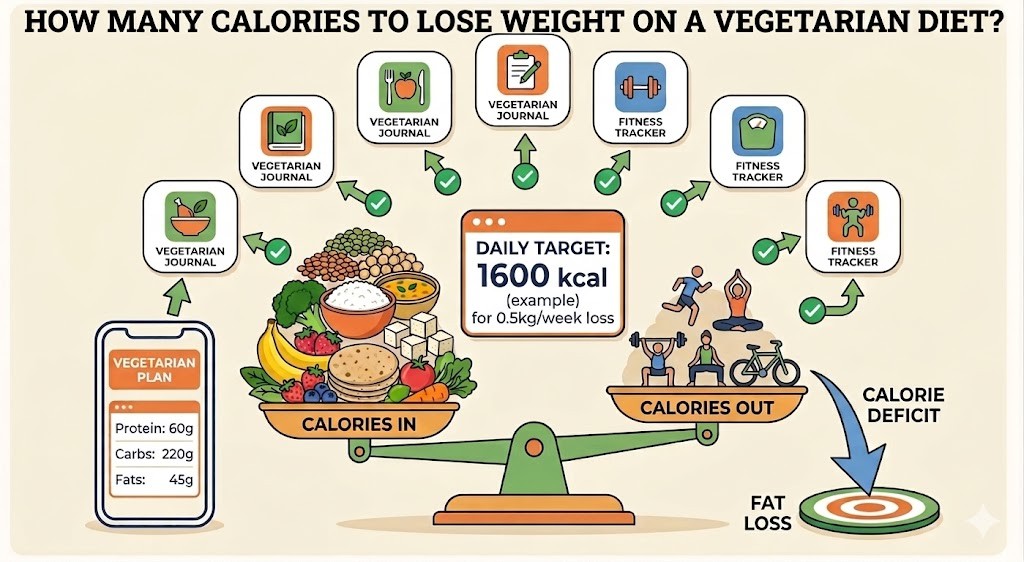
Deciding to lose weight on a vegetarian diet is a fantastic move for your health, the planet, and your taste buds. But once you’ve swapped the steak for sprouts, a big question remains: how many calories do you actually need to see results?
The secret to losing weight isn't magic—it’s metabolism. To lose weight, you need to create a "calorie deficit," which is just a fancy way of saying you use more energy than you take in. On a plant-based diet, you have a secret weapon: fiber. This "veggie edge" helps you stay full while eating fewer calories.
The Math Behind the Meal
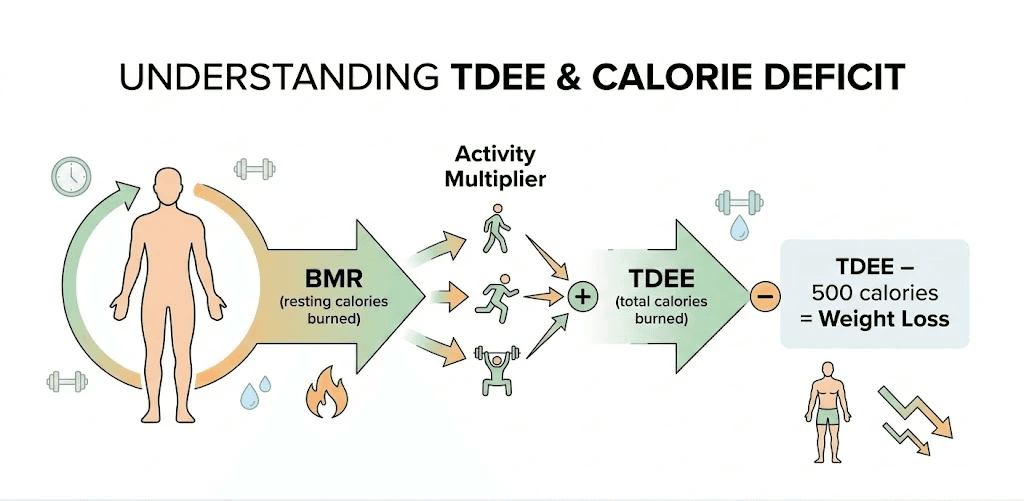
To find your perfect number, you first need to know your Total Daily Energy Expenditure (TDEE). This is the total amount of energy your body burns just being you—breathing, thinking, and moving around.
Step 1: Find Your Basal Metabolic Rate (BMR)
Your BMR is what your body burns at rest. We use the Mifflin-St Jeor equation to figure this out:
For Men:
BMR = (10 *{weight in kg}) + (6.25 *{height in cm}) - (5 *{age in years}) + 5
For Women:
BMR = (10 *{weight in kg}) + (6.25 *{height in cm}) - (5 *{age in years}) - 161
Step 2: Factor in Your Daily Movement
Once you have your BMR, multiply it by an activity factor to find your maintenance calories.
Activity Level | Description | PAL Multiplier |
Sedentary | Minimal movement; desk-bound work | 1.2 |
Minimally Active | 1–3 days per week of light activity | 1.375 |
Moderately Active | 3–5 days per week of moderate sports | 1.55 |
Very Active | 6–7 days per week of strenuous exercise | 1.725 |
Extra Active | Twice-daily training or intense job | 1.9 |
Bottom Line: Your TDEE is your "break-even" point. Eat this much to stay the same weight. Eat less to lose weight.
How Many Calories Should You Cut?
The gold standard for safe, sustainable weight loss is a deficit of 500 to 1,000 calories per day. This usually leads to losing about 1 to 2 pounds a week—the kind of progress that actually sticks.
Here is a general guide to maintenance calories based on age and activity. To lose weight, aim for 500 calories less than these numbers.
Estimated Daily Maintenance Calories
Age Range | Female (Mod. Active) | Male (Mod. Active) |
19–25 | 2,200 | 2,800 |
26–45 | 2,000 | 2,600 |
46–65 | 1,800–2,000 | 2,400 |
66+ | 1,800 | 2,200 |
Note: Women should generally not go below 1,200 calories and men 1,500 calories without a doctor's supervision.
Why Vegetarian Diets are Weight Loss Superstars
Vegetarian diets are naturally great for weight loss because plant foods are often "volume-heavy" but "calorie-light." High-fiber foods like lentils and broccoli take up more room in your stomach, signaling your brain that you're full earlier.
Plus, plant-based proteins have a high "thermic effect," meaning your body actually burns extra calories just trying to digest them!
The Best Vegetarian Protein Sources for Weight Loss
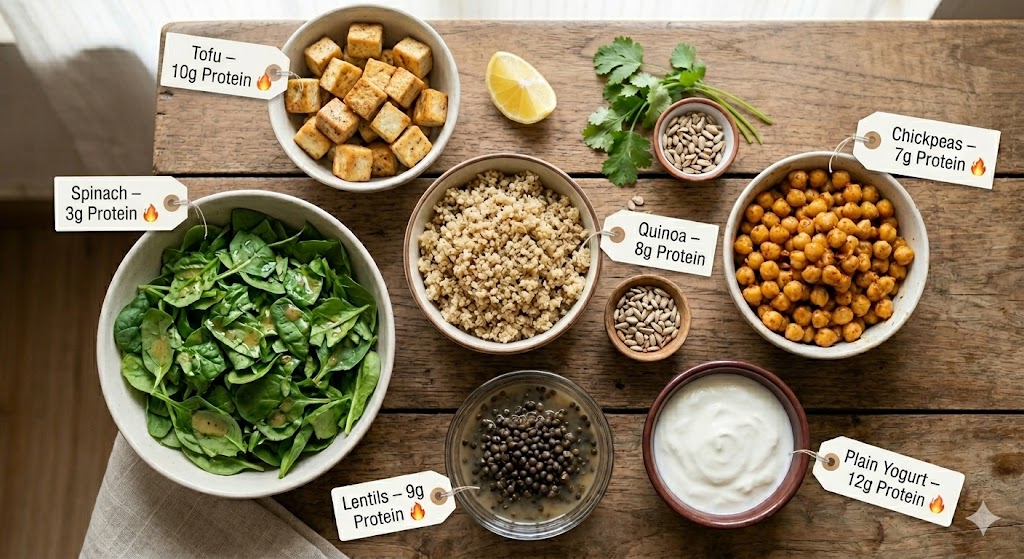
Protein is the key to keeping your muscles happy while the fat disappears. Here are some of the best vegetarian ways to hit your goals:
Food Item (100g) | Calories (kcal) | Protein (g) | Fiber (g) |
Cooked Lentils | 116 | 9.0 | 7.9 |
Firm Tofu | 144 | 15.0 | 2.3 |
Cooked Quinoa | 120 | 4.4 | 2.8 |
Greek Yogurt (Plain) | 59 | 10.0 | 0 |
Chickpeas (Canned) | 164 | 8.9 | 7.6 |
Raw Spinach | 23 | 2.9 | 2.2 |
Stop Guessing, Start Speaking with VoCal
Let’s be real: looking up the calories in a "homemade paneer methi roti" is a headache. Traditional apps can take 15 minutes a day just to log your meals.
That’s where VoCal comes in. Instead of searching through endless databases, you just say what you ate: "I had a bowl of dal makhani and two whole wheat rotis." VoCal’s AI understands the portions and cooking methods, logging everything in just 15 seconds with 95% accuracy. It's weight loss tracking without the "homework."
The Bottom Line
Losing weight on a vegetarian diet is all about balance. By finding your TDEE, creating a moderate 500-calorie deficit, and filling your plate with high-protein, high-fiber plants, you'll reach your goals in no time. And with tools like VoCal, you can spend less time tracking and more time enjoying your food.
Frequently Asked Questions (FAQ)
How many calories should I eat to lose weight veg?
It depends on your TDEE, but most people see steady results by eating 500 calories less than their maintenance level—usually around 1,500 for women and 2,000 for men.
Can I lose weight as a vegetarian without counting calories?
Yes! Focusing on whole, high-fiber plant foods can naturally lower your intake. However, tracking helps ensure you're hitting your protein goals and staying in a deficit.
Is paneer good for weight loss?
Yes! Paneer is high in protein and calcium, which can aid weight loss. Just watch the portion sizes and cooking oils, as full-fat versions are calorie-dense.
Disclaimer: This article is for informational purposes only and is not medical advice. Always consult a healthcare professional before making major dietary changes.