

Is there anything more comforting than a warm bowl of Rajma Chawal? Whether it's a lazy Sunday lunch or a quick weekday fix, this iconic duo is the ultimate "soul food" for millions. But if you’re using the VoCal app to stay on top of your fitness goals, you might be wondering: How many calories are actually on my plate?
The good news is that Rajma Chawal isn't just delicious—it's a nutritional powerhouse! Let’s break down the calories in homemade rajma chawal and see how it stacks up against those tempting restaurant versions.
How many calories does one serving of Rajma Chawal have?
A standard home-cooked serving of Rajma Chawal (approximately 200g to 250g) provides about 261 kcal.
If you're a "one big plate" kind of person (around 300g), the count moves closer to 350 kcal. Here is the energy breakdown for a standard serving:
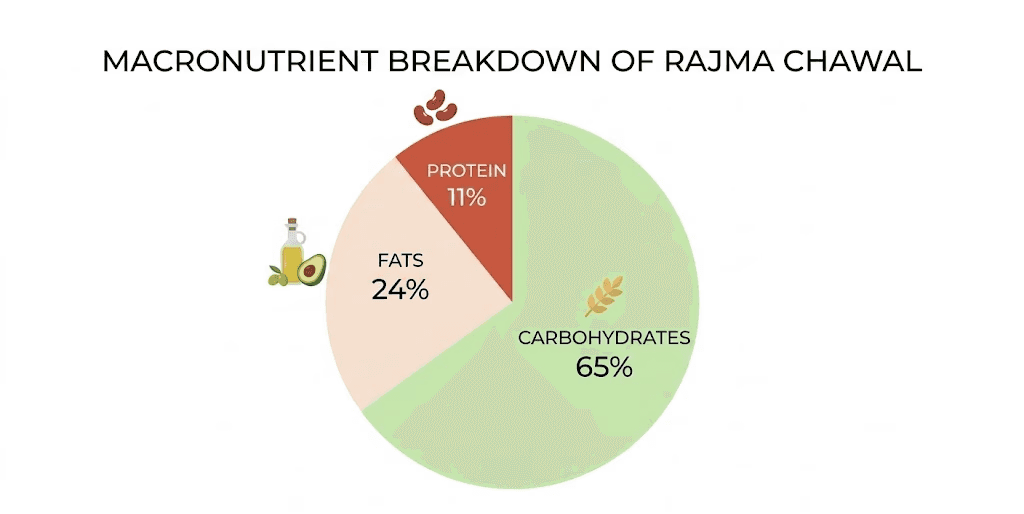
Component | Amount | Caloric Contribution | % of Total Energy |
Carbohydrates | 42.3 g | 169 kcal | 64.7% |
Total Fat | 7.05 g | 63 kcal | 24.1% |
Protein | 7.1 g | 28 kcal | 10.7% |
One serving provides roughly 13% of the total daily calorie requirement for a standard 2000 calorie diet.
Is Rajma Chawal healthy?
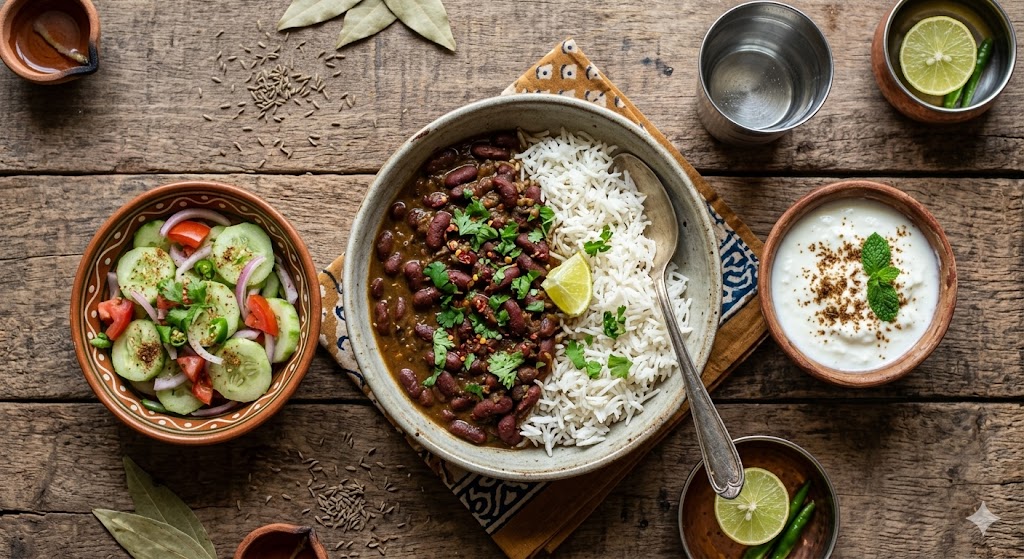
Yes! When prepared at home with minimal oil, Rajma Chawal is a goldmine of nutrients:
Rajma (Kidney Beans): A fiber champion! One cup of cooked rajma provides 26.2% of your daily Magnesium and is loaded with potassium to help manage blood pressure.
The "Complete Protein" Magic: Did you know that rice and beans are a match made in heaven? Rajma is high in an amino acid called lysine (which rice lacks), while rice provides methionine (which rajma lacks). Together, they form a complete protein—perfect for vegetarians!
Weight Loss Friendly: Because it's packed with fiber and protein, this meal has a high "satiety value." This is just a fancy way of saying it keeps you full for 4 to 5 hours, helping you dodge those mid-day snack cravings.
Heart & Sugar Support: Rajma has a very low Glycemic Index (GI) of about 24. This means it doesn't cause a scary sugar spike, making it a safe bet for diabetics when eaten in controlled portions.
Homemade vs. Restaurant: The Calorie Battle
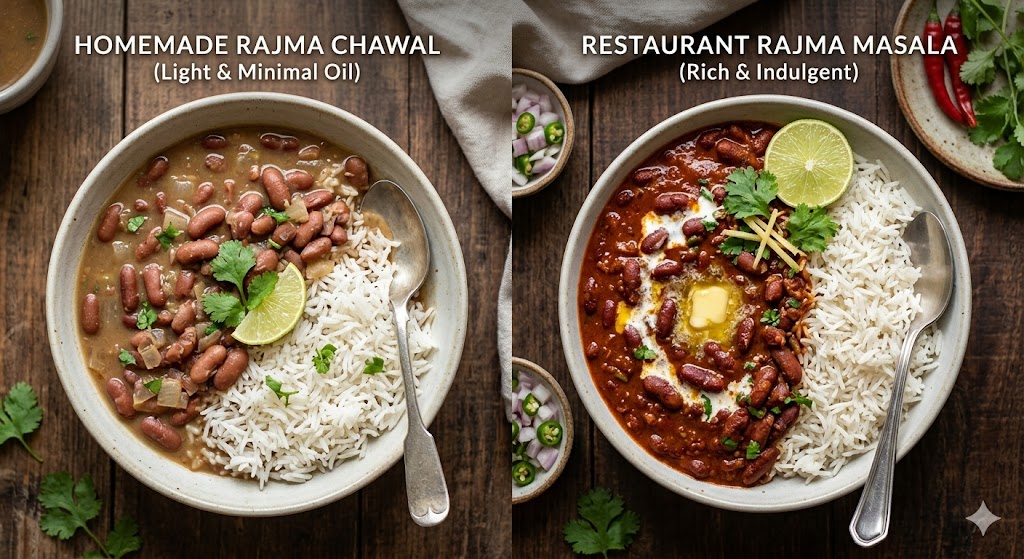
We all love a "Punjabi Rajma Masala" from our favorite dhaba, but your VoCal app will tell a different story. Restaurant versions often prioritize "lip-smacking" taste by adding extra butter, cream, and heavy oil tempering (tadka).
Metric | Homemade Rajma Chawal | Restaurant Rajma Chawal | Variance (%) |
Total Energy | 260–320 kcal | 400–480 kcal | +50-60% |
Total Fat | 5–8 g | 15–22 g | +200-275% |
Saturated Fat | <1.5 g | 5.0–9.0 g | +400% |
Sodium | 300–500 mg | 800–1200 mg | +140-160% |
VoCal Tip: When logging your meal, specify if it was "Homemade" or "Restaurant-style" to get the most accurate count!
How to burn 261 calories from a serving of Rajma Chawal?
If you're tracking your net calories, here is how much activity you'd need to balance out one standard serving:
Activity | Time Required |
Walking (brisk) | ~115 minutes |
Jogging (moderate pace) | ~33 minutes |
Bicycling | ~33 minutes |
Swimming | ~46 minutes |
Detailed Nutrition Facts: One Serving (261 kcal)
Based on data from the Indian Food Composition Tables (IFCT) and NIN guidelines:
Nutrient | Value | % Daily Value (DV) |
Energy | 261 kcal | 13% |
Protein | 7.1 g | 12% |
Fiber | 2.85 g | 9% |
Vitamin A | 179.9 mcg | 18% |
Folic Acid (B9) | 83.6 mcg | 28% |
Magnesium | 71.8 mg | 16% |
Potassium | 332.4 mg | 9% |
Iron | 1.4 mg | 7% |
Expert Tips for a Healthier Bowl
The Ratio Flip: Try a 60:40 ratio—more Rajma, less rice. This boosts protein and fiber while lowering the overall glycemic load.
Brown is Better: Swap white rice for brown rice or millets to increase your fiber even further.
Add a Side: Pair your bowl with a cucumber salad or a bowl of plain curd. The probiotics in curd help with digestion!
Beat the Bloat: Always soak your rajma for 8 to 12 hours and discard the water before pressure cooking. Adding a pinch of hing (asafoetida) or ginger to the tadka also helps.
Frequently Asked Questions (FAQs)
Q: Can I eat Rajma Chawal every day for weight loss?
A: You can, but keep the portions in check! Stick to one plate, use minimal oil, and load up on the beans more than the rice.
Q: Is it okay to eat Rajma at night?
A: Yes, as long as it's properly soaked and cooked. If you have a sensitive stomach, eat it for lunch when your digestion is strongest.
Q: Does rajma have more protein than other dals?
A: Rajma is one of the richest plant-based protein sources, especially when paired with grain, providing about 8g to 9g of protein per 100g of cooked beans.
Disclaimer: This content is for informational purposes only and does not constitute medical advice. Please consult a healthcare professional or nutritionist before making significant dietary changes.