

Let’s face it: we’ve all been there. You walk into the grocery store with the best intentions, filling your cart with gorgeous, bright green fresh spinach and crisp broccoli. Fast forward three days, and that spinach has morphed into a sad, slimy puddle in your crisper drawer, while the broccoli is looking yellow and limp.
Throwing away produce feels terrible for your wallet and the planet. But many of us still avoid the freezer aisle because we’ve been told that "fresh is always best."
The cold, hard truth? Modern food science completely busts this myth. When it comes to frozen vegetables vs fresh nutrition, frozen options are often just as healthy—and in some cases, actually more nutritious—than the fresh ones sitting on supermarket shelves.
Here is everything you need to know about how freezing locks in nutrients, which frozen veggies you should stock up on, and how to cook them to keep those vitamins intact.
The Deep-Freeze Science: Why Frozen Can Beat "Fresh"
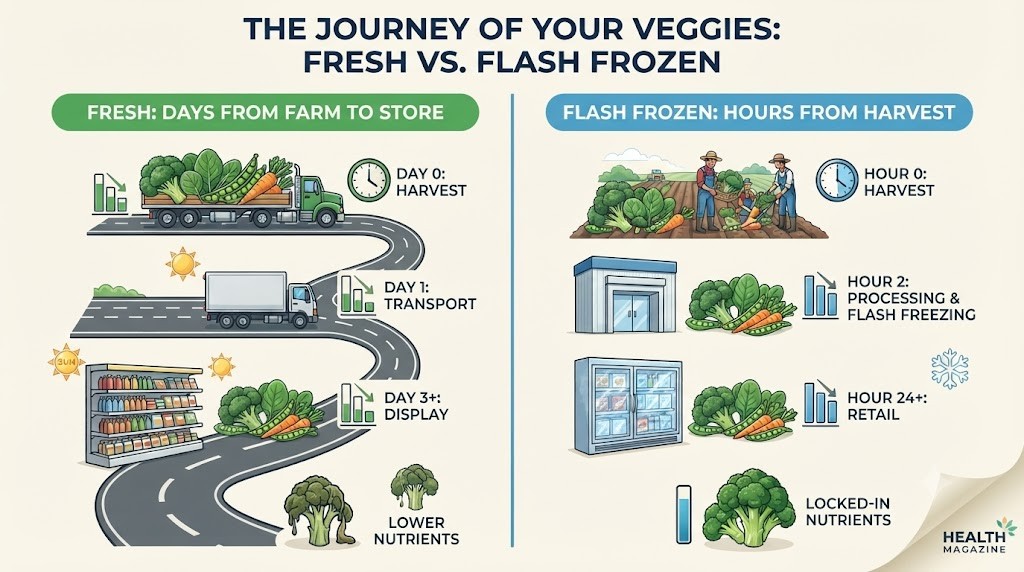
To understand why the freezer is your friend, we have to look at what happens to a vegetable the moment it's harvested.
Once picked, a vegetable is still technically "alive" and metabolically active. It begins using its own stored sugars and vitamins to keep its tissues from breaking down. Because fresh produce is often picked before it is fully ripe (so it can survive transport), its initial nutrient levels may not even be at their peak. By the time those fresh veggies are packed, shipped across the country, stacked in retail displays, and stored in your fridge, their nutrient levels have steadily dropped.
Commercial flash-freezing completely changes the game. Veggies destined for the freezer are harvested at peak ripeness, when they are at their absolute maximum nutrient density. Within hours of harvest, they undergo a quick step called "blanching"—a rapid dip in boiling water or steam.
As registered dietitians note, blanching deactivates the natural ripening enzymes that would otherwise cause the veggies to decay, lose their color, and get mushy during storage.
While blanching does cause a small initial loss of highly sensitive, water-soluble vitamins like Vitamin C and Vitamin B1, the subsequent rapid flash-freezing locks the remaining nutrients in place. Kept at a steady temperature of 0°F (-18°C) or lower, this nutrient matrix remains chemically stable for up to a year.
Studies from the University of California, Davis (UC Davis) show that the nutritional value of frozen produce is generally equal to—and sometimes even better than—their fresh-stored counterparts. Fresh veggies stored in the fridge steadily lose vitamins over time, while frozen veggies keep their nutritional wealth intact.
The Price Tag Showdown: Fresh vs. Frozen Costs
Besides preserving nutrients, frozen veggies are a fantastic way to meet daily dietary guidelines without breaking the bank.
National retail price data from the USDA Economic Research Service (ERS) shows that neither fresh nor processed forms are consistently cheaper; instead, costs depend on processing, transportation, and spoilage. Delicate, highly perishable fresh vegetables often carry high transport and handling fees that drive up their price at checkout.
Here is how the costs stack up per "cup equivalent" (a standard edible portion) based on USDA data, illustrating the financial perks of buying frozen:
Vegetable Type | Form | Average Price per Cup Equivalent (USD) | Spoilage & Processing Dynamics | Economic Advantage |
Spinach | Fresh | $1.77 | High shipping volume | Frozen Saves 38% |
Frozen | $1.10 | Condensed weight | ||
Sweet Corn | Fresh | $1.50 | High waste, rapid sugar decay | Frozen Saves 57% |
Frozen | $0.64 | Zero waste | ||
Carrots | Fresh (Raw) | $0.30 | Low spoilage, long shelf-life | Fresh Saves 49% |
Canned | $0.59 | Material and packaging costs | ||
Apples | Fresh | $0.50 | Long storage life | Fresh Saves 21% |
Applesauce (Canned) | $0.63 | Peeling and pureeing costs |
By mixing and matching fresh and frozen veggies, you can protect your wallet from seasonal price spikes and slash your household food waste—because with frozen, you only thaw what you actually need.
The 10 Best Dietitian-Recommended Frozen Vegetables
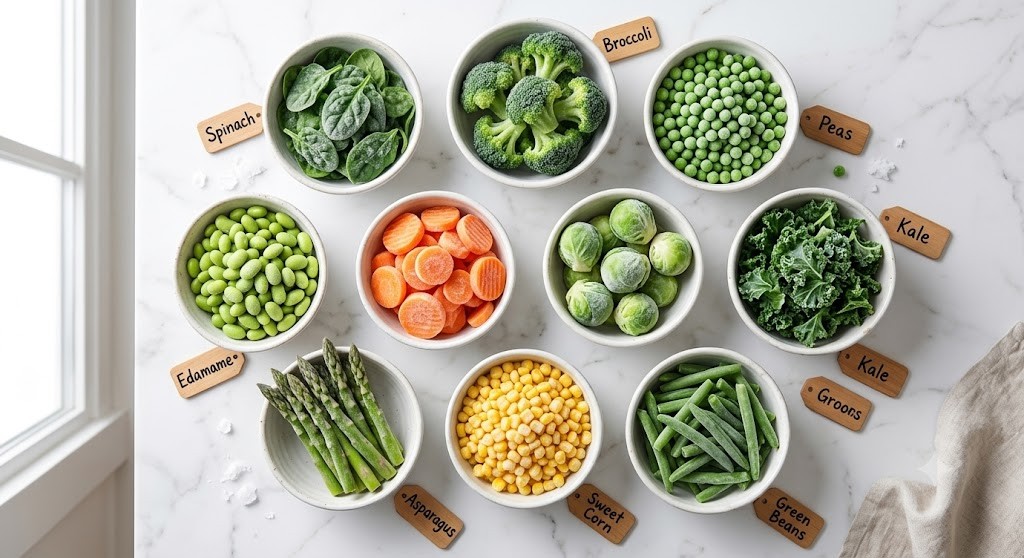
To help you get the most out of your grocery runs, clinical dietitians have ranked the top 10 frozen vegetables based on their nutrient retention, structural stability, and health benefits.
1. Spinach
Frozen spinach is a gold-medal winner in the freezer section. While fresh spinach stored in the fridge can lose up to 75% of its delicate Vitamin C within a week, flash-freezing stops this decline in its tracks.
Frozen spinach is an incredible source of lutein and zeaxanthin, delivering a massive 29.8 mg per cooked cup. These plant compounds are the only carotenoids that cross the blood-retina barrier to protect your eyes from blue light and reduce the risk of cataracts and macular degeneration.
The commercial freezing process also makes it easier for your body to extract Vitamin E from spinach, sometimes yielding levels 50% higher than fresh-stored leaves. Plus, it's incredibly low-carb and low-glycemic, making it perfect for managing blood sugar.
2. Broccoli
Broccoli is notoriously prone to shriveling and losing its nutrients when left on open supermarket displays. But once frozen, its nutrient profile becomes incredibly stable.
A single cup of cooked frozen broccoli provides around 80 mg of Vitamin C—nearly your entire daily requirement!
It is also rich in glucosinolates, which convert into sulforaphane during digestion. Sulforaphane supports liver detoxification and vascular health. UC Davis studies found that frozen broccoli has significantly higher levels of riboflavin (Vitamin B2) and Vitamin E than fresh-stored versions.
3. Green Peas
Peas are chemically frustrating. Within hours of being picked, their natural sugars convert into starch, making them taste mealy and bland. Flash-freezing immediately after harvest stops this process, locking in their natural sweetness, bright color, and dense nutrition.
They are an excellent source of clean, plant-based protein, dietary fiber, and essential minerals like zinc and iron.
A single cup of cooked frozen peas also serves up 3.8 mg of eye-healthy lutein and zeaxanthin.
4. Kale
Kale's tough, fibrous structure makes it exceptionally resilient during the flash-freezing process.
A single cup of cooked frozen kale delivers a massive 25.6 mg of eye-protecting lutein and zeaxanthin, along with bone-strengthening Vitamin K, Vitamin A, and bioavailable calcium.
Its robust cellular walls prevent nutrients from leaching out during preparation, making frozen kale an extremely stable and convenient addition to your morning smoothies or soups.
5. Brussels Sprouts
Brussels sprouts are incredibly dense, which means they lose very few water-soluble nutrients during the industrial blanching step.
A single cup of cooked frozen Brussels sprouts packs 75 mg of Vitamin C and 2.4 mg of lutein and zeaxanthin.
They are loaded with soluble fiber, which helps slow down sugar absorption in the gut and supports healthy cholesterol levels.
6. Green Beans
Fresh green beans can easily become limp and fibrous during refrigerated transport. Flash-freezing keeps them at their peak tenderness and structural snap.
Clinical tests show that frozen green beans experience virtually no nutrient loss during freezing, offering an outstanding source of silicon (which supports bone and tissue health) as well as manganese and Vitamin C.
7. Sweet Yellow Corn
Sweet yellow corn is a prime example of a vegetable that is both nutritionally and economically superior in its frozen form. Fresh corn on the cob loses its sweetness rapidly after harvest as its sugars turn to starch.
Flash-freezing sweet corn kernels immediately after harvest preserves their natural sweetness and prevents a mealy texture.
One cup of cooked frozen corn delivers 1.5 mg of lutein and zeaxanthin, and processing actually makes its dietary fiber more soluble and easier for your gut to use.
8. Asparagus
Asparagus is highly seasonal and notoriously delicate. While canning asparagus is quite harsh—causing a 30% loss of Vitamin C—flash-freezing is highly protective, resulting in a mere 10% loss.
Frozen asparagus is an excellent source of folate (Vitamin B9), which is crucial for cellular repair and DNA synthesis, as well as chromium, which helps improve insulin sensitivity.
9. Edamame (Soybeans)
Edamame is a plant-protein superstar, offering all nine essential amino acids needed for muscle repair and metabolic health.
The commercial freezing process keeps this high-quality protein, along with healthy fats, fiber, and 1.6 mg of lutein and zeaxanthin per cup, completely stable.
The natural plant estrogens (isoflavones) in edamame also remain stable in sub-zero temperatures, providing long-term cardiovascular support.
10. Carrots
Carrots are famous for their high concentrations of beta-carotene, which your liver converts into active Vitamin A to support eye health and immune function.
While water-soluble vitamins can easily break down during storage, fat-soluble carotenoids are incredibly tough.
In fact, the heat from blanching and the physical action of freezing soften the carrot’s tough cell walls. This actually makes the beta-carotene more "bioaccessible," meaning your body can absorb more Vitamin A from cooked frozen carrots than from raw fresh ones!
The Science of Water vs. Dry Matter in Frozen Veggies
How a vegetable reacts to freezing and thawing depends entirely on its physical structure, pH, and water content.
Vegetables with high dry-matter percentages (like peas and corn) maintain their shape beautifully. On the other hand, watery vegetables with delicate tissues (like spinach) require rapid flash-freezing to prevent their cell walls from bursting, which causes mushiness when thawed.
Here is a quick look at the physical chemistry of your favorite frozen veggies:
Vegetable | pH Range | Water Content (%) | Dry Matter Content (%) | Structural Profile | Lutein + Zeaxanthin (mg per cup) |
Spinach | 5.93 - 7.90 | 91.5% | 8.5% | Delicate tissues; prone to rapid wilting | 29.8 mg |
Kale | 6.00 - 7.00 | 89.0% | 11.0% | Tough, fibrous leaves; protects carotenoids | 25.6 mg |
Green Peas | 6.87 | 72.0% | 27.14% | Dense starch-storing tissues; highly stable | 3.8 mg |
Brussels Sprouts | 6.50 | 86.27% | 13.73% | Compact layered leaves; limits leaching | 2.4 mg |
Broccoli | 6.96 | 91.43% | 8.57% | Delicate florets; highly stable Vitamin C | 2.0 mg |
Edamame | 6.50 - 6.80 | 75.0% | 25.0% | High protein/lipid matrix; very stable | 1.6 mg |
Sweet Corn | 7.46 | 76.68% | 23.32% | High dry matter; low-acid; locks in sugars | 1.5 mg |
Green Beans | 6.38 | 88.02% | 11.98% | Moderate water content; keeps snap and color | 0.56 mg |
Carrot | 6.57 | 90.11% | 9.91% | Tough root tissues; blanching releases nutrients | 0.25 - 0.51 mg |
Culinary Rules: Stop Boiling Your Frozen Veggies!
Industrial flash-freezing is amazing at keeping nutrients intact, but what you do in your kitchen determines how many of those vitamins make it to your plate.
Because frozen veggies are already blanched (partially cooked), they require much shorter cooking times at home, which is great for preserving nutrients. However, choosing the wrong cooking method can quickly undo all of that hard work.
The Big Mistake: Boiling
Boiling is the absolute worst way to cook frozen vegetables. Submerging them in boiling water causes water-soluble nutrients (like Vitamin C and B vitamins), plant pigments, and minerals (like potassium and magnesium) to leak out of the softened tissues and into the cooking water—which usually gets poured down the drain.
Studies show that boiling broccoli can cause a 33% to 38% loss of Vitamin C and a 27% loss of its vibrant green chlorophyll. The only time boiling is okay is if you are making a soup or stew, where you are actually consuming the cooking liquid!
The Gold Standards: Steaming & Microwaving
To keep those healthy compounds in your food, stick to these two nutrient-protecting methods:
Steaming: Because the vegetables stay elevated above the boiling water, they do not make direct contact with the liquid, preventing water-soluble vitamins from leaking out. Steaming broccoli results in virtually zero loss of Vitamin C and fully preserves its cancer-fighting glucosinolates.
Microwaving: This is actually the champion of nutrient retention. Microwaves heat the water molecules already inside the food, cooking it incredibly fast without needing extra water. Clinical trials show that microwaving preserves over 90% of a vegetable’s Vitamin C and total antioxidant capacity.
Here is how different cooking methods impact nutrient retention:
Nutrient / Compound Class | Boiling | Steaming | Microwaving | Sautéing / Stir-Frying | Primary Loss Mechanism |
Vitamin C (Ascorbic Acid) | 62% - 67% | 95% - 100% | 90% - 95% | 76% - 84% | High heat sensitivity and water leaching |
Chlorophyll (Color) | 73% - 77% | 98% - 100% | 84% - 88% | 82% - 85% | Thermal breakdown of pigments |
Soluble Proteins & Sugars | Significant Loss | Fully Retained | Highly Conserved | Moderate Loss | Cell breakdown and osmotic leaching |
Glucosinolates (Sulforaphane) | Severe Depletion | Minimal Loss | Low Loss | High Loss | High heat sensitivity and solubility |
Carotenoids (Beta-Carotene) | 72% - 87% | 90% - 98% | 88% - 95% | 85% - 92% | Oxidation from excessive heat |
Minerals (K, Mg, Zn, Cu) | High Leaching | Minimal Leaching | Zero Leaching | Zero Leaching | Dissolution into cooking water |
4 Smart Shopper Hacks for the Frozen Aisle
To get the absolute best results from your frozen vegetables, follow these dietitian-approved rules:
1. Master the Squeeze Test
When grabbing a bag of frozen veggies, give it a gentle squeeze. The vegetables should feel like loose, individual pieces. If the bag feels like a single, solid block of ice, it means the product has thawed and refrozen somewhere during shipping or storage. Refreezing breaks down the plant's cell walls, leading to a mushy texture and a loss of water-soluble vitamins when cooked.
2. Guard Against Hidden Sodium and Fats
Always check the nutrition label. Choose plain, single-ingredient vegetables and skip those that come pre-packaged with cheese sauces, butter, or heavy seasonings. You can easily add your own healthy fats and low-sodium seasonings at home.
3. Kick Out Excess Air
Air is the ultimate enemy of frozen food. When air touches the surface of frozen veggies, it causes dehydration and oxidation, leading to tough, leathery, grayish-brown spots known as "freezer burn". While freezer-burned food is safe to eat, it tastes bland and woody. Once you open a bag, seal it tightly with a freezer clip or transfer the remaining veggies to a heavy-duty, ziplock freezer bag, squeezing out all the air before sealing.
4. Practice the FIFO Rule
Keep your freezer organized by using the "First In, First Out" (FIFO) method. Write the purchase date on your bags with a marker and move older items to the front of the freezer so they get used first. Consuming your frozen veggies within 3 to 6 months of purchase ensures you enjoy them at their absolute peak of color, flavor, and nutrition.
Beat Logging Fatigue with Voice-Activated Calorie Tracking
We all know that eating more vegetables is key to healthy eating, weight loss, and better metabolic health. But let’s be honest: tracking your food is one of the hardest habits to maintain.
Traditional calorie tracking is notorious for causing "logging fatigue". Having to manually type in every single ingredient, search through unverified databases, and guess portion sizes takes forever. It can add 3 to 5 minutes of friction to every meal, which is why so many people end up abandoning their health goals.
That’s where VoCal comes in.
VoCal is a voice-activated calorie counter that lets you track your meals naturally in under 15 seconds. Instead of tapping through complicated search menus, you simply tap the microphone and speak your meal naturally:
"I had two cups of steamed frozen broccoli with a six-ounce grilled salmon fillet and half a cup of brown rice."
VoCal’s advanced artificial intelligence instantly processes your voice note, identifies the foods and cooking methods, pulls accurate data from verified databases, and logs your calories and macros.
This is an incredible tool for anyone following a low-carb or ketogenic diet. Low-carb protocols typically restrict carbohydrates to 60 to 130 grams a day, while keto limits them to under 50 grams to maintain ketosis. By letting you log non-starchy frozen vegetables effortlessly, VoCal helps you accurately track net carbs, glycemic load, and fiber in real-time, helping to stabilize your blood sugar.
Frequently Asked Questions (FAQs)
Are frozen vegetables really as healthy as fresh ones?
Yes! In fact, because frozen vegetables are flash-frozen at peak ripeness right after harvest, they often contain higher levels of sensitive vitamins (like Vitamin C and Vitamin E) than "fresh" store-bought vegetables that have spent days in transport and on retail shelves.
Does the blanching process destroy the nutrients in frozen vegetables?
While the quick steam or hot water dip involved in blanching does cause a small initial loss of water-soluble vitamins like Vitamin C and B1, it is highly beneficial overall. Blanching deactivates the ripening enzymes that would otherwise cause rapid decay and nutrient loss during long-term storage.
Can I cook frozen vegetables without thawing them first?
Absolutely! Most frozen vegetables are designed to be cooked directly from their frozen state. Thawing them beforehand can actually cause them to lose their crisp texture and become mushy.
Why do some frozen vegetables get mushy when I cook them?
Mushiness usually happens for two reasons: either the veggies partially thawed and refroze in transit (causing ice crystals to rupture the plant cell walls), or they were cooked using a wet method like boiling. Stick to steaming or microwaving to preserve their structural snap.
What is the most nutrient-protective way to cook frozen vegetables?
Microwaving and steaming are the best methods. Because they use minimal water and very fast cooking times, they prevent water-soluble vitamins and antioxidants from leaching out of the vegetables, retaining over 90% of their nutritional value.
Disclaimer: This article is for informational and educational purposes only and does not constitute medical advice, diagnosis, or treatment. Always consult with a qualified healthcare professional or a registered dietitian before starting any new weight-loss program, making significant changes to your diet, or following specific exercise routines.