

Happy summer, wellness warriors! If you are focusing on crushing your health and weight loss goals this year, you already know that vegetables are your absolute best friends. They are packed with vitamins, loaded with fiber, and keep you feeling full without weighing you down.
But let's be real—when you are standing in the grocery store aisle, you might find yourself staring at the colorful bags in the freezer section and wondering: Is there really a difference when we compare frozen vegetables vs fresh nutrition? Are those convenient frozen florets actually good for your weight loss journey, or are they just a second-rate backup plan?
Before we dive into the frozen vs. fresh showdown, let’s quickly remind ourselves why veggies are the ultimate weight loss cheat code. Vegetables provide:
Essential vitamins and minerals: Getting your daily dose of vitamins A, B, C, E, and K, plus minerals like potassium, magnesium, calcium, and iron keeps your metabolism humming.
Dietary fiber: Fiber is a digestion superstar that stabilizes blood sugar, keeps your gut happy, and tells your brain, "Hey, we're full!".
Vibrant color compounds: Those bright greens, deep reds, and rich oranges represent unique plant compounds that fight oxidative stress and keep your body thriving.
According to the Dietary Guidelines for Americans, adults should aim for at least 2 ½ cups of vegetables each day. But if the thought of washing, chopping, and prep work makes you want to order takeout instead, frozen veggies might just be your saving grace. Let's see what the nutrition experts have to say!
The Science of Satiety: Feeling Full on Fewer Calories
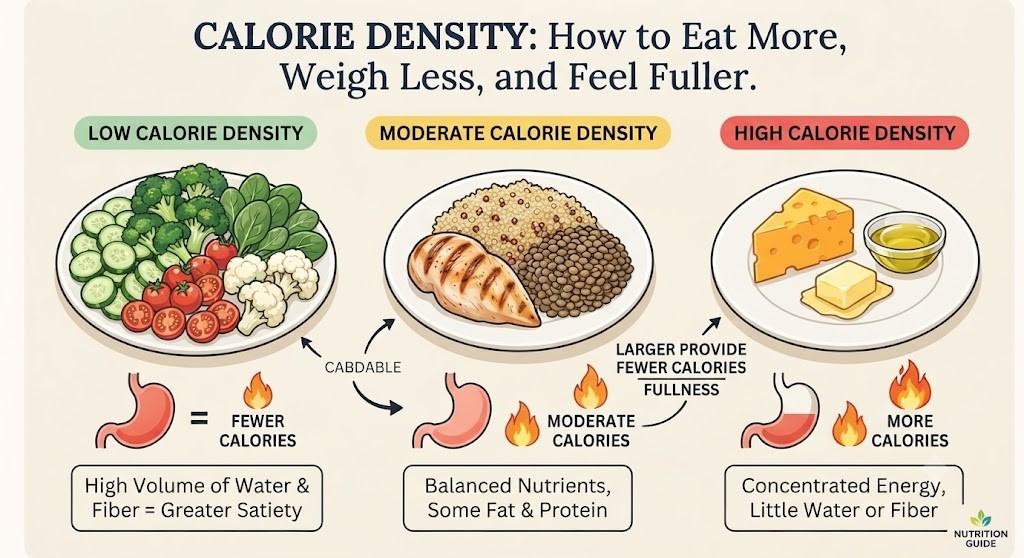
If you want to lose weight without feeling like you're starving, you need to understand the concept of "calorie density." Simply put, calorie density is how many calories are packed into a specific weight of food. The simple science behind it looks like this:
Calorie Density = Energy (kcal) / Mass (g)
Foods with a low calorie density (like veggies!) give you a massive, satisfying portion for very few calories. When you eat these high-volume foods, the physical bulk stretches your stomach wall, activating "stretch receptors" that instantly signal your brain that you are full. At the same time, the fiber slows down your digestion, keeping you satisfied for hours.
But keep in mind—not all veggies are created equal when it comes to weight loss. Large-scale studies from the Harvard T.H. Chan School of Public Health show that while non-starchy veggies (like cauliflower, spinach, and zucchini) are fantastic for weight loss, starchier options (like corn, peas, and potatoes) can sometimes cause scale plateaus if eaten in large amounts.
To show you how calorie density works in the real world, check out this breakdown of common foods based on USDA FoodData Central and Mayo Clinic weight-loss resources:
Food Item | Food Category | Calorie Density (kcal/g) | Primary Nutritional Characteristic | Impact on Satiety |
Cucumber | Non-Starchy Vegetable | 0.15 | 95% Water Content | High physical volume; rapid stretch-receptor activation |
Tomato | Non-Starchy Vegetable | 0.18 | Rich in Lycopene and Vitamin C | High moisture content; low glycemic load |
Lentils (Cooked) | Legume / Lean Protein | 1.10 | High in Dietary Fiber and Plant Protein | High; delayed gastric emptying due to protein-fiber synergy |
Quinoa (Cooked) | Whole Grain | 1.20 | Complex Carbohydrates and B-Vitamins | Moderate; sustained energy release without glucose spikes |
Grilled Chicken | Lean Protein | 1.65 | High Protein; Low Saturated Fat | High; protein stimulates satiety hormone release |
Feta Cheese | Dairy / Fat | 2.60 | High Sodium and Saturated Fat | Low; highly concentrated calories per unit of mass |
Olive Oil | Dietary Fat | 8.80 | Monounsaturated Fatty Acids | Extremely Low; minimal volume contribution to the stomach |
Harvard nutrition experts emphasize that building "skill power" rather than relying on pure "willpower" is the secret to weight loss. A perfect example of skill power is using a voice-based calorie tracking app like VoCal to log your meals instantly. Instead of opening an app and typing out endless ingredients, you can simply speak into your phone to track your veggies in real-time. This helps you stay perfectly aware of your daily calorie density without any of the tracking friction.
Is There a Difference Between Fresh and Frozen Veggies?
We’ve all been there: you buy a beautiful head of fresh broccoli, put it in the crisper drawer with the best intentions, and find it turned into a sad, yellowing science project a week later.
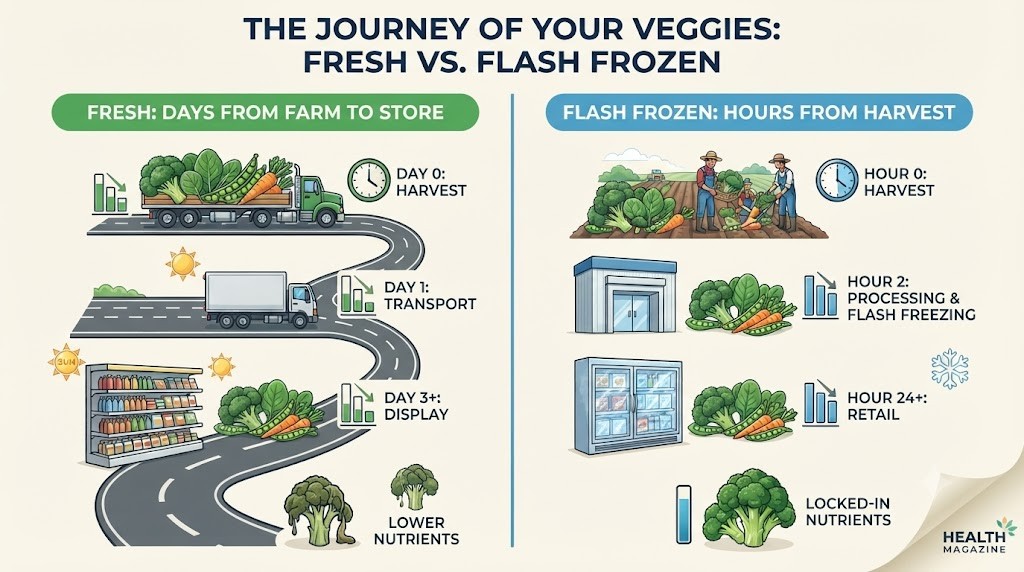
Here is a scientific reality check: fresh veggies start losing their nutrients the second they are picked. Because they have to travel long distances to get to your grocery store, they are often harvested before they are fully ripe. During transit and storage, they respire, lose moisture, and undergo oxidative stress, which degrades sensitive vitamins like vitamin C and folate.
On the flip side, commercial frozen vegetables are harvested at absolute peak ripeness when their nutrient levels are highest. Within hours of leaving the field, they are blanched and quick-frozen at sub-zero temperatures.
Nutrition experts call freezing "nature's pause button" because it completely locks in the vegetable's nutrients, flavor, and color. The preliminary step, blanching (a quick dip in boiling water or steam), stops the natural enzymes that would otherwise cause the veggie to rot and lose its color.
While blanching can cause a minor loss (about 25%) of water-soluble vitamins like Vitamin C, the remaining nutrients are completely stabilized. In fact, research from the University of Georgia found that frozen vegetables often have equivalent or even higher levels of vitamins A, C, and folate than fresh veggies that have been sitting in a standard refrigerator for five days.
Nutrition Metric | Fresh Produce (At Harvest) | Fresh Produce (Stored 5 Days) | Frozen Produce (Blanched & Quick-Frozen) |
Vitamin C Content | Maximum at peak ripeness | Degraded significantly due to oxidation | Retained at ~75% after blanching; highly stable at 0°F |
Beta-Carotene (Vitamin A) | High | Variable; can decrease up to 10% in green beans | Highly stable; heat exposure can increase bioavailability |
Folate Stability | Optimal | Degrades over time due to metabolic respiration | Stable initially; degrades slowly over 3 to 6 months in freezer storage |
Enzymatic Activity | Active; causes gradual decay and off-flavors | Highly active; drives cell wall breakdown | Deactivated by the blanching process |
Microbial Safety | Subject to bacterial growth at room temp | Gradual risk of mold, yeast, and bacterial spoilage | Microbes rendered completely dormant at 0°F |
Texture Integrity | Crisp and rigid cell walls | Loss of turgor pressure; wilting | Water expansion can rupture cell walls, softening texture |
What Are the Benefits of Frozen Vegetables?
Choosing frozen veggies over fresh isn't just lazy—it's incredibly smart! According to the Academy of Nutrition and Dietetics, families who include frozen options in their routine often have overall better diet quality. Here is why they are a must-have for weight loss:
Nutrient content: Because they are frozen immediately after harvest, they lock in peak-ripeness nutrients and hold onto them for months.
Affordability: Frozen vegetables are typically much cheaper than fresh, and their prices don't spike when a veggie goes out of season.
Convenience: They come pre-washed, pre-peeled, and pre-chopped. When you're exhausted after a long workday, having a bag of ready-to-cook veggies in the freezer completely removes the prep barrier.
Storage and zero waste: Frozen veggies have a freezer shelf-life of up to 1 year. You only pour out and cook what you need, leaving the rest safely frozen. No more throwing away soggy greens and wasting your hard-earned cash!
(Note: This concerns simple, plain frozen vegetables. Any frozen vegetables that come with pre-made cheese, butter, or garlic sauces can sneak in massive amounts of saturated fats, calories, and excess sodium. Under FDA guidelines, always double-check the Nutrition Facts label and shop for low-sodium, simple-ingredient lists!)
How Do I Make Tasty Frozen Veggies?
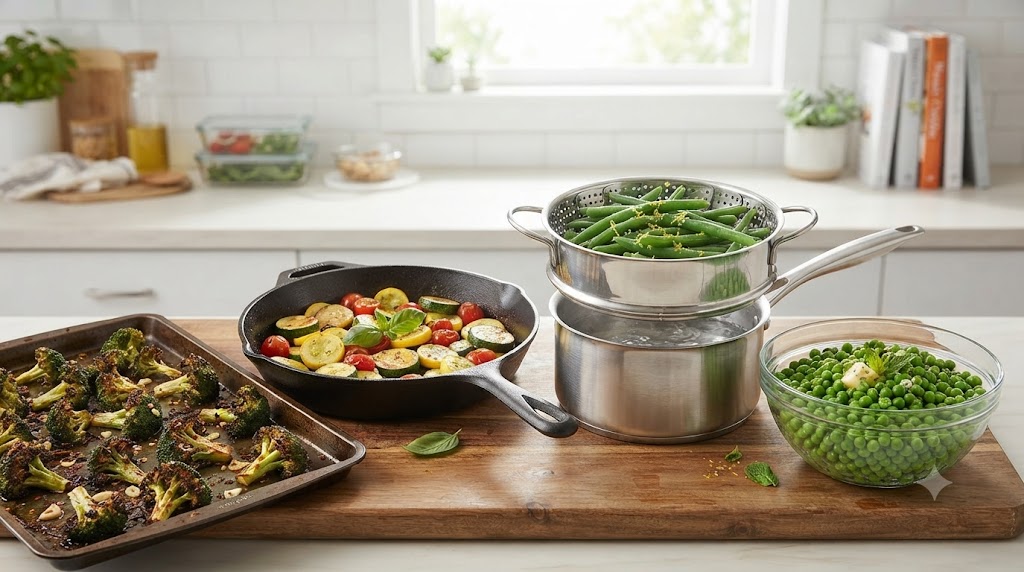
If you think frozen veggies are mushy, bland, or boring, you've likely been cooking them wrong! When water in vegetables freezes, it expands into ice crystals that can break the cell walls. If you boil them, they absorb even more water and turn into a mushy mess.
To keep that satisfying crunch and lock in maximum flavor, try these easy, expert-backed cooking methods:
Roast them hot: Toss your bone-dry, unthawed frozen broccoli, Brussels sprouts, or cauliflower in a tiny bit of olive oil and roast them at 400°F to 425°F. The high heat quickly evaporates moisture and caramelizes the natural sugars for a delicious, crispy bite.
Steam with care: Use a raised steamer basket over boiling water to heat veggies like green beans or carrots quickly. This prevents them from sitting in water, which limits nutrient loss.
Microwave in a flash: Place frozen veggies in a microwave-safe bowl with just a single tablespoon of water, cover, and microwave for a few minutes. This ultra-fast method is excellent for preserving heat-sensitive vitamins!
The skillet sauté: Flash-cook frozen zucchini slices or pepper-and-onion blends in a hot, dry skillet over medium-high heat to evaporate surface moisture and get a perfect sear.
Vegetable Type | Optimum Freezer Life | Ideal Cooking Method | Texture Retention Technique | VoCal Voice Logging Phrase Example |
Broccoli Florets | 3 - 6 Months | Roasting at 425°F | Toss dry in light olive oil; do not thaw before cooking | "Log one cup of roasted frozen broccoli" |
Spinach Blocks | 3 Months | Gentle Steaming or Direct Simmer | Press out excess water thoroughly post-cooking | "Log one half-cup of boiled frozen spinach" |
Zucchini Slices | 3 - 6 Months | Pan Sauté with Garlic | Flash-cook in a highly heated pan for under five minutes | "Log eighty grams of sautéed zucchini" |
Green Peas | 6 Months | Brief Microwaving | Microwave in a sealed bowl with one tablespoon of water | "Log three tablespoons of microwaved sweet peas" |
Riced Cauliflower | 3 - 6 Months | Dry Pan Searing | Cook in a dry, non-stick skillet to evaporate surface moisture | "Log one cup of skillet-cooked cauliflower rice" |
Fresh vs. Frozen: What’s the Bottom Line?
When it comes to the battle of frozen vegetables vs fresh nutrition, the verdict is clear: both are fantastic options! However, frozen vegetables are an absolute secret weapon for weight loss. They are budget-friendly, prepped and ready to go, and locked in at peak nutrition, making it easier than ever to fill your plate with high-volume, low-calorie goodness.
Ready to make your weight loss journey even simpler? Ditch the manual calorie-counting apps that require a math degree to log your dinner. With VoCal, you can log your meals in seconds using just your voice. Just speak your meal naturally—like "Log one cup of roasted frozen cauliflower"—and let our smart voice-tracking technology do the heavy lifting.
Happy veggie eating, and happy voice-logging!
Frequently Asked Questions (FAQs)
Do frozen vegetables lose nutrients when they are blanched?
Some heat-sensitive, water-soluble nutrients like vitamin C can decrease by about 25% during the quick blanching process. However, once frozen, those nutrients are completely locked in place. On the other hand, fresh veggies sitting in your fridge lose nutrients every single day, meaning frozen options often end up being the healthier choice by the time they hit your plate.
Are frozen vegetables good for weight loss?
Absolutely! Non-starchy frozen vegetables (like broccoli, spinach, cauliflower, and green beans) are very low in calorie density. This means you can eat massive portions to keep your physical hunger at bay while easily maintaining a calorie deficit.
Should I buy organic or conventional frozen vegetables?
Both organic and conventional frozen vegetables offer excellent nutrition. The most important factor for weight loss is ensuring you choose plain frozen veggies without any pre-made sauces, added sodium, or butter.
How long do frozen vegetables last in the freezer?
For the absolute best nutritional value, taste, and texture, aim to eat your frozen vegetables within 3 to 6 months of purchase, and make sure your freezer is set to a constant 0°F or lower.
Disclaimer: This article is for informational and educational purposes only and does not constitute medical advice, diagnosis, or treatment. Always consult with a qualified healthcare professional or a registered dietitian before starting any new weight-loss program, making significant changes to your diet, or following specific exercise routines.