

If you feel like your fitness journey is a constant battle between your appetite and your goals, it might be time to look back in history—specifically about 7,000 years!
Millets are making a massive comeback as the "superfoods" of the century. In fact, the United Nations even declared a recent "International Year of Millets" to celebrate these tiny, ancient grains as "smart foods" that are good for you and the planet. If you’re looking to shed some pounds without feeling like you’re starving, millets are about to become your new best friend.
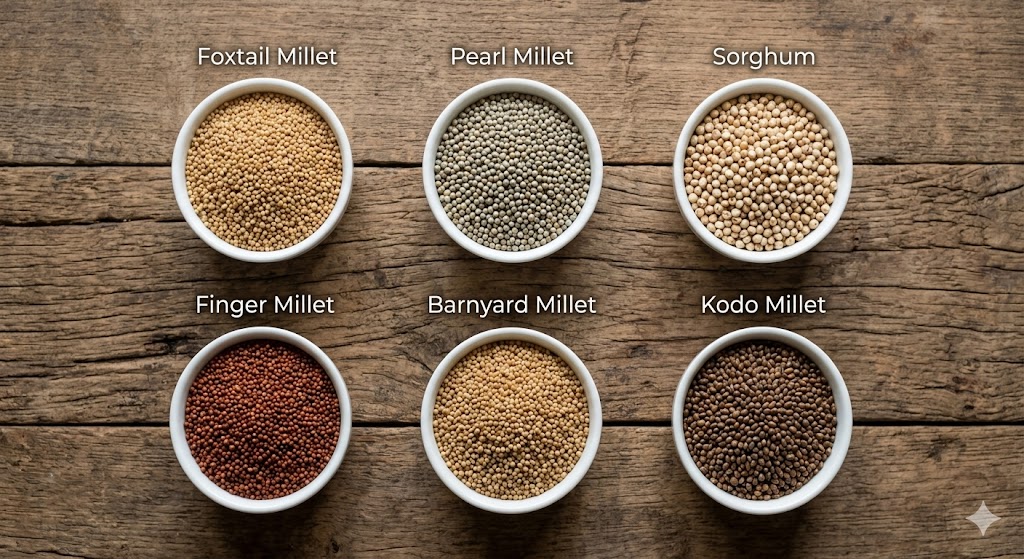
Why are Millets the Ultimate Weight Loss Tool?
Losing weight isn't just about eating less; it’s about choosing foods that work for your metabolism. Millets do this through three main "superpowers":
1. The "Maximum Fullness" Factor
Millets are packed with dietary fiber—some varieties have up to 30 times more fiber than polished white rice. This fiber expands in your stomach, signaling to your brain that you are full and satisfied for up to 5 hours. This naturally prevents the urge to snack between meals.
2. No More Energy Crashes
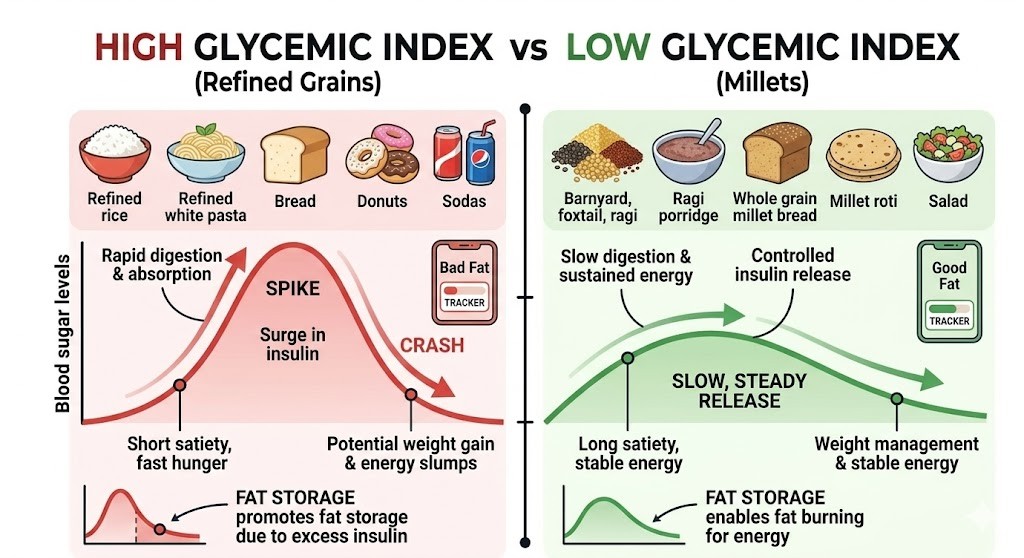
Unlike refined grains (like white bread or white rice) that cause your blood sugar to spike and then crash, millets have a Low Glycemic Index (GI). They release energy slowly and steadily, which keeps your insulin levels stable and keeps your body in "fat-burning mode" rather than "fat-storage mode".
3. The Fat-Storage Blocker
Recent science has discovered that specific compounds in Little Millet can actually bind to the FTO protein—the gene in our bodies responsible for fat mass and obesity. In laboratory simulations, these natural compounds showed stronger binding energy (up to 8.83 kcal/mol ) than some standard anti-obesity medications.
Comparing the "Millet Squad"
Not all grains are created equal. Check out how these varieties compare to standard white rice to see why the switch is so effective for your waistline.
Grain Type | Protein (g/100g) | Fiber (g/100g) | Calories (kcal) | Glycemic Index (GI) |
White Rice | 6.8 | 0.4 | 365 | 73 (High) |
Barnyard Millet | 6.2 | 10.1 | 300 | 50-55 (Low) |
Foxtail Millet | 12.3 | 8.0 | 331 | 50-55 (Low) |
Kodo Millet | 8.3 | 9.0 | 309 | 50-55 (Low) |
Pearl Millet | 11.6 | 8.0 | 361 | 54-68 (Medium) |
Finger Millet | 7.3 | 3.6 | 328 | 70-75 (Med/High) |
Which Millet Should You Pick?
While all millets are healthy, some are "specialists" for specific fitness goals:
Barnyard Millet: This is the heavyweight champion of weight loss. It has the lowest calories of all the grains (300 kcal per 100g) and is incredibly filling.
Foxtail Millet: If you’re hitting the gym, this is for you. It’s high in protein (12.3g per 100g), which helps you burn fat while maintaining lean muscle mass.
Finger Millet: Famous for its high calcium content (344mg), this grain contains an amino acid called tryptophan that acts as a natural appetite suppressant.
Sorghum: A gluten-free powerhouse that is rich in iron and fiber, helping to lower bad cholesterol while keeping your metabolism active.
3 Easy Recipes for Weight Loss (Vegetarian)
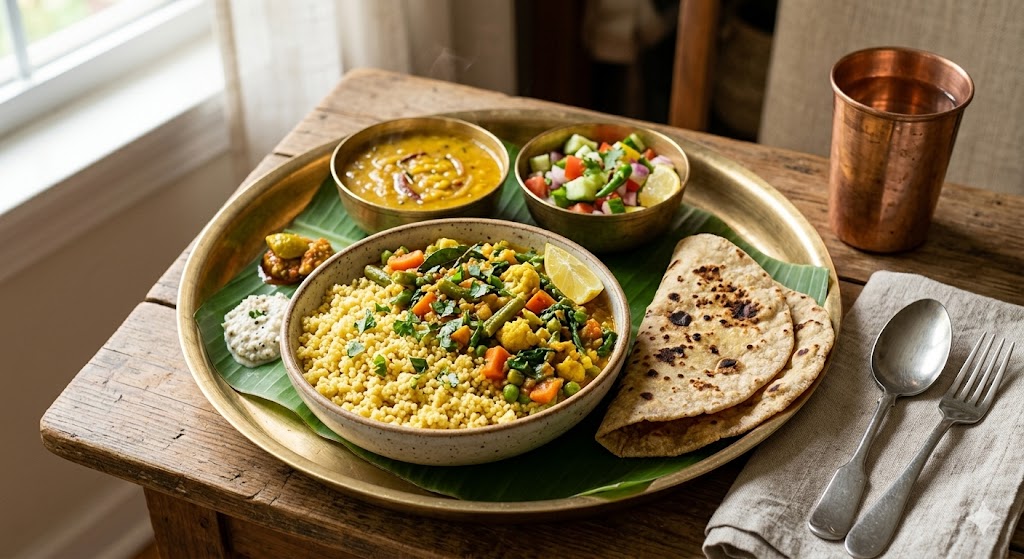
Millets are incredibly versatile. You can use them just like rice, quinoa, or oats!
1. Savory Breakfast Porridge (Foxtail Millet)
The Goal: High protein to fuel your morning.
How-to: Sauté mustard seeds and your favorite veggies (carrots, peas, onions). Add 2.5 cups of water for every 1 cup of soaked millet. Simmer until the water is absorbed and the grain is tender.
2. One-Pot Lentil and Grain Stew (Barnyard Millet)
The Goal: The lowest-calorie meal that still feels like a hug.
How-to: Cook soaked Barnyard millet and yellow lentils together in a pot with turmeric, ginger, and plenty of greens. It’s light, easy to digest, and very satisfying.
3. Grain-Free Flatbread (Sorghum)
The Goal: A gluten-free replacement for standard bread.
How-to: Mix Sorghum flour with hot water to create a dough. Roll it thin and cook it on a dry skillet. Serve it with a bowl of lentil soup or roasted vegetables.
Pro-Tips for Success
Always Soak: Soak your millets for at least 4–8 hours before cooking. This breaks down "antinutrients" like phytic acid, making the minerals easier for your body to absorb and the grain easier to digest.
The Substitution Strategy: Don't just add millets to what you're already eating. Instead, replace your daily white rice or white bread with a millet of your choice.
Hydrate: Because millets are so high in fiber, your body needs extra water to process them efficiently. Keep a water bottle nearby!
Consistency is Key: Research shows that people who consistently replaced refined grains with millets saw a 7.0% reduction in BMI over 12 to 16 weeks.
Start Your Journey with VoCal!
Ready to swap your refined grains for the ancient power of millets? Tracking your progress shouldn't be a chore.
With VoCal, you can track your daily millet intake effortlessly using just your voice. Simply tell the app what you ate, and we'll handle the calorie and nutrient counting for you. Start your 12-week transformation today and see how these ancient grains can change your life!
FAQs
Are millets better than rice for weight loss?
Absolutely. Millets have significantly more fiber and a lower glycemic index, which helps control hunger and prevents the body from storing excess fat.
Can I eat millets every day?
Yes, they can be a daily staple. However, experts recommend rotating between different types (like Sorghum one day and Foxtail the next) to get a wider range of nutrients.
Will millets help reduce belly fat?
Yes, when combined with a balanced diet and exercise. Their high fiber content improves digestion and reduces overall calorie intake by keeping you full longer.
Disclaimer: This article is for informational purposes only and does not constitute medical advice. Consult a healthcare professional before making major dietary changes, especially if you have conditions like hypothyroidism or celiac disease.