
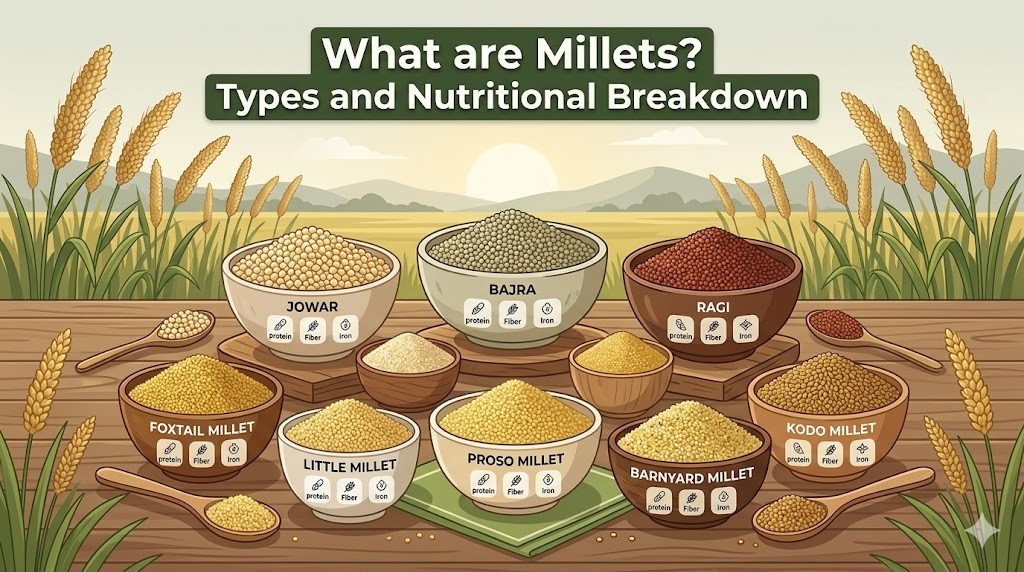
Millets might look like tiny birdseed, but they are actually powerful "Nutri-cereals" that have been feeding humans for over 10,000 years. While they were once known as "orphan crops" because they were overshadowed by wheat and rice, these ancient grains are having a major glow-up in the modern wellness world.
Naturally gluten-free and packed with more fiber and minerals than most common cereals, millets are a favorite for anyone looking to boost their health or manage their weight.
What is Millet?
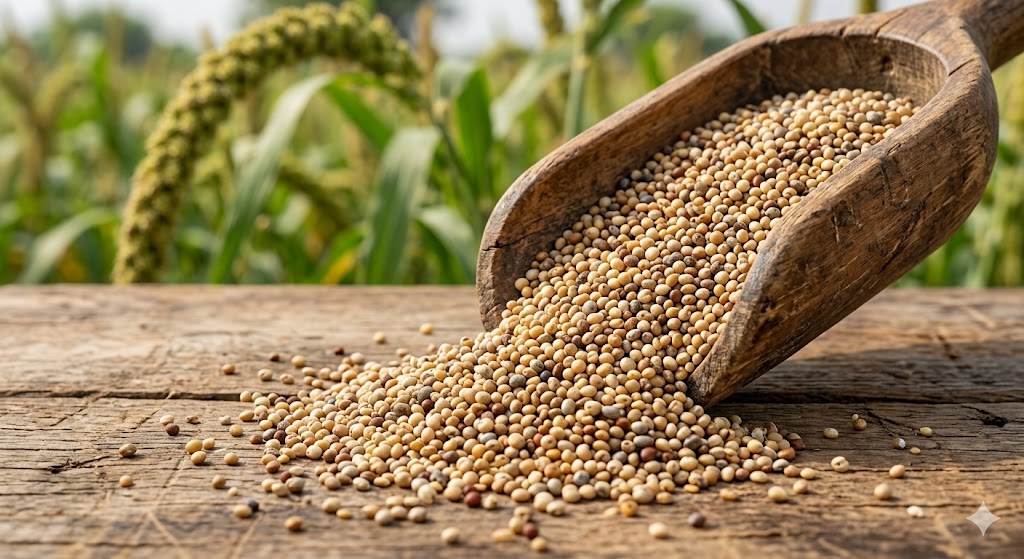
Millet is a collective term for a group of small-seeded annual grasses belonging to the Poaceae (grass) family. The word actually comes from the French word "mille," which means thousands—referring to the fact that a single handful of millet can contain thousands of grains.
These grains are "climate-resilient," meaning they can grow in hot, dry areas with very little water where other crops might fail. This makes them not only good for you but also great for the planet.
Types of millets
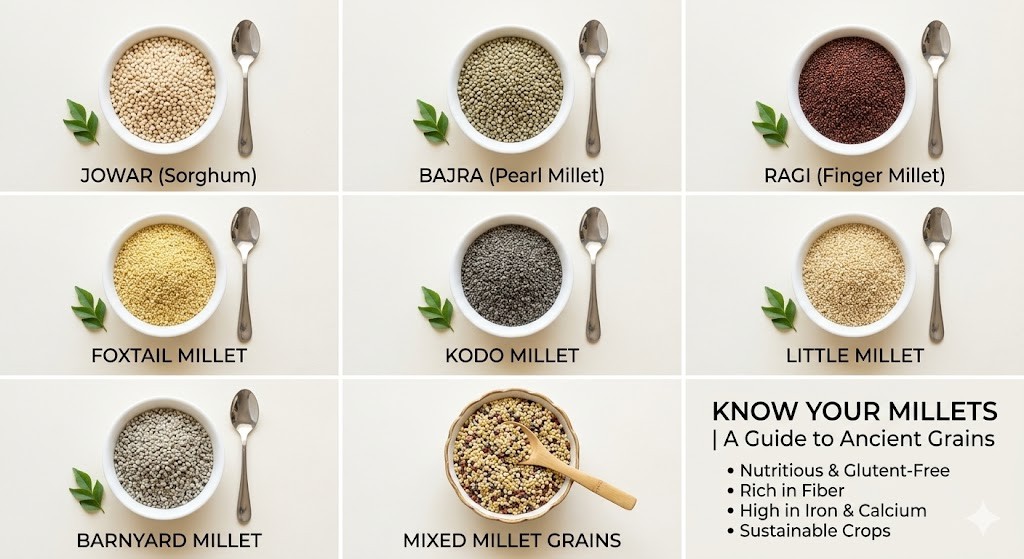
Not all millets are created equal! They are generally classified into two groups based on the size of the grain.
Major Millets
These are the big names you’ll likely see in your local grocery store:
Sorghum (Jowar): Often called the "Great Millet," it's a staple in many tropical regions and is perfect for rotis or bhakris.
Pearl Millet (Bajra): The most widely grown millet globally, known for being high in iron and omega-3 fatty acids.
Finger Millet (Ragi): A calcium superstar that is often used in porridges and baby food.
Minor Millets
These grains are smaller but pack a serious nutritional punch:
Foxtail Millet (Kangni): Rich in protein and complex carbs, it’s a great energy booster.
Kodo Millet: Known for having the highest fiber content among all millets.
Little Millet (Kutki): A traditional Indian crop that’s very gentle on the stomach.
Barnyard Millet: The fastest-growing millet and the lowest in calories, making it a favorite for weight loss.
Proso Millet: High in protein and B-complex vitamins like niacin and folic acid.
Nutritional Breakdown
Millets are known as "Nutri-cereals" because they are three to five times more nutritious than rice or wheat in terms of mineral and fiber content.
The table below shows the typical nutritional profile per 100g of various millets:
Millet Type | Energy (kcal) | Protein (g) | Dietary Fiber (g) | Calcium (mg) |
Barnyard Millet | 307 | 11.6 | 10.1 | 14 |
Finger Millet (Ragi) | 320 | 7.3 | 11.1 | 344–364 |
Little Millet | 329 | 8.7 | 6.3 | 17 |
Foxtail Millet | 331 | 12.3 | 8.0 | 31 |
Sorghum (Jowar) | 334 | 10.4 | 10.2 | 27 |
Pearl Millet (Bajra) | 363 | 11.6 | 11.4 | 27 |
Polished Rice | 345 | 6.4 | 0.3 | 2 |
Whole Wheat | 340 | 11.8 | 2.0 | 29 |
Benefits of eating millets for weight loss

If you’re trying to shed a few pounds, millets are a secret weapon. Here is why they work:
Ultimate Fullness: Millets contain up to 30 times more fiber than polished rice. This high fiber content slows down digestion and keeps you feeling full for hours, which naturally helps you eat less.
Stable Energy: Most millets have a low Glycemic Index (GI), meaning they release sugar slowly into your blood. This prevents the "insulin spikes" that cause your body to store fat.
Metabolic Boost: Grains like foxtail millet are high in protein, which can increase your metabolism through the "thermic effect of food".
Happy Gut: Millet fiber acts as a prebiotic, feeding the healthy bacteria in your gut that are linked to a leaner body type.
Things to consider: Safety and Preparation
While millets are superfoods, they do have a couple of quirks:
Soak them: Millets contain phytic acid, which can block mineral absorption. Soaking them for 6–8 hours before cooking neutralizes this and makes them much easier to digest.
Thyroid Caution: Millets like Bajra and Ragi contain mild "goitrogens," which can interfere with iodine uptake. If you have hypothyroidism, ensure your millets are well-cooked and rotated regularly rather than eating the same type every day.
Tracking your millet meals with VoCal
Because there are so many types of millets, manual calorie tracking can be a headache. Was that 100g of Ragi or Kodo?
VoCal solves this with voice-based tracking built for Indian diets. You can simply say, "I had two ragi dosas and a bowl of sambar," and the AI calculates the exact calories and macros for you in about 15 seconds. It’s 10x faster than searching through databases and handles complex Indian home-cooked meals with ease.
Frequently Asked Questions (FAQs)
Which millet is best for weight loss?
Barnyard millet is often considered the weight loss champion because it has the lowest calorie count (300 kcal/100g) and a very high fiber content, which helps keep you satisfied for longer. Browntop millet is another great choice as it boasts the highest fiber and protein levels among the minor millets.
Can I eat millets every day?
Yes, you can include millets in your daily diet, but experts recommend rotating between different varieties rather than sticking to just one. For example, you might enjoy Jowar in the summer due to its cooling properties and Pearl Millet (Bajra) in the winter because it is warming.
Are millets safe for thyroid patients?
Millets are safe for most thyroid patients when prepared correctly. Since some varieties like Bajra contain goitrogens, it is essential to soak them for at least 6–8 hours and cook them thoroughly, which destroys most goitrogenic activity. It is also helpful to pair millets with iodine-rich foods like eggs or iodized salt.
Disclaimer: This content is for informational purposes only and is not a substitute for professional medical advice. VoCal is a nutrition logging tool, not a medical device. Consult a healthcare provider before starting any new diet, especially if you have a medical condition like hypothyroidism.