
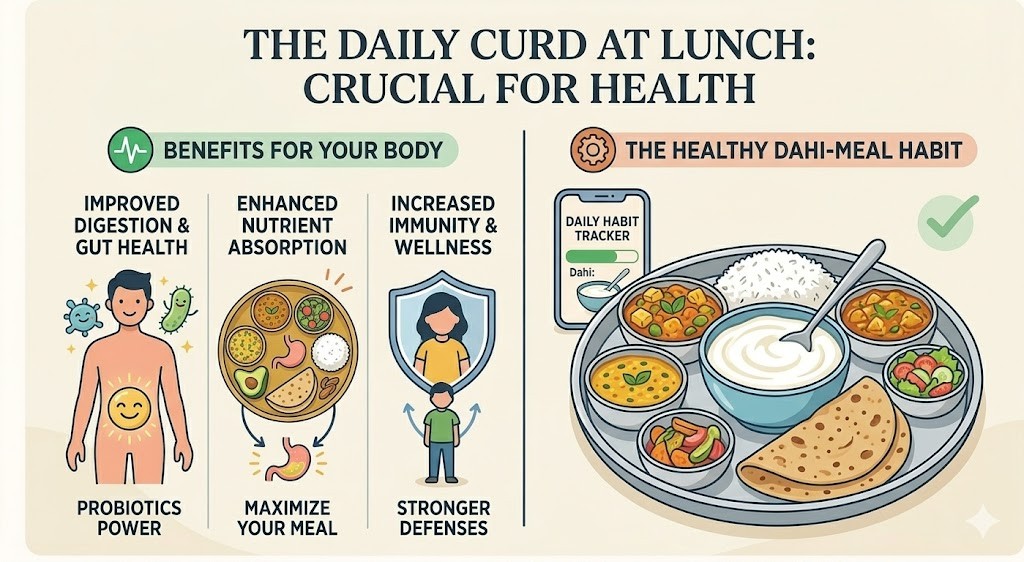
Have you ever wondered why almost every traditional Indian meal comes with a side of creamy, refreshing curd? It’s not just to cool down a spicy curry! Whether you call it dahi, yogurt, or your "magic bowl," curd is a nutritional powerhouse that can transform your health—especially when eaten at the right time.
While many people debate the benefits of curd with lunch and dinner, science (and ancient wisdom) suggests that your midday meal is the ultimate time to dive in. Let’s look at why you should never skip your daily dose of dahi!
Key Takeaways
Natural Probiotic: Curd is packed with live "good" bacteria that act like gardeners for your gut.
Perfect Timing: Eating curd at lunch aligns with your peak metabolism (or "digestive fire").
Weight Loss Buddy: It helps block stress hormones that tell your body to store belly fat.
Veggie Power: It’s a rare and vital source of Vitamin B12 for vegetarians.
1. A Natural Boost for Your Digestive System
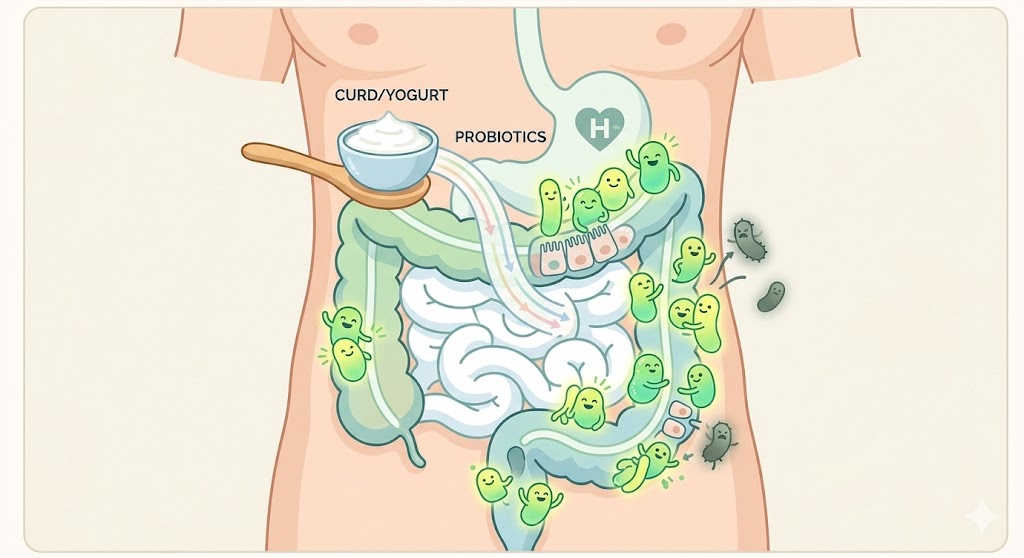
Think of your gut as a garden. To keep it beautiful, you need "good gardeners" (probiotics) to keep the "weeds" (bad bacteria) away. The live cultures in curd—like Lactobacillus—help break down complex food, ensuring you absorb nutrients without that heavy, bloated feeling after a big meal.
In fact, research shows that regular curd eaters see a 19% improvement in abdominal pain and a 16% boost in smooth digestion. It’s a literal relief for your stomach!
Feature | Traditional Curd (Dahi) | Standardized Yogurt |
Bacterial Strains | Variable/Environmental (e.g., L. acidophilus) | Standardized (L. bulgaricus, S. thermophilus) |
Probiotic Density | Varies by starter and environment | High and standardized |
Texture | Grainy, soft, semi-solid | Smooth, uniform, viscous gel |
Preparation | Natural fermentation with "starter" | Industrial inoculation |
2. The "Magic Bowl" for Weight Management
Looking for a secret weapon to fight belly fat? Meet curd! Obesity often stems from high levels of cortisol (the stress hormone), which signals your body to store fat around your middle. The high calcium content in curd helps put the brakes on cortisol production.
Plus, because it’s so high in protein, it keeps you feeling full for much longer. By having curd at lunch, you’re less likely to reach for that 4 PM oily snack!
3. Why Lunch is Better than Dinner
Timing is everything! In traditional wellness systems like Ayurveda, the midday period is when your "Agni" (digestive fire) is strongest. Since curd is nutrient-dense and "heavy," your body is best equipped to process it during lunch.
While having curd with lunch and dinner is generally safe for many, eating it late at night can sometimes lead to mucus buildup or a sluggish stomach for those sensitive to cold.
4. The Ultimate Bone Builder
If you aren't a fan of drinking plain milk, curd is your best friend. It’s loaded with calcium and phosphorus, the two main building blocks for strong teeth and bones. The lactic acid in curd actually makes it easier for your body to absorb that calcium, keeping your skeleton "young" and strong.
Nutrient | Amount per 100g (Approx.) | Key Biological Role |
Energy | 98 kcal | Daily metabolic fuel |
Protein | 11 g | Satiety, muscle repair, enzyme production |
Total Fat | 4 g | Absorption of fat-soluble vitamins |
Carbohydrates | 4.7 g | Glycemic stability |
Calcium | 85 - 110 mg | Bone density, intracellular signaling |
5. A Lifeline for Vegetarians
Finding Vitamin B12 on a vegetarian diet can be tricky since it’s mostly found in meat. However, curd is a reliable vegetarian source of B12, which is essential for your brain, nerves, and red blood cells.
How to Maximize Your "Curd Benefits"
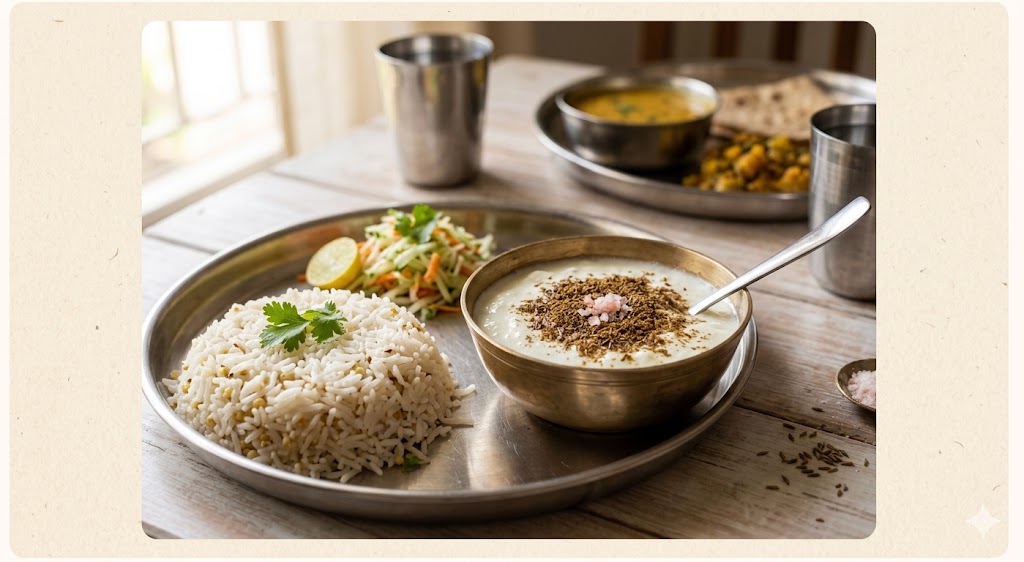
Don't just eat it plain—make it a part of your culinary adventure!
The Rice Connection: Mix it with warm brown rice or millets. The warmth of the rice balances the cooling curd.
The Pro-Digestion Spice: Add a pinch of roasted cumin (jeera) and rock salt. Cumin is a fantastic digestive stimulant.
The Veggie Mix: Grate some cucumber or carrots to create a "synbiotic" effect—the fiber (prebiotics) feeds the good bacteria (probiotics) in the curd!
Consistency is Key (And Easy with VoCal!)
We know, life gets busy. Forgetting to track your healthy habits is easy, but VoCal makes it effortless. You don’t need to type in complicated measurements. Just tap the mic and say: "I had a medium bowl of curd with moong dal and rice."
Our AI understands real Indian meals and logs your protein, calcium, and calories in seconds. It’s the easiest way to ensure you’re hitting your "magic bowl" goals every single day!
Summary
Adding a bowl of curd to your daily lunch is one of the simplest, cheapest, and most delicious ways to boost your health. From smoother digestion and stronger bones to easier weight management, the benefits are backed by both science and tradition. Pair it with your favorite veggie dishes, track it effortlessly with Vo-cal, and let your gut say "thank you!"
FAQs: Your Curd Questions Answered!
Q: Can I eat curd if I have a cold?
A: It's best to avoid it if it’s straight from the fridge. If you must have it, ensure it's at room temperature and add warming spices like black pepper.
Q: Is homemade curd better than store-bought?
A: Yes! Homemade curd usually has fresher, more active cultures and no hidden sugars or thickeners.
Q: Does curd help with acidity?
A: Absolutely. Curd has a soothing effect on the stomach lining and can help neutralize excess acid.
Disclaimer: This content is for informational purposes only and does not constitute medical advice. Consult a healthcare professional before making significant changes to your diet, especially if you have pre-existing conditions.